HOME > BLOG > HR Management > HR Analytics Career in India 2026: Roles, Tools, Salaries and Which Programmes Lead There
HR Management
HR Analytics Career in India 2026: Roles, Tools, Salaries and Which Programmes Lead There
J
By Prerna Singh
August 3, 20265 min read
Published on August 3, 2026
SHARE THIS ARTICLE
Table Of Content
What Is HR Analytics?
Why HR Analytics Is Growing Rapidly in India
Key Responsibilities of an HR Analytics Professional
Top HR Analytics Roles in India
Discover how HR Analytics is transforming the future of human resource management in India. Explore in-demand roles, essential analytics tools, salary trends, and the MBA and certificate programmes that can help you build a successful career in HR Analytics in 2026.
The Human Resources (HR) function has undergone a remarkable transformation over the past decade. What was once primarily focused on hiring, payroll, and employee administration has evolved into a strategic business function driven by data and technology. In 2026, HR Analytics has emerged as one of the fastest-growing career paths in India, helping organizations make informed decisions about talent acquisition, employee engagement, workforce planning, and organizational performance.
With businesses increasingly adopting Artificial Intelligence (AI), cloud-based HR systems, and predictive analytics, the demand for professionals who can analyze workforce data and translate it into actionable insights is growing rapidly. Companies no longer rely solely on intuition when making HR decisions—they use analytics to improve employee retention, optimize recruitment, predict workforce needs, and enhance productivity.
For graduates, HR professionals, business analysts, and working executives, a career in HR Analytics offers excellent growth opportunities across industries. This blog explores the roles, essential tools, salary trends, career pathways, and educational programmes that can help you build a successful career in HR Analytics in India.
HR Analytics, also known as People Analytics or Workforce Analytics, is the process of collecting, analyzing, and interpreting employee data to improve business and human resource decisions.
Rather than relying on assumptions, organizations use data to answer critical questions such as:
Why are employees leaving?
Which recruitment channels produce the best talent?
What factors influence employee performance?
How effective are learning and development programmes?
Which departments have the highest attrition risk?
The insights generated through HR Analytics help organizations improve workforce planning, employee experience, and overall business performance.
Why HR Analytics Is Growing Rapidly in India
India’s workforce is becoming increasingly digital, and organizations are investing heavily in HR technologies to manage large, distributed teams. The rise of hybrid work models, AI-powered recruitment platforms, and employee experience tools has significantly increased the need for HR professionals with analytical skills.
Several factors are driving demand for HR Analytics professionals:
Demand for HR Analytics professionals has resulted in competitive salary growth, especially for candidates with expertise in analytics tools and HR technologies.
Experience Level
Average Annual Salary (INR)
Entry Level (0–2 years)
₹5–8 LPA
Mid-Level (3–6 years)
₹8–15 LPA
Experienced (7–10 years)
₹15–25 LPA
Senior Leadership
₹25–45+ LPA
Professionals with expertise in Power BI, Tableau, SQL, Workday, SAP SuccessFactors, and People Analytics often earn higher compensation, particularly in multinational corporations and consulting firms.
Which Programmes Lead to HR Analytics Careers?
Several educational pathways can help professionals transition into HR Analytics.
MBA in Human Resource Management
An MBA in HR provides strong foundations in talent management, organizational behavior, leadership, and strategic HR while introducing students to analytics concepts.
MBA in Business Analytics
This programme combines business management with data analytics, making graduates highly suitable for HR Analytics roles.
PG Certificate in HR Analytics
Executive certificate programmes focus specifically on workforce analytics, HR dashboards, predictive modeling, and HR technologies.
Data Analytics Certification
Professionals from HR backgrounds can strengthen their analytical skills through certifications covering SQL, Power BI, Tableau, Excel, and data visualization.
AI and People Analytics Courses
As AI becomes increasingly integrated into HR, specialized programmes covering AI-driven recruitment, predictive workforce planning, and intelligent talent management are becoming highly valuable.
Future Scope of HR Analytics
The future of HR Analytics is closely linked with advancements in Artificial Intelligence, automation, and cloud-based HR platforms. Organizations are moving beyond descriptive reporting to predictive and prescriptive analytics, enabling HR teams to anticipate employee behavior and make proactive decisions.
Emerging areas include:
AI-powered recruitment
Employee sentiment analysis
Predictive attrition modeling
Skills intelligence
Workforce automation
Diversity analytics
Learning analytics
Organizational network analysis
Professionals who understand both HR strategy and advanced analytics will continue to enjoy strong career prospects over the coming years.
How to Build a Career in HR Analytics
Building a successful HR Analytics career requires a combination of HR knowledge, analytical thinking, and technical skills. Beginners can start by mastering Excel and HR reporting before progressing to SQL, Power BI, Tableau, and cloud-based HR systems. Learning to interpret workforce data, communicate insights, and support strategic decision-making is equally important.
Hands-on experience through internships, live projects, case studies, or certifications can significantly improve employability. Professionals who continuously upskill in AI, people analytics, and business intelligence will remain competitive in the evolving HR landscape.
Conclusion
HR Analytics has become one of the most promising career paths for professionals interested in combining human resources with data-driven decision-making. As organizations continue investing in digital transformation and workforce intelligence, the demand for skilled HR Analytics professionals is expected to grow steadily across industries.
Whether you are an HR executive looking to advance your career, a graduate exploring management opportunities, or a business analyst interested in people data, developing expertise in HR Analytics can open doors to rewarding and future-ready roles. By pursuing the right MBA or professional certification and building proficiency in analytics tools, you can position yourself at the forefront of the next generation of HR leadership.
Frequently Asked Questions
Yes. HR Analytics is one of the fastest-growing HR specializations in India. Organizations across IT, banking, consulting, healthcare, manufacturing, and e-commerce are hiring professionals who can use data to improve workforce decisions and business outcomes.
The most in-demand tools include Microsoft Excel, Power BI, Tableau, SQL, SAP SuccessFactors, Workday, Oracle HCM Cloud, and Visier. Knowledge of AI-powered HR platforms is also becoming increasingly valuable.
Entry-level professionals typically earn ₹5–8 LPA, while mid-level roles offer ₹8–15 LPA. Experienced professionals can earn ₹15–25 LPA, and senior HR Analytics leaders or People Analytics Heads may earn ₹25 LPA or more, depending on the organization and expertise.
Yes. Professionals from backgrounds such as business analytics, data analytics, statistics, engineering, management, and IT can transition into HR Analytics by learning HR fundamentals along with analytics tools and workforce management concepts.
Prerna Singh
Talent Acquisition Manager - India
Prerna Singh is a results-driven Talent Acquisition Manager with expertise in end-to-end HR management. She has a strong background in recruitment, employee engagement, and HR operations across IT domains. Skilled in ATS/HRIS platforms and vendor management, she is passionate about building productive workplaces. She is committed to aligning talent strategies with business growth.
Get Free Upskilling Guidance
Fill in the details for a free consultation
Related Courses
Explore our programs
Post Graduate Certificate Programme in Strategic Human Resource Management with AI & Analytics
 HOME > BLOG > HR Management > HR Analytics Career in India 2026: Roles, Tools, Salaries and Which Programmes Lead There
 August 3, 2026
 5 min read




 ChatGPT
 Perplexity
 Claude
 Grok
Grok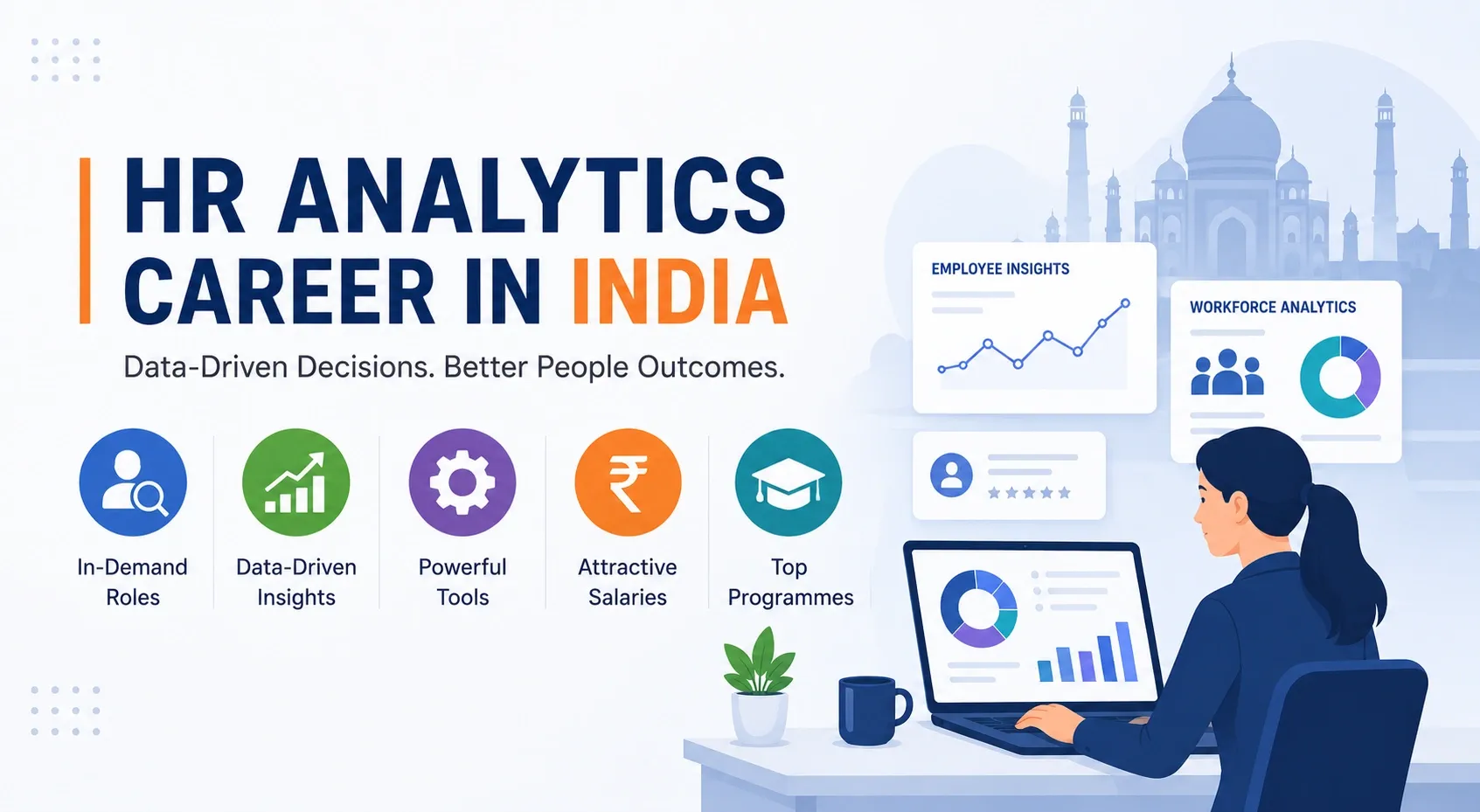









 ROI Calculator