What Are Analytical Skills? Definition, Examples, and Importance
J
By Jaro Education
December 12, 20257 min read
Last updated on September 1, 2026
SHARE THIS ARTICLE
Table Of Content
Analytical Skills Definition
Real-World Examples of Analytical Skills
Why Are Analytical Skills Important for the Workplace?
Analytical skills are one of the most valued workplace skills in the job market right now and for good reasons. Without a doubt, analytical thinkers are a valuable asset to organizations as they are the strategic planners and effective team members.
When organizations have some challenges, these professionals do not panic; they assess the situation, analyse the issue at hand, and use their analytical thinking to determine the best option to resolve the issue. But the question is, how do you develop these skills within yourself or your team to create real impact in your workplace?
In this blog, we will outline what analytical skills are, their importance at the workplace, and some real-life examples. Let’s get started.
Analytical skills are the ability to collect, interpret, and evaluate data to reach logical, well-informed conclusions. Analytical skills will enable you to interpret data and identify issues, leading to effective solutions based on careful reasoning rather than mere guesswork. In simpler terms, analytical skills meaning is to break complex topics into simpler components, like a detective and strategist all at once. Analytical thinkers approach problems in a systematic manner by identifying and asking the right questions or considering diverse viewpoints before reaching any conclusions.
And this skill is not only used in data science or financial analysis; its importance is universal. Whether you are:
Assessing your organization’s web traffic to see which campaigns draw visitors.
Creating a strategy for a product launch based on prior experience.
Predicting your department’s budget and spending for the upcoming quarter.
Or understanding problems with the user experience by talking to customers.
Depending on the type of job and the industry in which you work, analytical skills can take many different forms. Let’s look at some real-world examples from different sectors/industries where analytical skills play important roles.
1. Financial Analysis
In the financial world, analytical skills are the core of making good decisions. Financial analysts use analytical skills to sift through and make sense of complicated sets of data, analyze trends, and project future outcomes in regards to investment decisions. For example, if a company is going to expand, an analyst will look at prior financial reports, review stock performance, and assess potential risks before recommending a path forward for investment.
2. Marketing Strategy
Marketers rely mainly on analytical thinking. They analyse customer behaviour, track engagement metrics, and measure the outcome of advertising campaigns to improve strategies. For instance, a marketing manager may observe peaks in engagement on social media when posts are shared at certain times of the day. The marketing manager can use analytical thinking to change how they share posts, to improve those metrics since they will understand the data behind this measurement.
3. Project Management
Project managers use analytical skills when planning, coordinating, and monitoring many tasks. They assess timelines for projects, allocate resources, and anticipate possible roadblocks. For the case of a construction project that begins to fall behind schedule, a project manager will
(1) observe that the project has fallen behind,
(2) think analytically to understand what caused the delay, off the top of their head, supply chain problems, budget problems, workforce problems?
The project manager may implement solutions to the extent possible, based on data and evidence.
4. Healthcare Decision-Making
In healthcare, analytical skills can be a matter of life and death. Doctors and nurses analyze the patient’s symptoms, the laboratory reports, and the medical history of a patient to identify the illness and suggest treatments. An experienced physician will apply analytical reasoning when faced with two diseases that have very similar symptoms to arrive at an accurate diagnosis and treatment plan for the patient. In situations with high stakes, analytical accuracy can mean life or death for the patient.
Why Are Analytical Skills Important for the Workplace?
The next big analytical skills question is: what importance do these skills hold in the workplace? Let’s answer this question by exploring some benefits:
1. Improves Decision-Making
Analytical thinkers do not base decisions on instinct; rather, they consider the whole picture by looking at the data, recognizing gaps, and considering the risks. This means they can make decisions that are well-rounded and supported by data, which is more likely to lead to better business outcomes.
2. Increases Workplace Efficiency
When you know how to analyse processes and prioritise tasks effectively, you become more productive. Analytical people identify situations in which time or resources are wasted, and they look for smarter ways to handle the issue. For instance, reporting the same repetitive reports, or consulting simplest channels of communication allows for the time spent to be redirected to more strategically important tasks.
3. Enhances Problem-Solving
Analytical thinking is the process of solving problems from a logical perspective. People with strong analytical skills can break down complicated issues, get to the root causes, and suggest reasonable and sustainable solutions. Whether that issue is a technical fallout, or dissatisfied customers, analytical practitioners handle the issue with clarity and confidence.
4. Facilitates Strategy Development
Analytic skills are critical for developing long-range strategies. When leaders develop strategy based on verifiable data like market research, consumer insights, and financial analytics, they can be more strategic with their impact. For instance, a business development manager could analyze previous sales data to determine past performance, and which geography or demographic is the best target for expansion.
5. Enhances Adaptability
The pace of business change is rapidly evolving in which new technologies, changes in market conditions, and evolving customer needs abound. Analytical thinkers do not hesitate and adapt quickly, since they can understand new data, identify a new pattern, and make informed adjustments. Pivoting based on data ensures your organization remains competitive and resilient.
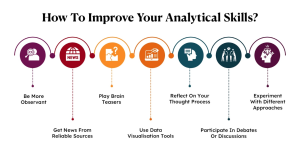
To be good at analytics, you don’t need to earn a degree in data science. All it takes is patience, commitment, and of course time. So, if you’re wondering about “how to improve analytical skills”, try a few of the ideas given below and stick with the ones you enjoy:
*kapable.club
1. Document Your Process
After each time you have solved a problem, make a habit of reviewing your problem-solving steps. Ask yourself questions, for example:
What facts or data did I take into consideration?
Did I look for input from other people, or did I rely solely on my own judgment?
What was my rationale behind making that decision? Did the outcome meet expectations, and could it be better?
2. Take Courses and Keep Learning
You are not limited to technical topics, anything you study that forces your brain to think logically will be beneficial. For example, studying philosophy may make you a better reasoner, and by taking public speaking classes you can get better at clearly communicating complex ideas.
In addition, you might learn to use tools like Excel, Power BI, or Tableau that will help you feel more comfortable with data. Platforms like Jaro Education also have short courses covering analytical thinking and data interpretation that may help you learn professionally.
3. Analyze Everything Around You
Incorporate analysis into your day-to-day life. Whether it’s the news, a movie, or a podcast, it’s not enough just to consume. You should inquire with yourself:
What is the main idea?’
How is it organized/presented?’
Is there another side to this?’
4. Practice Data Interpretation
Start small- look for signs in your own productivity, your social media performance, or your own spending patterns that might help you focus on your own data or on trends generally. As you build competency in recognizing what a trend, relationship, and outlier looks like, you will become more adept at interpreting raw data.
5. Ask Questions Frequently
Curiosity drives analytical progress. In meetings and discussions, don’t be afraid to ask questions that start with “why” and “how.” For example, rather than removing your personal bias from a marketing report simply because it is a marketing report, ask questions like: “Why did engagement drop this month?” or “How did external factors influence these results?”
Analytical skills are more than a career benefit: they are a vital life skill. It empowers you to consider problems from every direction, increase the likelihood of good decisions, and communicate ideas more effectively. These skills will always be relevant, regardless of whether you are working in finance, marketing, information technology, healthcare, or education.
The program’s comprehensive curriculum, practical case studies, and interactive sessions with industry experts can significantly enhance your project management and analytical skills. Take the next step toward becoming a strategic, analytical leader.
Enroll today with Jaro Education and accelerate your journey toward professional excellence.
Frequently Asked Questions
In finance, analytical skills involve understanding numbers & evaluating market trends. In the technology industry, analytical skills are used to interpret data, identify problems, and provide technical solutions.
Typical barriers include insufficient real-world practice and receiving feedback about analytical skill development. To overcome these barriers, seek out hands-on projects and ask mentors for their feedback.
Yes. Before and after the training, track organization variables such as employee productivity, quality of decisions made, and efficiency improvements to evaluate a return on investment.
Analytical skills can be shown through systematic decision making, exhibiting insight based on data, thoughtful decision making, and clear interpretation of information. Analytical skills can challenge you in projects, reports, and discussions that emphasize critical thinking and decision making.

 December 12, 2025
 7 min read





 ChatGPT
 Perplexity
 Claude
 Grok
Grok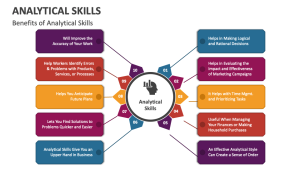 *collidu.com










 ROI Calculator