Power BI Jobs in India: Salary, Skills, Demand & Top Cities
J
By Dr. Sanjay Kulkarni
March 10, 202611 min read
Last updated on March 18, 2026
SHARE THIS ARTICLE
Table Of Content
What Exactly Are Power BI Jobs?
Why Power BI Jobs Are Growing So Fast in India?
Power BI Jobs vs Other Data Roles: Where It Fits
Power BI Jobs for Freshers: Reality Check
Power BI jobs are not limited to one single role. It’s an umbrella term, and underneath it sits a mix of responsibilities depending on the company, team size, and maturity level.
In this blog, we will explore how Power BI jobs are shaping the modern analytics workforce in India, what roles are actually in demand, the top skills that matter and where the real opportunities lie. So, let’s get started!
At a broad level, Power BI professionals work at the intersection of data, business logic, and decision-making. They take raw data, often messy, coming from multiple sources, and turn it into something usable with dashboards, reports, performance trackers, and forecasts. The kind of things leadership actually looks at.
*testgorilla.com
Some common roles you’ll see under this umbrella:
Power BI Analyst: Focused more on reporting, dashboards, and business insights
Power BI Developer: More technical, deeper into DAX, data modelling, performance optimisation
BI Consultant: Client-facing roles, often in consulting or service firms
MIS / Reporting Analyst: Entry-level or transitional roles heavily using Power BI
The important thing? These roles don’t exist in isolation. A Power BI professional is expected to understand why the business needs a metric, not just how to visualise it. That’s a big reason why demand has stayed strong while many generic reporting roles are slowly fading out.
The growth of Power BI jobs in India isn’t accidental. It’s the result of a few very practical shifts happening at the same time.
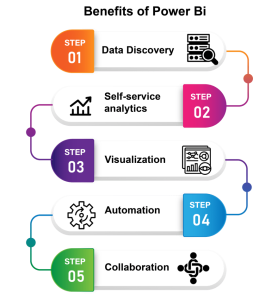
First, Indian companies, especially mid to large enterprises, are moving away from Excel-heavy reporting. Excel still exists (and always will), but it’s no longer just enough. Leadership teams want live dashboards, automated refreshes, and centralised reporting. Power BI delivers that without a steep learning curve, which makes it attractive for organisations and employees alike.
Second, global companies are expanding their analytics and reporting teams in India. Many MNCs now treat India as a core analytics hub, not just a support centre. Power BI is widely used in these setups because it integrates smoothly with Microsoft ecosystems already in place.
Third, the rise of data-driven decision-making isn’t just a buzzword anymore. Sales teams track performance daily. HR tracks attrition patterns. Finance teams monitor cash flow in near real time. All of this feeds into one thing: dashboards. And dashboards mean Power BI.
What’s interesting is that this demand cuts across sectors, be it:
IT services and consulting firms
BFSI and fintech companies
E-commerce and consumer tech
Manufacturing and supply chain organisations
In many of these companies, Power BI jobs are no longer handled by “just the data team”. Business teams expect Power BI expertise embedded within functions. That’s quietly expanding the job market.
Power BI Jobs vs Other Data Roles: Where It Fits
A common confusion among professionals is whether Power BI jobs sit “below” or “above” traditional data roles. The reality is, they sit alongside them.
Power BI professionals aren’t competing with data scientists. They’re solving a different problem. While data scientists focus on models, predictions, and experiments, Power BI roles focus on visibility, clarity, and action. In fact, many organisations use Power BI as the final layer where outputs from SQL, Python, or ML models are consumed by business users.
Compared to roles that rely only on SQL or Excel, Power BI jobs tend to have:
More visibility within the organisation
Direct interaction with decision-makers
Faster career movement into analytics leadership roles
That’s one reason many professionals from non-technical backgrounds, like finance, operations marketing, are transitioning into Power BI–centric roles. It’s technical enough to be valuable but business-facing enough to be impactful.
Power BI Jobs for Freshers: Reality Check
Now let’s talk honestly about Power BI jobs for freshers, because this is where expectations often go wrong.
Yes, freshers are getting hired for Power BI roles. But no, it’s not because they just “know the tool.” Recruiters don’t expect fresh graduates to be experts in complex DAX or enterprise-scale models. What they look for instead is potential.
Entry-level Power BI roles usually sit under titles like:
Junior BI Analyst
Reporting Analyst
MIS Executive
Business Analyst (Junior)
Freshers who do well in these roles typically show three things:
Comfort with data
A basic understanding of business metrics
The ability to explain insights clearly
This is where many candidates slip. They focus only on learning visuals and charts but struggle when asked why a dashboard was built a certain way. Companies want people who can grow into decision-support roles, not just build pretty reports.
Another truth worth mentioning: freshers who bring projects, even self-built ones, stand out far more than those with only certificates. A simple sales dashboard with a clear business story often beats a long list of tools on a resume.
Demand Snapshot: Where the Market Is Headed for Power BI Jobs
If you look at hiring patterns today, it’s clear that Power BI is no longer treated as a short-term trend. Organisations are building long-term reporting frameworks around it. Teams are standardising dashboards. Leadership reviews are increasingly Power BI–driven.
This means demand isn’t just for “someone who knows Power BI”. It’s for professionals who can:
Translate data into decisions
Scale dashboards across teams
Maintain performance as data grows
And that’s exactly why Power BI jobs are likely to remain relevant for the foreseeable future. The tool may evolve. Features will change. But the core need, which is making data usable, won’t go away.
Power BI Skills You Need to Get Hired (Core + Advanced)
Listed below are the key Power BI skills that actually move the needle and where most candidates quietly fall short.
Core Power BI Skills (Must-Have)
These are the basics, yes, but “basic” doesn’t mean shallow. Most rejections happen right here.
1. Data Modeling & Relationships
This is where real Power BI work begins, not visuals. Understanding how tables talk to each other, when to use star schemas, how to avoid circular relationships, this is non-negotiable. Poor modeling leads to slow dashboards, broken metrics, and confusion later. Good models stay invisible, which is exactly the point.
2. DAX Fundamentals
You don’t need to memorise every function, but you do need to understand how DAX thinks. Context. Filter vs row context. CALCULATE. If these words sound scary, that’s a signal, not a barrier. Most companies expect clean, readable DAX, not clever but fragile formulas.
3. Power Query (ETL concepts)
This is where raw data gets its first reality check. Cleaning columns, merging sources, handling missing values, standardising formats. Power BI professionals who ignore Power Query end up pushing messy logic into DAX later and that’s a painful way to work.
4. Dashboard Design & Storytelling
Here’s the uncomfortable truth: many dashboards look impressive but answer nothing. Hiring teams notice. They want dashboards that guide decisions, not confuse executives. Layout, hierarchy, colour discipline, and narrative flow matter more than flashy visuals.
5. Data Refresh, Gateways, and Publishing
Knowing how to publish a report is easy. Knowing how to keep it running reliably? That’s different. Scheduled refreshes, gateway issues, and access permissions – these operational skills quietly separate hobbyists from professionals.
Advanced Power BI Developer Skills
This is where Power BI developer skills start to justify higher salaries and bigger responsibilities.
1. Advanced DAX Patterns
Time intelligence, dynamic measures, complex aggregations, advanced DAX aren’t about complexity for its own sake. It’s about building measures that scale as data grows and questions change. Developers who can simplify logic without losing accuracy are rare and highly valued.
2. Performance Optimisation
Slow dashboards don’t survive in real businesses. Understanding query folding, model size reduction, and efficient calculations is critical in mid-to-large organisations. Performance work rarely looks glamorous, but it earns serious respect internally.
3. Row-level Security (RLS)
Once dashboards are shared across teams, security matters. RLS ensures the right people see the right data. This is especially important in finance, HR, and multi-region organisations.
4. Power BI Service Administration
Workspaces, apps, permissions and deployment pipelines come into play as teams scale. Developers who understand the service layer are often trusted with broader ownership.
5. Integration with Azure, SQL, APIs
Pure Power BI roles still exist, but integrated roles are growing faster. Pulling data from SQL, Azure services, or APIs makes dashboards far more powerful and future-ready.
Complementary Skills That Boost Hiring Probability
Here’s where candidates with similar technical skills start to separate.
1. SQL Proficiency
You don’t need to be a database expert, but writing clean queries, understanding joins, and optimising data pulls helps immensely. SQL reduces dependency and improves credibility.
2. Business Analytics Mindset
This is about asking better questions. Why does this metric matter? Who uses it? What decision does it support? Candidates who think this way often outperform technically stronger peers.
3. Domain Understanding
Finance dashboards don’t behave like sales dashboards. Operations data tells different stories. Even basic domain familiarity improves interpretation and trust.
Power BI Developer Jobs: Roles, Responsibilities & Career Progression
So how do Power BI developer jobs actually differ from analyst roles?
Analysts typically focus on insights, like what happened, why it matters, what should be done next. Developers focus on building the engine that makes those insights reliable at scale. In mid-to-large organisations, developers handle complex models, reusable datasets, performance tuning, and enterprise-wide reporting frameworks.
Responsibilities often include:
Designing scalable data models
Creating reusable measures and datasets
Supporting multiple teams from a single reporting layer
Working closely with stakeholders to refine requirements
As organisations mature, Power BI developers move beyond “report builders”. They become system thinkers.
Career progression of Power BI jobs usually looks like this:
Developer → Senior BI Developer → BI Architect → Analytics Lead
At the higher levels, the role becomes less about individual dashboards and more about governance, architecture, and strategy. That’s why Power BI skills age. They evolve with the business.
Power BI Salary in India: What the Numbers Actually Mean
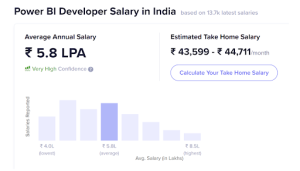
Let’s talk money, because that’s often the unspoken driver. Power BI salary figures vary widely, and context matters more than averages.
Freshers: Entry-level salaries typically sit in the lower-to-mid range of analytics roles. What pushes compensation up isn’t just Power BI knowledge; it’s project exposure, SQL comfort, and communication skills. Freshers who can explain why they built something earn trust faster and often negotiate better.
Mid-level: Salaries see a significant jump for professionals with 3–5 years of experience, especially for those who integrate Power BI with domain expertise or cloud technology. At this level, companies seek individuals who can take ownership and drive results, moving beyond simple execution.
Senior developers and consultants: This group see the widest salary spread. Those working showing enterprise scale, performance optimisation, and stakeholder leadership often move into premium brackets, especially in product firms and consulting roles.
What impacts salary the most?
Depth of skills, not tool count
Business understanding
Location and company type
Ability to scale solutions, not just build them
At this point, it should be clear that Power BI careers aren’t about learning a single tool and stopping there. They reward curiosity, clarity of thought, and steady depth over time.
Top Cities for Power BI Jobs in India
City
Why Power BI Jobs Are Strong Here
Key Hiring Sectors
Salary Advantage
Bengaluru
India’s largest analytics and product hub with high Power BI adoption across startups and MNCs
Product companies, SaaS, IT services, consulting
High, best pay for experienced professionals
Hyderabad
Growing base of Global Capability Centers (GCCs) and enterprise analytics teams
MNCs, BFSI, pharma, enterprise IT
High, strong for mid to senior roles
Pune
Strong presence of IT services and analytics consulting firms
IT services, consulting, manufacturing
Medium–High
Chennai
Stable demand for reporting and enterprise BI roles
Manufacturing, IT services, enterprise analytics
Medium
Mumbai
High demand for Power BI in finance-driven decision making
BFSI, fintech, analytics consulting
High, especially for domain-led roles
Delhi NCR
Consulting, analytics leadership, and client-facing BI roles
How Jaro Education Can Help You Land Power BI Jobs
At Jaro Education, we are a learning partner focused on helping working professionals and career switchers bridge the gap between ambition and opportunity. With industry-aligned programs and expert faculty, we ensure learners gain the skills employers actually care about.
We offer a portfolio of advanced certification and postgraduate programs in analytics, data science, AI, and business intelligence designed to fast-track careers. From foundational courses to leadership-level specialisations, each program blends practical learning with real-world projects and industry insights.
For professionals targeting Power BI jobs, our Post Graduate Certificate in Business Analytics & AI Applications, in collaboration with IIM Trichy, equips you with actionable skills in data analytics, visualisation, and business intelligence tools, including hands-on exposure to Power BI. The curriculum balances theory and practice so you can build dashboards, model data, and solve business problems confidently from day one.
Why Professionals Choose Us At Jaro Education
We design programs in collaboration with top-tier institutes like IIMs, ensuring academic rigor and industry relevance.
We emphasise hands-on projects and real-world case studies, not just theoretical learning
We support learners with career guidance, mentoring, and interview preparation, not just course completion.
Our learning formats are flexible and professional-friendly, built for working schedules.
We focus on long-term career outcomes, not short-term certifications.
Ready to take your Power BI career to the next level? Explore our programme today!
Power BI jobs in India are growing for a simple reason: businesses still need people who can think with data, not just collect it. Tools will keep changing, dashboards will keep evolving, but the need to understand numbers, patterns, and business reality isn’t going anywhere. Whether you’re starting or trying to move deeper into analytics, Power BI gives you a solid, practical entry point. Learn it with intent, apply it with context, and it can quietly shape a long, stable career.
Frequently Asked Questions
Yes, Power BI jobs are in strong demand in India, especially across IT services, BFSI, consulting, and product companies. Organisations rely on Power BI for real-time dashboards, automated reporting, and business intelligence, making it a consistently sought-after skill in analytics hiring.
It depends on skills and experience. Freshers start lower, but with strong projects and a couple of years in, salaries move up fast.
You can get started, yes. But adding SQL, business basics, or domain knowledge makes hiring much easier and growth faster.
Not really. AI may automate parts of reporting, but someone still has to ask the right questions and explain the results.
It can feel confusing at first, especially DAX. But once the basics click and you practice with real data, it becomes manageable, even enjoyable.
Not heavy coding. Some SQL and DAX help a lot, but most roles care more about logic, data thinking, and clear reporting.
Dr. Sanjay Kulkarni
Data & AI Transformation Leader
Dr. Sanjay Kulkarni is a Data & AI Transformation Leader with over 25 years of industry experience. He helps organizations adopt data-driven and responsible AI practices through strategic guidance and education. With experience across startups and global enterprises, he bridges the gap between theory and real-world application. His work empowers teams to innovate and thrive in AI-driven environments.
Get Free Upskilling Guidance
Fill in the details for a free consultation
Related Courses
Explore our programs
Admission Closed
Professional Certificate Programme in Applied Analytics and Gen AI for Business Decisions
 HOME > BLOG > Data Science and BI Analytics > Power BI Jobs in India: Salary, Skills, Demand & Top Cities
 March 10, 2026
 11 min read





 ChatGPT
 Perplexity
 Claude
 Grok
Grok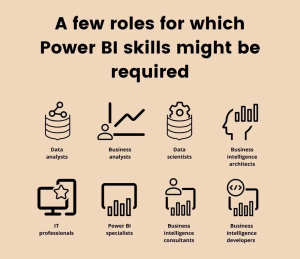




 Admission Closed

 Admission Closed
 Admission Closed
 Admission Closed

 ROI Calculator




