Understanding the Types of Managers in an Organization
Skills Every Manager Needs, Whatever the Role
Build Your Management Career with the Right Program
Conclusion
Key Insights
Managers are classified by their organizational levels, including top-level, middle-level, and first-line managers, as well as by their specific business functions.
General Managers oversee overall business performance, while Functional Managers lead specialised areas such as finance, marketing, operations, and human resources.
Different managers have distinct responsibilities, from managing daily operations and company finances to leading sales teams, handling projects, and developing business strategies.
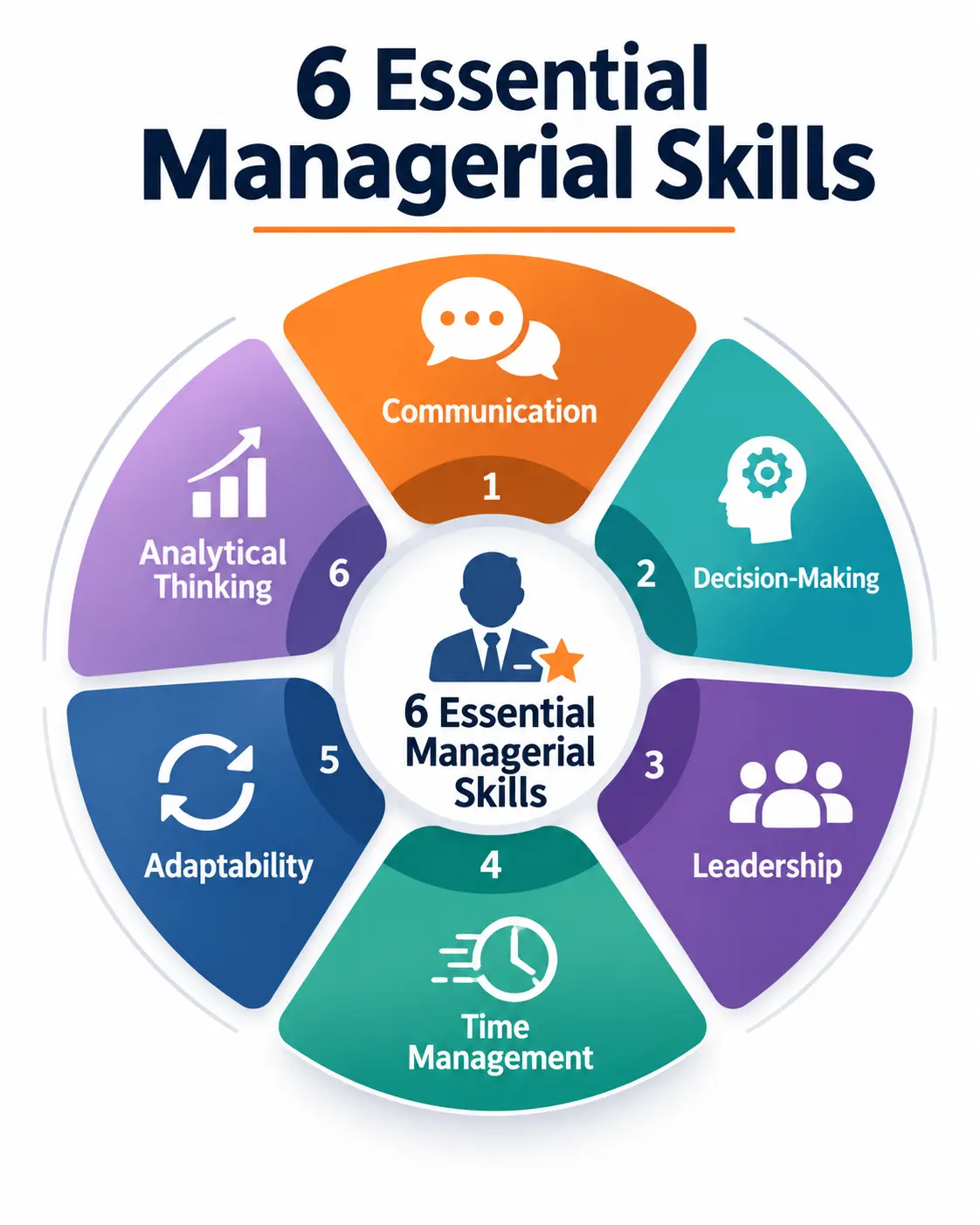
Successful managers need essential skills such as clear communication, leadership, decision-making, adaptability, time management, and analytical thinking.
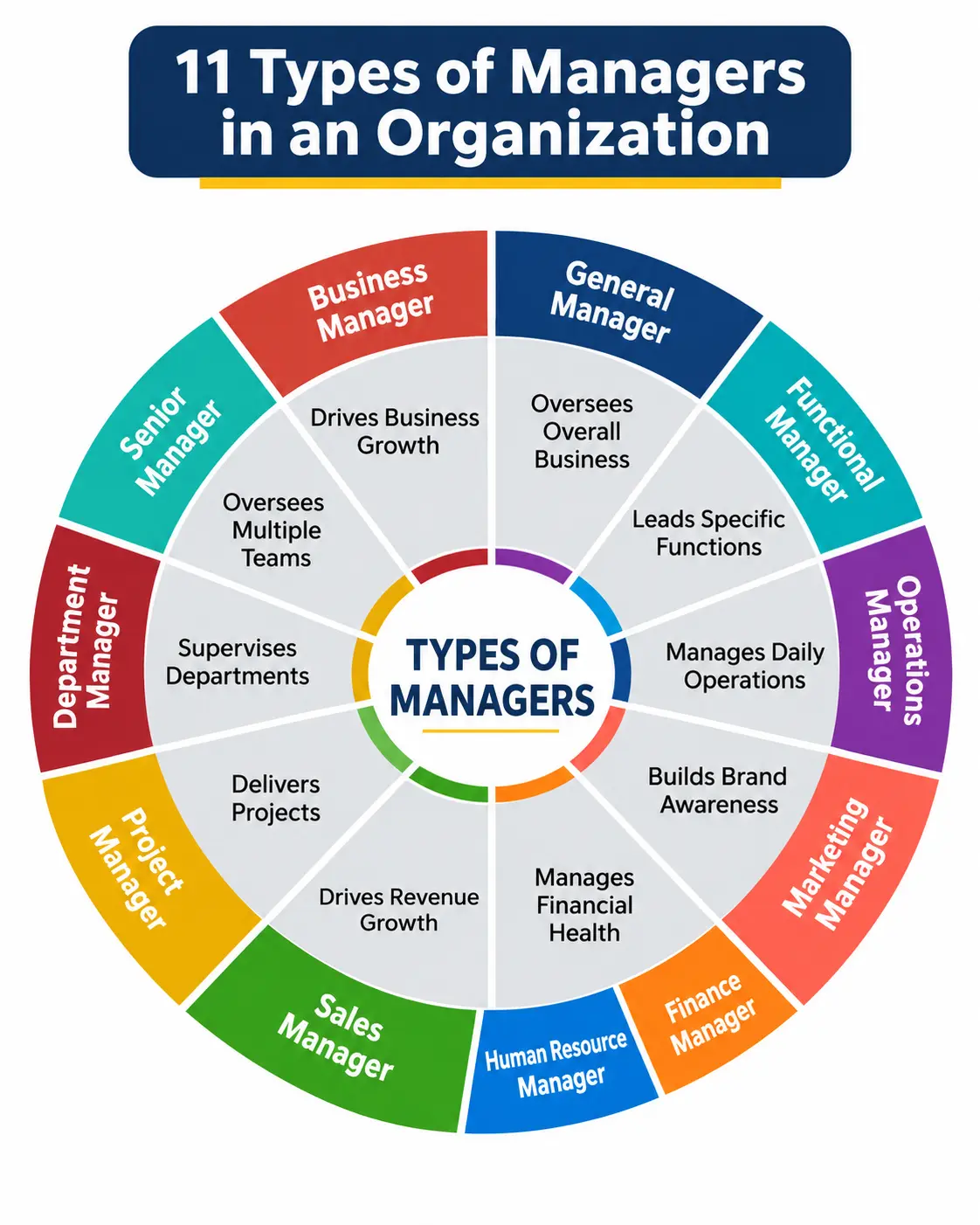
In this blog, you'll learn about the 11 types of managers in a company, their roles, functions, key responsibilities, essential management skills, and ways to build a career in management.
Behind every successful company is a team of people who plan, organize, guide, and support the work being done. These people are managers. Yet the word "manager" covers a wide range of jobs. A manager who leads a factory floor has very different duties from one who builds a brand campaignor tracks company budgets. Understanding the different types of managers helps employees plan their careers, helps business owners structure their teams, and helps students choose the right path.
In this blog, we explain the main types of managers in a company, what each one does, and how they contribute to business success. The language is simple, so you can use it as a quick reference whenever you need it.
Understanding the Types of Managers in an Organization
Managers are usually grouped in two ways. The first is by level: top-level managers set the vision and strategy, middle-level managers turn that strategy into plans, and first-line managers supervise daily work. The second is by function, meaning the area of the business they look after, such as finance, sales, or people.
Most companies have a mix of both. A single person can be a middle-level manager and a functional manager at the same time. Let us look at the eleven most common types of managers one by one.
1. General Manager
A General Manager oversees an entire business unit, branch, or sometimes the whole company. This role carries broad responsibility for profit and loss, strategy, operations, and people. A General Manager works closely with every department head and makes sure all functions move in the same direction.
Key responsibilities: setting goals for the unit, approving budgets, monitoring overall performance, solving cross-department problems, and reporting results to senior leadershipor the owners.
This role suits professionals who are comfortable with big-picture thinking and want to understand every part of a business.
2. Functional Managers
Functional Managers lead a specific function or area of expertise within the company, such as finance, marketing, production, or human resources. They are specialists who guide teams of people with similar skills and make sure the function supports company goals.
Key responsibilities: defining standards for the function, hiring and training specialists, managing the function’s budget, and coordinating with other functional managers. Many of the roles described below, including marketing, finance, and HR managers, are types of functional managers.
3. Operations Manager
An Operations Managerkeeps the daily business running smoothly. They look after processes, resources, suppliers, quality, and delivery. Whether the company sells products or services, this manager ensures work is done efficiently and at the right cost.
Key responsibilities: improving workflows, managing inventory and logistics, controlling costs, maintaining quality standards, and making sure customers receive what they were promised on time.
Strong problem-solvingand organizational skills are essential for this role.
4. Marketing Manager
A Marketing Managerbuilds awareness of the company’s products and services and helps attract and keep customers. They study the market, understand customer needs, and plan how the brand should be presented.
Key responsibilities: creating marketing strategies, managing campaigns across digital and traditional channels, overseeing branding and content, tracking campaign results, and managing the marketing budget. They often work hand in hand with the sales team to turn interest into revenue.
5. Finance Manager
A Finance Managerprotects the financial health of the company. They plan budgets, monitor spending, study financial data, and guide decisions about investments and cash flow.
Key responsibilities: preparing financial reports, forecasting revenue and expenses, managing risk, ensuring compliance with tax and accounting rules, and advising leadership on financial decisions. Accuracy, honesty, and analytical thinkingare the foundation of this role.
6. Human Resource Manager
The Human Resource Manager, often called the HR Manager, looks after the company’s most valuable asset: its people. They manage the full employee journey, from hiring to retirement, and work to create a healthy and productive workplace.
Key responsibilities: recruitment and onboarding, training and development, performance reviews, compensation and benefits, employee relations, and compliance with labor laws. Good communication and empathy are key strengths here.
7. Sales Manager
A Sales Managerleads the team that brings in revenue. They set sales targets, build strategies to reach new customers, and coach sales representatives to perform at their best.
Key responsibilities: forecasting sales, tracking performance against targets, training the sales team, maintaining important client relationships, and analyzing market trends. Sales Managers need strong people skills, resilience, and a clear understanding of customer needs.
8. Project Manager
A Project Manageris responsible for completing a specific project on time, within budget, and to the required quality. Unlike many other managers, they usually lead a temporary team brought together for one particular goal, such as launching a product or building a new system.
Key responsibilities: defining project scope, creating schedules, assigning tasks, managing risks, tracking progress, and keeping stakeholders informed. Time management and clear communication are the most important skills for this role.
9. Department Manager
A Department Manager supervises one department within the company, such as customer service, accounts, or quality control. They sit at the middle level of the organization, connecting senior leaders with front-line employees.
Key responsibilities: assigning daily work, monitoring team performance, handling employee concerns, meeting departmental goals, and sharing updates with upper management. This role is often the first step toward higher leadership positions.
10. Senior Manager
A Senior Manager holds an experienced position between middle management and executive leadership. They usually oversee several teams or managers and are trusted with important decisions.
Key responsibilities: translating company strategy into action plans, mentoring junior managers, managing larger budgets, driving process improvements, and representing their function in leadership meetings. Senior Managers must balance strategic thinking with hands-on execution.
11. Business Manager
A Business Managerfocuses on the overall commercial success of a business, product line, or service. They study markets, identify growth opportunities, and make sure resources are used wisely to reach profit goals.
Key responsibilities: developing business plans, managing partnerships, controlling costs, evaluating performance, and aligning teams around growth objectives. This role is common in small and mid-sized companies, where one person often handles several business functions.
Build Your Management Career with the Right Program
If you are aiming to move into any of the roles above, structured learning can make the journey faster and more confident. ThePGCP in General Management from IIM Nagpur, offered with Jaro Education, is designed for working professionals who want to develop leadership and business skills across functions such as operations, marketing, finance, and human resources. The program helps you understand how different parts of a business connect, a perspective that is valuable for anyone aspiring to become a General Manager, Senior Manager, or Business Manager. Its flexible format also allows you to continue working while you learn.
Companies run on the combined efforts of many kinds of managers. General Managers guide the big picture, functional managers bring deep expertise, and operations, marketing, finance, HR, sales, project, department, senior, and business managers each play a specific part in keeping the organization productive and growing. Knowing how these roles differ can help you choose a career direction,build better teams, and appreciate the work that goes on behind every successful business.
Whatever path you choose, remember that good management is about more than authority. It is about guiding people, making thoughtful decisions, and creating value for customers, employees, and the company.
Frequently Asked Questions
The main types of managers are usually grouped by level (top-level, middle-level, and first-line) and by function (such as marketing, finance, HR, operations, and sales). Common job titles include General Manager, Operations Manager, Marketing Manager, Finance Manager, Human Resource Manager, Sales Manager, Project Manager, Department Manager, Senior Manager, and Business Manager.
A General Manager oversees a whole business unit and is responsible for all its functions and overall results. A Functional Manager leads one specific area, such as finance or marketing, and focuses on that specialty.
There is no single best role, because it depends on your interests and strengths. However, roles that give exposure to multiple functions, such as Operations Manager, Business Manager, or General Manager, are often valued for leadership growth. Skills in data analysis, communication, and strategic thinking help in every path.
Many managers begin with a bachelor’s degree and gain experience over time. Professional programs in management can speed up growth by building leadership, decision-making, and business knowledge, especially for people moving from technical or specialist roles into management.
Nuthana Reddy
Nuthana Reddy is a Senior Manager at Procter & Gamble, specializing in operations, digitization, and cross-functional leadership. She has driven multimillion-dollar impact through innovation, process optimization, and strategic execution across global markets.
Get Free Upskilling Guidance
Fill in the details for a free consultation
Related Courses
Explore our programs
Post Graduate Certificate Programme in General Management (PGCPGM)
 HOME > BLOG > Business Management > Types of Managers in a Company: Roles, Functions & Responsibilities
 November 22, 2026
 6 min read





 Key Insights
 ChatGPT
 Perplexity
 Claude
 Grok








 ROI Calculator