What Are Software Engineering and Development Projects?
Top Software Project Ideas for Students
Python Project Titles for Students
Software Engineering Projects List by Skill Level
Key Insights
Software engineering projects help students apply programming knowledge to requirements gathering, design, coding, testing, security, deployment, and maintenance.
The blog covers practical software project ideas across web development, mobile applications, Python, AI, databases, cybersecurity, cloud, and automation, with suggested features and technology directions.
Choosing a project based on skill level, career goals, scope, available time, and technology requirements can help students build a manageable and meaningful solution.
Strong projects stand out by including documentation, version control, testing, security, responsive design, deployment, monitoring, and measurable outcomes rather than focusing only on coding.
In this blog, you'll learn about software project ideas, software development projects, Python project titles, software engineering projects for students, main project topics, and IT related projects for different skill levels.
Choosing the right project can turn theoretical programming knowledge into software engineering experience. It shows that you can identify a problem, gather requirements, design a solution, manage data, test features, handle security, deploy an application, and improve it based on user feedback.
This guide brings together software project ideas across web development, mobile applications, Python, artificial intelligence, databases, cybersecurity, cloud, and automation. Unlike generic lists that simply name applications, these ideas include the purpose, suggested features, technology direction, and ways to make each project more substantial. The goal is to help you choose a project that matches your skill level and creates a portfolio piece you can explain confidently.
What Are Software Engineering and Development Projects?
Software development projects involve planning, designing, coding, testing, deploying, and maintaining an application or software system. Software engineering projects apply these activities systematically, with attention to requirements, architecture, quality, security, documentation, version control, and maintainability.
For students, the best projects are not necessarily the most complicated ones. A well-designed expense tracker with authentication, analytics, testing, and deployment can demonstrate more engineering ability than a large application built from copied code. Before choosing a topic, consider the problem, target users, features, technology requirements, duration, and how the final product can be demonstrated.
Build a web or mobile application that lets users record income and expenses, classify transactions, create budgets, and view spending patterns. Add recurring transactions, monthly reports, budget alerts, and exportable statements.
Suggested stack: React or Flutter for the interface, Node.js or Django for the backend, and PostgreSQL or MySQL for data storage.
To make it stronger, add role-based access, encrypted sensitive data, spending visualisations, automated category suggestions, and unit and integration tests. This project demonstrates CRUD operations, authentication, database design, APIs,analytics, and responsive development.
2. Student Learning Management System
Create a platform where students can register for courses, access lessons, submit assignments, attempt quizzes, and monitor progress. Instructors can upload learning material, create assessments, and view performance.
Possible modules include attendance, certificates, discussion forums, notifications, and a recommendation dashboard. Students can begin with a basic web application and later add an API, cloud storage, search, and analytics.
This is one of the most useful software engineering projects for students because it covers multiple user roles and workflows while offering opportunities to demonstrate database relationships, authorization, testing, and deployment.
3. AI-Powered Resume Screening System
Develop an application that compares resumes with job descriptions and highlights relevant skills, missing keywords, experience, and role alignment. A Python-based backend can process documents and use natural language processing techniques to extract information.
Important features can include PDF upload, skill extraction, keyword matching, scoring, and downloadable reports. For a more advanced version, add explainable scoring rather than presenting a score without context.
This project combines Python, NLP, file processing, databases, APIs, and user interface development. It can also demonstrate responsible handling of personal information and secure document storage.
4. Campus Event and Club Management Platform
Design a platform for colleges to publish events, manage registrations, issue digital passes, send notifications, and collect feedback. Separate dashboards can be created for students, event coordinators, and administrators.
Useful additions include QR-based attendance, event capacity management, waitlists, calendar integration, certificate generation, and participation analytics. The project can be expanded into a mobile application after the web version is stable.
This is a strong option for students because the system contains realistic workflows, multiple roles, transactional data, and opportunities for automation.
5. Online Appointment and Queue Management System
Create a system for clinics, salons, service centres, or college departments where users can select services, book appointments, receive confirmations, and track queue status.
Core modules can include user registration, service management, time-slot allocation, appointment cancellation, reminders, and an administrator dashboard. A real-time queue indicator can make the project more interesting.
The engineering challenge lies in preventing duplicate bookings and handling concurrent requests, demonstrating database constraints, validation, APIs, testing, and reliability.
6. Secure Online Examination System
Build a platform for conducting online tests with question banks, timed assessments, automatic scoring, result dashboards, and role-based access.
A stronger implementation can include randomised questions, negative marking, autosave, attempt controls, question navigation, and audit logs. Security should be treated as a core requirement, including password hashing, input validation, access control, and protection against common web vulnerabilities.
This project is suitable for students who want to demonstrate both application development and software quality practices.
7. Personal Productivity and Task Management App
Develop a task manager that supports projects, priorities, deadlines, recurring tasks, reminders, and progress tracking. Add collaboration features so users can assign tasks and comment on work.
An advanced version can include calendar views, Kanban boards, activity history, search, notifications, and productivity analytics. Students can implement it using React, Angular, Flutter, Django, Node.js, or another familiar stack.
The project can demonstrate frontend architecture, APIs, database relationships, authentication, state management, and usability.
8. Smart Inventory and Billing System
Create an application for small retailers to manage products, suppliers, purchases, stock levels, sales, invoices, and customers. Automatic low-stock alerts and sales reports can make the application more practical.
Students can add barcode support, role-based permissions, GST-ready invoice fields, product search, and dashboard analytics. The backend should maintain accurate stock calculations and transaction records.
This project is particularly useful for learning database normalisation, business logic, validation, reporting, and transaction handling.
9. Cybersecurity Incident Reporting Platform
Build a secure portal where employees or users can report suspicious emails, phishing attempts, security incidents, or policy violations. Administrators can assign cases, change statuses, add notes, and monitor incident trends.
Features may include severity classification, evidence upload, role-based access, audit trails, email alerts, and reporting dashboards. The project should prioritise access control and safe file handling.
It is a useful choice among IT related projects because it connects software development with cybersecurity concepts and creates a realistic business workflow.
10. AI Chatbot for Student Support
Create a chatbot that answers frequently asked questions about admissions, courses, schedules, fees, campus facilities, or academic processes. A simple version can use predefined intents, while an advanced version can use retrieval-based responses from an approved knowledge base.
Add conversation history, escalation to human support, feedback buttons, analytics, and multilingual support where appropriate. The project can involve Python, APIs, databases, NLP, and frontend development.
The key learning opportunity is not simply connecting an AI API. Students should focus on data quality, response evaluation, privacy, error handling, and user experience.
Python Project Titles for Students
Python is a flexible choice for academic projects because it can support web applications, automation, data analysis, machine learning, and scripting. Some practical python project titles include:
Student performance analytics dashboard
Automated invoice generator
Face-mask detection application
Personal finance tracker
Library recommendation system
Email spam classification system
Weather analytics dashboard
Job description keyword extractor
File organisation automation tool
Customer feedback sentiment analyser
Attendance analytics system
Document summarisation assistant
The best choice depends on your current Python skills. Beginners can start with automation, file handling, APIs, or database applications. Intermediate learners can explore Flask or Django, while advanced students can combine Python with machine learning, NLP, cloud services, or data pipelines.
Free Courses
Stakeholder Communication & Negotiation Skill Sets
Beginners should choose projects with manageable requirements and a clear user flow. Examples include a calculator application, notes app, library management system, quiz application, portfolio website, contact management system, expense tracker, or simple attendance system.
The objective is to learn programming fundamentals, user interfaces, database operations, validation, debugging, and version control. Do not focus only on completing the interface. Document requirements, create test cases, and maintain the code in a Git repository.
Intermediate-Level Projects
Intermediate learners can select systems with authentication, multiple user roles, APIs, dashboards, and integrations. Examples include an e-learning platform, appointment system, inventory platform, food delivery prototype, job portal, event management system, or collaborative task application.
These projects are ideal for learning API development, database design, authentication, deployment, testing, and software architecture. Use Git branches, issue tracking, environment variables, and automated tests to make the project closer to an industry workflow.
Advanced-Level Projects
Advanced learners can work on distributed applications, AI-assisted systems, cybersecurity platforms, cloud-native applications, recommendation engines, or real-time collaboration tools.
Examples include a real-time collaboration platform, fraud detection dashboard, intelligent recommendation engine, secure document management system, AI-powered customer support platform, or cloud-based monitoring system.
Advanced projects should demonstrate more than complex technology. Include architecture diagrams, scalability considerations, logging, monitoring, security controls, performance testing, and deployment documentation.
Final-year projects should ideally solve a defined problem and provide enough scope for research, implementation, testing, and presentation. Strong main project topics include:
Intelligent inventory and demand forecasting platform
Real-time collaboration application
Document verification and management system
Personalised learning recommendation system
When choosing a final-year topic, avoid selecting a project simply because it sounds advanced. Faculty members and recruiters are more likely to value a project when you can explain the problem, requirements, architecture, design decisions, limitations, testing strategy, and measurable outcome.
How to Choose the Right Software Development Project
Start with your objective. If you want to improve programming fundamentals, choose a focused application. If your goal is to strengthen your resume, select a project that demonstrates multiple skills. If you want to specialise, choose a topic connected to your target role.
Next, evaluate complexity. Divide the idea into must-have, useful, and advanced features. Build the must-have version first. This prevents a common student problem: attempting too many features and finishing none properly.
Then select the technology stack. Avoid choosing a framework only because it is popular. Use technologies that help you demonstrate the skills relevant to your career goal.
Finally, define measurable outcomes. Instead of saying that your application is “fast” or “secure,” identify what you tested. You could measure response time, test coverage, successful transaction rate, error frequency, or task completion rate.
How to Make Software Engineering Projects Stand Out
A basic application becomes a stronger portfolio project when you show the engineering process behind it. Start with a problem statement and requirements document. Create wireframes, database schemas, system architecture, and API specifications before coding.
Use Git for version control and write meaningful commit messages. Follow a consistentcoding structure and keep configuration secrets outside the source code. Add unit, integration, and end-to-end tests where appropriate.
Security should not be an afterthought. Use authentication, authorisation, input validation, secure password storage, protected APIs, and safe handling of uploaded files. Also consider accessibility and responsive design.
Deployment can significantly improve the project. Host the frontend and backend using suitable cloud services, connect a managed database where appropriate, configure environment variables, and document the deployment process. Add logging and basic monitoring so you can identify failures.
Finally, prepare a concise project README containing the problem statement, features, technology stack, architecture, setup instructions, screenshots, testing approach, limitations, and future enhancements. A recruiter should be able to understand your contribution without opening every source file.
Common Mistakes to Avoid
One common mistake is copying a project tutorial without understanding the implementation. Another is choosing a topic based only on its title. A project called “AI-powered system” is not automatically impressive if the AI component is superficial.
Students also often ignore testing, documentation, security, deployment, and user experience. These areas can differentiate a classroom prototype from a credible software project.
Avoid adding technologies simply to make the stack longer. Five well-used technologies are better than twelve poorly integrated ones. Also keep a clear record of what you personally developed when working in a team.
Conclusion
The best software project ideas are those that give you a meaningful problem to solve while allowing you to demonstrate practical engineering skills. Whether you choose a Python automation tool, ane-learning platform, a cybersecurity application, an AI chatbot, or a full-stack management system, focus on building a complete solution rather than only writing code.
Use this software engineering projects list as a starting point, then adapt an idea to your interests, skill level, target role, and available time. Strong software development projects should show how you think, design, build, test, secure, deploy, and improve software. That approach can turn a college assignment into a portfolio project that communicates genuine technical ability.
Frequently Asked Questions
A project with a clear problem, manageable scope, multiple practical features, and opportunities for testing and deployment is a strong choice. E-learning, inventory, appointment, cybersecurity, and productivity applications are useful examples.
A student performance analytics system, recommendation system, NLP application, document processing tool, or automation platform can provide broader learning than a very basic Python application.
Match the topic with your career goal, evaluate the required technologies, define the core features, estimate the development time, and ensure you can explain the architecture, testing, security, and expected outcome.
A clear problem statement, thoughtful design, clean implementation, useful features, secure authentication, testing, deployment, documentation, and measurable results can make a project stand out.
Yes. Many of these ideas can be adapted for IT, computer science, BCA, MCA, and engineering coursework by changing the scope, technology stack, user roles, and project requirements.
Shubham Lal
Lead Software Developer
Shubham Lal joined Microsoft in 2017 and brings 8 years of experience across Windows, Office 365, and Teams. He has mentored 5,000+ students, supported 15+ ed-techs, delivered 60+ keynotes including TEDx, and founded AI Linc, transforming learning in colleges and companies.

 September 6, 2026
 10 min read





 Key Insights
 ChatGPT
 Perplexity
 Claude
 Grok
Grok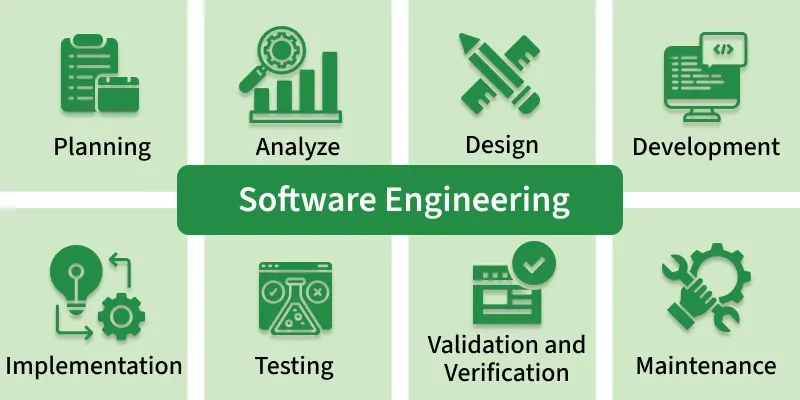












 ROI Calculator



