HOME > BLOG > Business Management > IIT Roorkee Strategic Product Management Programme 2026: The PM Career Ladder Explained Honestly
Business Management
IIT Roorkee Strategic Product Management Programme 2026: The PM Career Ladder Explained Honestly
J
By Manya Tohani
June 24, 202611 min read
Published on June 24, 2026
SHARE THIS ARTICLE
Table Of Content
Why Product Management Is One of the Fastest-Growing Careers
What Does a Product Manager Actually Do?
The Real Product Management Career Ladder
Common Myths About Becoming a Product Manager
Over the last decade, Product Management has evolved from a niche role in technology companies to one of the most sought-after careers across industries. Today, organisations are launching digital products, AI-powered platforms, SaaS solutions, fintech applications, healthcare technologies, and e-commerce ecosystems at an unprecedented pace.
Behind every successful product is a team responsible for understanding customer needs, defining product strategy, prioritising features, and driving business growth. At the centre of this team is the Product Manager.
As businesses become increasingly product-led, demand for skilled Product Managers continues to rise. However, many professionals still have questions such as:
What does a Product Manager actually do?
Can non-engineers become Product Managers?
Is Product Management still a good career in 2026?
What skills are required to succeed?
How can professionals transition into product roles?
This guide answers these questions while exploring how the Post Graduate Certificate Programme in Strategic Product Management by CEC, IIT Roorkee helps professionals build the skills needed to thrive in modern product-led organisations.
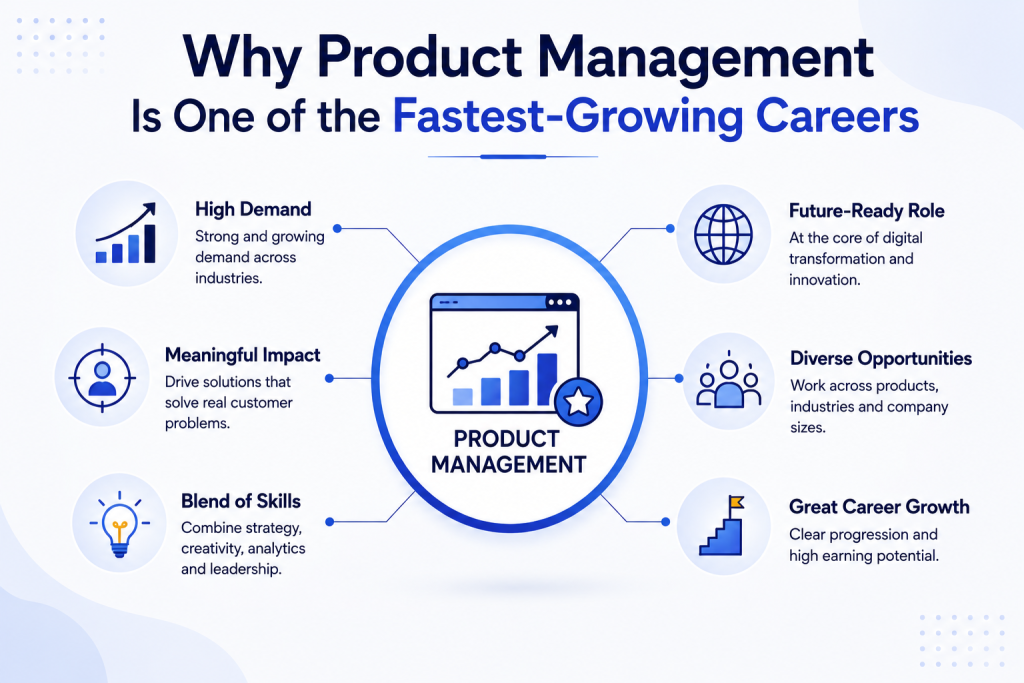
Why Product Management Is One of the Fastest-Growing Careers
Product Management has become one of the most in-demand career paths because it combines business strategy, technology, customer experience, and innovation into a single role. As companies increasingly adopt product-led growth models and invest in digital transformation, the need for skilled Product Managers continues to rise across industries.
One major reason for this growth is the rise of product-led companies, particularly in sectors such as SaaS, FinTech, E-commerce, EdTech, and HealthTech. These organisations rely on continuous product innovation and customer-centric development to drive growth, creating strong demand for professionals who can align customer needs with business objectives.
The rapid adoption of Artificial Intelligence has further expanded the scope of Product Management. Today’s Product Managers are increasingly involved in developing AI-powered applications, automation solutions, data-driven products, and intelligent customer experiences. As businesses integrate AI into their products and services, Product Managers play a crucial role in identifying opportunities, defining product strategies, and ensuring successful implementation.
Another factor driving demand is the growth of startups and digital-first businesses. Product Managers help organisations identify customer problems, validate product ideas, prioritise features, and allocate resources effectively. Their ability to balance customer expectations, business goals, and technical feasibility makes them valuable contributors to business success.
Additionally, Product Management is a highly cross-functional role. Product Managers collaborate closely with engineering, design, marketing, sales, operations, and customer success teams to bring products to market. Their ability to align diverse stakeholders and drive strategic decision-making positions them as future business leaders, making Product Management one of the most attractive and fastest-growing careers in 2026.
What Does a Product Manager Actually Do?
One of the biggest misconceptions about Product Management is that Product Managers simply create product features.
In reality, Product Managers are responsible for ensuring that products create value for customers and support business goals.
A Product Manager typically focuses on three core areas:
Understanding Customers
Successful products begin with a deep understanding of user needs.
Product Managers spend time:
Conducting customer research
Analysing feedback
Identifying pain points
Understanding market trends
Defining Product Strategy
Once customer needs are understood, Product Managers determine:
What should be built
Why it should be built
How it supports business objectives
This strategic perspective helps organisations prioritise investments effectively.
Driving Product Execution
Product Managers collaborate with multiple teams to bring ideas to life.
Their responsibilities often include:
Product roadmapping
Feature prioritisation
Stakeholder alignment
Performance measurement
Product launches
What a Product Manager Is Not
Many professionals confuse Product Management with other business roles.
A Product Manager is not:
A Project Manager who only manages timelines
A Software Developer who writes code
A Marketing Manager who runs campaigns
A Sales Manager who closes deals
Instead, Product Managers act as the bridge between customers, business stakeholders, and product teams.
As businesses increasingly adopt product-led growth strategies, the role of Product Managers has become more strategic than ever. Modern organisations need professionals who can understand customer needs, analyse market opportunities, collaborate across teams, and drive products from concept to successful execution. This growing demand has created a need for structured learning programmes that go beyond theory and focus on practical product leadership skills.
The Post Graduate Certificate Programme in Strategic Product Management by CEC, IIT Roorkee is designed to help professionals develop a comprehensive understanding of product strategy, innovation, customer-centric thinking, and business decision-making. The programme equips learners with the knowledge and frameworks needed to manage products effectively throughout their lifecycle while balancing customer expectations, business objectives, and market dynamics.
Why Is This Programme Relevant in 2026?
The responsibilities of Product Managers have expanded significantly in recent years. Today’s product leaders are expected to combine strategic thinking with analytical skills, customer understanding, and cross-functional collaboration. As AI, digital transformation, and data-driven decision-making continue to reshape industries, Product Managers must be prepared to navigate increasingly complex business environments.
The IIT Roorkee Strategic Product Management Programme addresses these evolving demands by helping professionals build expertise in key areas such as product strategy, product lifecycle management, customer-centric thinking, innovation, market analysis, and business growth frameworks. Through a structured and industry-relevant curriculum, the programme aims to prepare participants for the challenges and opportunities of modern product leadership.
By focusing on both strategic and practical aspects of Product Management, the programme provides a valuable learning pathway for professionals seeking to advance their careers in one of the fastest-growing business functions.
The role of a Product Manager has evolved significantly in recent years. Today’s Product Managers are expected to do much more than manage product features or coordinate teams. They must balance business objectives, customer needs, market dynamics, and technological advancements while driving product success. As organisations become increasingly data-driven and technology-focused, successful Product Managers need a blend of strategic, analytical, and leadership capabilities.
One of the most important skills is product strategy, which involves understanding how a product aligns with broader business goals and contributes to long-term growth. Equally important is customer discovery, as Product Managers must continuously gather insights about customer behavior, pain points, and expectations to build products that create real value.
Modern Product Managers also rely heavily on data and analytics to validate assumptions, measure product performance, and make informed decisions. With Artificial Intelligence becoming a core component of many products, AI literacy is emerging as a critical skill, helping Product Managers understand how AI can enhance user experiences and business outcomes.
In addition, strong product roadmapping skills enable Product Managers to prioritise initiatives, allocate resources effectively, and maintain a clear product vision. Since the role involves working with multiple stakeholders—including engineers, designers, marketers, business leaders, and customers—effective stakeholder management is essential for aligning teams and driving execution.
Finally, exceptional Product Managers stand out through their leadership and communication abilities. The ability to influence decisions, communicate a product vision clearly, and lead cross-functional teams often determines whether a Product Manager can successfully transform ideas into impactful products and business results.
Free Courses
Stakeholder Communication & Negotiation Skill Sets
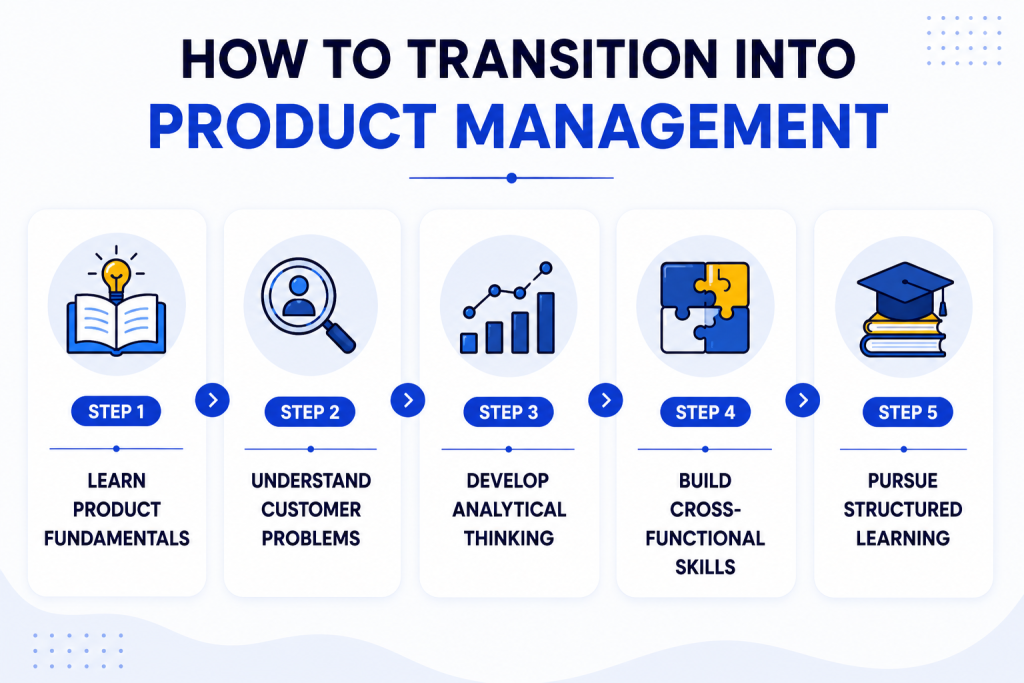
One of the biggest strengths of Product Management is that professionals from diverse backgrounds can transition into the field. Unlike many specialized careers, Product Management values business thinking, customer understanding, problem-solving, and cross-functional collaboration.
Product Managers Looking to Upskill
Professionals already working in product roles can strengthen their strategic thinking, product leadership, and decision-making capabilities.
Business Analysts
Business Analysts often work closely with product teams and possess strong analytical skills, making Product Management a natural career progression.
Software Engineers
Engineers who want to move closer to business strategy and customer-centric decision-making can benefit from structured product management education.
Marketing Professionals
Marketers already understand customer behavior, positioning, and growth strategies—skills that are highly relevant in Product Management.
Startup Founders and Entrepreneurs
Founders constantly make product decisions. Understanding product strategy can help them build better products and scale businesses more effectively.
Consultants and Strategy Professionals
Consultants seeking hands-on business ownership often find Product Management an attractive career path.
Product Manager Salary Trends in India
One reason Product Management continues to attract professionals is its strong career progression and earning potential.
However, salary outcomes depend on factors such as:
Average Product Management Salary Ranges in India (2026)
Role
Average Salary Range
Associate Product Manager
₹8–15 LPA
Product Manager
₹15–30 LPA
Senior Product Manager
₹25–45 LPA
Group Product Manager
₹40–70 LPA
Director of Product
₹60 LPA+
VP Product
₹1 Crore+
Chief Product Officer
Varies significantly
While compensation can be attractive, aspiring Product Managers should understand that the role comes with significant responsibility and accountability.
IIT Roorkee vs Other Product Management Learning Options
Professionals exploring Product Management often encounter multiple learning pathways.
Self-Learning
Many professionals begin with books, YouTube videos, blogs, and online resources.
Advantages:
Flexible
Low cost
Self-paced
Limitations:
Lack of structured curriculum
No guided learning pathway
Limited peer interaction
Short-Term Product Courses
Short courses provide focused exposure to specific concepts.
However, many lack depth in areas such as product strategy, stakeholder management, and business decision-making.
While IIT Roorkee focuses strongly on strategic product management, IIM Nagpur incorporates product and brand management perspectives, making both programmes valuable depending on individual career goals.
Together, these learning pathways help professionals build broader business and leadership capabilities.
Is Product Management Still Worth It in 2026?
The short answer is yes—but with realistic expectations. Product Management continues to be one of the most sought-after career paths because it sits at the intersection of business strategy, technology, customer experience, innovation, and leadership. As companies become increasingly product-led and technology-driven, skilled Product Managers remain critical to driving growth and delivering customer value.
One of the biggest advantages of a Product Management career is the opportunity for long-term growth. The role offers a clear leadership pathway, exposure to strategic business decisions, and the ability to influence product direction and organisational success. Product Managers work closely with teams across engineering, design, marketing, sales, and operations, making it a highly impactful and cross-functional position.
However, Product Management is not without challenges. The role requires balancing competing priorities, managing stakeholder expectations, making difficult trade-offs, and continuously adapting to changing technologies and market conditions. Product Managers are often accountable for product outcomes, which can create significant pressure and responsibility.
For professionals who enjoy solving complex problems, collaborating with diverse teams, understanding customer needs, and driving business outcomes, Product Management can be an incredibly rewarding career. While the field continues to evolve, its strategic importance within organisations suggests that it will remain a valuable and high-growth profession well beyond 2026.
Final Thoughts
Product Management has become one of the most influential functions within modern organizations. As companies continue building digital products, AI-powered solutions, and customer-centric experiences, demand for skilled Product Managers is expected to remain strong.
The challenge, however, is that Product Management requires more than technical knowledge or business expertise alone. Successful Product Managers must understand customers, strategy, data, innovation, and leadership.
The Strategic Product Management Programme by IIT Roorkee is designed to help professionals develop these capabilities through a structured learning experience focused on product strategy, customer-centric thinking, innovation, and business decision-making.
Whether you are an aspiring Product Manager, Business Analyst, Engineer, Consultant, Entrepreneur, or experienced professional looking to transition into product leadership, building product management skills can create significant long-term career opportunities.
It is a professional learning programme designed to help participants develop expertise in product strategy, customer-centric thinking, product lifecycle management, innovation, and business decision-making.
Yes. Professionals from backgrounds such as marketing, consulting, operations, finance, design, and entrepreneurship successfully transition into Product Management roles.
Yes. Product Management continues to be a high-growth career due to increasing demand for professionals who can bridge business strategy, customer needs, and technology.
Key skills include product strategy, customer discovery, analytics, stakeholder management, leadership, communication, and business problem-solving.
Salaries vary based on experience and organization, but Product Managers often earn competitive compensation with strong long-term growth potential.
The programme is suitable for Product Managers, Business Analysts, Engineers, Marketing Professionals, Consultants, Entrepreneurs, and professionals aspiring to move into product roles.
Yes. Product Management offers a clear progression from Associate Product Manager to Product Manager, Senior Product Manager, Director of Product, VP Product, and Chief Product Officer (CPO).
Manya Tohani
Personal Growth Mentor
Manya Tohani is a Personal Growth Mentor and content strategist, helping individuals build strong personal brands and accelerate career growth. With 8M+ impressions and experience mentoring students, she empowers others through actionable guidance, resilience, and real-world insights.
Get Free Upskilling Guidance
Fill in the details for a free consultation
Related Courses
Explore our programs
Admission Open
Post Graduate Certificate Programme in Strategic Product Management
 HOME > BLOG > Business Management > IIT Roorkee Strategic Product Management Programme 2026: The PM Career Ladder Explained Honestly
 June 24, 2026
 11 min read













 ROI Calculator