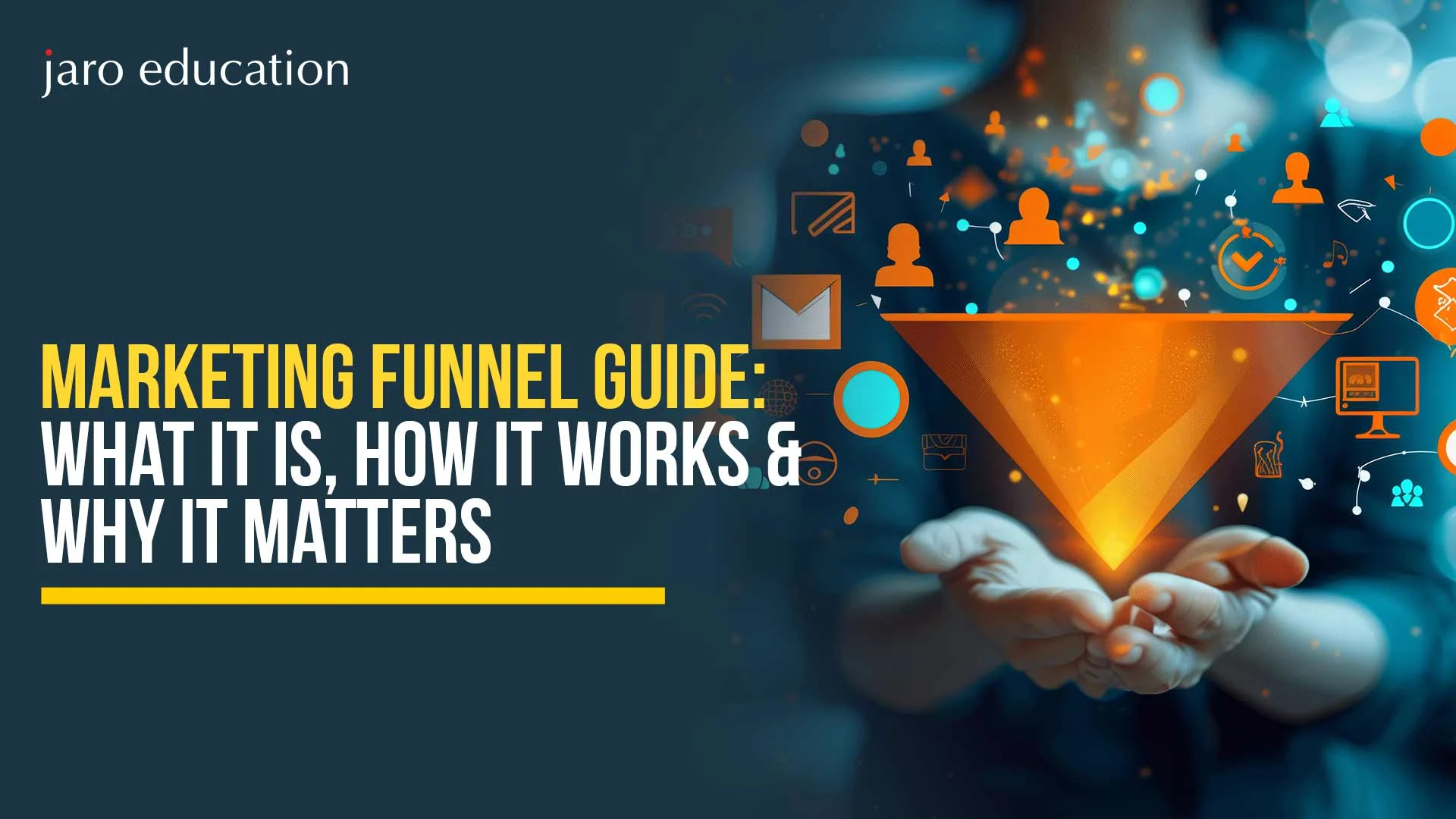
Have you ever wondered why some brands effortlessly convert curious visitors into loyal customers while others struggle to generate even a single lead? The answer often lies in how well they understand and implement the marketing funnel.
Modern consumers rarely make instant purchase decisions. Instead, they move through a journey — discovering a brand, evaluating options, comparing alternatives, and finally deciding whether to buy. A well-designed digital marketing funnel helps businesses guide potential customers smoothly through each step of this journey.
Understanding what a marketing funnel is essential for anyone involved in business, marketing, sales, or entrepreneurship. Whether you are promoting a product, service, or educational programme, the marketing funnel helps structure your strategy and improve conversion rates.
This guide explains the marketing funnel stages, how the funnel works, why it matters, and how organisations can build effective funnel strategies to drive sustainable growth.
A marketing funnel is a model that represents the customer journey from the moment they first discover a brand to the point where they become paying customers — and ideally, loyal advocates.
It is called a funnel because the number of potential customers decreases at each stage. Many people may discover your brand initially, but only a portion will eventually convert into customers.
For example:
1000 people see your advertisement
500 visits to your website
200 explore your product
80 add the product to cart
30 complete the purchase
The narrowing process visually resembles a funnel shape.
The digital marketing funnel helps businesses understand customer behaviour and optimise each stage to improve results.
Why is the Marketing Funnel Important?
The marketing funnel plays a crucial role in helping organisations understand how customers interact with their brand.
Key Benefits of the Marketing Funnel
Here are the key benefits of the Marketing funnel:
Improves targeting: Businesses can create personalised strategies for each stage of the funnel.
Increases conversion rates: By addressing customer needs at each stage, companies can improve the likelihood of purchase.
Enhances customer experience: The funnel ensures customers receive the right information at the right time.
Optimises marketing budget: Marketers can allocate resources to the most effective channels.
Improves lead nurturing: The funnel helps convert interested prospects into loyal customers.
Understanding the marketing funnel stages enables marketers to create structured campaigns that deliver measurable results.
Satisfied customers recommend the brand to others.
Examples include:
Reviews
Referrals
Testimonials
Social media mentions
Strong advocacy improves brand credibility.
How a Digital Marketing Funnel Works
The digital marketing funnel uses online channels to guide customers through each stage.
Example of Digital Marketing Funnel
Consider a professional looking to upgrade leadership skills.
Awareness:
A user sees a LinkedIn post about leadership skills.
Interest:
They read a blog explaining the career benefits of management education.
Decision:
They attend a webinar explaining programme outcomes.
Action:
They enrol in a certification programme.
Each stage plays an important role in influencing customer behaviour.
Professionals looking to strengthen strategic decision-making and marketing effectiveness often explore executive programmes such as the Accelerated General Management Programme by IIM Ahmedabad, which builds capabilities across business strategy, analytics, and leadership.
Types of Marketing Funnels
Different industries use different funnel models.
Lead Generation Funnel
Focuses on capturing potential customers’ contact information.
Professionals who understand funnel strategies are highly valuable in marketing roles.
Conclusion
Understanding the marketing funnel is essential for building effective marketing strategies. It helps businesses attract the right audience, nurture relationships, and convert leads into customers.
Whether used for product marketing, service promotion, or education programmes, the digital marketing funnel provides a structured approach to achieving business goals.
As competition continues to increase, organisations that understand what a marketing funnel is and how to optimise each stage will gain a strong competitive advantage.
Frequently Asked Questions
A marketing funnel is a structured model that represents the journey potential customers go through from discovering a brand to making a purchase decision. It helps businesses understand customer behaviour at each stage and design strategies that guide prospects toward conversion.
The main marketing funnel stages typically include awareness, interest, decision, and action. Some modern models also include retention and advocacy, focusing on building long-term customer relationships and encouraging repeat purchases or referrals.
A digital marketing funnel refers to the online version of the customer journey, where digital channels such as websites, social media, email marketing, and online advertisements are used to attract, engage, and convert potential customers into buyers.
The marketing funnel helps businesses create targeted strategies for different stages of the customer journey. It improves customer experience, increases conversion rates, enhances lead nurturing, and allows marketers to measure campaign performance effectively.
A marketing funnel works by gradually moving potential customers from awareness to purchase through strategic content, engagement, and communication. Each stage addresses specific customer needs and provides relevant information to build trust and encourage action.
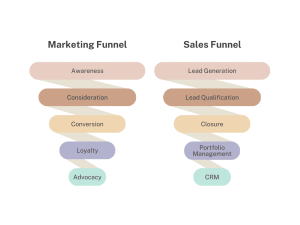
A marketing funnel focuses on attracting and nurturing potential customers through content and engagement, while a sales funnel focuses on converting qualified leads into paying customers. Both work together to support overall business growth.
Priya Sahu
Sales & Digital Marketing Strategist
Sales and Marketing professional with 6+ years of experience in B2B and B2C growth, specializing in business development and digital marketing. Skilled in CRM systems, paid campaigns, and AI-driven strategies to drive revenue, optimize performance, and build lasting client relationships.

 April 5, 2026
 5 min read




 ChatGPT
 Perplexity
 Claude
 Grok
Grok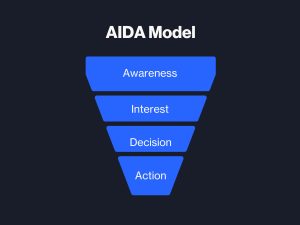









 ROI Calculator