HOME > BLOG > Marketing > What is Product Marketing? Strategy, Examples & Career Scope
Marketing
What is Product Marketing? Strategy, Examples & Career Scope
J
By Priya Sahu
May 13, 20268 min read
Last updated on May 25, 2026
SHARE THIS ARTICLE
Table Of Content
Product Marketing vs. The Field: Clearing the Confusion
The Strategic Foundation: Product Mix in Marketing
The North Star: Achieving Product-Market Fit
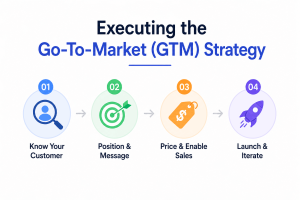
Executing the Go-To-Market (GTM) Strategy
Product marketing is the discipline of bringing a product to market and, critically, keeping it there. It's not a one-time event tied to a launch date. It's the ongoing process of understanding customers, positioning solutions, and ensuring every team — from engineering to sales — is pulling in the same direction.
Think of product marketing as the strategic glue binding your organization together. Where product teams focus on building and sales teams focus on closing, product marketing sits at the intersection — translating complex capabilities into compelling narratives and translating customer needs back into product direction. Without it, even the best-built product can stall at the gate.
The 2026 landscape has accelerated a meaningful shift in how this discipline operates. According to research from the Product Marketing Alliance, product marketing leaders are increasingly shaping company-level strategy — not just campaign messaging. The function has evolved from launch-centric (a sprint towards release day) to lifecycle-centric (sustained growth across acquisition, retention, and expansion).
This distinction also separates product marketing from traditional brand marketing. Brand marketing builds awareness and emotional resonance over time. Product marketing is more surgical — it's tied directly to revenue, adoption metrics, and competitive positioning.
Product marketing is the connective tissue of a go-to-market strategy: without it, even great products get lost in noisy markets.
Of course, the discipline doesn't operate in isolation. Understanding exactly where product marketing ends and adjacent functions begin is where many teams stumble — and that's precisely what we'll untangle next.
Product Marketing vs. The Field: Clearing the Confusion
Role confusion is one of the most persistent challenges in product marketing. Even seasoned professionals sometimes struggle to explain where their responsibilities end and someone else’s begin. Getting this clarity right matters — because misaligned ownership directly undermines a go-to-market strategy before it even launches.
Product Marketing vs. Product Management
The simplest way to frame this distinction: Product Management owns the what — defining what gets built, prioritizing the roadmap, and managing development cycles. Product Marketing (PMM) owns the how — how the product is positioned, messaged, and launched to the market.
In practice, the two functions are deeply interdependent. Product managers translate customer problems into product requirements. Product marketers translate product capabilities into customer value. Friction happens when either side tries to absorb the other’s lane.
Product Marketing vs. Marketing Communications
MarCom handles tactical execution — ad copy, email campaigns, social content, and press releases. Product marketing operates upstream. A PMM defines the strategic positioning and core messaging framework before MarCom picks up a keyboard.
Strategic positioning is only as effective as the research behind it — and that research is squarely the PMM’s responsibility.
The PMM’s Role in the 4 Ps
Product marketers sit at the intersection of all four Marketing Mix Elements — Product, Price, Place, and Promotion. They inform pricing strategy, influence distribution decisions, and shape promotional narratives. No single marketing role touches all four dimensions more consistently.
The Voice of the Customer
Perhaps the PMM’s most critical function is carrying the Voice of the Customer into internal decision-making. Through win/loss analysis, customer interviews, and competitive research, product marketers ensure development teams build for real market needs — not assumptions.
Understanding how individual products fit into a broader portfolio is the natural next step, which is exactly where product mix strategy comes in.
The Strategic Foundation: Product Mix in Marketing
Before a product marketer can craft compelling messaging or map a customer journey, they need to understand what they’re actually working with. That means taking a clear-eyed look at the full portfolio — not just the flagship product, but every offering across every segment.
Product mix in marketing refers to the complete range of products a company offers to its target market. It’s sometimes called the product assortment, and it’s the strategic canvas on which all product marketing decisions are painted.
The Four Dimensions of Product Mix
Product mix isn’t a flat list — it has structure. Four key dimensions define it:
Width: The number of distinct product lines. A tech company selling laptops, tablets, smartphones, and wearables has a wide product mix.
Length: The total number of products across all lines combined.
Depth: The number of variants within a single product line — different configurations, storage options, or color choices.
Consistency: How closely related the product lines are in terms of use, production, or distribution channels.
Managing Complexity at Scale
Consider how a large consumer electronics brand manages products across premium, mid-range, and budget segments simultaneously. Each tier serves a different buyer persona, competes in a different price band, and requires a distinct value proposition. Product marketers working at this scale can’t apply a one-size-fits-all strategy — they have to tailor positioning for each dimension of the mix without diluting the overall brand identity.
A well-managed product mix is one of the clearest signals that a company understands its customers, not just its products.
Why This Matters for Reaching Diverse Segments
Optimizing the product mix allows marketers to reduce gaps in market coverage, minimize internal cannibalization, and identify white-space opportunities. Without this view, teams risk over-investing in crowded segments while neglecting high-potential ones entirely.
Understanding the full product portfolio is foundational — but knowing which products have genuinely earned their place in the market is a different challenge altogether. That’s where the concept of product-market fit becomes critical.
Understanding your product mix lays the groundwork, but there’s a more fundamental question every product marketer must answer before anything else: does the market actually want what you’re selling? That answer defines product-market fit—the condition where your product satisfies a strong, demonstrable demand within a specific market segment.
Marc Andreessen, who popularized the term, described it simply as being in a good market with a product that can satisfy that market. It sounds straightforward. In practice, it’s one of the hardest milestones a company will ever reach.
Why Fit Must Come Before Scale
Product-market fit is a prerequisite for scaling, not a byproduct of it. Companies that pour budget into aggressive campaigns before achieving fit rarely succeed—they just burn through resources faster. No combination of marketing mix elements, from pricing promotions to distribution expansion, can sustainably compensate for a product that customers don’t genuinely need. What typically happens is that churn erodes every gain, and marketing spend becomes an expensive treadmill.
According to Coursera’s 2026 guide on product-market fit, fit signals the transition from survival mode to scalable, repeatable growth—a shift that changes everything about how a team operates.
Measuring Fit: The Metrics That Matter
Three signals consistently indicate whether fit has been achieved:
Retention rates: Do users keep coming back without being incentivized?
Net Promoter Score (NPS): Are customers actively recommending the product?
The Sean Ellis “40% rule”: Ask users how they’d feel if they could no longer use the product. If 40% or more say “very disappointed,” fit is likely established.
These aren’t vanity metrics. They reflect genuine behavioral commitment, which is the only kind that supports sustainable growth.
The Product Marketer’s Role in Getting There
Product marketers don’t just observe the journey to fit—they actively shape it. By synthesizing customer feedback, sharpening positioning, and aligning messaging with real user pain points, they help translate early traction into something repeatable and scalable.
Once fit is confirmed, the real work begins. That’s where a structured go-to-market strategy takes over and exactly what the next section breaks down.
Free Courses
Mastering Product Management: Roadmap,Vision, and Strategy
With a clear understanding of product mix and product-market fit established, the next challenge is execution. A well-designed GTM strategy is what bridges internal clarity with market impact—and in 2026, that execution demands more structure, more data, and significantly more iteration than ever before.
Phase 1: Customer Research and Persona Development
Every effective GTM strategy starts with the customer, not the product. Before crafting a single message, product marketers conduct qualitative interviews, analyze behavioral data, and build detailed personas that capture not just demographics but also pain points, buying triggers, and decision-making criteria. Shallow personas produce shallow messaging—and shallow messaging doesn’t convert.
Phase 2: Positioning and Messaging
Once personas are defined, the work shifts to narrative. Positioning answers why your product exists for a specific audience; messaging translates that positioning into language that actually lands. A common pattern is developing a messaging hierarchy—starting with a core value proposition, then tailoring supporting points for each buyer segment. Consistency here is what separates memorable brands from forgettable ones.
Phase 3: Pricing Strategy and Sales Enablement
Pricing isn’t a finance function—it’s a marketing signal. How you price communicates perceived value. Equally important is sales enablement: equipping revenue teams with battle cards, objection-handling guides, and competitive positioning documents so every customer conversation reinforces the intended narrative. According to Marketing Strategy Plan: Step-by-Step Guide to Growth, aligning marketing and sales messaging is among the highest-leverage activities in any go-to-market motion.
Phase 4: Launch and the Iterative Feedback Loop
A product launch is not a finish line—it’s a starting point. The 2026 approach treats launch as the beginning of a continuous feedback loop, where real-world signals validate or challenge earlier assumptions about product-market fit. Metrics like activation rates, churn signals, and net promoter scores feed directly back into positioning and messaging refinements.
This iterative mindset is precisely what distinguishes modern product marketers—and it’s a skill set that defines the most ambitious career trajectories in the field.
Career Scope: Path to VP of Product Marketing
Understanding ‘what is product marketing’ is only the first step. Building a career in it is an entirely different challenge — and a genuinely rewarding one. The field offers a clear progression ladder, strong compensation, and accelerating global demand.
The Career Roadmap
Most PMM careers follow a recognizable trajectory:
Associate PMM — Learning the fundamentals: messaging, positioning, and competitive research
PMM — Owning product launches and go-to-market execution independently
Senior PMM — Leading cross-functional initiatives and mentoring junior team members
Director of Product Marketing — Managing teams, shaping strategy, and influencing product roadmaps
VP of Product Marketing — Driving company-wide go-to-market vision and executive alignment
Each step demands sharper skills, not just more experience.
Skills That Separate Good from Great
Three capabilities consistently define top-performing PMMs: data storytelling (translating analytics into compelling narratives), cross-functional leadership (aligning product, sales, and marketing without formal authority), and customer empathy (deeply understanding buyer psychology). According to insights from product marketing leaders, strategic influence at the executive level is now a baseline expectation — not a bonus skill.
Salary Benchmarks and Market Demand
Compensation scales significantly with seniority. Entry-level PMMs in the US typically earn between $65,000–$85,000, while VP-level roles regularly command $180,000+. Globally, the Indian startup ecosystem is emerging as a hotbed for PMM talent, with Series B and Series C companies actively hiring Senior PMMs as they prepare for international expansion.
The demand is real — and it’s growing. That makes right now an ideal time to map your next move.
Conclusion
Product marketing managers are no longer just launch coordinators — they’re the connective tissue between product, revenue, and customer value. From establishing product-market fit to executing a GTM strategy and building towards a VP role, the PMM function drives measurable business outcomes at every stage.
The best time to start building these skills is now. Whether you’re pivoting from sales, leveling up as a marketer, or launching your first product, the frameworks in this guide give you a clear starting point.
Frequently Asked Questions
Digital marketing focuses on channels and campaign execution — SEO, paid ads, social. Product marketing focuses on positioning, messaging, and the strategic “why” behind what’s being sold.
Absolutely. Sales experience is a genuine advantage — you already understand buyer objections, deal dynamics, and customer language. In practice, many strong PMMs come from sales backgrounds.
Track win rates, pipeline influenced, feature adoption, and customer retention. According to TSL Marketing, aligning metrics to revenue impact is what elevates PMM from tactical to strategic.
The Product Marketing Alliance’s PMM certification remains highly respected. Coursera also offers product-market fit foundations worth completing early in your journey.
Priya Sahu
Sales & Digital Marketing Strategist
Sales and Marketing professional with 6+ years of experience in B2B and B2C growth, specializing in business development and digital marketing. Skilled in CRM systems, paid campaigns, and AI-driven strategies to drive revenue, optimize performance, and build lasting client relationships.
Get Free Upskilling Guidance
Fill in the details for a free consultation
Related Courses
Explore our programs
Admission Closed
Post Graduate Certificate Programme in Product & Brand Management

 May 13, 2026
 8 min read





 ChatGPT
 Perplexity
 Claude
 Grok
Grok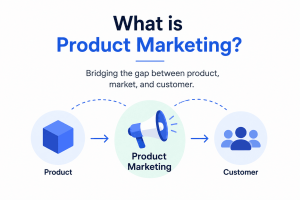










 ROI Calculator