What Is Artificial Intelligence? Benefits, Examples & Future
J
By Dr. Sanjay Kulkarni
April 11, 20255 min read
Last updated on August 17, 2026
SHARE THIS ARTICLE
Table Of Content
What Is Artificial Intelligence?
What Is Artificial Intelligence With Examples?
AI Benefits In Business
Applications Of Artificial Intelligence Across Industries
Key Insights
Artificial intelligence enables machines to learn, analyse data, and make decisions with minimal human intervention.
AI powers applications such as virtual assistants, chatbots, fraud detection, recommendation engines, and medical diagnosis.
Key AI benefits in business include improved decision-making, operational efficiency, cost optimisation, and enhanced customer experiences.
Industries including healthcare, banking, retail, manufacturing, and logistics are increasingly adopting AI-driven solutions.
The future of AI is being shaped by Generative AI, Large Language Models (LLMs), intelligent automation, and responsible AI.
Artificial intelligence (AI) has evolved from a futuristic concept into a technology that is reshaping the way businesses operate. From automating routine tasks and analysing large volumes of data to improving customer experiences and supporting strategic decision-making, artificial intelligence is becoming an integral part of organisations across industries.
Businesses of all sizes are now adopting AI-powered tools to improve efficiency, reduce operational costs, personalise customer interactions, and uncover valuable insights from data. As AI continues to advance, understanding its capabilities and practical applications has become increasingly important for business leaders, professionals, and aspiring technology experts.
This guide explores what is artificial intelligence, how it works, its applications across industries, the AI benefits in business, and what is the future of AI.
Artificial intelligence is a branch of computer science that focuses on developing systems capable of performing tasks that typically require human intelligence. These tasks include learning from data, recognising patterns, understanding language, solving problems, making decisions, and adapting to new information.
Credit: aitimejournal.com
Unlike traditional software that follows predefined instructions, AI systems can analyse data, identify trends, and continuously improve their performance through experience and machine learning algorithms.
Artificial intelligence encompasses several technologies, including:
Together, these technologies enable intelligent systems to solve complex business and operational challenges.
What Is Artificial Intelligence With Examples?
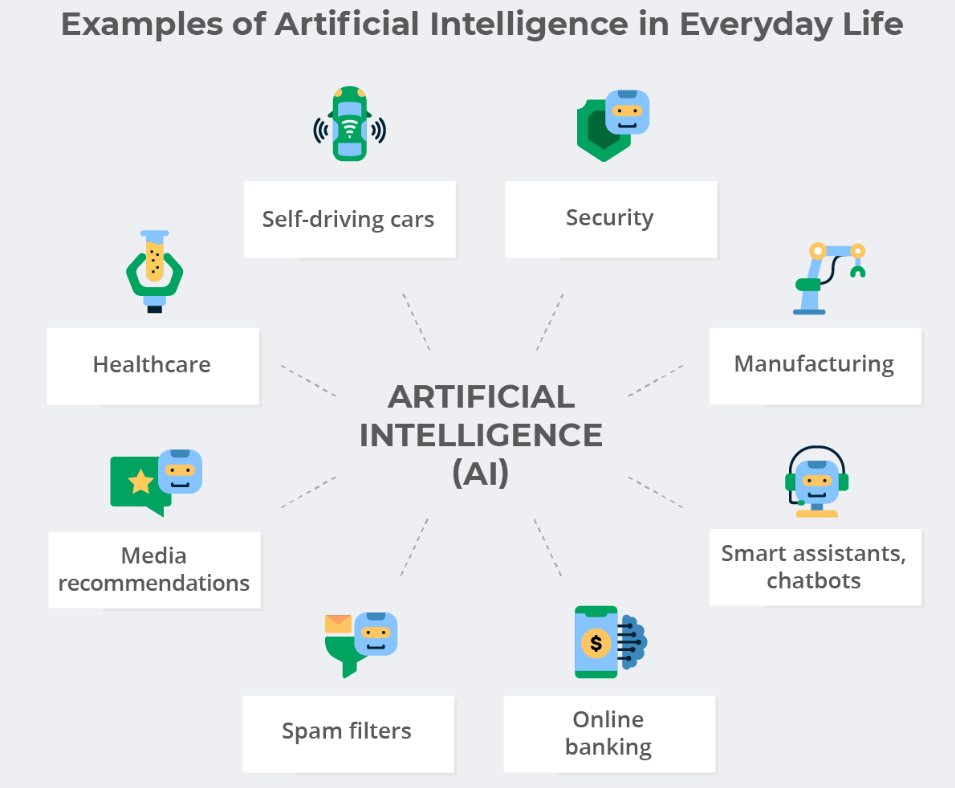
Artificial intelligence has become part of everyday life, often working behind the scenes in applications people use regularly.
Credit: naukri.com
Some common examples include:
Virtual assistants
AI-powered assistants such as Siri, Alexa, and Google Assistant can understand voice commands, answer questions, set reminders, and perform various daily tasks.
Recommendation systems
Streaming platforms and e-commerce websites use AI to recommend movies, music, or products based on user preferences and browsing history.
Fraud detection
Banks and financial institutions use AI algorithms to detect suspicious transactions and identify potential fraud in real time.
Customer service chatbots
Many organisations deploy AI-powered chatbots to answer customer queries, resolve common issues, and provide 24/7 support.
Medical diagnosis
Healthcare providers use AI to analyse medical images, support disease detection, and assist clinicians in developing personalised treatment plans.
Autonomous vehicles
Self-driving vehicle technologies use computer vision, sensors, and machine learning to interpret surroundings and make driving decisions.
These examples demonstrate how AI is helping organisations improve efficiency while enhancing user experiences across industries.
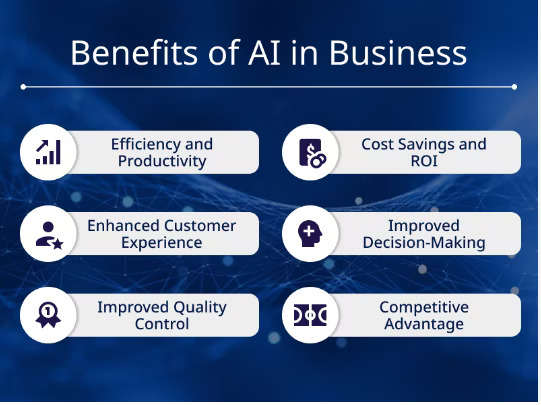
Artificial intelligence is transforming business operations by enabling organisations to make faster, more informed decisions and automate repetitive processes. Some of the major AI benefits in business include:
Credit: adamfard.com
Improved decision-making
AI analyses large datasets quickly, helping businesses identify trends, forecast demand, and make data-driven strategic decisions.
Increased operational efficiency
Automation reduces the time spent on repetitive administrative tasks, allowing employees to focus on higher-value activities.
Enhanced customer experience
AI-powered recommendation engines, personalised marketing campaigns, and intelligent chatbots help organisations deliver more relevant and responsive customer experiences.
Better risk management
Businesses use AI to monitor transactions, detect fraud, assess financial risks, and strengthen cybersecurity measures.
Cost optimisation
Automating workflows and improving operational processes can reduce costs while increasing productivity across departments.
Business innovation
AI enables organisations to develop smarter products, improve existing services, and identify new market opportunities using predictive analytics and customer insights.
Applications Of Artificial Intelligence Across Industries
Artificial intelligence is being adopted across numerous sectors, each leveraging the technology to address industry-specific challenges.
Industry
AI Applications
Healthcare
Medical imaging, disease prediction, patient monitoring
The future of artificial intelligence is expected to be shaped by continuous advancements in machine learning, generative AI, robotics, and intelligent automation.
Some emerging trends include:
Generative AI for content creation and business productivity
AI-powered business decision support
Autonomous systems and robotics
Personalised healthcare using predictive analytics
Intelligent cybersecurity solutions
AI-assisted software development
Responsible and ethical AI governance
Human-AI collaboration in the workplace
Rather than replacing human expertise, AI is increasingly being used to augment human capabilities, enabling professionals to make better decisions, improve efficiency, and focus on strategic work.
As organisations continue investing in digital transformation, professionals with AI knowledge are expected to remain in high demand across industries.
Learn Artificial Intelligence With Industry-Focused Programmes
Building expertise in artificial intelligence requires continuous learning and practical exposure to emerging technologies. Jaro Education collaborates with leading institutions to offer executive programmes that help professionals develop expertise in Generative AI, Large Language Models (LLMs), intelligent decision-making, and AI-driven business applications.
Jaro Education collaborates with leading institutions to offer programmes designed to help learners understand artificial intelligence, machine learning, and emerging AI technologies.
Designed for working professionals from both business and technical backgrounds, this programme focuses on Generative AI, agentic systems, business intelligence, analytics, and AI-enabled decision-making. Participants gain practical exposure through live online sessions, case discussions, hands-on exercises, and a capstone project.
This programme provides in-depth learning in Generative AI and Large Language Models (LLMs), covering topics such as deep learning, transformers, GANs, VAEs, diffusion models, and modern AI frameworks. Delivered through live online sessions, hands-on labs, guided projects, and an on-campus visit, it equips learners with practical skills for building and evaluating AI systems.
These programmes are suitable for:
Software engineers and developers looking to build expertise in Generative AI and LLMs
Data scientists and machine learning professionals seeking to strengthen their AI capabilities
Technical architects and technology managers driving AI-powered innovation
Artificial intelligence is redefining how organisations operate by improving efficiency, supporting innovation, and enabling smarter decision-making. From healthcare and finance to retail and manufacturing, AI is creating new opportunities for businesses to solve complex challenges and deliver greater value to customers.
Understanding what is artificial intelligence, its real-world applications, and the AI benefits in business can help professionals and organisations make informed decisions about adopting this transformative technology. As AI continues to evolve, developing relevant skills and staying informed about emerging trends will be essential for individuals looking to succeed in an increasingly technology-driven future.
Frequently asked Questions (FAQs)
Artificial intelligence is a branch of computer science that enables machines to perform tasks such as learning, reasoning, problem-solving, and decision-making, which typically require human intelligence.
Examples of artificial intelligence include virtual assistants like Siri, recommendation systems used by streaming platforms, fraud detection in banking, AI-powered chatbots, autonomous vehicles, and medical diagnosis systems.
AI helps businesses improve decision-making, automate repetitive tasks, enhance customer experiences, optimise costs, strengthen risk management, and drive innovation.
The future of AI includes advancements in generative AI, intelligent automation, robotics, personalised healthcare, predictive analytics, ethical AI, and human-AI collaboration across industries.
Yes. Many executive education programmesare designed for working professionals and business leaders, helping them understand AI concepts, business applications, and strategic implementation without requiring extensive programming experience.
Dr. Sanjay Kulkarni
Data & AI Transformation Leader
Dr. Sanjay Kulkarni is a Data & AI Transformation Leader with over 25 years of industry experience. He helps organizations adopt data-driven and responsible AI practices through strategic guidance and education. With experience across startups and global enterprises, he bridges the gap between theory and real-world application. His work empowers teams to innovate and thrive in AI-driven environments.
 HOME > BLOG > AI and Machine Learning > What Is Artificial Intelligence? Benefits, Examples & Future
 April 11, 2025
 5 min read




 Key Insights
 ChatGPT
 Perplexity
 Claude
 Grok
Grok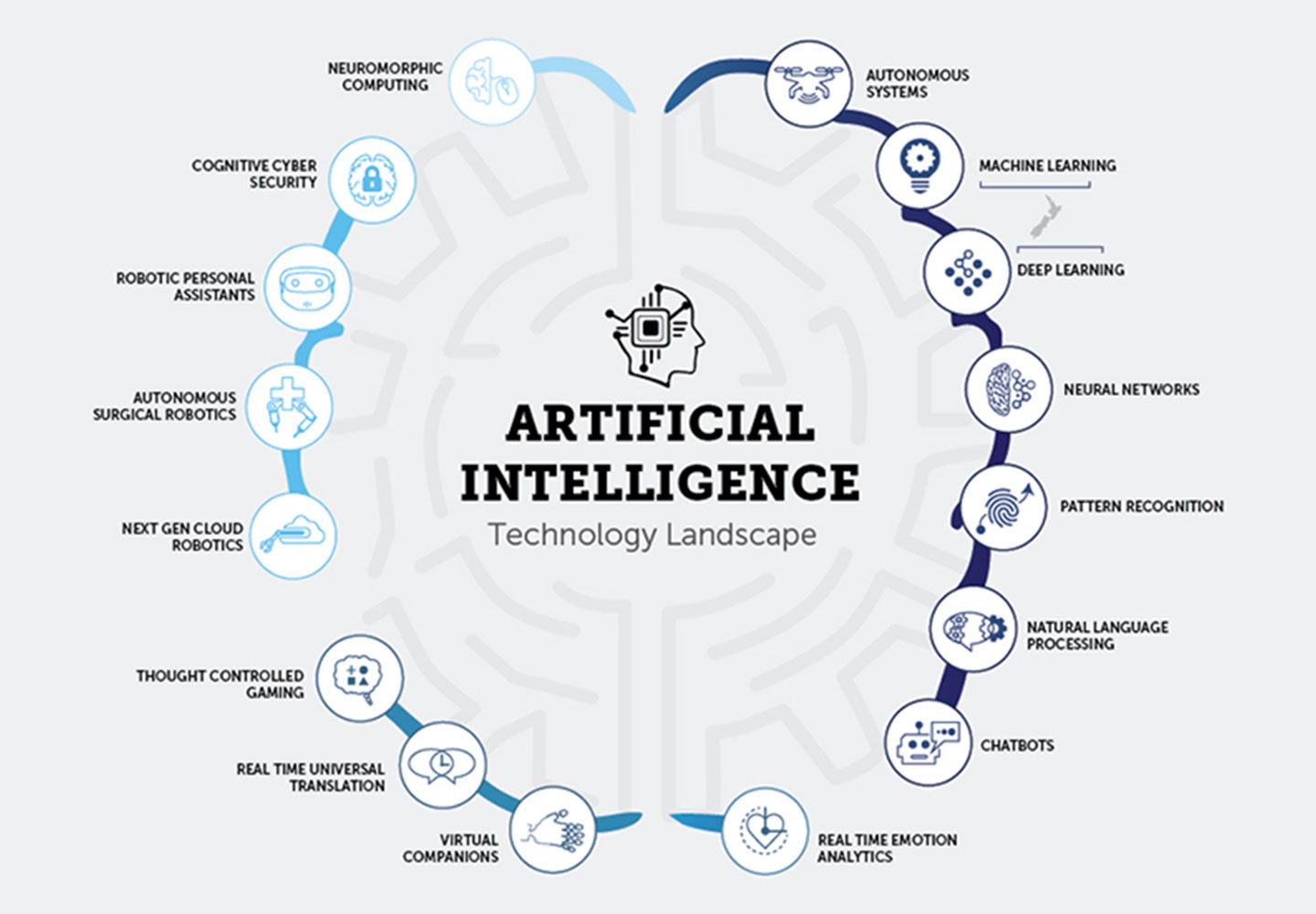









 ROI Calculator