HOME > BLOG > Business Management > How to Become a Product Manager in India in 2026 (With No PM Experience)
Business Management
How to Become a Product Manager in India in 2026 (With No PM Experience)
J
By Nuthana Reddy
August 6, 20269 min read
Published on August 6, 2026
SHARE THIS ARTICLE
Table Of Content
Why Product Management Is One of the Best Careers in 2026
Can You Become a Product Manager Without PM Experience?
Understanding What Product Managers Actually Do
Skills You Need to Become a Product Manager
The product management profession has evolved into one of the most sought-after career paths in India. As businesses across technology, finance, healthcare, e-commerce,manufacturing, and SaaS continue to build digital-first products, the demand for professionals who can identify customer needs, define product strategies, and collaborate with cross-functional teams is growing rapidly. Companies are actively seeking individuals who can bridge the gap between business goals, technology, and user experience to create products that deliver value.
One common misconception is that becoming a Product Manager (PM) requires years of prior product management experience. In reality, many successful product managers today have transitioned from software development, business analysis, marketing, consulting, sales, operations, design, and even customer support. What employers increasingly value is not the job title on your resume but your ability to think strategically, solve problems, understand customers, and make data-driven decisions.
In 2026, with the rise of artificial intelligence (AI), digital transformation, and agile product development, there are more opportunities than ever for professionals without direct PM experience to enter this exciting field. Organisations are looking for adaptable professionals who can quickly learn product frameworks and apply them to real business challenges.
If you are wondering whether you can become a Product Manager without prior PM experience, the answer is yes. However, it requires a structured learning approach, practical exposure, and continuous skill development.
This guide will walk you through everything you need to know about starting a successful product management career in India in 2026.
Why Product Management Is One of the Best Careers in 2026
Over the past decade, product management has shifted from being a niche role within technology companies to becoming a strategic business function across industries. Today, almost every organisation that develops digital products or customer-focused services relies on product managers to guide innovation and ensure business success.
As AI-powered products, fintech platforms,healthcare technologies, electric vehicles, and digital commerce continue to expand, companies need professionals who can understand customer expectations while balancing technical feasibility and business objectives.
Another reason for the growing popularity of product management is the variety it offers. Unlike highly specialised roles, product managers collaborate with engineering, design, marketing, sales, operations, and leadership teams. This cross-functional exposure makes the role intellectually stimulating and provides a strong foundation for future leadership positions.
Competitive salaries, faster career progression, and opportunities to work on innovative products further contribute to the profession’s growing appeal.
Can You Become a Product Manager Without PM Experience?
Many companies hire Associate Product Managers (APMs), Product Analysts, Junior Product Managers, or Product Owners who possess transferable skills even if they have never held a formal product management position.
Employers understand that product management is a multidisciplinary role. Candidates from engineering backgrounds often bring strong technical knowledge, while marketers understand customer behaviour. Business analystsexcel in data interpretation, consultants possess structured problem-solving skills, and UX designers understand user experience.
Instead of focusing solely on previous job titles, recruiters increasingly evaluate whether candidates can think strategically, communicate effectively, prioritise tasks, analyse market opportunities, and collaborate across teams.
If you already have experience solving business problems in your current role, you have a strong foundation to build upon.
Free Courses
Stakeholder Communication & Negotiation Skill Sets
Before planning your career transition, it is important to understand the responsibilities of a Product Manager.
A Product Manager is responsible for defining what should be built, why it should be built, and how it creates value for customers and the business. They gather customer insights, conduct market research, prioritise product features, create roadmaps, coordinate with engineering and design teams, and monitor product performance after launch.
Rather than writing code or designing interfaces themselves, Product Managers ensure that every department works towards a common product vision.
In many organisations, they also participate in pricing decisions, competitive analysis, customer interviews, stakeholder communication, and business strategy discussions.
This combination of technical understanding and business thinking makes product management one of the most dynamic careers available today.
Skills You Need to Become a Product Manager
Although every organisation has different expectations, certain skills are consistently valued across industries.
Strategic thinking is perhaps the most important. Product Managers must evaluate opportunities from both customer and business perspectives before making decisions.
Strong communication skills are equally essential. Since product managers work with multiple teams, they must explain ideas clearly, manage stakeholder expectations, and resolve conflicting priorities.
Problem-solving abilities enable Product Managers to identify customer pain points and create solutions that deliver measurable value.
In 2026, AI literacy has become another important skill. Product managers are increasingly expected to understand how AI can improve customer experiences, automate workflows, and support better decision-making.
Knowledge of Agile methodologies, Scrum, design thinking, product roadmaps, user stories, prioritisation frameworks, and customer research techniques further strengthens your profile.
A Step-by-Step Roadmap to Become a Product Manager
Transitioning into product management becomes much easier when you follow a structured approach rather than applying randomly for Product Manager roles.
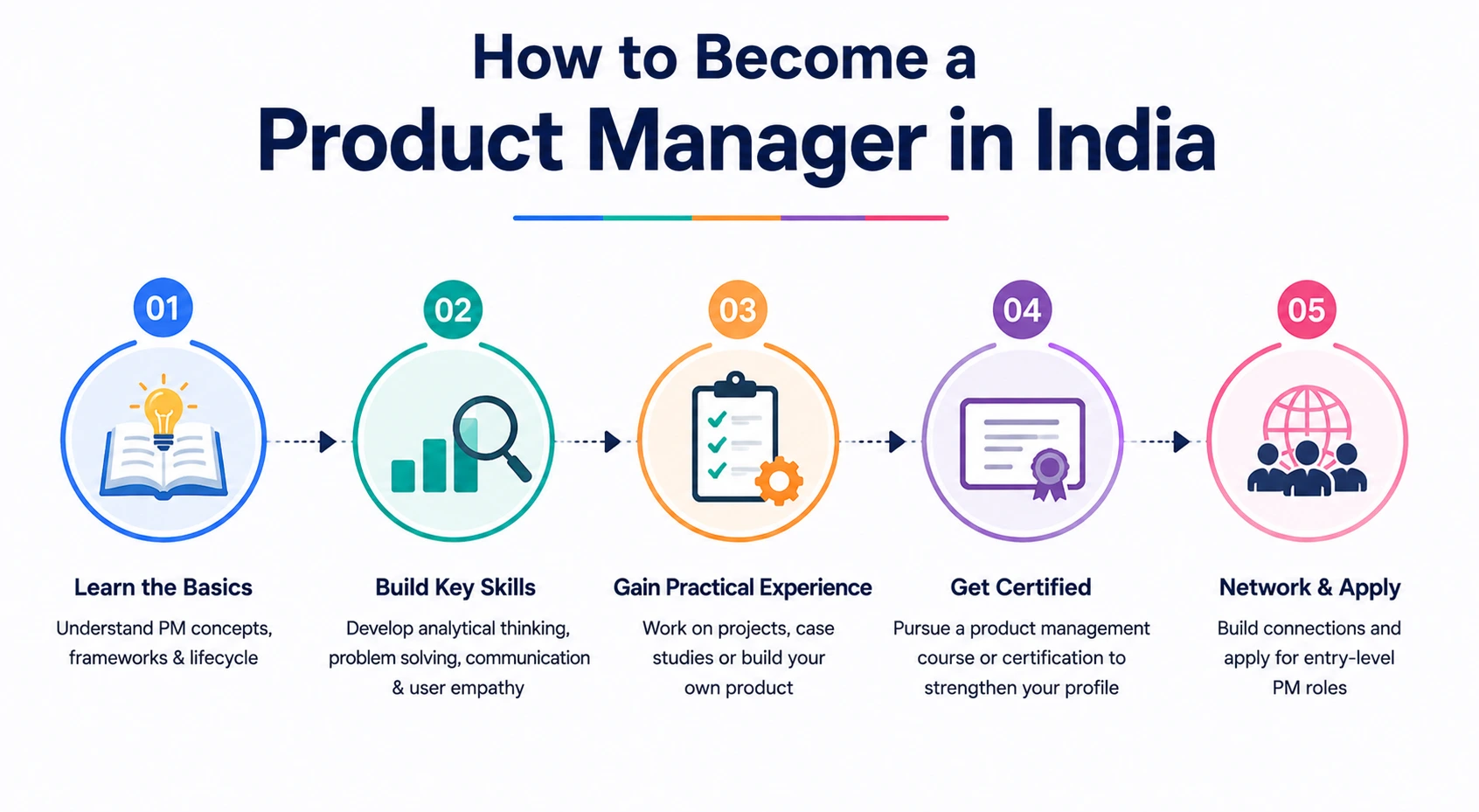
The first step is understanding the product lifecycle. Learn how products move from idea generation and market research to design, development, launch, and continuous improvement. Familiarity with these stages helps you understand how product teams function in real organisations.
The second step is building product thinking. Start analysing the apps and services you use every day. Ask yourself why certain features exist, how they improve customer experience, and what could be done better. This habit develops the strategic mindset expected from Product Managers.
Next, strengthen your business knowledge. Understanding concepts such as market segmentation, competitive positioning, pricing strategies, customer acquisition, revenue models, and profitability enables you to contribute beyond feature discussions.
You should also become comfortable working with data. Learn how to interpret product metrics, analyse user behaviour, and make evidence-based decisions instead of relying on assumptions.
Hands-on experience is equally important. Even if your current role is not in product management, volunteer for projects involving customer feedback, process improvement, feature planning, digital transformation, or cross-functional collaboration. These experiences can strengthen your resume and demonstrate relevant skills during interviews.
Finally, invest in structured learning through recognised product management certification programmes. A comprehensive programme provides industry frameworks, practical case studies, mentorship, networking opportunities, and exposure to real-world product challenges that self-learning often cannot offer.
1. Build a Portfolio Even Without Product Experience
One of the biggest challenges for aspiring Product Managers is demonstrating practical experience. Fortunately, you do not need to work as a Product Manager to build a strong portfolio.
Start by selecting popular products such as food delivery apps, banking applications, e-commerce platforms, or streaming services. Analyse customer pain points, identify improvement opportunities, and propose new features supported by logical reasoning and market insights.
You can also create product requirement documents (PRDs), feature prioritisation exercises, user personas, customer journey maps, and product roadmaps based on publicly available products.
Documenting these projects showcases your analytical thinking and problem-solving abilities during interviews. Recruiters appreciate candidates who demonstrate initiative and product thinking rather than waiting for formal work experience.
2. Learn the Right Tools
While Product Managers are not expected to master every technical tool, familiarity with commonly used platforms improves workplace readiness.
Some widely used tools include Jira for project management, Confluence for documentation, Figma for collaborating with design teams, Miro for brainstorming, Google Analytics for user insights, Mixpanel for product analytics, and SQL or Excel for analysing business data.
Understanding how these tools support product development enables smoother collaboration with engineering and design teams while improving decision-making.
3. Build Your Professional Network and Personal Brand
Product management is a collaborative profession, and networking plays an important role in opening new career opportunities. Many product management positions are filled through referrals, professional communities, and industry connections rather than traditional job applications.
Start by creating a strong LinkedIn profile that highlights your transferable skills, certifications, projects, and achievements. Share your thoughts on product trends, customer experience, artificial intelligence, and digital transformation. Engage with posts from product leaders, participate in discussions, and connect with professionals working in product roles.
Attending webinars, product management meetups, hackathons, and industry conferences can also help you understand current hiring trends while expanding your professional network. These interactions often provide valuable insights into what employers expect from aspiring Product Managers.
4. Prepare for Product Management Interviews
Preparing for interviews is just as important as acquiring technical knowledge. Recruiters typically assess candidates on their ability to think strategically, analyse business problems, and communicate solutions effectively.
Rather than memorising answers, practise solving product-related case studies. Learn how to prioritise features, evaluate customer pain points, define product success metrics, and explain your decision-making process. Interviewers often value structured thinking over arriving at a perfect answer.
You should also be prepared to discuss your previous work experience and explain how it has helped you develop transferable skills such as stakeholder management,analytical thinking, customer focus, leadership, or project execution. Even if your experience is outside product management, framing your achievements from a product perspective can significantly strengthen your profile.
Do Certifications Really Help?
While certifications alone cannot guarantee a product management role, they can significantly improve your learning journey and credibility. A structured programme provides a clear understanding of product frameworks, customer research, product strategy, agile methodologies, product analytics, and go-to-market planning—all of which are highly valued by employers.
Certifications also expose learners to industry case studies, live projects, experienced faculty, and networking opportunities that are difficult to replicate through self-learning. For professionals transitioning from engineering, marketing, consulting, operations, or analytics, a recognised certification helps bridge knowledge gaps and demonstrates commitment to the profession.
The key is choosing a programme that focuses on practical application rather than just theoretical concepts.
Product Manager Salary in India in 2026
One of the biggest reasons professionals are attracted to product management is its excellent earning potential. As organisations continue investing in digital products and AI-powered solutions, compensation for skilled Product Managers remains highly competitive.
Entry-level Associate Product Managers generally earn attractive salary packages, while professionals with a few years of experience often move into Product Manager and Senior Product Manager roles with significantly higher compensation. Experienced professionals leading product portfolios or managing multiple product teams can earn even more, particularly in technology, fintech, SaaS, and e-commerce organisations.
However, salary growth is influenced by several factors, including industry, company size, location, technical expertise, leadership skills, and the ability to deliver measurable business outcomes. Professionals who continuously upskill and stay updated with emerging technologies often experience faster career progression.
Future Scope of Product Management
The future of product management in India looks exceptionally promising. Artificial intelligence, machine learning, automation, cloud computing, and digital transformation are reshaping how products are built and managed. As organisations focus on delivering personalised customer experiences, the role of Product Managers is becoming even more strategic.
In addition to technology companies, industries such as healthcare, manufacturing, education, banking, retail, logistics, and automotive are increasingly hiring Product Managers to lead innovation initiatives. This diversification creates opportunities for professionals from a wide range of educational and professional backgrounds.
Product management also offers a clear leadership pathway. With experience, professionals can progress to roles such as Senior Product Manager, Group Product Manager, Head of Product, Director of Product, and Chief Product Officer. Many entrepreneurs also leverage product management skills to successfully launch and scale their own ventures.
Kickstart Your Product Management Career with IIT Roorkee
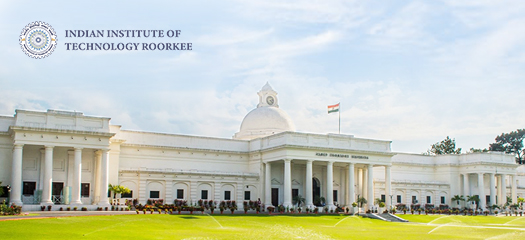
If you’re looking for a structured pathway into product management, the Post Graduate Certificate Programme in Strategic Product Management by Continuing Education Centre (CEC), IIT Roorkee, offered through Jaro Education, is an excellent option. This 5-month live online programme equips aspiring and working professionals with industry-relevant skills in product strategy, AI-driven product development, customer-centric innovation, agile methodologies, and product analytics through live weekend classes, real-world case studies, and a Build Your Own Product (BYOP) capstone project. With guidance from IIT Roorkee faculty and industry experts, campus immersion, and flexible EMI options, the programme helps learners build the practical expertise and confidence needed to launch or accelerate a successful career in product management.
Breaking into product management without prior PM experience is entirely achievable in 2026. The key lies in building the right combination of business knowledge, product thinking, analytical skills, customer empathy, and practical experience. Employers are increasingly looking beyond job titles and focusing on candidates who can solve real business problems, collaborate effectively, and think strategically.
By following a structured learning path, working on product projects, building a strong professional network, and continuously upgrading your skills, you can successfully transition into one of India’s most exciting and future-ready careers. With digital innovation accelerating across industries, there has never been a better time to begin your journey toward becoming a Product Manager.
Frequently Asked Questions
Yes. Many Product Managers transition from engineering, marketing, consulting, business analysis, operations, design, and other domains by developing product management skills and gaining practical experience through projects and certifications.
Strategic thinking, customer research, communication, data analysis, product roadmapping, agile methodologies, stakeholder management, AI literacy, and problem-solving are among the most in-demand skills.
While it is not mandatory, a recognised certification helps build structured knowledge, improves credibility, provides practical exposure, and makes career transitions smoother.
Salaries vary based on experience, industry, and location. Product management remains one of the highest-paying career paths, with strong growth potential as professionals move into senior leadership roles.
Technology, fintech, healthcare, SaaS, e-commerce, manufacturing, logistics, education, automotive, and banking are among the top sectors actively hiring Product Managers.
Nuthana Reddy
Nuthana Reddy is a Senior Manager at Procter & Gamble, specializing in operations, digitization, and cross-functional leadership. She has driven multimillion-dollar impact through innovation, process optimization, and strategic execution across global markets.
 HOME > BLOG > Business Management > How to Become a Product Manager in India in 2026 (With No PM Experience)
 August 6, 2026
 9 min read





 ChatGPT
 Perplexity
 Claude
 Grok
Grok






 ROI Calculator