 HOME > BLOG > AI and Machine Learning > Personalized Learning and AI: Revolutionizing Education in the Modern Era
Personalized Learning and AI: Revolutionizing Education in the Modern Era
 May 2, 2026
 8 min read




Table Of Content
- The Strategic Importance of AI in Education: Scaling Excellence
- How AI Revolutionizes Personalized Learning: The Mechanics of Adaptation
- AI in Education Examples: From Virtual Tutors to Predictive Analytics
- The Future of AI in Education: Immersive and Predictive Frontiers
Picture a classroom from 1890. Now picture one from 2025. The desks may look different, but the underlying assumption has stubbornly remained the same: that every student learns the same content, at the same pace, in the same way. That assumption is finally breaking down.
The 19th-century "factory model" of education was designed for efficiency, not individuality. It treated students as uniform inputs on an assembly line — same lesson plans, same deadlines, same tests. For an industrializing society that needed a standardized workforce, it worked well enough. For a knowledge economy that demands critical thinking, creativity, and adaptive skill-building, it falls critically short.
What's replacing it is something far more ambitious: radical personalization. This isn't just about tailoring homework assignments. It represents a fundamental shift in pedagogy — where every learner's unique strengths, gaps, pace, and goals shape the entire educational experience.
AI in education is the infrastructure making this shift possible at scale. Understanding this transformation starts with grasping just how strategically significant this moment really is — and that's exactly where we're headed next.
 ChatGPT
 Perplexity
 Claude
 Grok
GrokThe Strategic Importance of AI in Education: Scaling Excellence
The previous section established that the factory model of education is collapsing under its own weight. The question now isn’t whether AI will reshape learning — it’s how fast, and at what scale.
The numbers are striking. The global AI in education market was valued at approximately $4 billion in 2022 and is projected to exceed $30 billion by 2032. That trajectory isn’t just a business story. It signals a fundamental shift in how institutions, governments, and educators understand what “quality education” actually means at scale.
The significance of AI in education becomes clearest when you examine the problem of scalability. A single skilled teacher can meaningfully support perhaps 25 to 30 students. An AI-powered learning system can simultaneously adapt to thousands, tracking performance, flagging confusion, and adjusting content delivery in real time. For institutions managing large student populations, that capability isn’t a luxury. It’s a structural necessity.
Institutions that fail to integrate intelligent systems risk falling behind not just technologically, but in their core mission: ensuring every student has a genuine opportunity to succeed.
Beyond student outcomes, AI delivers a quietly transformative benefit for educators themselves. Administrative tasks — grading routine assessments, tracking attendance, generating progress reports — can consume hours that teachers could spend on what only humans can offer: mentorship, encouragement, and nuanced guidance. By automating the routine, AI returns educators to their most valuable role.
For a deeper look at how this shift is already playing out across institutions, Jaro Education‘s analysis on the role of AI in transforming the future of education offers useful context worth exploring.
Understanding why AI matters at scale naturally raises the next question: how does it actually work inside the learning experience?
How AI Revolutionizes Personalized Learning: The Mechanics of Adaptation
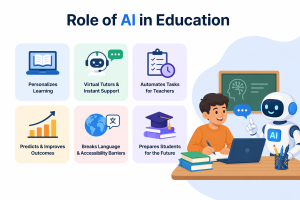
Understanding why the old model is failing is one thing. Understanding how AI actually replaces it is another. The mechanics behind personalized AI-driven learning are more sophisticated than simply adjusting a quiz difficulty — they represent a fundamental rewiring of how instruction is delivered and responded to.
Intelligent Tutoring Systems and Real-Time Feedback
Intelligent Tutoring Systems (ITS) are arguably the most powerful expression of AI in classrooms today. Unlike static courseware, an ITS observes how a student interacts with material — tracking response times, error patterns, and hesitation signals — then adjusts instruction in the moment. The result is a feedback loop that doesn’t wait for a graded test to reveal a problem. It catches the stumble as it’s happening.
As research from IGI Global highlights, this shift from one-size-fits-all delivery to individualized support isn’t theoretical — it’s already reshaping how learners engage with content at every level.
Adaptive Learning Paths: Content That Moves With the Student
One practical approach that distinguishes AI-powered platforms is dynamic content sequencing. When a student consistently answers geometry questions correctly, the system advances the difficulty. When they struggle with fractions, it loops back — not with the same explanation, but with an alternative approach. The path bends around the learner, not the other way around.
This adaptability is what makes examples of AI in education so compelling: the technology doesn’t just personalize pace, it personalizes method.
Identifying Learning Gaps Before They Become Failures
Perhaps the most underappreciated capability is predictive gap detection. AI systems analyze behavioral and performance data to flag struggling students weeks before a teacher might notice. This is early intervention at scale — something no single educator can realistically provide across 30+ students simultaneously.
For a deeper look at how these mechanics are reshaping online learning environments specifically, Jaro Education’s analysis on how AI is changing the landscape of online learning offers valuable context.
These systems don’t operate in isolation, though. The real picture emerges when you see them applied across tools — from virtual tutors to institution-wide analytics platforms.
AI in Education Examples: From Virtual Tutors to Predictive Analytics
The mechanics of AI-driven adaptation are compelling in theory. In practice, they’re already running inside platforms used by millions of students every day. As the future of AI in education takes shape, it helps to ground the conversation in concrete tools — organized by who they actually serve.
Student-Facing Tools: Learning on Demand
Duolingo uses AI to adjust lesson difficulty in real time based on response accuracy and session pacing, effectively creating a personalized language curriculum for each of its hundreds of millions of users.
Other student-facing tools include AI-powered writing coaches that flag structural weaknesses, adaptive math platforms that identify exactly where a student’s conceptual gap began, and intelligent flashcard systems that schedule review sessions based on predicted forgetting curves.
Teacher-Facing Tools: Amplifying Human Judgment
AI doesn’t replace educators — it removes the administrative drag that pulls them away from teaching. Tools in this category auto-generate differentiated lesson materials, flag students who are disengaging before a teacher notices the pattern, and provide real-time feedback on classroom questions. According to a U.S. Department of Education report, AI has significant potential to reduce the non-instructional workload that consumes a disproportionate share of a teacher’s day.
Administrative Systems: Retention Before It’s a Crisis
Predictive analytics is arguably the most consequential AI application in higher education right now. Universities are using behavioral data — attendance patterns, assignment submission timing, LMS login frequency — to identify at-risk students weeks before they drop out. Intervention teams can then act with precision rather than guesswork. The result is measurable improvement in retention rates and, critically, better outcomes for students who might otherwise have slipped through unnoticed.
For a broader view of how these tools fit into emerging trends, this roundup of top EdTech trends is worth exploring.
These examples represent today’s landscape. However, the tools currently in classrooms are only the beginning — what’s coming next involves environments and experiences that look far less like traditional education altogether.



The Future of AI in Education: Immersive and Predictive Frontiers
AI and Virtual Reality converging is perhaps the most transformative frontier on the horizon. Imagine medical students practicing surgical procedures inside photorealistic simulations, or history students walking through ancient Rome — all guided by adaptive AI that adjusts the scenario’s difficulty in real time. For artificial intelligence for students, this isn’t science fiction. Pilot programs already demonstrate that immersive, AI-powered simulations dramatically improve knowledge retention by placing learners inside the content rather than in front of it.
Equally significant is the push toward global, borderless classrooms. Real-time AI translation and accessibility features — live captioning, language switching, adaptive interfaces for learners with disabilities — are dismantling the geographic and linguistic barriers that have historically limited educational access. A student in rural Texas and a peer in São Paulo can now share the same learning environment without friction.
Perhaps the most profound shift, however, is the emergence of personal AI “career coaches.” Rather than discrete educational episodes, AI is beginning to manage continuous, lifelong learning paths — tracking skill gaps, recommending micro-credentials, and recalibrating goals as industries evolve. The Future of Learning and Development explores how this shift redefines professional growth entirely.
Lifelong learning, guided by intelligent systems, is becoming less of an aspiration and more of an infrastructure. The real question isn’t whether these tools will arrive — it’s whether educators and professionals will be positioned to use them effectively.
The Human Element: Upskilling for an AI-Driven World
The immersive and predictive frontiers explored earlier share one consistent thread: they all require skilled humans to guide, interpret, and ethically deploy them. That reality brings the conversation back to teachers, administrators, and working professionals navigating a rapidly shifting landscape.
AI won’t replace teachers — but educators who use AI will replace those who don’t. This is more than a catchy phrase. The U.S. Department of Education explicitly notes that AI should amplify human instructional capacity, not eliminate it. What changes is the skill set required.
For working professionals, the stakes are equally high. Understanding the importance of upskilling in the age of AI isn’t optional — it’s a career imperative. Edtech innovation is accelerating that urgency, reshaping how credentials are earned and competencies are validated.
Educators and learners alike benefit from understanding how artificial intelligence is reshaping higher education. Adapting proactively, rather than reactively, is what separates those who thrive from those who struggle. That spirit of intentional adaptation sets the stage for a broader conclusion.
Conclusion: Embracing the AI Revolution in Education
AI isn’t replacing great teaching — it’s amplifying it. As explored throughout this article, personalized learning powered by AI is fundamentally a tool for equity and excellence, meeting every student where they are rather than forcing them to conform to a single mold. Research consistently supports this shift: the U.S. Department of Education has called for educators to actively engage with AI rather than resist it.
The opportunity is clear — the moment to act is now. Educators who embrace these tools won’t just improve outcomes; they’ll help close long-standing gaps in access and achievement. Start small, stay curious, and build from there.
For professionals balancing career and learning, the intersection of AI and flexible education is especially powerful — explore more on that connection in resources covering the benefits of online learning for working professionals.
Frequently Asked Questions
AI improves personalized learning by continuously analyzing each student’s performance, pace, and learning style to deliver tailored content in real time. Rather than following a fixed curriculum, AI-powered platforms adjust difficulty, provide targeted feedback, and identify knowledge gaps before they widen.




Find a Program made just for YOU
We'll help you find the right fit for your solution. Let's get you connected with the perfect solution.
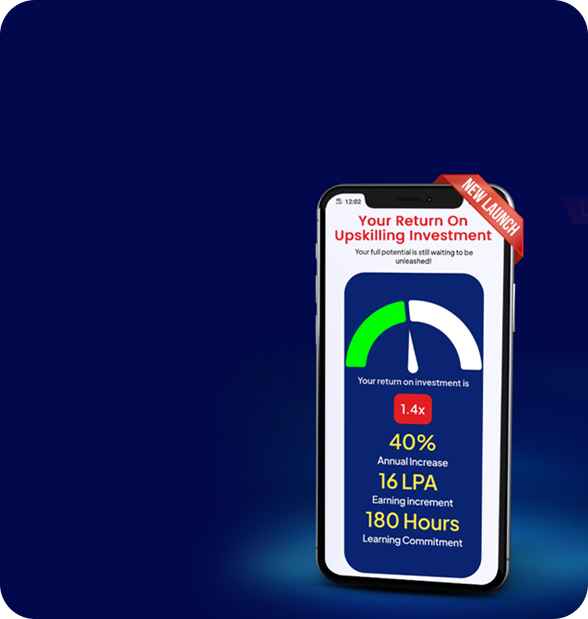
Is Your Upskilling Effort worth it?
 ROI Calculator

Are Your Skills Meeting Job Demands?
Try our Skill Gap tool
Experience Lifelong Learning and Connect with Like-minded Professionals
Explore Jaro Connect

