Artificial Intelligence has rapidly transformed the way people interact with technology. From chatbots that answer questions instantly to tools that generate articles, emails, and even computer code, AI-powered systems are becoming an integral part of everyday life. At the centre of many of these innovations lies the LLM, a powerful technology capable of understanding and generating human-like language.
If you have ever interacted with AI tools that write content, translate languages, summarise information, or assist with programming, you have already experienced the capabilities of an LLM model. These models are designed to process massive amounts of text data and generate meaningful responses that closely resemble human communication.
For beginners entering the world of artificial intelligence, understanding what is LLM, the full form of LLM in AI, and how these models work is an important first step. This guide explains the concept in a simple and structured manner, covering how LLMs function, their applications, benefits, limitations, and career opportunities related to LLM technologies.
A Large Language Model is a type of artificial intelligence system trained on vast amounts of text data to understand language patterns, context, and meaning. It uses advanced machine learning techniques to interpret user inputs and produce relevant responses.
LLMs belong to a broader category called Natural Language Processing (NLP), which focuses on enabling computers to understand and interact using human language.
Examples of tasks performed by LLMs include:
Answering questions
Writing articles
Translating text
Summarising documents
Generating computer code
Assisting in research
Automating customer support
What is LLM?
An LLM is an advanced AI model designed to process and generate text in a way that resembles human communication. It learns from enormous datasets that include books, websites, articles, and other written content.
By analysing patterns in language, an LLM model can predict the next word in a sentence and generate coherent responses.
For example:
Input: “Explain artificial intelligence in simple words.” Output: A simplified explanation of AI concepts.
LLMs do not actually “think” like humans but rely on probability and statistical patterns to produce meaningful outputs.
Understanding how an LLM model works does not require deep technical knowledge. At a high level, these models learn by analysing large volumes of text and identifying relationships between words.
Step 1: Data Collection
LLMs are trained on extensive text datasets containing information from various domains. This helps the model understand grammar, context, facts, and writing styles.
Step 2: Training Process
The model uses machine learning algorithms to recognise patterns in language. It learns how words relate to each other in different contexts.
Training involves adjusting millions or even billions of parameters.
Step 3: Tokenization
Text is broken into smaller units called tokens. Tokens may represent words, parts of words, or characters.
Example:
“Tokenization” → “Token” “ization”
Step 4: Prediction
The model predicts the most likely next word based on context.
Example:
“The sky is” → likely prediction: “blue”
Step 5: Response Generation
The model generates complete responses based on learned patterns.
Modern LLMs use neural network architectures called transformers, which allow them to understand context more effectively.
Key Features of LLMs
Large Language Models possess several characteristics that make them powerful tools.
Context Awareness
LLMs can understand relationships between words within sentences and paragraphs.
Language Generation
They can create human-like text that is coherent and meaningful.
Multi-task Capability
LLMs can perform multiple language tasks without needing separate systems.
Adaptability Through Fine-tuning
LLMs do not update automatically in real time; they improve through fine-tuning, retraining, or tools like Retrieval-Augmented Generation (RAG).
Scalability
LLMs can be applied across industries and domains.
Types of LLM Models
There are several types of LLM model architectures based on their design and training approach.
General-purpose LLMs
These models perform a wide variety of tasks such as writing, coding, and answering questions.
Domain-specific LLMs
Some models are trained on specialised data such as medical research, finance, or legal documents.
Instruction-based LLMs
These models are trained to follow user instructions more accurately.
Multilingual LLMs
Multilingual models can understand and generate text in multiple languages.
LLMs help create blogs, social media posts, reports, and marketing content.
Customer Support
Chatbots powered by LLMs provide instant responses to customer queries.
Education
Students and professionals use LLM tools for research, explanations, and summarisation.
Software Development
LLMs assist developers in writing and debugging code.
Healthcare
LLMs help summarise medical documents and assist in research.
Finance
Financial institutions use LLMs for analysing reports and generating insights.
Marketing
Marketers use LLMs to generate campaign ideas, email content, and ad copy.
Benefits of LLM Technology
LLMs provide several advantages.
Improves productivity
Automates repetitive writing tasks.
Enhances decision-making
Provides quick access to information.
Saves time
Generates content rapidly.
Supports innovation
Enables the development of intelligent applications.
Personalisation
Provides customised responses based on input.
Limitations of LLM Models
Despite their capabilities, LLMs have certain limitations.
May generate incorrect information
LLMs rely on training data and may produce inaccurate responses.
Lack of real-world understanding
Models recognise patterns but do not possess true comprehension.
Data bias
Training data may include biases that influence responses.
High computational cost
Training large models requires significant computing resources.
Dependence on data quality
Poor training data leads to poor performance.
Difference Between LLM and Traditional NLP Models
Here’s the difference between LLM and Traditional NLP models:
Basis
LLM
Traditional NLP
Data size
Very large datasets
Smaller datasets
Capability
Multi-task learning
Task-specific
Accuracy
High
Moderate
Flexibility
Highly adaptable
Limited
Training complexity
Very high
Moderate
Skills Required to Learn LLM
Professionals interested in learning about LLM technology benefit from understanding:
Basic programming concepts
Machine learning fundamentals
Natural language processing basics
Data analysis
Python programming
Deep learning concepts
Strong analytical thinking also helps in understanding model behaviour.
LLM Course and Learning Options
Many professionals explore an LLM course to build expertise in artificial intelligence and machine learning.
Typical topics covered include:
Introduction to NLP
Neural Networks
Transformers
Prompt engineering
Model evaluation
Ethical AI
LLM Course Duration
The LLM course duration depends on the programme level.
Short certification courses: 2 to 6 months Advanced programmes: 6 to 12 months Postgraduate programmes: 12 to 24 months
Professionals interested in AI-driven decision-making often consider executive education programmes that include exposure to analytics and emerging technologies.
Organisations increasingly seek professionals who understand how to use AI tools effectively.
Conclusion
An LLM is one of the most impactful developments in artificial intelligence, enabling machines to understand and generate human language with remarkable accuracy. Understanding what LLM is, the LLM full form in AI, and how LLM models work provides a strong foundation for exploring modern AI applications.
From content generation to automation and analytics, LLMs continue to transform industries and redefine how humans interact with technology.
As demand for AI expertise grows, professionals who develop skills related to LLM technologies will be well-positioned for future career opportunities.
Frequently Asked Questions
LLM stands for Large Language Model, a type of AI system trained on vast text data to understand language patterns and generate human-like responses.
The LLM full form in AI is Large Language Model. It refers to advanced machine learning models used in natural language processing tasks.
An LLM model works by analysing large datasets, identifying language patterns, and predicting the most relevant sequence of words to generate meaningful responses.
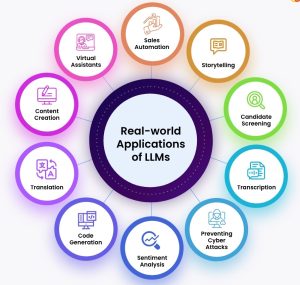
LLM applications include chatbots, content writing tools, translation software, virtual assistants, coding assistants, and research tools.
Key skills include programming knowledge, understanding of machine learning concepts, data analysis skills, and familiarity with natural language processing techniques.
LLM course duration varies depending on the programme, typically ranging from a few months for certification courses to one or two years for advanced programmes.
Industries such as healthcare, finance, education, marketing, technology, and customer service use LLM technology to improve efficiency and automate tasks.
Dr. Sanjay Kulkarni
Data & AI Transformation Leader
Dr. Sanjay Kulkarni is a Data & AI Transformation Leader with over 25 years of industry experience. He helps organizations adopt data-driven and responsible AI practices through strategic guidance and education. With experience across startups and global enterprises, he bridges the gap between theory and real-world application. His work empowers teams to innovate and thrive in AI-driven environments.
Get Free Upskilling Guidance
Fill in the details for a free consultation
Related Courses
Explore our programs
Admission Open
Post Graduate Certification Programme in Business Analytics & Artificial Intelligence (AI) Applications

 April 5, 2026
 5 min read




 ChatGPT
 Perplexity
 Claude
 Grok
Grok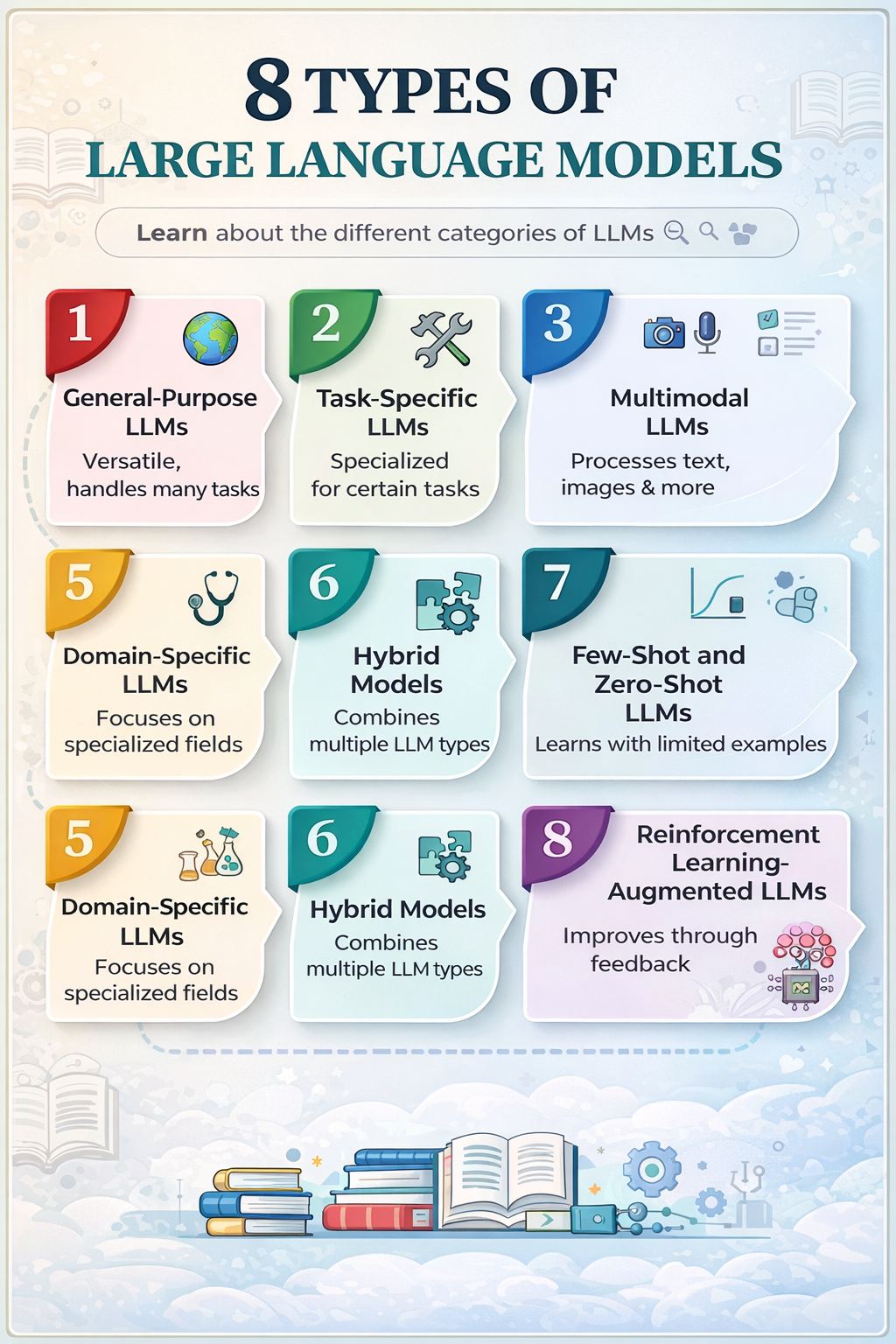






 Admission Open
 Admission Closed
 Admission Open
 Admission Closed
 ROI Calculator