The Growing Importance of Supply Chain Management in 2026
Why Supply Chain Management Skills Are Essential in 2026
Top Supply Chain Management Skills Required in 2026
The Role of Supply Chain Managers in Modern Organizations
The global business landscape is evolving rapidly, and supply chains are at the center of this transformation. From managing international logistics to handling disruptions caused by economic uncertainty, climate change, and technological shifts, companies now rely heavily on strong supply chain systems to maintain operational efficiency and customer satisfaction.
In 2026, businesses are not only looking for operational expertise but also strategic leadership capabilities. This growing demand has significantly increased the importance of supply chain management skills across industries such as manufacturing, retail, healthcare, e-commerce, logistics, and technology.
Organizations today require professionals who can manage complex supplier networks, optimize logistics operations, leverage analytics, and drive digital transformationinitiatives. As a result, professionals with advanced supply chain management skills required for modern business environments are becoming highly valuable in the global job market.
This blog explores why supply chain management skills are essential in 2026, the key competencies organizations expect from professionals, and how specialized learning programs can help individuals stay future-ready.
The Growing Importance of Supply Chain Management in 2026
Supply chain management is no longer viewed as a backend operational activity. It has become a strategic business function that directly impacts profitability, customer experience, sustainability, and competitive advantage.
Modern supply chains involve multiple interconnected processes, including:
Procurement management
Inventory optimization
Demand forecasting
Supplier relationship management
Warehousing and logistics
Transportation planning
Sustainability initiatives
Risk management
Data analytics
Digital transformation
The increasing complexity of global trade and consumer expectations has created a strong demand for skilled supply chain managers who can adapt quickly to changing market conditions.
Businesses are now prioritizing agility, resilience, and digital integration in supply chain operations. This shift has made supply chain leadership one of the most critical business functions in 2026.
Why Supply Chain Management Skills Are Essential in 2026
1. Businesses Need Agile and Resilient Supply Chains
Recent global disruptions have shown how vulnerable supply chains can be. From pandemics and geopolitical conflicts to transportation delays and raw material shortages, organizations must now prepare for constant uncertainty.
Professionals with strong supply chain management skills help organizations:
Reduce operational disruptions
Improve supply chain visibility
Build resilient supplier networks
Develop contingency strategies
Enhance operational flexibility
Companies increasingly seek professionals who can proactively manage risks while maintaining business continuity.
2. Digital Transformation Is Reshaping Supply Chains
Technology is revolutionizing supply chain operations across industries. Businesses are rapidly adopting:
As organizations modernize operations, the supply chain management skills required now include digital literacy, data analysis, and technology implementation capabilities.
Professionals who understand how to integrate technology into supply chain processes are becoming essential for organizations aiming to improve efficiency and reduce operational costs.
3. Data Analytics Has Become a Core Business Requirement
Modern supply chains generate massive amounts of real-time data. Organizations use this information to optimize inventory, forecast demand, reduce waste, and improve customer satisfaction.
Professionals with analytical expertise can help companies:
Improve forecasting accuracy
Optimize inventory levels
Reduce supply chain inefficiencies
Make data-driven decisions
Enhance customer experiences
As a result, analytical thinking is now considered one of the most important supply chain management skills in 2026.
4. E-Commerce Growth Has Increased Supply Chain Complexity
The rapid growth of e-commerce has transformed consumer expectations. Customers now demand:
Faster delivery times
Real-time order tracking
Seamless returns
Personalized experiences
Consistent product availability
Meeting these expectations requires highly efficient supply chain operations.
Supply chain managers must coordinate inventory, transportation, warehousing, and last-mile delivery while maintaining cost efficiency. This has increased the demand for professionals with advanced logistics and operations expertise.
5. Sustainability Is Becoming a Business Priority
Environmental responsibility has become a major focus for global organizations. Businesses are now expected to adopt sustainable supply chain practices that reduce environmental impact while improving operational efficiency.
Professionals with sustainability-focused supply chain management skills can help organizations implement the following:
Green logistics
Sustainable sourcing
Circular supply chain models
Carbon footprint reduction strategies
Ethical procurement practices
In 2026, sustainability is no longer optional. It has become a key component of long-term business strategy.
Top Supply Chain Management Skills Required in 2026
As the industry evolves, employers are seeking professionals with a combination of technical, strategic, and leadership capabilities.
Analytical and Problem-Solving Skills
Modern supply chains depend heavily on data and forecasting models. Professionals must be able to analyze information, identify inefficiencies, and solve operational challenges quickly.
Strategic Decision-Making
Organizations need professionals who can align supply chain operations with overall business objectives and long-term growth strategies.
Technology and Digital Skills
Understanding AI, automation, analytics tools, and cloud-based systems has become essential for modern supply chain professionals.
Leadership and Communication
Supply chain managers often work across departments and global teams. Strong leadership and communication skills are necessary for collaboration and stakeholder management.
Risk Management
Professionals must understand how to identify, assess, and mitigate operational and supply chain risks effectively.
Sustainability Knowledge
As businesses focus on ESG goals, professionals with expertise in sustainable supply chain practices are becoming increasingly valuable.
Free Courses
Finance for All – Free Finance Certification Course
These programs provide structured learning and practical exposure that help professionals remain competitive in rapidly evolving business environments.
Many working professionals now prefer executive certificate programs because they offer flexibility through online and hybrid learning formats.
Benefits of Executive Learning in Supply Chain Management
Executive education programs are specifically designed for working professionals who want to balance learning with career growth.
Some major benefits include:
Flexible schedules
Industry-focused curriculum
Real-world case studies
Peer networking opportunities
Exposure to industry experts
Hands-on learning experiences
Executive programs also help professionals transition from operational roles into leadership positions.
The Future of Supply Chain Careers
The future of supply chain management will be shaped by technological innovation, sustainability goals, and global market dynamics.
Emerging trends include:
AI-driven forecasting
Autonomous logistics
Smart warehouses
Digital supply networks
Sustainable operations
Predictive analytics
Blockchain-based transparency
Professionals who continuously upgrade their supply chain management skills will be better prepared for future leadership opportunities.
The growing reliance on digital transformation and data-driven decision-making ensures that skilled supply chain professionals will remain in high demand for years to come.
About the Advanced Certificate Programme in Smart Supply Chain Management & Transformation by IIM Kozhikode
Professionals looking to strengthen their expertise in supply chain leadership can explore the Advanced Certificate Programme in Smart Supply Chain Management & Transformation by IIM Kozhikode.
The programme is designed for working professionals who want to build advanced knowledge in supply chain analytics, procurement management, digital transformation, logistics optimization, and risk management.
Delivered through a flexible Direct-to-Device learning format, the programme includes live online sessions, business simulations, industry case studies, and hands-on analytical learning experiences.
Participants gain exposure to modern supply chain technologies and strategic leadership concepts that help improve operational efficiency and business decision-making. The programme also provides Executive Alumni Status from IIM Kozhikode upon successful completion.
As businesses continue to prioritize digital and resilient supply chain systems, specialized executive programs like this can help professionals stay competitive and future-ready in 2026 and beyond.
Conclusion
Supply chain management has become one of the most important business functions in the modern economy. In 2026, organizations require professionals who can combine operational expertise with technology, analytics, leadership, and strategic thinking.
The increasing complexity of global supply chains, rising customer expectations, and rapid digital transformation have significantly increased the demand for skilled supply chain managers.
Professionals who invest in developing advanced supply chain management skills can unlock strong career opportunities across industries while contributing to organizational growth and innovation.
Continuous learning, executive education, and industry-focused skill development will remain essential for professionals who want to succeed in the evolving world of supply chain management.
Frequently Asked Questions
The most in-demand skills include data analytics, AI and automation knowledge, risk management, strategic decision-making, and sustainability expertise. Employers are also looking for professionals with strong leadership and digital transformation capabilities.
Yes, supply chain management continues to be a highly promising career due to increasing global trade, e-commerce growth, and digital transformation. Industries such as retail, healthcare, manufacturing, and logistics are actively hiring skilled professionals.
AI is helping businesses improve demand forecasting, automate warehouse operations, optimize inventory management, and enhance supply chain visibility. It also enables faster decision-making through predictive analytics and real-time insights.
A certificate course helps professionals gain updated industry knowledge, practical skills, and exposure to modern technologies. It also improves career prospects by strengthening leadership, analytical, and operational capabilities.
Industries such as e-commerce, manufacturing, FMCG, healthcare, logistics, and technology offer strong career opportunities. These sectors rely heavily on efficient supply chain systems to maintain operational efficiency and customer satisfaction.
Nuthana Reddy
Nuthana Reddy is a Senior Manager at Procter & Gamble, specializing in operations, digitization, and cross-functional leadership. She has driven multimillion-dollar impact through innovation, process optimization, and strategic execution across global markets.
Get Free Upskilling Guidance
Fill in the details for a free consultation
Related Courses
Explore our programs
Admission Closed
Advanced Certificate Programme in Smart Supply Chain Management & Transformation

 June 1, 2026
 6 min read




 ChatGPT
 Perplexity
 Claude
 Grok
Grok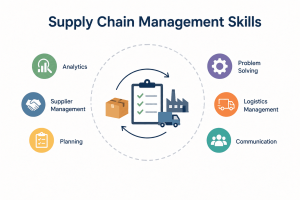






 Admission Closed
 Admission Open
 Admission Open
 Admission Open

 ROI Calculator



