The Strategic Value of Supply Chains in Global Trade
FTA: A Catalyst, But Not a Cure-All
A Framework for Supply Chain Transformation
Conclusion: From Tariff Cuts to Strategic Competitive Edge
The signing of the landmark EU-India Free Trade Agreement (FTA) marks a significant step forward for both economies. However, it reveals an important truth: trade policy alone is not enough. To unlock the full potential of this historic agreement, supply chains must be redesigned to handle regulatory complexity, sustainability standards, digital trade needs, and demands for resilience.
Let’s look at why EU-India trade requiressupply chain transformation, not just policy changes, and how businesses can get ready for the next era of global commerce.
Trade at a Crossroads: Statistics That Set the Stage
India and the European Union have been important trade partners for years.
As of 2024-25, total bilateral goods and services trade exceeded $190 billion.
The EU is India’s largest trading partner and primary source of foreign direct investment, with FDI stock reaching €140.1 billion in 2023.
Trade in goods between the EU and India has grown nearly 90% in the last decade. Still, India accounts for only 2.4% of the EU’s total goods trade, falling far behind the U.S. and China.
After nearly two decades of negotiation, the EU-India FTA was signed in early 2026. The FTA is expected to substantially scale up trade, enhance export competitiveness, and integrate Indian businesses more deeply into the European and global value chains. % of Indian exports by value over phased schedules.
The Strategic Value of Supply Chains in Global Trade
In today’s interconnected world, it is not enough to have trade agreements between two nations to facilitate successful international trade. Rather, it is the supply chain that is responsible for enabling successful international trade. A supply chain is a series of processes that connect suppliers, manufacturers, distributors, and other industry players to facilitate smooth movement of goods from manufacturing centers to international markets. In this regard, it is important to note that supply chains will be vital in ensuring that trade between India and European nations is successful, especially as trade between these nations is expected to increase in the coming days.
Supply chains have been important in ensuring that efficiency, cost control, and reliability are maintained in international trade. In this regard, supply chains have been important for companies seeking to export goods to European nations, as they have had to be equipped with the ability to comply with regulatory requirements, traceability, and sustainability. In other words, supply chains have been important for companies seeking to gain competitive advantages, even with reduced tariffs and trade policies.
Besides, resilient supply chains also provide businesses with the ability to quickly adapt to changing markets and disruptions. Whether it is changing demands, delayed transportation, or geopolitical issues, a well-designed supply chain helps businesses adapt quickly to any disruptions.
As the EU and India continue to strengthen their trade relations, businesses need to consider supply chain management a strategic issue. Effective and technologically advanced supply chains will eventually define the success of businesses in exploiting the potential offered by international trade partnerships.
FTA: A Catalyst, But Not a Cure-All
Trade agreements mainly lower tariffs and harmonize rules. However, real competitive advantage in global commerce today depends on supply chain capabilities as much as, if not more than, duty rates.
Here’s why:
1. Regulatory Complexity Goes Beyond Tariffs
EU trade isn’t just about import duties anymore. Policies like the EU’s Carbon Border Adjustment Mechanism (CBAM) impose carbon taxes on carbon-intensive products; this means exporters face compliance charges regardless of tariff levels.
Non-tariff barriers, like strict labor, safety, and environmental standards, also create challenges. During trade talks, negotiators emphasized the need to address both tariff and non-tariff issues equally.
2. Supply Chains Are Still Too Fragmented and Risk-Prone
Global shocks, such as COVID-19 disruptions, geopolitical tensions, and logistics bottlenecks, exposed key weaknesses in linear supply models. Today’s trade landscape requires visibility, agility, and diversification.
Under the EU-India FTA:
Indian exporters gain important access to EU markets, including textiles, garments, chemicals, and machinery.
European firms establish a presence in India’s growing manufacturing base, which could double EU exports by 2032.
However, if companies cannot quickly respond to changing demand patterns, regulatory enforcement, and border compliance, these opportunities may be lost to competitors with more flexible supply networks.
3. Sustainability and ESG Are Now Trade Criteria
The EU is integrating Environmental, Social, and Governance (ESG) requirements into trade and corporate regulations. Changing supply chains is not just about cutting costs; it also involves meeting ethical standards.
Corporate supply due diligence laws are being enforced to stop human rights and environmental abuses within supplier networks. Research on supply chain diligence shows complex risks in multi-tier networks.
AI Tool
EU regulations increasingly require suppliers to provide reporting, traceability, and transparency, particularly in industries like steel, aluminum, and electronics.
A trade deal that lacks the ability to trace, monitor, and manage ESG compliance will not ensure ongoing market access.
4. Digital Trade and Data Standards Cannot Be Ignored
Cross-border trade today is deeply digital:
E-commerce platforms
Electronic documentation
Supply chain management systems linked across borders
Yet digital trade compliance, particularly concerning the EU’s data protection regulations under the General Data Protection Regulation (GDPR) and data localization expectations, requires supply chains to meet the technological standards of destination markets.
Therefore, trade competitiveness now depends on integrating digital supply chains. This integration allows for automation, compliance checks, and data security across global nodes.
5. Connected Supply Networks Boost Resilience
Global companies are shifting to multi-regional supply networks that help spread risk.
Manufacturers are moving away from relying too heavily on a single sources such as China.
Trade between the EU and India creates new opportunities for “China + 1” strategies, allowing for diversification into India’s manufacturing sectors.
However, diversification does not happen by itself; it requires:
Conclusion: From Tariff Cuts to Strategic Competitive Edge
The EU-India FTA will definitely create more opportunities in sectors like textiles, pharmaceuticals, machinery, and services. However, trade policy alone cannot provide a strategic advantage.
Businesses that rethink supply chains as digital, compliant, resilient, and sustainable networks will succeed. They will profit from lower tariffs and avoid expensive regulatory issues and operational delays.
Transforming the supply chain is no longer optional; it is the foundation of competitive, future-ready trade.
Advance Your Career in Supply Chain Transformation
In this new era of global trade, supply chain leaders need to navigate complex regulatory environments, use data and digital technology, and build resilient cross-border networks.
Offered in collaboration with Jaro Education, the programme equips professionals with the knowledge and skills to lead in a rapidly changing trade landscape. Participants learn strategic frameworks alongside practical tools to optimise supply chains, ensure compliance, and capture emerging global trade opportunities.
Benefits of the Programme:
Learn from industry leaders and IIT Bombay faculty
Gain skills in international trade, compliance, and risk management
Build your ability to design resilient, digital supply chains
Improve your leadership potential in supply chain transformation
Prepare not just for policy changes but for supply chain leadership in the global economy.
Connect with our Admission Counsellor to understand how this programme aligns with your career goals and to explore the next steps in your application journey.
Frequently Asked Questions
Of course, a landmark Free Trade Agreement (FTA) has been signed between India and the European Union after years of negotiation to further enhance trade cooperation between the two regions. The agreement is intended to facilitate trade and reduce tariffs for the smooth conduct of trade between the two regions.
The new agreement is called the EU India Free Trade Agreement, with the intention of increasing trade and investment between India and the European Union’s nations. The agreement is intended to facilitate trade and reduce trade barriers, as well as improve regulatory cooperation and create new trade opportunities in sectors such as manufacturing, services, and technology.
The European Union is one of India’s major trading partners, with trade in goods and services valued at over $190 billion in recent years. The trade relationship between India and the European Union has been increasing manifold over the past decade, covering sectors such as pharmaceuticals, engineering products, textiles, and technology services.
Within the European Union, Germany is regarded as a major trading partner of India on account of cordial trade ties in engineering products, cars, machinery, and technology. The Netherlands, France, and Italy are also significant trading partners of India, playing a major role in India-EU trade.
Shubham Lal
Lead Software Developer
Shubham Lal joined Microsoft in 2017 and brings 8 years of experience across Windows, Office 365, and Teams. He has mentored 5,000+ students, supported 15+ ed-techs, delivered 60+ keynotes including TEDx, and founded AI Linc, transforming learning in colleges and companies.
Get Free Upskilling Guidance
Fill in the details for a free consultation
Related Courses
Explore our programs
Admission Closed
Advanced Certificate Programme in Smart Supply Chain Management & Transformation
 HOME > BLOG > Supply Chain > Why EU-India Trade Needs Supply Chain Transformation, Not Just Trade Policy
 March 20, 2026
 6 min read




 ChatGPT
 Perplexity
 Claude
 Grok
Grok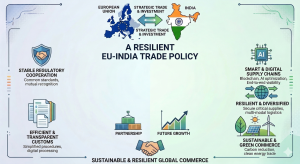






 Admission Closed
 Admission Closed
 Admission Closed
 Admission Open

 ROI Calculator



