Key Strategic Shifts Supply Chain Leaders Must Make
In this increasingly interconnected world, Free Trade Agreements (FTAs) have emerged as strategic tools, transforming the global trade landscape and supply chain architecture. Trade agreements signed in recent years, such as the India–EFTA Trade and Economic Partnership Agreement, are not only changing the tariff structure but also the compliance framework, logistics architecture, and risk management strategies. What was once a cost-effective and linear supply chain is now undergoing a transformation to become a compliance-driven and resilient supply chain network that can adapt to geopolitical risks, complexities, and ever-changing trade norms. For business leaders, this means supply chain strategy is no longer just an operational issue; it is a critical element of global competitiveness.
The global trade environment is no longer the stable trajectory that it was before the pandemic. The World Policy Uncertainty Index has skyrocketed from 13,003 in January 2024 to over 41,000 in mid-2025, which is a clear signal of increasing uncertainty in trade policies, taxes, and regulations. This has forced many companies to re-evaluate their supply chains, manufacturing locations, and distribution networks.
At the same time, there has been an increase in FTAs across the globe. According to the World Trade Organization (WTO), there are approximately 375 FTAs that have been notified as of late 2025, which is a clear signal that the preference for free trade is still a strategic priority.
Why FTAs Matter to Your Supply Chain?
FTAs are more than just a way to lower tariffs and eliminate non-tariff barriers or facilitate faster market access. The true significance of FTAs in supply chain formation goes beyond these benefits:
Rules of Origin and Compliance
Typically, the rules of origin in most FTAs are very specific on how a product must qualify for preferential tariff treatment. This means that manufacturers must be able to trace their inputs accurately, or else the whole advantage of the FTA may be lost. This makes supplier traceability a strategic imperative for global supply chain-based companies.
Operational Efficiency and Customs Facilitation
Modern trade agreements often incorporate customs-driven improvements such as harmonized processes, paperless documentation, and streamlined inspection processes. Efficient and reliable border crossing is more than a mere convenience; it’s a key differentiator for just-in-time inventory and e-commerce networks.
Risk Diversification and Resilience
Current research on supply chain networks indicates that three-quarters of enterprises globally are rethinking their supply chains to connect with new suppliers, a move that reflects the geopolitical uncertainty and risk of tariff changes. FTAs enable companies to source goods from multiple countries, mitigating risks and creating regional hubs that better respond to market realities.
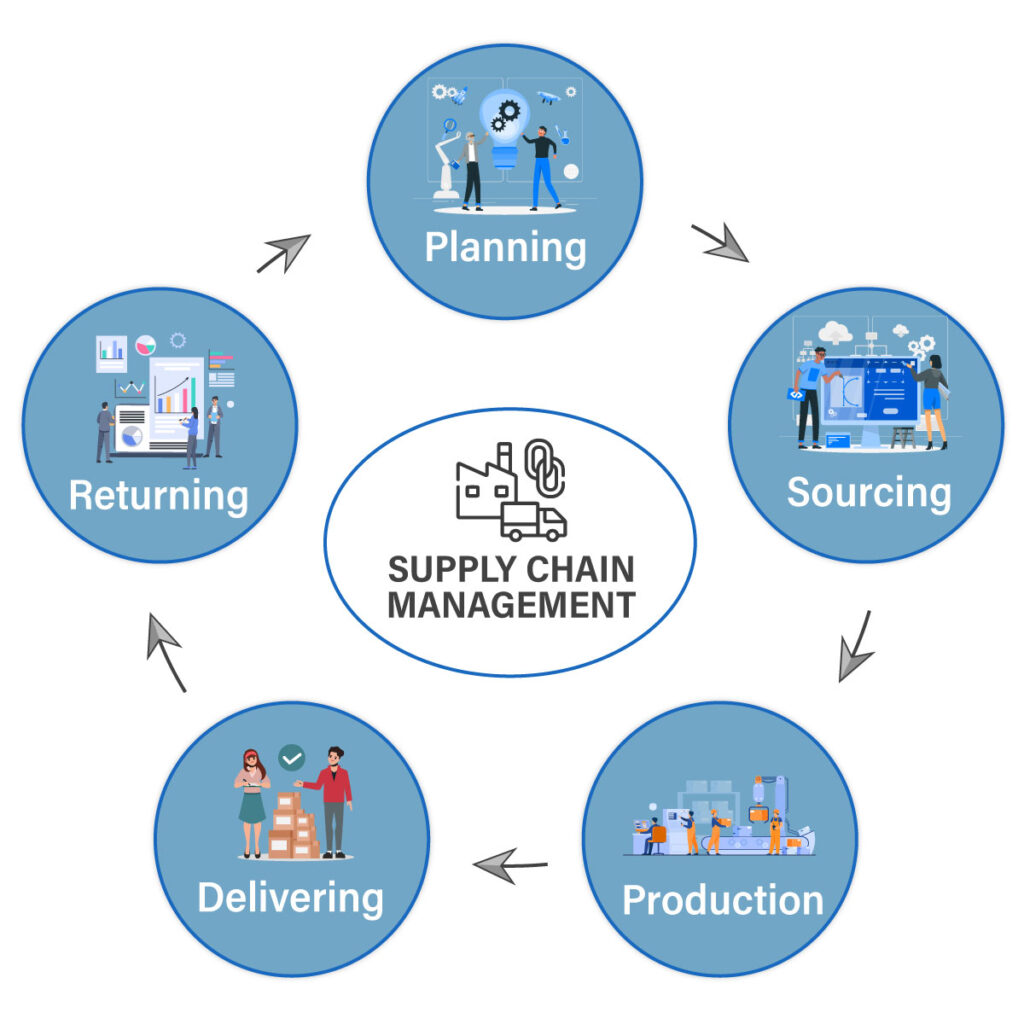
Supply chain management is of vital importance for the smooth operation of industries today. It links suppliers, manufacturers, distributors, and retailers together for the efficient movement of materials, information, and finished products. Effective supply chain management helps industries lower their operational costs, improve manufacturing efficiency, and deliver goods to customers on time. This also helps industries improve their inventory management, reduce delays, and improve coordination with other stakeholders involved in the supply chain. Effective supply chain management is vital for industries, as it helps them respond to changing market demands and supply chain disruptions in competitive markets today. Effective supply chain management is also vital for industries as they expand their operations globally and look for long-term growth.
Key Strategic Shifts Supply Chain Leaders Must Make
1. Embed Compliance in Supply Chain Design
It’s no longer enough to treat compliance as just paperwork. Organizations must incorporate compliance into sourcing models, supplier contracts, and logistics planning, integrating regulatory checks early in the design process. This includes automated data capture, digital traceability, and governance teams from different functions.
2. Invest in Visibility & Analytics
Visibility across multi-tier supply networks is crucial for qualifying products under FTA terms, managing risk, and responding to disruptions. Tools that combine data from suppliers, logistics partners, and customs authorities can help organizations meet compliance requirements and gain insights into cost drivers and performance trends.
3. Dynamic Partner Mapping & Dual Sourcing
Companies are increasingly adopting dual supply chains and “friend-shoring” strategies, diversifying partner locations based on political alignment, cost profiles, and supply risks. Approximately 40% of companies are sourcing more from the U.S., and 32% are creating dual networks to reduce geopolitical tensions.
4. Align ESG and Trade Requirements
Environmental, Social, and Governance (ESG) compliance frameworks are merging with trade compliance in many areas. This has raised expectations for supplier due diligence, sustainability reporting, and evidence of ethical standards throughout the supply chain.
Advance Your Career in This New Era of Supply Chains
To succeed in today’s compliance-driven supply chain environment, professionals need strong skills in international trade, risk management, and supply network transformation.
The Advanced Executive Programme in Global Supply Chain Management & Transformation at SJMSOM, IIT Bombay, offered by Jaro Education, is tailored for mid- to senior-level professionals. This programme provides you with strategic insights, practical frameworks, and tools to manage complex FTAs, create resilient supply chains, and lead transformation projects. You will gain knowledge in compliance optimization, global logistics strategy, digital supply chain design, and risk reduction, all supported by world-class academic guidance.
Benefits of the Programme:
Learn from industry experts and IIT Bombay faculty.
Master the latest tools in trade compliance and supply chain analytics.
Develop strategic skills to lead global supply chain transformation.
Boost your career growth and leadership potential in international trade and logistics.
Apply now and future-proof your career to ensure your supply chain strategies are compliant and competitive.
FTA signing is defined as the agreement between two or more nations to establish a Free Trade Agreement. The main intention behind the creation of the FTA is to reduce or eliminate duties and make the rules governing the movement of goods and services between the nations simpler and easier.
The Indian government and the European Union have been in talks to establish a mutually beneficial Free Trade Agreement (FTA) between the two nations to strengthen their economic and trade relations
Yes, supply chain management is considered a promising field because international trade is heavily dependent on the efficient movement of goods and services between nations. With the rise of international trade and e-commerce, the need for skilled personnel in the field of supply chain management is high.
The four types of supply chains that are commonly found in any organization include efficient supply chains, responsive supply chains, agile supply chains, and flexible supply chains.
Shubham Lal
Lead Software Developer
Shubham Lal joined Microsoft in 2017 and brings 8 years of experience across Windows, Office 365, and Teams. He has mentored 5,000+ students, supported 15+ ed-techs, delivered 60+ keynotes including TEDx, and founded AI Linc, transforming learning in colleges and companies.
Get Free Upskilling Guidance
Fill in the details for a free consultation
Related Courses
Explore our programs
Admission Closed
Advanced Certificate Programme in Smart Supply Chain Management & Transformation
 HOME > BLOG > Supply Chain > FTA Is Signed. Are Your Supply Chains Ready? The New Compliance-Driven Supply Chain Era
 March 18, 2026
 4 min read




 ChatGPT
 Perplexity
 Claude
 Grok
Grok



 Admission Closed

 Admission Closed
 Admission Closed
 Admission Open

 ROI Calculator



