HOME > BLOG > Leadership > Types of Leadership Styles: 4 Key Types with Examples & Skills
Leadership
Types of Leadership Styles: 4 Key Types with Examples & Skills
J
By Bhargavi R
May 5, 20268 min read
Published on May 5, 2026
SHARE THIS ARTICLE
Table Of Content
4 Key Types of Leadership Styles
Why Understanding Types of Leadership Matters in 2026
How to Choose the Right Leadership Style
Future Leadership Trends at a Glance
There is no single formula for good leadership today. An approach that worked well in the era of rigid hierarchies ten years ago might not work in today's dynamic environment. People working together no longer share the same space, roles are overlapping, and the whole process of decision-making is much more decentralised.
It turns out that, at such times, knowing about different types of leadership goes beyond theoretical importance. The modern job market relies heavily on hybridisation, agility, and cross-functional collaboration, which calls for leaders who can tailor their leadership styles to circumstances.
When the style matches the needs of a particular team or organisation, there are tangible results. They include increased productivity, better stability of corporate culture, and easier scalability of processes.
The types of leadership refer to different approaches leaders use to guide, influence, and manage teams. Each style reflects how decisions are made, how authority is distributed, and how leaders interact with their teams. Choosing the right one depends on the situation, team structure, and business goals.
Here are the 4 types of leadership styles with examples:
1. Autocratic Leadership
Autocratic leadership is characterised by control and clarity. This form of leadership is marked by the leader making decisions on his/her own without much team interaction. This form of leadership works best in scenarios where rapidity and accuracy are prioritised over deliberation.
Skills Required:
Effective decision-making
Decision conviction
Handling of pressure
Direction-giving
Ownership of accountability
Example:
In many traditional Indian businesses, especially earlier family-run setups, leadership often followed a command-driven structure. Decisions were made at the top, with execution flowing downward. This worked effectively in stable environments where clarity and control mattered more than flexibility.
2. Democratic Leadership
Democratic Leadership is based on an inclusive approach. While the final call rests with the leader, group participation plays an important role in making decisions. This type of leadership has gained significance in today’s time.
Skills Required:
Emotional intelligence
Empathy
Effective communication
Collaboration
Handling conflicts
Research indicates that almost 36% of people in India prefer the democratic approach of leadership.
Example:
Modern professional organisations in India, especially in sectors such as information technology and new enterprises, have embraced the participative approach for decision-making. Decision-makers include members in consultations, not only for idea generation but also for achieving synergy.
3. Transformational Leadership
Transformational leadership emphasises vision and far-reaching results. Transformational leaders do not simply control processes but rather motivate others to transform their thoughts, actions, and development within the organisation.
Skills Required:
Vision and strategic foresight
Motivation and influence
Ethics and trust building
Emotional Intelligence
Change Management
Such leadership skills emphasise essential qualities such as passion, ethics, flexibility, and emotional resilience in leaders who implement change.
Example:
Ratan Tata is an example of such a leader. He transformed the business from a decentralised, mostly domestic entity to a global powerhouse by emphasising trust, ethical values, and encouraging innovation over short-term revenue.
4. Laissez-Faire Leadership
Among all the leadership styles, laissez-faire leadership is the least intrusive style of leadership. Such leaders will guide, but they will let their groups work autonomously.
Skills Needed:
Trust and delegation
Self-awareness
Patience
Identifying talent
Very little involvement and strategic guidance
This type of leadership is based on ideas of leadership that require self-awareness and humility, which enable them to take a back seat and let competent teams work unhampered.
Example:
Warren Buffett trusted managers to run Berkshire Hathaway firms autonomously, while tech entrepreneurs such as Steve Jobs empowered teams to create novel products. This style is most effective in circumstances where innovation and individuality are paramount, but it requires competent teams.
Why Understanding Types of Leadership Matters in 2026
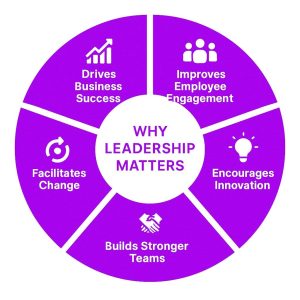
Leadership today isn’t about sticking to one approach, it’s about knowing when to shift gears. As teams become more dynamic and expectations evolve, understanding the types of leadership skills helps leaders stay relevant and effective without overcomplicating decision-making.
Here’s how:
1. Driving Business Agility in Uncertain Markets
Firms now find themselves working within an environment where the only certainty is constant change. Managers with knowledge of various forms of leadership will react swiftly through adjusting their style rather than trying to fit a square peg into a round hole.
When under stress, for example, a more directive form of leadership may increase efficiency. On the other hand, when developing a new strategy or innovating, a collaborative style would produce better results.
2. Improving Employee Retention and Engagement
Retention has moved beyond merely being concerned about compensation; it has become closely associated with management practices. Employees are bound to be retained if there is a match between leaders’ behaviours and those of their teams. Otherwise, employees get disengaged.
Leaders who effectively employ various forms of leadership ensure that their employees feel valued, respected, and trusted. In the long run, this helps build stronger interpersonal relations, retain employees, and improve organisational morale without any form of coercion.
3. Accelerating Innovation and Decision-Making
Creativity does not flourish in a rigid environment. Creativity blossoms when there are conditions that support idea generation and innovation. Leadership approaches that are more open tend to foster a culture where problems can be effectively solved.
However, all scenarios may not provide opportunities for lengthy debate. Here, an awareness of the various types of leadership skills becomes relevant.
4. Managing Cross-Functional and Hybrid Teams
Modern teams are rarely uniform. They consist of individuals from different functions, backgrounds, and even locations. Managing such diversity requires more than a fixed leadership style.
Leaders who are familiar with multiple types of leadership can adjust their approach based on team maturity, expertise, and communication preferences. This makes collaboration smoother and reduces friction, especially in hybrid or remote setups where alignment can easily break down.
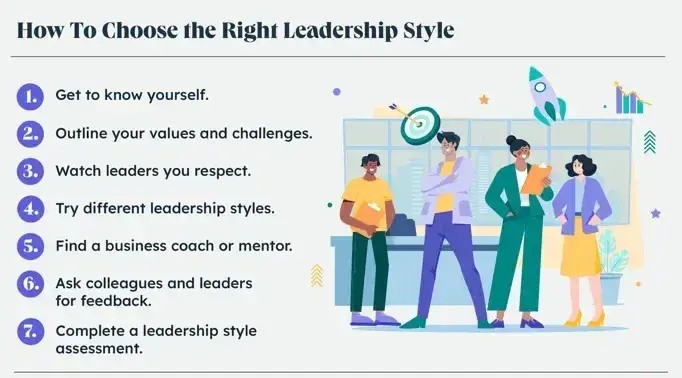
There isn’t a single answer to this, and that’s where most people get it wrong. Choosing between different types of leadership isn’t about what feels right to you, it’s about what actually works for the people and situation in front of you. Most effective leaders don’t stick to one style; they adjust as things change.
1. Start With Your Team, Not Yourself
Prior to contemplating the type of leadership style, take note of your followers. An experienced group of people does not require much supervision from its leaders because they have already mastered the task on their own. For a novice team, more explicit directions and close supervision would be helpful.
It is at this point that various forms of leadership begin to apply. This has nothing to do with preference and everything with correct assessment.
2. Look at the Situation You’re In
Sometimes the team will have to adopt another perspective based on whatever the situation is. In times of urgency, such as deadlines and emergencies, people expect leaders to step up and assume control.
However, during periods where everything is running smoothly and in projects that require creativity, a more participative method of work tends to yield favourable results. The ability to know how to act appropriately is what distinguishes mediocre leaders from good leaders.
3. Match Your Style to the Goal
Different objectives call for different kinds of leaders. If speed and efficiency are the priorities, then the best way forward would be to go straight to the point. On the other hand, if the aim is to innovate and grow, then giving people freedom to think and speak will produce much better outcomes.
It becomes clear that there is great value in being acquainted with different leadership styles, since this enables one to pick the right style based on one’s objective.
4. Don’t Lock Yourself Into One Style
A very frequent mistake is limiting oneself to one particular style of leadership, irrespective of the context. Leadership is not static but dynamic. Many excellent leaders alternate between different styles subtly and unobtrusively.
For instance, you may find yourself assuming total responsibility in one case, sharing responsibilities with others in another, and withdrawing entirely when your group is self-reliant.
Instead of overcomplicating things, you can break it down into three steps:
Assess what your team needs right now
Adapt your approach based on that
Apply it, and adjust if it’s not working
Over time, this becomes instinctive. And that’s when understanding the types of leadership skills actually starts to show in how you lead, not just what you know.
Mixing different leadership styles based on the situation
Data-Backed Decisions
Using tools and insights instead of relying only on instinct
People-Focused Leadership
Paying attention to employee experience and trust
Flexible Team Management
Adjusting leadership style for different teams and setups
Upskill Your Leadership Capabilities with Jaro Education
Knowing about the leadership styles is one thing; being able to apply them successfully is another. This is where structured training comes into play. Professionals who want to move from theory to practice and acquire the skills necessary for leadership roles can rely on the programs offered by Jaro Education.
The programs are focused on addressing the changing requirements of businesses and provide the necessary mindset and skills needed in various leadership styles.
These programmes not only strengthen your understanding of the types of leadership but also equip you with the practical skills needed to apply them effectively in dynamic business settings.
In today’s world, leadership has become more dynamic than sticking to a rigid process. Which means there’s no single “best” style anymore, knowing multiple types of leadership is what actually helps. Being able to adjust your approach quickly is becoming more important than sticking to one way of leading.
For individuals seeking to develop their leadership skills, at Jaro Education, we provide courses from top B schools.
Get in touch with us today and take the first step towards developing your leadership skills!
Frequently Asked Questions
Leadership skills may vary from decision-making and communication to emotional intelligence and adaptability. There is an array of skills that are needed for different types of leadership styles.
There is no one-size-fits-all answer to this question. It depends on context, people, and goals. Good leaders typically adopt different types of leadership styles.
There are four main leadership styles: autocratic, democratic, transformational, and laissez-faire. Each of these styles varies in decision-making and team management.
It is possible, and it is even recommended. Leaders should adopt different leadership styles depending on circumstances.
It is essential because it helps to build a team and achieve better results by using different types of leadership styles.
Bhargavi R
HR Professional
Bhargavi Reddy is an HR professional with over 6 years of experience in IT recruitment and talent acquisition. She specializes in hiring across technologies like Java, DevOps, Python, and Data Engineering. With strong expertise in full-cycle recruitment and stakeholder management, she focuses on building high-performing teams. Currently, she works as an HR Manager driving strategic hiring initiatives.

 May 5, 2026
 8 min read




 ChatGPT
 Perplexity
 Claude
 Grok
Grok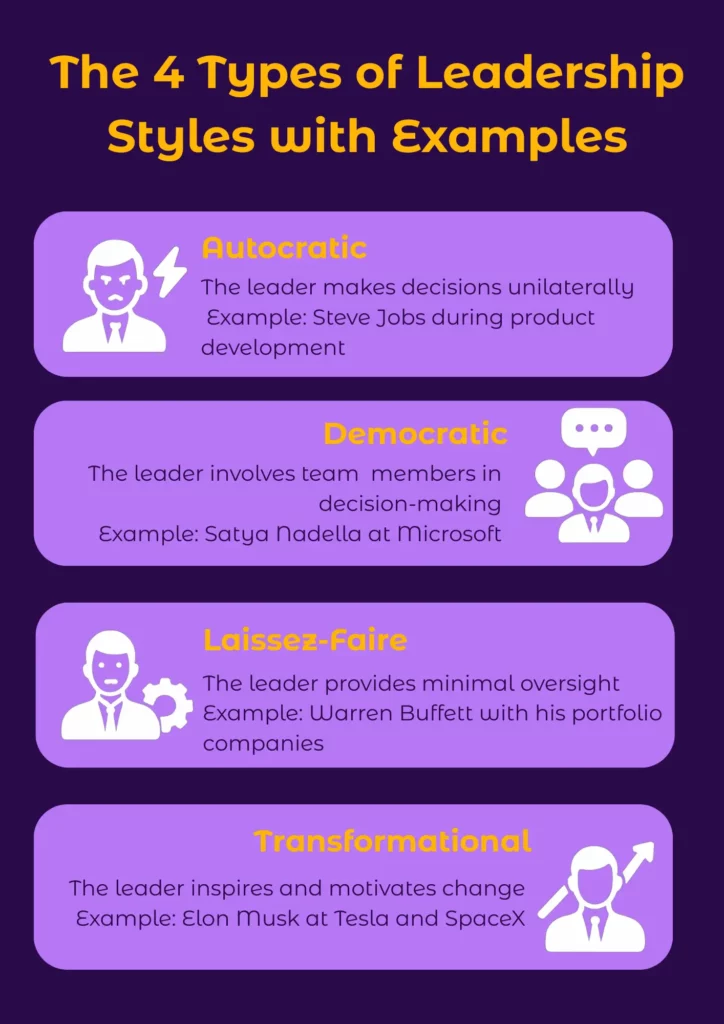




 Admission Open
 Admission Closed

 Admission Closed

 ROI Calculator



