A startup is a young company built to solve a problem through innovation, with the potential to scale quickly while navigating uncertainty and business risks.
Startups come in different types, including small business, scalable, lifestyle, buyable, social, and big company startups, across industries such as fintech, edtech, healthtech, and artificial intelligence.
Building a startup involves identifying a real problem, validating the idea with potential customers, creating a Minimum Viable Product (MVP), gathering feedback, and developing a sustainable business model.
Startup funding options include bootstrapping, angel investors, venture capital, government schemes, crowdfunding, and incubators. Common challenges such as cash shortages, limited market demand, team conflicts, and slow growth can be addressed through careful planning and continuous improvement.
In this blog, you'll learn what a startup is, how it differs from a small business, the types and stages of startups, practical steps for starting a startup, promising startup ideas, funding options, and ways to overcome common challenges.
Every big company you know once began as a tiny idea. Amazon started in a garage selling books. Airbnb began when two roommates rented out air mattresses to pay their bills. Flipkart started with two friends and a handful of book orders. These are all examples of a startup, and today the word is everywhere. Newspapers talk about it, colleges teach it, and millions of young people dream about it.
But what is a startup, really? Is it just a small business with a cool office? Is it only for tech geniuses? And how does one actually work, grow, and make money? In this blog, we will keep things simple and honest. You will learn the startup meaning, the main types, how a startup works, how to begin starting a startup, where to find startup ideas, and how startup funding works. Let's get into it!
A startup is a young company built to solve a problem in a new or better way, with the goal of growing fast. It usually begins with an idea, a small team, and limited money. Instead of copying an existing business, a startup tries to create something fresh, such as a new product, a smarter service, or a different way of doing things.
Three words capture the heart of any startup: innovation, scalability, and uncertainty.
Innovation: It offers something new or meaningfully better.
Scalability: It can grow quickly without costs rising at the same speed. A single app, for example, can serve ten users or ten million.
Uncertainty: Nobody knows for sure if the idea will work. That risk is part of the journey.
So a startup is not just “a new business”. It is a business that is still searching for a repeatable, profitable way to grow.
Startup vs Small Business: What's the Difference?
People often mix these up, so let’s clear it. Opening a local bakery or a tailoring shop is a wonderful thing, but it is usually a small business. It follows a proven model, grows steadily, and aims for stable income. A startup, on the other hand, is built to test a new idea and grow big, often across cities or countries.
Point
Startup
Small Business
Main goal
Rapid growth and innovation
Steady income and stability
Business model
New and still being tested
Proven and familiar
Risk level
High
Low to moderate
Growth
Fast and scalable
Gradual and local
Funding
Often investors
Usually savings or loans
Neither is better. They simply have different goals. Many great founders have started with a small business and later turned it into a startup, and the reverse happens too.
Not all startups look alike. Here are the most common types, explained in plain language.
1. Small Business Startups
These are founder-run ventures such as cafes, boutiques, consulting firms, and freelance agencies. The goal is a healthy income rather than explosive growth.
2. Scalable Startups
This is the classic Silicon Valley style. Founders build a product, find investors, and aim to grow rapidly. Think software platforms,fintech apps, and e-commerce marketplaces.
3. Lifestyle Startups
Some founders want freedom more than empire. A lifestyle startup is built around the founder’s passion and preferred way of living, like a travel blog, an online course, or a design studio.
4. Buyable Startups
Here the founder builds a product to be acquired by a bigger company. Many tech toolsand apps follow this path.
5. Social Startups
A social startup focuses on solving social or environmental problems, such as clean energy, education access, or healthcare for rural areas. Profit matters, but impact matters more.
6. Big Company Startups
Sometimes large corporations create startup-like units inside the company to experiment with fresh ideas. These teams move faster than the parent organization and try new products.
7. Startups by Industry
You can also group startups by the field they work in: fintech, edtech, healthtech, agritech, foodtech, e-commerce, SaaS (software as a service), artificial intelligence, clean energy and more. Each has its own challenges and opportunities.
How a Startup Works: Behind the Scenes
Now for the interesting part. How does a startup actually work day-to-day?
Step 1: It Starts With a Problem
Every strong startup begins by noticing a real problem. Maybe people waste hours commuting, small shops struggle to accept digital payments, or students cannot afford good coaching. The clearer the problem, the better the startup.
Step 2: The Founders Build a Solution
The team creates a first version of the product, often called an MVP (Minimum Viable Product). It is basic on purpose. The goal is not perfection. It is to put something in front of real users and see what happens.
Step 3: Learn From Customers
Users give feedback, and the startup learns what they love and what they ignore. This is where many ideas change shape. Founders often “pivot”, meaning they change direction based on what the market tells them.
Step 4: Find a Business Model
A startup needs a way to earn money. It could charge subscriptions, take commissions, show ads, sell products, or offer premium features. Finding a model that works consistently is one of the toughest parts.
Step 5: Grow and Scale
Once the idea works, the startup focuses on reaching more customers, hiring more people, and expanding to new markets. This is usually when startup funding becomes important, because growth takes money.
Idea stage: You spot a problem and imagine a solution.
Validation stage: You talk to potential customers and test if they truly need it.
Early stage: You build the MVP, get your first users, and refine the product.
Growth stage: Sales rise, the team expands, and you focus on scaling.
Expansion or maturity stage: The company enters new markets, adds products, or becomes stable and profitable.
Exit or long-term stage: The founders may stay and keep growing, sell the company, or take it public.
Not every startup completes all six stages, and that is okay. Many learn valuable lessons even if the first attempt does not work out.
Starting a Startup: A Practical Step-by-Step Guide
Thinking about starting a startup yourself? Here is a clear path to follow.
1. Find a Real Problem Worth Solving
Look at your own life, your job, your city, and your community. The best startups often come from frustrations the founders felt personally. Ask yourself: What annoys people daily? What takes too long, costs too much, or feels too complicated?
2. Validate Your Idea Early
Before spending money, talk to at least 20 to 30 potential customers. Ask about their problems, not about your idea. If people say, “Yes, I would pay for that,” you are onto something. If they shrug, rethink.
3. Study the Competition
Competition is not bad news. It proves people want a solution. Study what others offer, where they fall short, and how you can be different, whether through price, quality, convenience, or experience.
4. Build a Simple Business Plan
You do not need a 50-page document. A clear one-page plan is enough. Write down your target customer, your product, how you will earn, your main costs, and your goals for the first year.
5. Assemble the Right Team
Starting a startup alone is possible, but a good team makes it easier. Look for co-founders with skills that complement yours, such as someone strong in tech, someone in sales, and someone in operations. Trust and shared vision matter more than fancy degrees.
6. Build Your MVP
Create the simplest working version of your product. Launch quickly, collect feedback, and improve. Speed beats perfection in the early days.
7. Handle the Legal Basics
Choose a business structure, such as a private limited company, LLP, or partnership, depending on your country’s rules. Register the business, get the needed licenses, and open a business bank account. In India, for example, the government’s Startup India initiative lets eligible startups apply for recognition and access certain benefits. Rules change, so always check official sources or speak with a professional.
8. Get Your First Customers
Start with people you can reach directly: friends of friends, local communities, social media groups, and online forums. A handful of happy early customers can be more valuable than thousands of random website visitors.
9. Track, Learn, and Improve
Measure what matters, such as sign-ups, sales, customer feedback, and cash in the bank. Then keep adjusting. Successful founders are not the ones who never fail. They are the ones who keep learning.
Startup Ideas to Inspire You
Stuck on what to build? Here are some startup ideas across different fields. Use them as sparks, not copy-paste plans.
Edtech: Affordable skill-based courses, regional language learning apps, or exam prep platforms for small towns.
Healthtech: Telemedicine for rural areas, mental wellness apps, or medicine reminder tools for elderly people.
Agritech: Platforms that connect farmers directly to buyers, or tools that give crop and weather advice.
Fintech: Simple budgeting apps, micro-investing tools, or digital payment solutions for small shops.
Sustainability: Reusable packaging, waste recycling services, or solar solutions for homes and small businesses.
Food and Beverage: Healthy tiffin services, cloud kitchens, or packaged regional snacks.
Digital services: Freelance marketplaces, social media management agencies, or content creation studios.
AI-powered tools: Chatbots for customer support, automation tools for small businesses, or personalized learning assistants.
How to Pick the Best Startup Idea
A great idea passes four tests. Does it solve a real problem? Is the market big enough? Can you build or deliver it? And can it make money? If you can say yes to all four, you have something worth testing.
Startup Funding: How Startups Raise Money
You use your own savings or early revenue to run the business. It keeps full control in your hands and forces discipline, though growth may be slower.
1. Bootstrapping (Self-Funding)
You use your own savings or early revenue to run the business. It keeps full control in your hands and forces discipline, though growth may be slower.
2. Friends and Family
Many founders get their first small cheque from people who believe in them. Treat it seriously. Put agreements in writing, even with loved ones.
3. Angel Investors
Angel investors are wealthy individuals who invest their own money in early-stage startups, often in exchange for a share of the company. Many also offer mentoring and useful connections.
4. Venture Capital (VC)
Venture capital firms invest larger amounts in startups with big growth potential. They usually come in at later stages, after the startup shows some traction, and they expect strong returns.
5. Government Grants and Schemes
Many governments support startups through grants, subsidized loans, and seed funds. India has several such schemes, and other countries have their own. Check official portals for the latest options and eligibility.
6. Incubators and Accelerators
These programs offer mentorship, workspace, networking, and sometimes small investments in return for equity. They can be a great launchpad for first-time founders.
7. Crowdfunding
Platforms allow many people to back your idea with small amounts, often by pre-ordering your product. It also doubles as proof that people want what you are building.
8. Bank Loans and Venture Debt
Loans can work if you have steady revenue and a clear repayment plan. They let you keep ownership, but you must pay them back regardless of how the business performs.
Tips for Raising Startup Funding
Show traction such as users, sales, or strong feedback. Proof beats promises.
Keep your pitch simple: problem, solution, market, business model, team, and ask.
Know your numbers, including costs, revenue, and how long your money will last.
Choose investors who understand your field, not just those with the biggest cheques.
Common Startup Challenges (and How to Handle Them)
Be ready for bumps along the way.
Running out of cash: Track spending closely and cut non-essentials.
No market need: Validate early and listen to customers.
Team conflicts: Set clear roles and communicate openly.
Slow growth: Test different marketing channels and improve your product.
Founder burnout: Take breaks, ask for help, and remember it is a long game.
Many startups fail, and that is a normal part of the ecosystem. What matters is learning quickly and not giving up after the first setback.
Why Startups Matter
Startups do more than make founders rich. They create jobs, introduce new technology, bring competition that improves services, and solve problems that big companies often ignore. For young people especially, the startup world offers a way to build a career based on ideas, effort, and creativity.
Final Thoughts
A startup is not magic, and it is not only for geniuses. It is simply a new company trying to solve a real problem in a better way and grow along the journey. You learn the startup meaning by understanding innovation, scalability, and risk. You succeed by testing ideas, listening to customers, and staying persistent.
If you are thinking about starting a startup, start small. Pick a problem you care about, explore a few startup ideas, talk to real people, and build a simple version. Look into startup funding only when you are ready to grow. The best time to begin is not when everything is perfect. It is when you are curious enough to take the first step.
Frequently Asked Questions
A startup is a newly formed company that tries to solve a problem with a fresh idea and aims to grow quickly. It usually starts small, takes risks, and keeps testing until it finds a model that works.
It depends on the idea. A digital or service-based startup can begin with very little, sometimes just a laptop and internet. Product-based or tech-heavy startups may need more. Starting with an MVP helps you keep early costs low.
Yes. Many founders bootstrap their startup using savings and early customer revenue. Startup funding from investors is helpful for fast growth but is not compulsory, especially if your business can earn from day one.
AI-powered tools, healthtech, edtech, sustainability, fintech, and creator-economy businesses are all attracting attention. Still, the best startup idea is the one that solves a real problem you understand, whether or not it is trendy.
Nuthana Reddy
Nuthana Reddy is a Senior Manager at Procter & Gamble, specializing in operations, digitization, and cross-functional leadership. She has driven multimillion-dollar impact through innovation, process optimization, and strategic execution across global markets.
Get Free Upskilling Guidance
Fill in the details for a free consultation
Related Courses
Explore our programs
e-Postgraduate Diploma in Innovation & Entrepreneurship

 October 14, 2026
 10 min read




 Key Insights
 ChatGPT
 Perplexity
 Claude
 Grok
Grok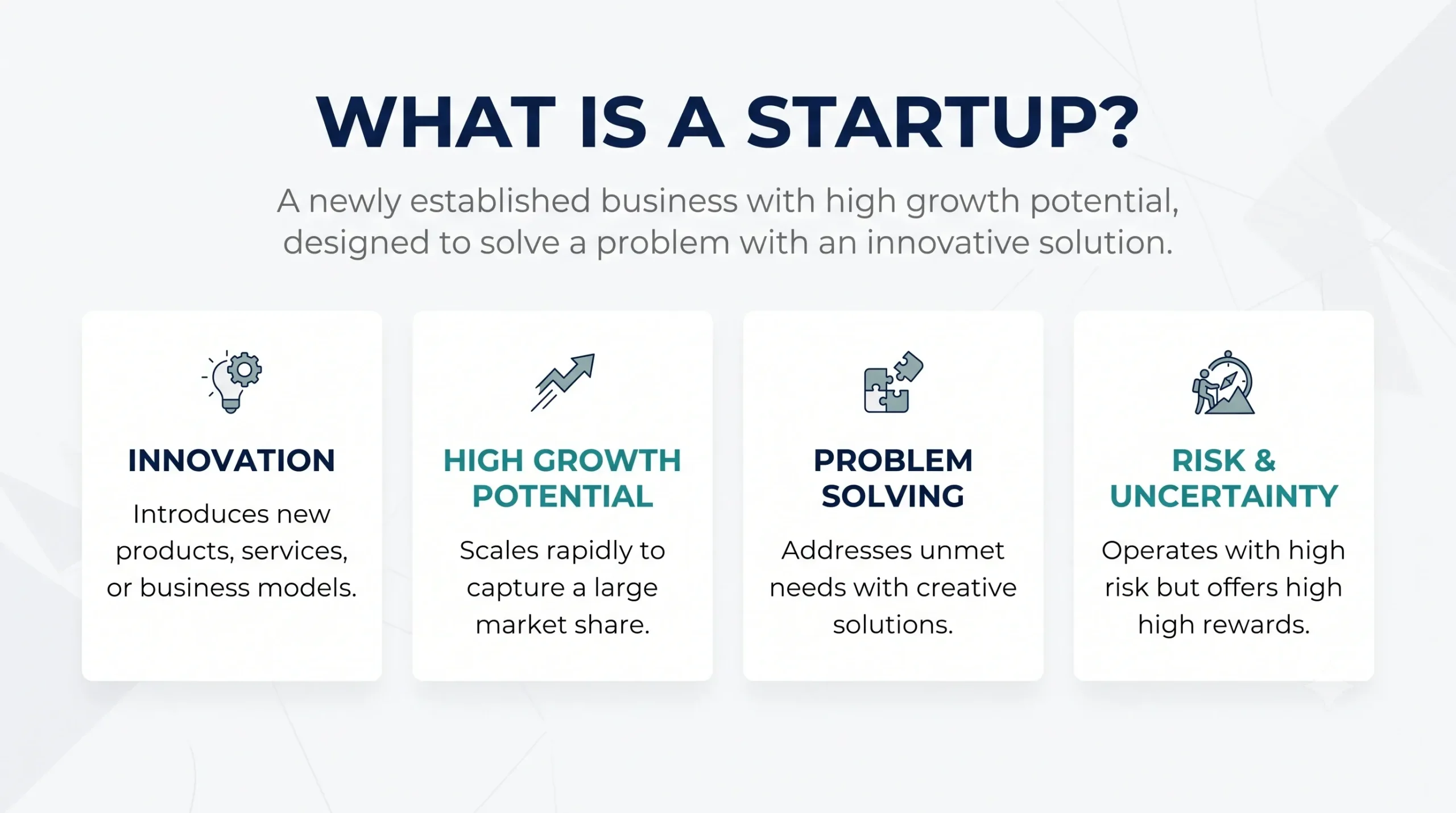












 ROI Calculator



