HOME > BLOG > Finance > Financial Reporting Standards in India 2026: What CAs, CFOs and Finance Managers Must Know
Finance
Financial Reporting Standards in India 2026: What CAs, CFOs and Finance Managers Must Know
J
By Arif Siddiqui
June 30, 20266 min read
Published on June 30, 2026
SHARE THIS ARTICLE
Table Of Content
Understanding Financial Reporting Standards in India
Why Financial Reporting Standards Matter More in 2026
Major Financial Reporting Trends in India 2026
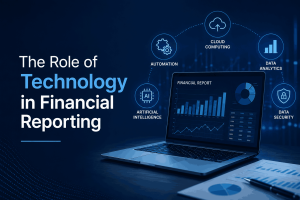
The Role of Technology in Financial Reporting
India’s financial ecosystem is evolving rapidly in 2026. With increasing globalisation, stricter regulatory scrutiny, digital transformation, and the growing importance of transparency in corporate governance, financial reporting standards have become more important than ever before.
For Chartered Accountants (CAs), Chief Financial Officers (CFOs), finance managers, auditors, compliance professionals, and business leaders, understanding the latest financial reporting developments is essential for ensuring compliance, improving investor confidence, and driving strategic decision-making.
Financial reporting today is no longer limited to preparing balance sheets and income statements. It has become a strategic business function that directly impacts investor trust, risk management, governance quality, and long-term business sustainability.
As India continues aligning its reporting framework with global standards, finance professionals must stay updated with emerging regulations, Indian Accounting Standards (Ind AS), ESG disclosures, and technology-driven financial systems.
Understanding Financial Reporting Standards in India
Financial Reporting Standards refer to the framework of accounting principles, disclosures, and reporting guidelines that companies follow while preparing financial statements.
In India, financial reporting is governed by:
Ministry of Corporate Affairs (MCA)
Institute of Chartered Accountants of India (ICAI)
Indian Accounting Standards (Ind AS) are largely converged with International Financial Reporting Standards (IFRS), helping Indian organisations align with globally accepted accounting practices.
The primary objective of these standards is to ensure:
Transparency
Accuracy
Consistency
Comparability
Accountability in financial reporting
These standards help stakeholders such as investors, lenders, regulators, auditors, and shareholders make informed business decisions.
Why Financial Reporting Standards Matter More in 2026
The role of financial reporting has expanded significantly in recent years due to multiple business and regulatory developments.
Globalisation of Business
Indian companies are increasingly expanding internationally while foreign investors continue investing heavily in Indian markets. Global stakeholders demand internationally comparable financial statements.
Rise in Regulatory Oversight
Authorities such as SEBI, NFRA, and RBI are strengthening compliance and disclosure requirements to reduce financial fraud and improve governance practices.
Increased Investor Expectations
Modern investors expect:
Real-time transparency
ESG disclosures
Ethical governance
Risk-related disclosures
Accurate forecasting
Digital Finance Transformation
Finance functions are increasingly powered by AI, analytics, automation, and cloud-based systems, making reporting more dynamic and data-driven.
Because of these developments, finance professionals are expected to move beyond traditional accounting roles and contribute strategically to organisational growth.
Ind AS implementation continues expanding across industries and business sectors in India.
The objective is to improve:
Financial statement comparability
International alignment
Reporting transparency
Investor confidence
Ind AS standards cover critical areas such as:
Revenue recognition
Lease accounting
Financial instruments
Consolidation of accounts
Fair value accounting
Impairment assessment
Companies transitioning from traditional Indian GAAP to Ind AS often face operational and compliance challenges. Therefore, finance leaders must possess strong expertise in technical accounting standards and implementation frameworks.
2. Insurance Sector Transition to Ind AS
One of the biggest developments in 2026 is the proposed implementation of Ind AS for India’s insurance sector.
The Insurance Regulatory and Development Authority of India (IRDAI) has proposed mandatory adoption of Ind AS for insurers from April 1, 2026. This move aims to improve financial transparency and global comparability in the insurance industry. (The Economic Times)
The transition will impact:
Profit recognition
Financial disclosures
Risk reporting
Asset valuation
Long-term liability measurement
For finance professionals working in insurance companies, understanding these reporting changes is becoming highly critical.
3. ESG and Sustainability Reporting
Environmental, Social, and Governance (ESG) reporting is now a major part of corporate reporting practices.
Investors today evaluate organisations not only based on profitability but also on:
Sustainability practices
Social impact
Governance quality
Ethical operations
Diversity and inclusion
SEBI’s Business Responsibility and Sustainability Reporting (BRSR) framework has accelerated ESG adoption among Indian companies.
Finance leaders now play a key role in:
Measuring ESG performance
Integrating sustainability metrics into reporting
Ensuring disclosure accuracy
Managing non-financial reporting frameworks
In the coming years, ESG reporting will become as important as traditional financial reporting.
4. Greater Focus on Corporate Governance
Corporate governance has become central to financial reporting in 2026.
Recent corporate frauds and governance failures globally have increased the demand for:
Professionals who continuously upgrade their skills are more likely to succeed in leadership roles.
Future of Financial Reporting in India
The future of financial reporting in India will be shaped by:
Global reporting convergence
Sustainability reporting
AI-driven finance operations
Real-time reporting systems
Governance-focused leadership
Finance functions will become more integrated with business strategy, risk management, and stakeholder communication.
Companies will increasingly expect finance teams to deliver:
Strategic insights
Predictive analytics
Ethical governance
Transparent reporting
Data-driven decision-making
As reporting frameworks evolve, professionals who combine technical expertise with strategic and technological capabilities will remain highly valuable.
Importance of Executive Education in Finance and Governance
With the growing complexity of financial reporting and governance frameworks, executive education has become extremely important for finance professionals.
Specialised programmes help professionals:
Understand evolving reporting standards
Strengthen governance expertise
Develop strategic finance skills
Improve leadership capabilities
Gain practical industry exposure
One such programme is the Financial Reporting and Corporate Governance Programme offered by IIM Ahmedabad in collaboration with Jaro Education.
The programme is delivered in blended learning mode and includes campus immersion at IIM Ahmedabad. It is designed for finance professionals, CAs, auditors, entrepreneurs, and executives looking to strengthen their expertise in financial reporting and governance.
Participants gain exposure to:
Industry-relevant case studies
Expert faculty from IIM Ahmedabad
Strategic finance frameworks
Practical governance insights
The programme also provides networking opportunities with experienced professionals across industries.
Conclusion
Financial reporting standards in India are entering a new era of transparency, accountability, sustainability, and digital transformation in 2026.
From Ind AS adoption and ESG reporting to AI-driven finance systems and stronger governance expectations, the role of finance professionals is evolving rapidly.
For CAs, CFOs, finance managers, and auditors, staying updated with financial reporting developments is essential not only for compliance but also for driving business growth and strategic decision-making.
Professionals who invest in continuous learning, governance expertise, and technology-driven finance capabilities will be better prepared to lead organisations successfully in the future.
As businesses continue adapting to global financial standards and stakeholder expectations, strong financial reporting and governance practices will remain critical pillars of long-term organisational success.
Frequently Asked Questions
The 2026 updates mainly focus on enhanced disclosure norms, ESG reporting integration, revised lease accounting practices, and closer alignment with global IFRS standards. Businesses are expected to adopt more transparent and technology-driven reporting frameworks.
Keeping up with Ind AS and IFRS updates helps organizations ensure regulatory compliance, improve investor confidence, avoid penalties, and make better strategic financial decisions in a competitive business environment.
The latest standards are increasing the demand for accurate disclosures, real-time financial reporting, automation in accounting processes, and stronger corporate governance practices across industries.
Chartered Accountants (CAs), CFOs, finance managers, auditors, compliance professionals, and aspiring finance leaders can significantly benefit from advanced financial reporting and corporate governance expertise.
Professionals can enhance their expertise through executive education programmes, certifications in financial reporting, corporate governance training, and industry-oriented finance leadership programmes from reputed institutions like Indian Institute of Management Ahmedabad.
Arif Siddiqui
Head of Accounting and Treasury
Arif Siddiqui is a finance leader specializing in accounting, treasury, and financial strategy. As Head of Finance at Generali Employee Benefits, he brings extensive experience in managing global financial operations. He is known for driving financial efficiency and governance across organizations. His leadership supports sustainable business growth and financial excellence.

 June 30, 2026
 6 min read




 ChatGPT
 Perplexity
 Claude
 Grok
Grok





 Admission Open
 Admission Open
 Admission Closed
 ROI Calculator