The Growing Need for Financial Literacy Across Departments
How Financial Reporting Supports Better Decision-Making
Not too long ago, financial reporting was seen as something handled only by accountants and finance teams. Most employees outside finance rarely interacted with financial statements unless they were part of senior management. But the way businesses operate today has changed significantly. Companies are becoming more data-driven, performance-focused, and strategically aligned across departments. As a result, financial reporting skills are no longer limited to finance professionals alone.
Modern organizations expect employees to understand how their work affects revenue, profitability, budgeting, and overall business performance. Whether it is marketing, operations, human resources, sales, or project management, every department contributes to the financial health of a company. This shift has made financial reporting an essential business skill for professionals across industries.
For many professionals, understanding financial reporting is no longer just an added advantage. It is becoming a necessary skill for career growth, leadership opportunities, and better decision-making in the workplace.
Businesses today operate in highly competitive environments where every decision impacts cost, efficiency, and profitability. Companies rely heavily on financial data to evaluate performance, identify opportunities, and plan future strategies. Financial reporting helps organizations understand where they are spending, how they are earning, and what improvements are required.
This growing dependence on financial data has increased the importance of financial literacy across teams. Professionals who understand financial reports are often able to make smarter decisions, communicate more effectively with leadership teams, and contribute more meaningfully to business goals.
The workplace is also changing because of digital transformation. Companies now use dashboards, analytics platforms, and automated reporting systems that make financial information accessible to employees across departments. Since financial data is no longer restricted to finance teams, organizations expect professionals to understand and use this information effectively.
Financial reporting refers to the process of recording, analyzing, and presenting financial information in a structured format. These reports help businesses evaluate their financial condition and overall operational performance.
Financial reporting usually includes areas such as:
Revenue tracking
Expense management
Profitability analysis
Budget planning
Financial forecasting
Cash flow monitoring
Traditionally, these reports were mainly handled by finance departments. However, modern business environments require professionals from different functions to understand these reports because their daily decisions directly impact company finances.
For example, a marketing team managing advertising campaigns needs to understand return on investment. Operations teams need to monitor costs and efficiency. HR departments must balance hiring budgets and workforce expenses. Sales teams focus on revenue targets and profitability. In all these situations, financial understanding becomes extremely valuable.
The Growing Need for Financial Literacy Across Departments
One of the main reasons financial reporting skills are becoming essential is the increasing need for collaboration between departments. Businesses no longer operate in isolated functions where finance handles numbers while other teams focus only on execution.
Today, budgeting, forecasting, and strategic planning involve multiple departments working together. When professionals understand financial terminology and reporting structures, communication becomes more efficient and productive. Teams can align better with organizational goals and participate more confidently in business discussions.
This shift has also increased the demand for financially aware managers and team leaders. Companies prefer professionals who not only understand their domain expertise but can also evaluate the financial impact of their decisions.
For example, when launching a new product, teams must consider production costs, marketing budgets, expected revenue, and long-term profitability. Professionals with financial reporting knowledge can contribute more effectively during such planning processes.
How Financial Reporting Supports Better Decision-Making
Decision-making in modern organizations is heavily influenced by data. Businesses now expect professionals to justify strategies and investments using measurable insights rather than assumptions.
Financial reporting helps professionals:
Understand business performance more clearly
Identify areas of unnecessary spending
Evaluate operational efficiency
Monitor project profitability
Analyze growth opportunities
For instance, an operations manager who understands financial reporting can identify production inefficiencies that increase costs. Similarly, a marketing manager can analyze whether campaign spending is generating profitable returns.
This ability to connect financial insights with operational activities improves both short-term decisions and long-term business planning.
Why Modern Businesses Prefer Financially Aware Professionals
Employers today look for professionals who can combine technical expertise with business understanding. Financial reporting skills have become increasingly valuable because they help professionals think beyond their immediate responsibilities.
Companies appreciate employees who understand:
How budgets are managed
How profitability is measured
How financial performance affects business growth
How operational decisions impact revenue and expenses
Professionals with financial awareness are often better prepared for leadership roles because they can participate in strategic discussions and understand broader business objectives.
This trend is especially visible in startups and rapidly growing organizations where employees are expected to handle multiple responsibilities. In such environments, financial understanding becomes critical for managing resources effectively.
The Role of Technology in Financial Reporting
Technology has significantly transformed the way businesses handle financial reporting. Modern organizations use tools such as Excel, Power BI, ERP systems, cloud accounting platforms, and AI-based analytics software to generate real-time business insights.
These technologies have made financial information more accessible across departments. Employees no longer need advanced accounting expertise to understand financial dashboards and reports. Instead, organizations expect professionals to interpret data and use it for decision-making.
Automation has also reduced the manual workload traditionally associated with accounting processes. Many routine financial tasks are now handled through software systems. As a result, businesses increasingly value professionals who can analyze financial data strategically rather than simply process it.
The rise of data analytics and automation has further increased the relevance of financial reporting skills in non-finance roles.
Industries Where Financial Reporting Skills Are Highly Valuable
The demand for financial literacy is growing across almost every industry. However, some sectors particularly value professionals who can combine operational expertise with financial understanding.
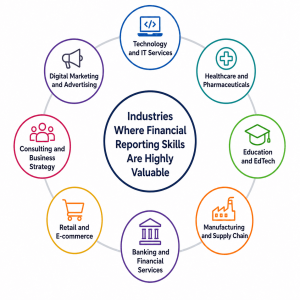
Industries where financial reporting skills are highly beneficial include:
Technology and IT Services
Healthcare and Pharmaceuticals
Education and EdTech
Manufacturing and Supply Chain
Banking and Financial Services
Retail and E-commerce
Consulting and Business Strategy
Digital Marketing and Advertising
In these industries, businesses constantly evaluate performance metrics, operational costs, and profitability to remain competitive. Professionals who understand financial reporting are better equipped to contribute to strategic business decisions.
Career Benefits of Learning Financial Reporting
Financial reporting skills can create strong career advantages for working professionals. Employers often prefer individuals who understand both business operations and financial performance.
Professionals with financial reporting knowledge usually benefit in areas such as:
For entrepreneurs and startup founders, financial reporting becomes even more important because managing budgets, monitoring cash flow, and presenting financial information to investors are essential parts of business growth.
As organizations continue to prioritize performance and efficiency, financial literacy will likely become a core professional skill across industries.
Build Financial Reporting Expertise with IIM Ahmedabad
For professionals looking to strengthen their understanding of financial reporting and corporate governance, executive education programmes can provide practical, industry-focused learning.
The programme is particularly valuable for working professionals who want to improve their business decision-making abilities and gain a deeper understanding of how financial systems influence organizational performance. As businesses increasingly expect cross-functional financial awareness, programmes like these help professionals stay relevant in evolving corporate environments.
Conclusion
Financial reporting is no longer a skill reserved only for finance departments. Modern businesses expect professionals across all functions to understand financial information and use it to support better decision-making. From improving collaboration and operational efficiency to supporting business growth and leadership development, financial literacy has become an essential workplace skill.
As organizations continue to become more data-driven and performance-focused, professionals who understand financial reporting will likely gain a strong advantage in the job market. Developing these skills today can help individuals contribute more effectively to business success while opening doors to long-term career growth opportunities.
Frequently Asked Questions
Financial reporting skills help professionals understand how their work impacts company performance, profitability, and business growth. This improves decision-making and collaboration across departments.
Financial reporting is the process of recording and presenting financial information such as revenue, expenses, profits, and cash flow to evaluate business performance.
Industries such as technology, healthcare, education, manufacturing, banking, consulting, and retail highly value professionals with financial reporting knowledge.
Yes, professionals with financial literacy often gain better opportunities for leadership roles, strategic responsibilities, and cross-functional collaboration.
Professionals can build financial reporting knowledge through executive programmes, industry certifications, and practical exposure to business reporting tools and financial analysis.
Priya Sahu
Sales & Digital Marketing Strategist
Sales and Marketing professional with 6+ years of experience in B2B and B2C growth, specializing in business development and digital marketing. Skilled in CRM systems, paid campaigns, and AI-driven strategies to drive revenue, optimize performance, and build lasting client relationships.

 May 27, 2026
 6 min read





 ChatGPT
 Perplexity
 Claude
 Grok
Grok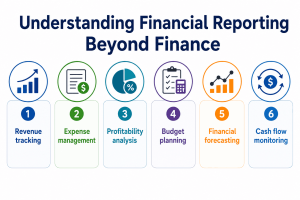






 Admission Closed
 Admission Closed
 Admission Open

 ROI Calculator