Demand Generation Meaning: Looking Beyond the Definition
Demand Generation vs. Lead Generation: What Is the Difference?
Why Demand Generation Matters for Business Growth
Key Insights
Demand generation is a long-term marketing strategy that builds brand awareness, educates prospects, and creates interest in products or services throughout the customer journey.
Demand generation and lead generation serve different purposes. Demand generation builds trust and interest, while lead generation captures contact details from interested prospects.
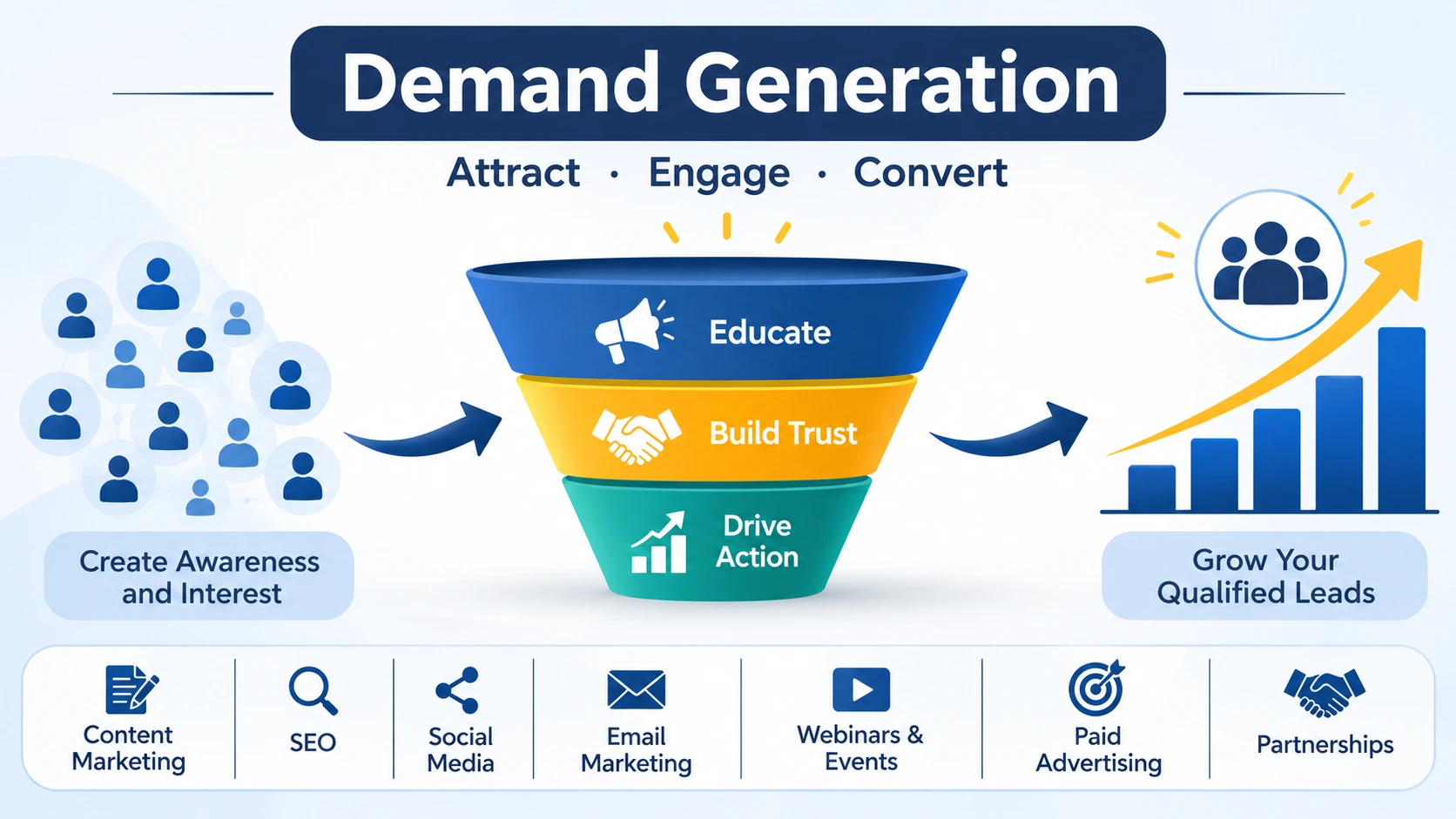
Successful demand generation campaigns combine content marketing, SEO, social media, email marketing, webinars, paid advertising, partnerships, and account-based marketing (ABM).
Building an effective demand generation strategy involves defining the ideal customer, setting measurable goals, mapping the customer journey, creating valuable content, choosing the right channels, and nurturing prospects.
In this blog, you'll learn what demand generation means, how it differs from lead generation, its key benefits and components, steps to build successful campaigns, practical examples, and important metrics to measure results.
Every business wants more customers, but many struggle to find them consistently. Some companies rely on cold calls, others on paid ads, and others simply hope that word of mouth will do the job. These tactics can work for a while, yet they rarely lead to steady and predictable growth.
This is why more marketingand sales teams are turning to demand generation. Instead of chasing people who have never heard of you, demand generation focuses on helping the right audience discover your brand, understand its value, and want to buy. In this guide, you will learn what is demand generation, understand the demand generation meaning in simple terms, explore how demand generation campaigns work, and discover practical steps to scale your leads.
Let us begin with the central question: what is demand generation? Demand generation is a marketing approach that creates awareness and interest in your products or services across the entire customer journey. Its goal is not just to collect contact details, but to build trust and educate buyers so that they actively want to hear from you.
Think of it as planting seeds before harvest season. A farmer does not wait for the harvest to start working. The soil must be prepared, seeds planted, and crops watered over time. In the same way, demand generation prepares your audience long before they are ready to buy. When they finally have a need, your brand is already familiar and trusted.
In practice, demand generation includes a mix of activities such as content marketing, search engine optimization, social media, email marketing, webinars, events, and partnerships. All of these work together to attract the right people, keep them engaged, and gradually move them toward a purchase decision.
Demand Generation Meaning: Looking Beyond the Definition
The demand generation meaning goes beyond a single tactic or channel. It describes a long-term strategy that connects marketing and sales around one shared goal: creating a steady flow of interested, qualified buyers.
There are three ideas at the heart of this meaning:
Awareness. People must first know that your brand and the problem you solve exist.
Education. Prospects need helpful, honest information that guides them toward a good decision.
Engagement. Ongoing conversations keep your brand present until the buyer is ready to act.
Because of this, demand generation is often described as a full-funnel approach. It supports people at the top of the funnel who are just exploring, those in the middle who are comparing options, and those at the bottom who are ready to buy.
Demand Generation vs. Lead Generation: What Is the Difference?
Many people use these two terms as if they mean the same thing, but they are different. Understanding the difference will help you plan better.
Demand generation is about creating interest and building relationships with a broad audience. It focuses on education, trust, and brand awareness, often without asking for anything in return at first.
Lead generation is about capturing contact information from people who have already shown some interest. It usually involves forms, gated content, or sign-up pages.
A helpful way to see the relationship is this: demand generation fills the top of the funnel with interested people, and lead generation turns that interest into identifiable leads. The two work best together. Without demand, lead generation often brings cold or low-quality contacts. Without lead capture, demand has no clear path into your sales process.
Free Courses
Free Digital Marketing Course – Marketing in New Age Digital World
Buyers today behave differently than they did a decade ago. Most people research products online, read reviews, compare options, and talk to peers before they ever speak to a salesperson. In many cases, they have made much of their decision before contacting a company.
This shift makes demand generation essential. Here is why it matters:
It builds trust early. Helpful content shows that you understand your customers’ problems.
It improves lead quality. People who learn about you first tend to be more informed and more ready to buy.
It shortens sales cycles. When prospects already understand your value, sales conversations become simpler.
It supports sustainable growth. Instead of depending on short bursts of activity, you build a steady source of interest.
It strengthens brand recognition. Consistent visibility helps your company stay on the shortlist.
It aligns marketing and sales. Both teams work toward the same goal of revenue growth.
Key Components of Successful Demand Generation Campaigns
Effective demand generation campaigns are rarely built on a single tactic. They bring several elements together into a clear plan. Here are the main components.
Content Marketing
Content is the foundation of demand generation. Blog posts, guides, e-books, case studies, videos, and podcasts help you answer questions and show expertise. The aim is to be genuinely useful, not just promotional.
Search Engine Optimization (SEO)
When people search for answers online, you want your brand to appear. SEOhelps your content rank for the questions and topics your audience cares about, bringing in steady, organic traffic.
Social Media Marketing
Platforms such as LinkedIn, Instagram, YouTube, and X allow you to reach audiences, share valuable insights, and start conversations. For business-to-business companies, LinkedIn is often especially effective.
Email Marketing and Nurturing
Email remains one of the most reliable ways to stay connected. Welcome series, newsletters, and personalized follow-ups help you nurture prospects over time without being pushy.
Webinars and Events
Live and virtual events give people a chance to learn directly from you and ask questions. They build credibility and often produce highly engaged leads.
Paid Advertising
Paid search, social ads, and sponsored content can extend your reach and put your best content in front of the right people faster. They work best when paired with strong, educational offers.
Partnerships and Referrals
Collaborating with industry experts, partner brands, and satisfied customers helps you reach new audiences through trusted voices.
Account-Based Marketing (ABM)
For companies selling to larger organizations, ABM focuses marketing efforts on a defined list of high-value accounts, using tailored messages for each.
How to Build Demand Generation Campaigns: Step-by-Step
Planning a demand generation strategy does not need to be complicated. Follow these steps to create a clear and practical roadmap.
Step 1: Define Your Ideal Customer
Start by understanding who you want to reach. Identify their industry, role, challenges, goals, and the questions they ask during their research. The clearer your picture, the more relevant your messages will be.
Step 2: Set Clear Goals
Decide what success looks like. Goals might include increasing website traffic, growing your email list, generating more qualified opportunities, or raising brand awareness. Make them specific and measurable.
Step 3: Map the Customer Journey
List the stages your buyers go through, from first awareness to final decision. Then match each stage with helpful content. For example, early-stage buyers may enjoy blog posts and videos, while late-stage buyers may prefer product demos and case studies.
Step 4: Create Valuable Content
Produce content that solves real problems. Use simple language, practical examples, and honest advice. Quality matters far more than quantity.
Step 5: Choose the Right Channels
You do not have to be everywhere. Focus on the channels where your audience spends time and where you can show up consistently.
Step 6: Nurture Your Audience
Use email, retargeting, and personalized follow-ups to keep your audience engaged. Share useful resources at the right moments rather than sending the same message to everyone.
Step 7: Align Marketing and Sales
Agree on what a qualified lead looks like and how handoffs will work. Regularcommunicationbetween teams ensures that interested buyers receive timely and relevant attention.
Step 8: Measure, Learn, and Improve
Track your results and adjust your approach. Treat every campaign as a chance to learn what your audience values most.
Examples of Demand Generation Campaigns
To make the idea more concrete, here are a few simple examples of how businesses use demand generation campaigns.
A software company publishes a series of how-to guides and short tutorial videos on common workflow problems. Readers who find them useful later sign up for a free trial.
A financial services firm hosts a monthly webinar on retirement planning, followed by an email series with practical tips. Attendees who want personalized advice book a consultation.
A manufacturing business shares case studies and industry reports on LinkedIn, then runs targeted ads to decision-makers at specific companies.
A consulting agency launches a podcast featuring industry experts. Over time, listeners become familiar with the agency and reach out when they need help.
In each case, the company focuses first on being helpful. Sales conversations come later, once trust has been built.
Pipeline and revenue influenced by marketing activities
Conversion rates at each stage of the funnel
Remember that demand generation often works over months rather than days. Patience, consistency, and regular review are important.
Final Thoughts
Demand generation is not a quick trick. It is a thoughtful way of helping the right people discover, understand, and trust your brand. Now that you know what is demand generation, understand the demand generation meaning, and have seen how demand generation campaigns are built, you are ready to apply these ideas to your own business.
Start small. Learn about your audience, create helpful content, stay consistent, and measure what works. Over time, these efforts build a steady stream of interested buyers, making it easier to scale your leads and grow with confidence.
Frequently Asked Questions
Demand generation is a marketing strategy that builds awareness and interest in your products or services by educating and engaging your target audience. The goal is to help people understand their needs and see your brand as a trusted solution, so that they are ready to buy when the time comes.
Demand generation focuses on creating interest and trust across a broad audience, while lead generation focuses on capturing contact information from people who have shown interest. They work best together, with demand generation feeding the pipeline that lead generation then converts.
The timeline varies by industry, budget, and strategy. Some early signals, such as traffic and engagement, may appear within a few weeks. Meaningful pipeline and revenue results often take three to six months or longer, since demand generation builds trust over time.
Yes. Small businesses can use demand generation effectively by focusing on a few channels, creating helpful content, and building relationships with a specific audience. Starting small and staying consistent often delivers better results than trying to do everything at once.
Priya Sahu
Sales & Digital Marketing Strategist
Sales and Marketing professional with 6+ years of experience in B2B and B2C growth, specializing in business development and digital marketing. Skilled in CRM systems, paid campaigns, and AI-driven strategies to drive revenue, optimize performance, and build lasting client relationships.
Get Free Upskilling Guidance
Fill in the details for a free consultation
Find a Program made just for YOU
We'll help you find the right fit for your solution. Let's get you connected with the perfect solution.

 November 20, 2026
 8 min read




 Key Insights
 ChatGPT
 Perplexity
 Claude
 Grok




 ROI Calculator