Every business, whether a scrappy startup or an established enterprise, shares one fundamental challenge — finding and converting new customers. Customer acquisition is the process of attracting prospects and turning them into paying customers through deliberate, repeatable strategies. According toSalesforce, it spans the entire journey from initial awareness to the moment a purchase is made.
Getting this process right matters more than most businesses realize. Without a structured acquisition approach, growth becomes unpredictable and expensive. Tracking the rightmarketing performance indicators early on helps businesses understand what’s working — and where money is being wasted.
The sections ahead break down 9 proven strategies to build a smarter, more cost-effective acquisition engine.
The Importance of Customer Acquisition Cost (CAC)
Once you understand what customer acquisition is, the next logical question is: what does it actually cost? That’s where customer acquisition cost becomes one of the most critical metrics in any growth strategy.
Simply put, CAC measures the total spend required to win a single new customer — covering everything from ad budgets to sales salaries. Keeping a close eye on this number helps businesses allocate resources smarter and avoid overspending on channels that underdeliver. In fact,tracking CAC alongside other key metrics is essential for evaluating whether a campaign is genuinely profitable.
According toZendesk, businesses that regularly monitor CAC are better positioned to scale efficiently because they know exactly which acquisition channels are worth doubling down on.
A high CAC isn’t always a dealbreaker, but it does demand a strong customer lifetime value to justify the investment. Understanding this balance sets the foundation for the practical strategies coming up next.
Strategy 1: Leveraging Content Marketing
Content marketing is one of the most cost-effective customer acquisition channels available — and the numbers back that up. According to Adobe, content-driven strategies consistently outperform traditional outbound tactics in long-term ROI. The core idea is simple: create genuinely useful content that attracts your target audience, builds trust, and nudges them toward a purchase — without the hard sell.
What makes content marketing especially powerful is how it compounds over time. A well-optimized blog post or video keeps driving traffic for months, even years, after it’s published. That means your customer acquisition cost formula — total marketing spend divided by new customers gained — improves steadily as content accumulates. Unlike paid ads, which stop the moment your budget runs out, content keeps working.
Key content formats that drive acquisition include:
Blog posts and SEO articles — capture search intent at every stage of the funnel
Videos and tutorials — build brand authority and explain complex offerings clearly
Case studies — demonstrate real-world results that convert skeptical prospects
Lead magnets (e-books, templates) — exchange value for contact information
One practical approach is to align content topics with the questions your ideal customers are already searching for. Understandinghow digital marketing drives growth can help you map content to the right channels and audiences more effectively.
Great content doesn’t just attract visitors — it earns their trust before they ever speak to your sales team. That trust is often what closes the deal. As we’ll explore next, social media platforms amplify that content even further, putting it directly in front of the audiences most likely to convert.
Strategy 2: Utilizing Social Media Platforms
Understanding what is customer acquisition goes beyond just knowing the definition — it means identifying where your potential customers actually spend their time. And increasingly, that’s on social media.
Platforms like Instagram, LinkedIn, Facebook, and TikTok give businesses direct access to highly targeted audiences. According to Smart Insights, social media remains one of the top-performing acquisition channels across industries.
Key tactics that work:
Paid social ads — Target by demographics, interests, and behavior
Organic community building — Consistent posting builds trust over time
Influencer partnerships — Borrow credibility from established voices
Social proof — Reviews, shares, and user-generated content lower purchase hesitation
One practical approach is aligning your social strategy withtrackable performance metrics so you can measure what’s actually driving new customers, not just likes.
However, social media results aren’t instant. Organic reach takes time, and paid campaigns require ongoing optimization to stay cost-efficient.
Social media’s real power is turning passive scrollers into active buyers but only when messaging matches the platform’s native culture. Up next, we’ll look at another high-ROI channel that works closely alongside social: email marketing.
Among the most reliable customer acquisition strategies, email marketing consistently delivers one of the highest returns on investment across industries. According to Indeed, targeted email campaigns remain a top channel for converting prospects into paying customers and for good reason.
Why email works:
Personalization at scale — Segmented campaigns deliver the right message to the right audience, increasing open rates and conversions
Nurture sequences — Automated drip campaigns guide prospects through the funnel without constant manual effort
In practice, businesses that pair strong lead magnets (free guides, discounts, trials) with well-timed email sequences see significantly faster conversion cycles. The key is relevance — generic broadcast emails rarely move the needle.
A well-segmented email list is one of the most valuable assets a business can own for sustainable customer acquisition.
According toNextdoor Business, combining email outreach with community-based touchpoints further strengthens trust with potential customers. Once email lays the groundwork, live interactions can seal the deal — which is exactly where webinars and events come in.
Strategy 4: Engaging Customers Through Webinars and Events
Beyond email campaigns, one of the most underrated ways to acquire customers is through live and virtual experiences — webinars, workshops, and industry events that put your expertise front and center.
Webinars build trust fast. When potential customers see your team solving real problems in real time, skepticism drops and credibility rises. According toContentsquare, interactive content formats consistently outperform passive channels in moving prospects down the acquisition funnel.
Key reasons webinars and events work:
Direct engagement — Q&A sessions turn passive viewers into active participants
Qualified lead capture — registration forms filter for genuinely interested prospects
Repurposable content — recordings, slides, and recaps extend reach long after the event ends
Authority building — hosting positions your brand as the go-to expert in your niche
Understanding yourdigital strategy and analytics helps you measure which event formats drive the strongest attendance and conversions — so you’re not just hosting webinars, you’re optimizing them.
The brands that consistently win new customers through events aren’t just presenting information — they’re creating experiences that make prospects feel genuinely understood.
As you explore experience-driven acquisition, it’s worth considering how partnering with trusted voices can amplify your reach even further — which is exactly what influencer collaborations make possible.
Strategy 5: Influencer Collaborations for Wider Reach
Influencer marketing has evolved from a trendy tactic into one of the most effective strategies to acquire customers at scale. By partnering with creators whose audiences already trust them, brands can tap into established communities without building that trust from scratch.
Micro-influencers drive results — Creators with 10K–100K followers often deliver higher engagement rates than mega-celebrities, at a fraction of the cost.
Niche alignment matters — Partnering with influencers in your specific industry ensures you’re reaching genuinely interested prospects, not just broad audiences.
According toBraze’s customer acquisition research, personalized, trust-driven outreach consistently outperforms interruptive advertising — and influencer collaborations check both boxes naturally.
Tracking performance is non-negotiable. Use unique discount codes or UTM links per influencer to measure actual conversions, not just impressions. Understanding yourmarketing ROI metrics helps evaluate whether each collaboration is genuinely lowering your customer acquisition cost or simply generating vanity metrics.
However, influencer partnerships aren’t a guaranteed win. Misaligned partnerships can damage brand credibility. Vetting an influencer’s audience authenticity before committing budget is always worth the extra step.
With audience trust secured through influencers, the next logical move is ensuring those new prospects can actually find your brand — which is exactly where search engine optimization comes in.
Strategy 6: Optimizing for Search Engines
Search engine optimization (SEO) remains one of the most cost-efficient channels for business customer acquisition — especially for long-term, compounding growth. Unlike paid ads that stop the moment you cut the budget, organic search traffic keeps delivering.
Key SEO tactics that drive acquisition:
Keyword targeting: Create content around terms your potential customers are actively searching for
On-page optimization: Optimize titles, meta descriptions, and headers to boost click-through rates
Technical SEO: Improve site speed, mobile-friendliness, and crawlability
Content depth: Publish authoritative, helpful content — exploreemerging content approaches to stay ahead of algorithm shifts
According tomonday.com’s acquisition research, businesses that consistently invest in organic search build a sustainable pipeline that’s far less vulnerable to market fluctuations than paid-only strategies.
Strong SEO isn’t just about rankings — it’s about placing your solution directly in front of buyers at the exact moment they’re looking.
Understanding thedifferent types of marketing strategies can help you integrate SEO with broader acquisition channels more effectively. Speaking of channels — if SEO brings in strangers, referral programs turn happy customers into your most credible recruiters.
Strategy 7: Referral Programs as a Growth Driver
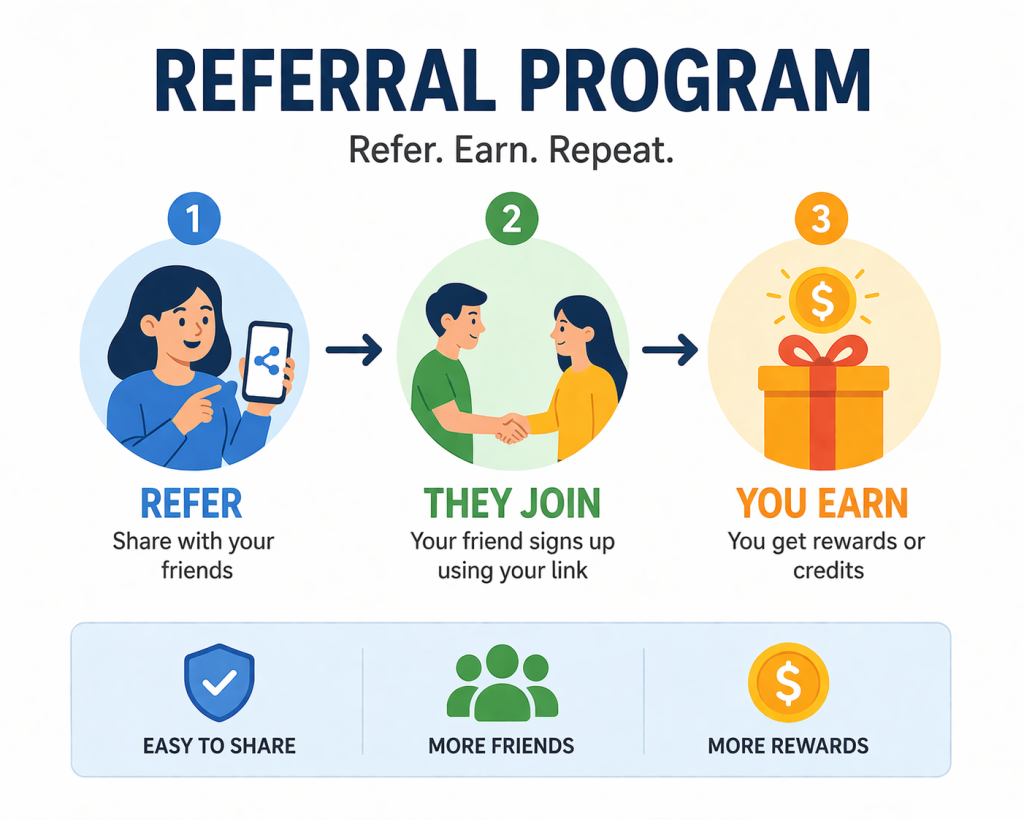
Word-of-mouth has always been powerful — but a structured referral program turns that organic behavior into a repeatable acquisition engine. When existing customers bring in new ones, your CAC (customer acquisition cost) drops significantly compared to paid channels, because the heavy lifting is done by people who already trust your brand.
Clear incentives — Discounts, credits, or exclusive perks motivate customers to share
Frictionless sharing — Simple links or codes keep participation rates high
Two-sided rewards — Rewarding both the referrer and the new customer doubles the motivation
In practice, even a basic referral structure can outperform expensive ad campaigns. The key iscrafting compelling messaging that makes sharing feel natural rather than transactional.
Referral programs work best when your product genuinely delights users — no incentive can substitute for a strong core experience.
Of course, referral programs have limits. They rely on having an existing customer base, which means they’re more of a growth accelerator than a launch strategy. Once your referral flywheel is spinning, though, pairing it with paid advertising can create compounding momentum — which is exactly where the next strategy comes in.
Strategy 8: Paid Advertising for Immediate Impact
Unlike SEO or referral programs — which build momentum over time — paid advertising delivers results fast. When you need to accelerate customer acquisition quickly, paid channels put your brand in front of the right audience almost immediately.
Key paid advertising channels to consider:
Pay-Per-Click (PPC): Platforms like Google Ads let you bid on high-intent keywords, capturing prospects who are actively searching for solutions.
Social Media Ads: Targeted campaigns on platforms like Meta or LinkedIn allow precise demographic and behavioral targeting.
Display & Retargeting Ads: Re-engage visitors who didn’t convert the first time — a proven tactic for reducing customer acquisition cost over time.
In practice, the most effective paid strategies combine top-of-funnel awareness ads with bottom-of-funnel retargeting. Understanding your PPC and paid media metrics helps you continuously refine what’s working.
Paid advertising is only as powerful as the targeting and messaging behind it — reaching the wrong audience at scale simply accelerates budget waste.
One caveat worth noting: paid ads require ongoing investment. Once you stop spending, traffic stops. That’s why pairing paid acquisition with longer-term organic strategies creates a more resilient growth engine. Speaking of which, extending reach through strategic partnerships can deliver qualified customers at a fraction of the cost — which is exactly what the next strategy explores.
Beyond paid ads and referral programs, strategic partnerships offer one of the most cost-efficient ways to expand your customer base. By aligning with complementary businesses, you tap into an already-engaged audience — without building trust from scratch.
Why partnerships work:
Co-marketing campaigns split costs while doubling reach
Bundled offers create added value for both customer bases
Cross-promotions introduce your brand to pre-qualified audiences
In practice, a fitness app partnering with a nutrition brand reaches health-conscious consumers through a channel that already has their attention. That’s powerful targeting without heavy digital marketing spend.
Strategic alliances lower customer acquisition cost by leveraging shared audiences, shared credibility, and shared resources — a triple win for growth-focused businesses.
The key is finding partners whose offerings complement rather than compete with yours. Alignment in values and target audience matters more than brand size.
These real-world patterns — referrals, paid ads, and partnerships working in concert — are exactly what the next section explores through common acquisition scenarios.
Key Takeaways
After walking through strategies, patterns, limitations, and real-world scenarios, it’s worth pulling the most essential ideas together before wrapping up.
Customer acquisition is the structured process of attracting, engaging, and converting new buyers — not just a one-off tactic but an ongoing business function.
The customer acquisition cost formula (Total Acquisition Spend ÷ New Customers Gained) is your compass for measuring efficiency across every channel.
Customer acquisition cost varies wildly by industry, channel, and audience — what works for one business may drain another’s budget.
A blended strategy — combining content, SEO, paid ads, referrals, and email — consistently outperforms single-channel approaches.
Retention and acquisition go hand in hand; lowering churn directly improves your acquisition ROI.
Understanding digital marketing fundamentals and social media marketing can sharpen every acquisition effort.
The bottom line: sustainable customer acquisition isn’t about spending more — it’s about spending smarter, measuring consistently, and iterating often. Still have questions? The next section tackles the most common ones head-on.
Frequently Asked Questions
Customer acquisition is the process of attracting and converting new prospects into paying customers through targeted marketing, sales, and engagement efforts. It matters because without a steady flow of new customers, even the most profitable businesses eventually stagnate. A strong acquisition strategy keeps revenue growing and reduces dependence on any single customer segment. Learn more about building foundational strategies through digital marketing fundamentals.
The customer acquisition cost formula is straightforward:CAC = Total Sales & Marketing Spend ÷ Number of New Customers AcquiredFor example, if you spend $10,000 and gain 200 customers, your CAC is $50. Tracking this metric consistently helps you evaluate channel efficiency and allocate budget smarter. Explore related measurement frameworks through conversion rate optimization insights.
There’s no single answer — it depends on budget, industry, and audience. However, content marketing and referral programs tend to deliver strong ROI at lower cost for smaller operations. Paid ads scale faster but require careful budget management. A blended approach usually outperforms any standalone channel. Check out small business marketing strategies for tailored guidance.
Customer acquisition cost measures what you spend to gain one customer. Customer lifetime value (CLV) measures total revenue that customer generates over time. The healthiest businesses maintain a CLV-to-CAC ratio of at least 3:1, according toSalesforce’s acquisition benchmarks. When CLV significantly outpaces CAC, you’re building sustainable, scalable growth — the ultimate goal of any acquisition effort.
Get Free Upskilling Guidance
Fill in the details for a free consultation
Related Courses
Explore our programs
Admission Closed
Digital Marketing: Business Models, Processes and Technologies
 HOME > BLOG > Jaro Education > What is Customer Acquisition? 9 Strategies To Acquire Customers for your Business
 April 11, 2026
 11 min read




 ChatGPT
 Perplexity
 Claude
 Grok
Grok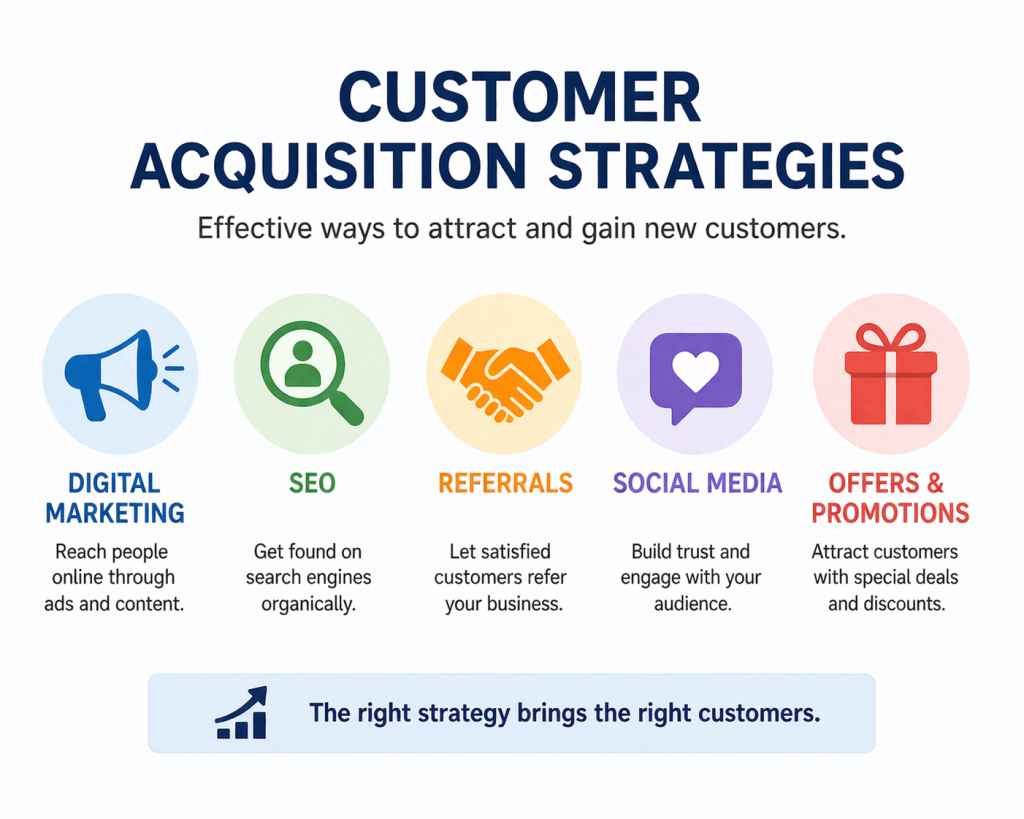

 Admission Closed

 Admission Open
 Admission Closed
 Admission Open
 ROI Calculator