
What is Content Marketing? Meaning, Examples & Benefits
 May 23, 2026
 8 min read




Table Of Content
- The Strategic Meaning: How Content Marketing Actually Works
- High-Impact Content Marketing Examples for Professionals
- The ROI of Authority: Core Benefits of Content Marketing
- Mastering the Tools and Services of the Trade
Businesses today face a trust deficit. Consumers are skeptical of traditional advertising, inboxes are saturated, and AI-generated content floods every channel. In that environment, understanding what content marketing — truly understanding it — is no longer optional. It's a strategic imperative.
Content marketing is a value-exchange system — a disciplined practice of delivering consistent, relevant, high-quality content that earns audience attention, builds credibility, and ultimately drives measurable business outcomes.
That definition deliberately moves past the outdated "blogging" stereotype. Content marketing isn't a content calendar or a social media post. It's a philosophy that replaces interruption with invitation.
Traditional advertising interrupts. It inserts itself between a person and what they actually want. Content marketing does the opposite — it becomes what people are searching for. According to research on content marketing's evolving role, brands that prioritize educational, audience-first content consistently outperform those relying on paid interruption alone.
In 2026, that gap is widening. AI-generated noise has made human-led authority significantly more valuable. When every competitor can publish at scale, the differentiator becomes depth, credibility, and genuine expertise — qualities that the right content marketing tools and human specialists can deliver, but algorithms alone cannot replicate.
That's where Speed-to-Trust emerges as the defining KPI for modern leaders. As Allison Dunn, CEO of Deliberate Directions, puts it: “Content marketing is an accelerant.” The right content moves a stranger from awareness to trust in half the time."
Understanding how audiences move through stages of trust is what separates reactive content creation from a true growth engine—and those strategic mechanics deserve a closer look.
 ChatGPT
 Perplexity
 Claude
 Grok
GrokThe Strategic Meaning: How Content Marketing Actually Works
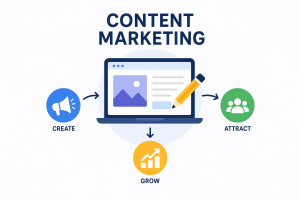
Understanding the true content marketing meaning goes well beyond publishing blog posts or sharing social media updates. It’s a structured system designed to move audiences from first awareness through to confident action, and when it’s built correctly, it compounds in value over time.
Awareness: The First 3 Seconds
The funnel begins with capturing attention in an overcrowded digital landscape. This is where the ‘3-3-3’ rule starts: you have roughly 3 seconds to hook a reader before they scroll past. That means headlines, thumbnails, and opening lines carry enormous weight. According to research on modern content strategy, brands that lead with audience-specific value—rather than product-first messaging—consistently outperform those that don’t at the awareness stage.
Consideration: The Next 3 Minutes
Once you’ve earned attention, you have approximately 3 minutes to deepen engagement. This is where expert-led content earns its weight. Technical specialists—engineers, clinicians, finance professionals—bring credibility that generalist writers simply can’t replicate. That authority matters: 88% of B2B marketers agree that content marketing has successfully established their organization as credible and trusted resource.
Conversion: The Critical 30 Minutes
The final phase requires sustained value delivery over 30 minutes of deeper engagement — think long-form guides, webinars, or case studies. This is where the 5 C’s converge: Context, Content, Connection, Community, and Conversion. Each element reinforces the others. Context ensures relevance; community builds trust; conversion becomes a natural outcome rather than a forced ask. Understanding how data-driven experimentation supports this process can sharpen every stage.
| The 5 C’s | Core Function |
| Context | Aligns content with audience intent |
| Content | Delivers genuine expertise and value |
| Connection | Builds emotional and professional resonance |
| Community | Fosters loyalty and peer validation |
| Conversion | Transforms trust into measurable action |
Content marketing, at its best, is a trust-building machine — one where every piece of content is a strategic step, not an isolated effort. The next section explores exactly how high-performing organizations and professionals bring this framework to life.
High-Impact Content Marketing Examples for Professionals
The strategic framework covered earlier only delivers results when it’s applied to the right formats. These content marketing examples show how leading institutions and professionals translate strategy into measurable outcomes — and they’re worth studying closely.
Whitepapers and Webinars for Premium Enrollment
Ivy League and top-tier certification programs consistently use long-form whitepapers and live webinars to attract high-intent candidates. A whitepaper on emerging industry skill gaps positions the institution as an authority before a single sales conversation happens. Webinars go further — they create a two-way dynamic that mirrors the learning environment itself.
Why it works: These formats address the skepticism of executive-level audiences who need proof of credibility, not just promotional copy. They move prospects through consideration stages by delivering genuine insight upfront.
Interactive Tools That Convert
ROI calculators and skill-gap quizzes are among the most underutilized assets in professional education marketing. Institutions using interactive content like gamified milestones and quizzes have seen a 27% higher application completion rate, a compelling signal that engagement-driven content directly influences downstream decisions.
Why it works: Interactive tools make the value proposition personal. When a prospective student sees their specific skill deficit mapped against market demand, the decision to enroll becomes logical rather than aspirational.
Thought Leadership on LinkedIn and Industry Journals
For technical professionals, a consistent presence on LinkedIn and in peer-reviewed publications builds a personal brand that compounds over time. A well-crafted article connecting your niche expertise to a broader business trend can attract recruiter attention, speaking invitations, and consulting inquiries simultaneously. A deliberate content strategy ensures each piece of content serves a specific audience and measurable goal.
Why it works: Authority signals — publications, endorsements, cited expertise — carry more weight with senior decision-makers than credentials alone.
Executive Video and Behind-the-Scenes Content
Short-form video featuring executive interviews or campus access humanizes institutions in ways static content simply can’t. Research-backed content formats consistently show that video drives stronger emotional connection and recall.
Why it works: Transparency builds trust. Showing the people and processes behind a program converts passive interest into active consideration — setting the stage for the measurable ROI that content marketing ultimately delivers.



The ROI of Authority: Core Benefits of Content Marketing
The formats and frameworks covered earlier only matter if they deliver measurable returns. Fortunately, the benefits of content marketing aren’t abstract—they show up in conversion rates, cost structures, career trajectories, and long-term brand value.
Educational Content Drives Purchasing Decisions
The most direct proof of content’s power lies in the numbers. Consumers exposed to educational content are 131% more likely to purchase than those who haven’t engaged with it. That’s not a marginal lift—it’s a near doubling of purchase intent driven entirely by the quality of information you share before asking for a sale.
What this tells professionals is clear: content that genuinely teaches earns trust, and trust converts. Audiences don’t just consume helpful content—they remember who created it.
Insight: Educational content isn’t a soft brand play. It’s a hard conversion lever—and one that compounds in value the longer it stays published and discoverable.
Cost Efficiency Over the Long Term
Paid advertising operates on a simple and unforgiving model: when the budget stops, the traffic stops. Content marketing works differently. A well-optimized article, video, or case study continues generating organic traffic and leads months or even years after it’s published.
In practice, this compounding effect means the cost-per-lead from content typically decreases over time, while ad spend yields diminishing returns as competition for placements intensifies. For growth-focused businesses, this makes content one of the highest-return channels in the mix.
Career Advancement Through Content Mastery
For professionals aiming toward senior roles—CMO, COO, or VP of Marketing—demonstrating content fluency signals strategic thinking, not just tactical execution. Understanding how content aligns with revenue goals is increasingly a requirement at the leadership level. If you’re preparing for those conversations, brushing up on common marketing strategy questions can sharpen how you articulate that value.
Insight: Content marketing expertise signals cross-functional thinking to hiring committees—bridging brand, demand generation, and customer experience in ways that generalist skills rarely do.
Brand Equity as a Competitive Moat
Proprietary insights, original research, and consistent editorial positioning create something competitors can’t easily replicate: a recognizable point of view. That accumulated authority becomes a moat around your brand. And as content marketing continues evolving, the businesses and professionals who own distinctive intellectual territory will be the hardest to displace.
Executing on all of this, of course, depends heavily on having the right tools and systems in place—which is exactly what the next section addresses.
Mastering the Tools and Services of the Trade
The ROI gains outlined in the previous section don’t materialize without the right infrastructure behind them. Building a capable content operation means assembling a tech stack that supports every stage of the process — and knowing when to bring in outside expertise.
Must-Have Tools for Content Professionals
A practical content tech stack covers three core layers:
- CMS platform — WordPress, Contentful, or a headless CMS for publishing and content governance
- SEO intelligence tools — Ahrefs or Semrush for keyword research, competitor gap analysis, and rank tracking
- AI-assisted writing tools — tools like ChatGPT or Jasper work best as drafting aids, not replacements for strategic thinking
- Analytics and attribution — Google Analytics 4, Search Console, and a CRM integration to track content’s downstream revenue impact
- Project management — Notion, Asana, or similar platforms to coordinate editorial calendars across teams
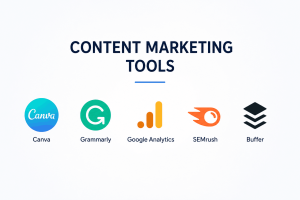
The distinction between AI-assistance and AI-replacement matters. Strategic content requires human judgment, brand nuance, and audience empathy that automation can’t reliably replicate. Understanding the broader digital marketing landscape helps contextualize where these tools fit within a full-channel strategy.
Evaluating Content Marketing Services
For high-growth firms, outsourcing specific functions — SEO audits, content production, or distribution — through specialized content marketing services can accelerate output without sacrificing quality. The key is evaluating providers on editorial rigor, subject-matter depth, and measurable KPIs rather than volume alone. As WSI World notes, content is the lifeblood of every digital channel, which means weak outsourced content undermines your entire ecosystem.
One emerging trend worth noting: leading brands are borrowing learning management principles from EdTech — structuring content as progressive, curriculum-style journeys rather than standalone pieces. It’s a shift that rewards expertise. And that expertise, as the next section explores, is where a career-defining advantage is actually built.
Conclusion: Elevating Your Career Through Strategic Content Mastery
The journey mapped out in this article tells a consistent story: content marketing has evolved far beyond producing blog posts and social media captions. Today, it demands the analytical rigor of a strategist, the technical fluency of a digital operator, and the business acumen of a growth leader. The shift from content creator to strategic content leader isn’t cosmetic — it reflects an entirely different level of professional responsibility.
That said, one important caveat deserves acknowledgment. A well-structured content marketing strategy can’t be assembled from free tutorials alone. The expertise required — audience psychology, data interpretation, cross-channel attribution, and competitive positioning — takes structured, rigorous learning to develop. Shortcuts tend to produce fragmented results.
Structured education is what separates practitioners from leaders. MBA programs and PG Diplomas with dedicated marketing tracks provide precisely the frameworks that transform working professionals into high-impact strategists. Explore current trends shaping modern marketing to understand the breadth of skills today’s roles demand — from MarTech integration to content-led revenue growth.
This is where Jaro Education’s institutional partnerships become genuinely consequential. By bridging the gap between working professionals and world-renowned academic institutions like IIMs and IITs, Jaro Education makes tier-1 credentials accessible without pausing your career.
Frequently Asked Questions

Related Courses
Explore our programs
 Admission Open
 Admission Open
 Admission Open
 Admission Open
Find a Program made just for YOU
We'll help you find the right fit for your solution. Let's get you connected with the perfect solution.
Is Your Upskilling Effort worth it?
 ROI Calculator

Are Your Skills Meeting Job Demands?
Try our Skill Gap tool
Experience Lifelong Learning and Connect with Like-minded Professionals
Explore Jaro Connect

