
What is Dynamic Pricing? How It Works, with Examples and Benefits
 November 3, 2026
 8 min read





Table Of Content
- What Is Dynamic Pricing?
- How Dynamic Pricing Works
- Types of Dynamic Pricing Models
- Dynamic Pricing Examples from Everyday Life
 Key Insights
- Dynamic pricing allows businesses to adjust product or service prices based on real-time factors such as demand, supply, competition, inventory, and customer behavior.
- Common dynamic pricing models include time-based, demand-based, competitor-based, segmented, and inventory-based pricing.
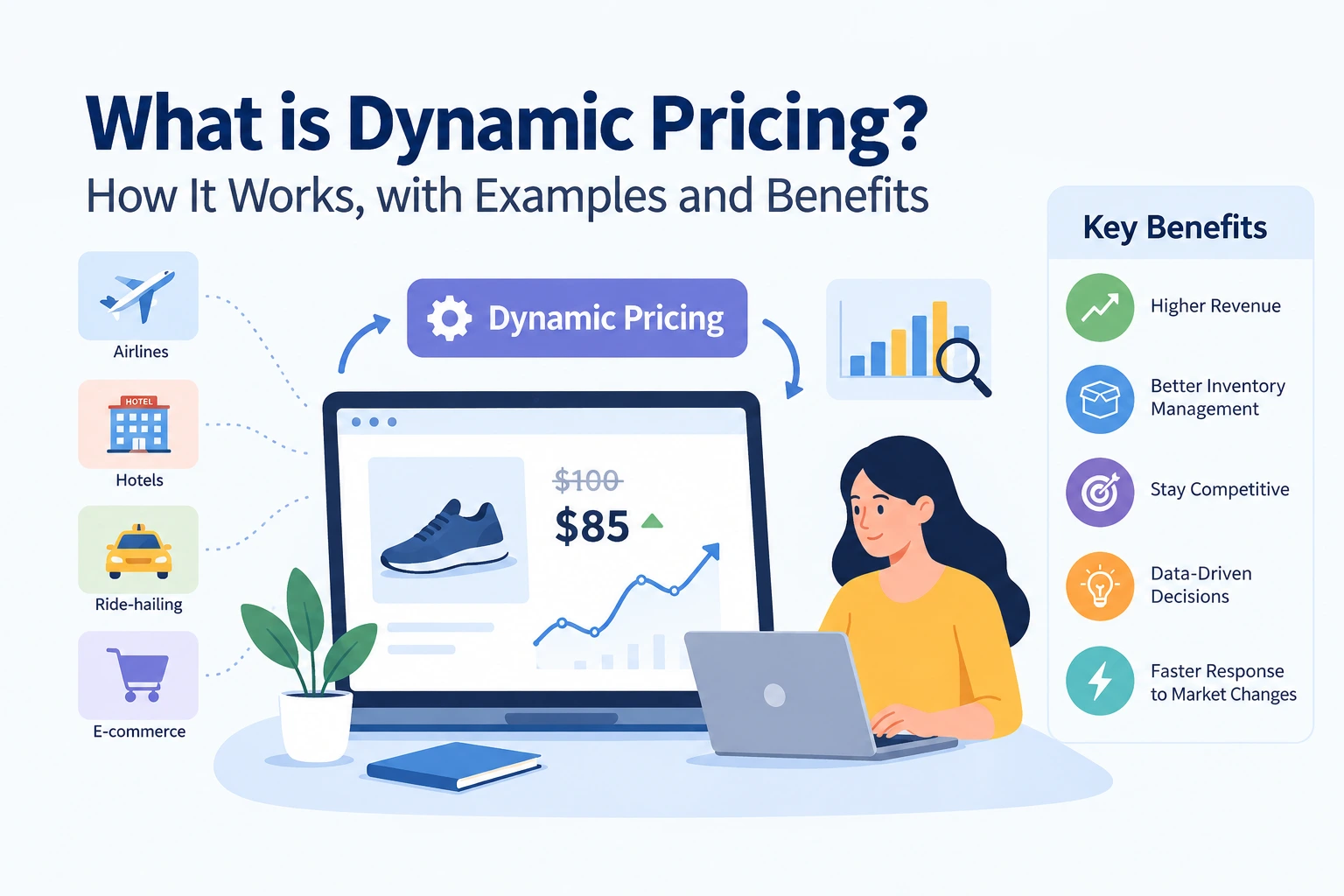
- Industries such as airlines, hotels, ride-hailing services, e-commerce, food delivery, and event ticketing use dynamic pricing to respond to changing market conditions.
- Dynamic pricing helps businesses increase revenue, improve inventory management, stay competitive, make data-driven decisions, and respond faster to market changes. Setting clear pricing limits and maintaining transparency also helps protect customer trust.
- In this blog, you'll learn what dynamic pricing is, how it works, its different models, real-world examples, key benefits, and how to implement it successfully through a step-by-step approach.
Have you ever checked a flight price in the morning, returned in the evening, and found a different number? Or noticed that a ride costs more when it rains? These changes are not random. They are the result of dynamic pricing, a strategy that many businesses now use to stay competitive and grow revenue.
In this guide, you will learn what dynamic pricing is, how dynamic pricing works, the main models businesses follow, real-world examples, key benefits, and how to implement dynamic pricing step by step. Whether you run an online store, manage a hotel, or simply want to understand why prices keep changing, this blog will give you a clear and practical picture.
 ChatGPT
 Perplexity
 Claude
 Grok
What Is Dynamic Pricing?
So, what is dynamic pricing? Dynamic pricing is a strategy in which a business adjusts the price of a product or service based on real-time market conditions. Instead of keeping one fixed price for weeks or months, the seller changes it as demand, supply, competition, timing, or customer behavior changes.
It is also known as surge pricing, demand pricing, or time-based pricing, depending on how it is applied. The idea is simple: the value of a product is not always the same. A hotel room is worth more during a festival weekend than on a quiet Tuesday. A cab ride is worth more when many people need one at the same time. Dynamic pricing allows a business to reflect that changing value in its price.
This approach is different from static pricing, where a price stays the same regardless of what is happening in the market. Static pricing is easy to manage and predictable for customers, but it can leave money on the table when demand is high and fail to attract buyers when demand is low.
How Dynamic Pricing Works
Understanding how dynamic pricing works is easier when you break it into a few clear stages. Most businesses follow a similar process, even if the tools they use are different.
1. Data Collection
The process begins with data. Businesses collect information about customer demand, website traffic, past sales, inventory levels, competitor prices, seasonal trends, and even external factors such as weather or local events. The more accurate and current the data, the better the pricing decisions.
2. Rules and Algorithms
Next, the business sets pricing rules or uses software with algorithms to analyze the data. A simple rule might be: “If stock falls below 20 percent, increase the price by 5 percent.” More advanced systems use machine learning to predict demand and recommend the best price at a given moment.
3. Price Adjustment
Once the system identifies the right price, it updates the price automatically or sends a suggestion to the pricing team for approval. Online retailers may update prices several times a day, while hotels and airlines may adjust them continuously.
4. Monitoring and Learning
After prices change, the business tracks how customers respond. Did sales increase? Did customers abandon their carts? Did profit improve? These results feed back into the system, helping it make smarter decisions over time.
Key Factors That Influence Dynamic Pricing
The following factors commonly shape how dynamic pricing works in practice:
- Demand: Prices rise when many customers want the same product and fall when interest drops.
- Supply and inventory: Limited stock can push prices up, while excess stock may lead to discounts.
- Competitor pricing: Businesses often adjust prices to stay competitive with similar sellers.
- Time: The time of day, day of the week, season, or how close a customer is to a deadline can affect the price.
- Customer segment: Different groups, such as students, loyalty members, or bulk buyers, may see different prices.
- External events: Holidays, weather, sporting events, and local festivals can change demand quickly.





Types of Dynamic Pricing Models
There is no single way to apply dynamic pricing. Businesses choose a model that fits their industry and goals. Here are the most common ones.
Time-Based Pricing
Prices change depending on the time of purchase or use. For example, a cinema may charge more for evening shows than for morning shows, and an electricity provider may charge higher rates during peak hours.
Demand-Based Pricing
Prices go up when demand rises and come down when it falls. Ride-hailing apps and event ticket platforms commonly use this model.
Competitor-Based Pricing
The business tracks competitor prices and adjusts its own to remain attractive. This is very common in e-commerce, where customers can compare prices within seconds.
Segmented Pricing
Different customer groups pay different prices for the same product or service. Student discounts, senior citizen offers, and corporate rates are familiar examples.
Inventory-Based Pricing
Prices change according to how much stock is left. When inventory is running low, prices may rise. When stock needs to be cleared, prices may drop.
Dynamic Pricing Examples from Everyday Life
Real examples make it easier to see dynamic pricing in action. You have probably encountered many of them already.
- Airlines: Ticket prices change based on how many seats are left, how close the departure date is, and how many people are searching for that route. Booking early or during a low-demand period can often be cheaper.
- Hotels: Room rates rise during holidays, conferences, and peak tourist seasons, and drop when occupancy is low.
- Ride-hailing services: Fares can increase when demand is high and the number of available drivers is low, such as during rush hour or bad weather.
- E-commerce platforms: Online retailers adjust prices often, responding to competitor offers, stock levels, and shopping trends. Flash sales and festival discounts are also forms of dynamic pricing.
- Event tickets: Prices for concerts, sports matches, and shows can rise as the event date approaches or as tickets sell out.
- Food delivery apps: Delivery fees may vary depending on distance, order volume, and time of day.
- Utilities and energy: Some providers charge different rates for peak and off-peak usage to encourage customers to use energy when demand is lower.
These examples show that dynamic pricing is not limited to one industry. Any business with changing demand, limited capacity, or competitive markets can benefit from it.
Benefits of Dynamic Pricing
When applied thoughtfully, dynamic pricing offers several advantages for both businesses and customers.
Higher Revenue and Profit
By raising prices when demand is strong, businesses capture more value from each sale. This can significantly improve revenue without increasing marketing costs.
Better Inventory Management
Price changes help businesses balance supply and demand. Slow-moving products can be discounted to avoid waste, while fast-selling items can be priced to protect availability.
Stronger Competitiveness
The ability to respond quickly to competitor moves helps a business stay relevant in crowded markets. Instead of reacting weeks later, the company can adjust within hours or even minutes.
Improved Customer Segmentation
Dynamic pricing allows businesses to offer suitable prices to different customer groups. Price-sensitive buyers may find attractive deals, while those who value convenience or urgency may be willing to pay more.
Data-Driven Decisions
Because pricing depends on real data, decisions become more objective. Businesses learn what customers are willing to pay and when, which also supports better planning for marketing, stock, and staffing.
Faster Response to Market Changes
Markets change quickly. Dynamic pricing lets a business react to trends, seasons, and sudden spikes in demand without waiting for a long review cycle.
How to Implement Dynamic Pricing: A Step-by-Step Guide
If you are wondering how to implement dynamic pricing in your own business, the following steps provide a practical starting point.
Step 1: Define Your Goals
Start by deciding what you want to achieve. Do you want to increase revenue, improve profit margins, clear excess inventory, or gain market share? Clear goals will guide every pricing decision that follows.
Step 2: Understand Your Costs and Margins
Know the minimum price at which you can sell without losing money. Dynamic pricing should never push prices below your cost or your required profit margin.
Step 3: Gather and Organize Data
Collect data on past sales, customer behavior, seasonal patterns, competitor prices, and inventory. Make sure the data is accurate, up to date, and stored in a way that your team and tools can easily use.
Step 4: Choose the Right Pricing Model
Select the model that fits your business, whether that is time-based, demand-based, competitor-based, segmented, or inventory-based. Some businesses combine more than one model.
Step 5: Set Pricing Rules and Limits
Create clear rules for when and how prices can change. Set a minimum price and a maximum price, and decide how large each change can be. These guardrails protect your brand from extreme swings that may upset customers.
Step 6: Select the Right Tools
Small businesses can begin with simple rule-based tools or spreadsheets. Larger businesses may use dedicated pricing software with artificial intelligence and automation. Choose a tool that connects easily with your website, inventory system, and sales channels.
Step 7: Start with a Pilot
Test dynamic pricing on a small group of products or a single market first. Observe how customers react and measure results before expanding to your full catalog.
Step 8: Monitor, Measure, and Improve
Track key metrics such as conversion rate, revenue, profit margin, and customer feedback. Review results regularly and fine-tune your rules. Dynamic pricing is not a one-time setup. It improves with constant learning.
Step 9: Communicate Clearly
Be transparent about how and why prices change, where possible. Explaining that prices reflect demand, timing, or availability helps customers understand and accept the system.
Best Practices for Successful Dynamic Pricing
- Keep customers in mind: Aim for prices that feel fair, not just profitable.
- Avoid too many changes: Constant price swings can confuse buyers. Find a rhythm that suits your market.
- Combine data with human judgment: Algorithms are helpful, but experienced people should review unusual results.
- Protect your brand value: Do not discount so heavily that your product looks low in quality.
- Stay compliant: Review local laws and platform policies related to pricing and consumer rights.
Conclusion
Dynamic pricing helps businesses match price to value in real time. By understanding what dynamic pricing is, how dynamic pricing works, and how to implement dynamic pricing with clear goals and safe limits, you can improve revenue, manage inventory better, and respond quickly to market changes. At the same time, it is important to keep fairness and transparency at the center of your strategy, because customer trust is just as valuable as profit. Start small, learn from the data, and grow your approach step by step.
Frequently Asked Questions
Dynamic pricing means changing the price of a product or service based on current conditions such as demand, supply, competition, or time. The price is not fixed, so it can go up or down depending on what is happening in the market.
Airlines, hotels, ride-hailing services, e-commerce, event ticketing, and energy providers are well-known users of dynamic pricing. Any business with changing demand, limited capacity, or strong competition can use it.
Yes. Small businesses can start with simple rules, such as weekend rates, off-peak discounts, or stock-based offers. As the business grows, it can adopt specialized pricing software for more advanced automation.

Related Courses
Explore our programs




Find a Program made just for YOU
We'll help you find the right fit for your solution. Let's get you connected with the perfect solution.
Is Your Upskilling Effort worth it?
 ROI Calculator


Are Your Skills Meeting Job Demands?
Try our Skill Gap tool
Experience Lifelong Learning and Connect with Like-minded Professionals
Explore Jaro Connect
