Importance of Social Skills: Top 12 Tips to Improve
J
By Bhargavi R
April 25, 20266 min read
Published on April 25, 2026
SHARE THIS ARTICLE
Table Of Content
What Are Social Skills?
Why Are Social Skills Important?
Key Social Skills You Should Develop
Top 12 Ways to Improve Your Social Skills
Every day, we interact with people, whether at work, at home, or even during simple activities like shopping or travelling. All these activities of communicating, listening and responding to other players play an important role in our lives. These are social skills that help you to connect with people, build confidence and trust, and give you the potential to handle different situations. There are some people who are already equipped with these abilities, and others learn over time.
If you feel you lack social interaction and want to strengthen it, you’re in the right place. Here you will find 12 top tips that can help you to enhance your social skills and understand why it’s an important part of your life, especially for the workplace.
Social skills are the capabilities that help you interact and communicate with others effectively. These skills include both verbal communication (the words you speak) and non-verbal communication, such as body language, facial expressions, tone of voice, and eye contact.
They help people build relationships, work in teams, resolve conflicts, and express ideas clearly in different situations. These skills are sometimes referred to as interpersonal skills or soft skills since they form how people connect with each other in daily life and professional environments.
Some of the common social skills examples are: Communication, Active listening, Teamwork, Empathy, Conflict resolution, Leadership skills, and Respect for others. For instance, when you listen carefully to a colleague during a meeting and respond politely, you are using social skills. When you help resolve a disagreement between team members, that also reflects strong interpersonal abilities.
Why Are Social Skills Important?
*themanthanschool.co.in
There are many students or individuals who think that academic qualifications and technical knowledge can get them a good job. But in reality, social skills are also equally important, which helps employers determine how practical you are and how you can handle problems in the workplace. Such skills also influence your career growth, workplace relationships, and personal happiness.
1. Improve Communication
Clear communication skills are the foundation of every relationship. Social skills help you express ideas confidently and understand others without confusion.
2. Strengthen Teamwork
Most jobs today require collaboration. People with good social skills can work smoothly with different personalities and contribute to group success.
3. Help Build Professional Relationships
Networking becomes easier when you know how to approach people respectfully and start meaningful conversations.
4. Help Resolve Conflicts
Disagreements are normal in workplaces and relationships. Social skills allow you to handle conflicts calmly and find solutions that work for everyone.
5. Support Career Growth
Many employers look for candidates who can communicate well, collaborate, and lead teams effectively. These qualities are often linked to strong social skills.
6. Build Confidence
When you feel comfortable interacting with people, your confidence naturally increases in meetings, presentations, and social environments.
Although social skills include many abilities, a few core skills are especially important.
Communication is one of the most essential social skills. It involves expressing thoughts, ideas, and opinions clearly and respectfully so that others can easily understand your message.
Active listening is equally important. It means paying full attention to what others are saying rather than simply waiting for your turn to speak. Good listeners acknowledge others’ viewpoints and respond thoughtfully.
Empathy allows individuals to understand and respect the feelings and perspectives of others. This helps create trust and strengthen interpersonal relationships.
Teamwork refers to the ability to collaborate effectively with others to achieve shared goals.
Leadership involves guiding, motivating, and supporting others in a positive way, helping individuals become better colleagues, friends, and responsible leaders.
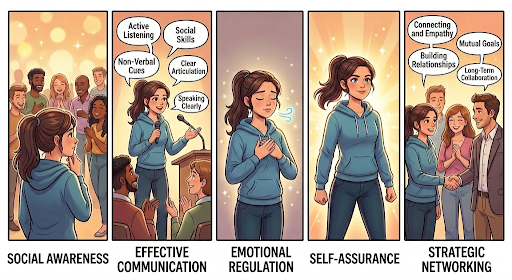
Top 12 Ways to Improve Your Social Skills
Generated by AI
1. Practice Active Listening
Listening carefully is one of the most important social skills. When someone is speaking, give them your full attention instead of thinking about what you will say next. Maintain eye contact, nod occasionally, and avoid interrupting. Active listening makes people feel valued and understood.
2. Learn to Remember Names
Remembering someone’s name may seem like a small thing, but it leaves a strong impression. When you address someone by their name during a conversation, it shows respect and attention. A simple way to remember names is to repeat them naturally while speaking.
3. Improve Your Body Language
Communication is not limited to words. Your body language plays a major role in how others perceive you. Maintain good posture, keep your arms relaxed, and make comfortable eye contact. A natural smile can also make conversations more friendly and welcoming.
4. Ask Questions During Conversations
Good conversations are not one-sided. Asking thoughtful questions keeps the discussion flowing and shows genuine interest in the other person. It also helps you understand different perspectives and build stronger connections.
5. Practice Empathy
Empathy means understanding how others feel and responding with care. Before reacting to someone’s words or actions, try to see the situation from their point of view. This approach reduces misunderstandings and helps create more meaningful relationships.
6. Build Confidence in Social Situations
Confidence grows when you practice interacting with people regularly. Start with simple conversations with coworkers, neighbours, or friends. Over time, these small interactions help you feel more comfortable speaking in different social settings.
7. Be Open to Feedback
Sometimes we are unaware of our communication habits. Feedback from trusted colleagues, friends, or mentors can help identify areas that need improvement. Being open to suggestions can help you refine your interactions and grow socially.
8. Maintain a Positive Attitude
A positive attitude makes conversations more enjoyable. People generally feel comfortable around someone respectful, friendly, and supportive. Even in challenging discussions, maintaining a calm and positive tone helps keep communication productive.
9. Learn to Handle Conflicts Calmly
Conflicts are a natural part of human interaction. Instead of reacting emotionally, focus on understanding the issue and listening to both sides. Calm discussions often lead to better solutions and help maintain healthy relationships.
10. Practice Public Speaking
Public speaking is a powerful way to strengthen communication skills. Participating in presentations, meetings, or group discussions helps you express ideas clearly and build confidence when addressing larger audiences.
11. Observe Effective Communicators
Watching how skilled communicators interact can be very helpful. Notice how they listen, respond, and maintain conversations. Learning from these observations can give you practical ideas to improve your own communication style.
12. Step Out of Your Comfort Zone
Growth happens when you try new experiences. Attending networking events, joining professional groups, or participating in discussions exposes you to new people and situations. Each interaction helps you gain confidence and refine your social abilities.
How Jaro Education Helps You Build Social Skills
If you want structured guidance to develop both professional and interpersonal abilities, Jaro Education provides several industry-relevant programmes designed for working professionals and students.
We collaborate with top universities and institutes to offer executive education programs in fields such as:
Business management
Leadership and strategy
Data science and analytics
Digital marketing
Technology management
These programs often involve case studies, group assignments, presentations, and live interactions with faculty and industry experts. Such activities naturally improve communication, teamwork, and networking abilities.
Benefits of Learning with Jaro Education
Apart from course knowledge, learners gain several additional advantages:
Industry-Focused Learning: Programmes are designed in collaboration with reputed universities and industry experts.
Networking Opportunities: Students interact with professionals from different industries, helping them build valuable connections.
Career Guidance: Jaro Education offers mentorship and career support that helps learners grow professionally.
Flexible Learning Options: Many programs are designed for working professionals, allowing them to study while continuing their jobs.
Alumni Community: Learners become part of a large professional network that supports knowledge sharing and collaboration.
Strong social skills are essential for success in both personal and professional life. They help people communicate clearly, build meaningful relationships, resolve conflicts, and work effectively in teams. While some individuals develop these abilities naturally, anyone can strengthen them through awareness and regular practice.
Understanding what social skills are and learning from real social skills examples can make it easier to improve everyday interactions. Simple habits like listening carefully, showing empathy, and communicating confidently can create a lasting positive impression.
As workplaces continue to value collaboration and leadership, social skills will remain one of the most important abilities for long-term growth and career success.
Social skills are abilities that help people communicate and interact effectively with others. They include communication, empathy, teamwork, listening, and relationship-building.
Social skills help individuals build relationships, work well with others, resolve conflicts, and succeed in professional environments.
Common social skills examples include communication, active listening, empathy, teamwork, leadership, conflict resolution, and networking.
You can improve social skills by practising active listening, engaging in conversations, observing good communicators, seeking feedback, and participating in group activities or professional courses.
Bhargavi R
HR Professional
Bhargavi Reddy is an HR professional with over 6 years of experience in IT recruitment and talent acquisition. She specializes in hiring across technologies like Java, DevOps, Python, and Data Engineering. With strong expertise in full-cycle recruitment and stakeholder management, she focuses on building high-performing teams. Currently, she works as an HR Manager driving strategic hiring initiatives.

 April 25, 2026
 6 min read




 ChatGPT
 Perplexity
 Claude
 Grok
Grok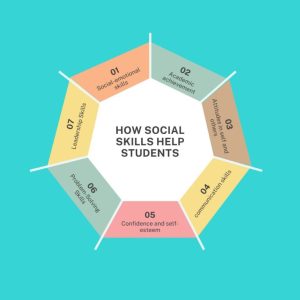




 Admission Open
 Admission Closed

 Admission Open
 Admission Open

 ROI Calculator