A service desk analyst acts as a central point of contact for users, troubleshooting technical issues and helping restore normal service with minimal disruption.
Key responsibilities include responding to support requests, managing tickets, troubleshooting problems, handling service requests, documenting solutions, and escalating complex issues.
Success in the role requires both technical and soft skills, including hardware and software knowledge, networking fundamentals, communication, problem-solving, patience, time management, attention to detail, and teamwork.
In this blog, you'll learn about the service desk analyst role and responsibilities, essential skills, certification options, salary factors, career scope, and the steps to become a service desk analyst.
Technology keeps modern businesses moving, but when systems fail, passwords stop working, or applications become inaccessible, employees need help quickly. A service desk analyst is often the first person responsible for providing that support.
In India, the average base pay for a service desk analyst is around ₹4 lakh per year, although compensation can vary significantly by location, experience, and technical expertise.
A service desk analyst plays an essential role in connecting end users with an organization’s IT department. They troubleshoot technical problems, manage support requests, document incidents, and ensure users can return to work with minimal disruption. The role combines technical knowledge with communication, customer service, and problem-solving skills.
For anyone looking to start or advance anIT career, understanding the service desk analyst job description, required skills, salary expectations, and future career opportunitiescan help determine whether this path is the right fit.
A service desk analyst is an IT support professional who acts as a central point of contact for users experiencing technical issues. These users may be employees within an organization or external customers, depending on the company and industry.
When someone cannot access an application, connect to a network, reset a password, install software, or resolve a hardware issue, the service desk is often the first place they turn. The analyst investigates the problem, attempts to resolve it, and escalates more complex issues to specialized technical teams when necessary.
The role is sometimes described as analyst service desk, help desk analyst, IT support analyst, or technical support analyst. While job titles may vary, the core objective remains similar: provide efficient technical support while delivering a positive user experience.
A modern service desk analyst does much more than answer calls. They work with ticketing systems, follow IT service management processes, document solutions, identify recurring problems, and help organizations improve their overall IT support operations.
Service Desk Analyst Job Description
A typical service desk analyst job description focuses on providing first-line or advanced technical support to users. The analyst receives incidents and service requests through multiple channels, including phone calls, email, chat platforms, self-service portals, and remote support tools.
Their primary responsibility is to understand the user’s problem, determine its urgency and impact, and either resolve it directly or route it to the appropriate team.
A service desk analyst may support a wide range of technologies, including:
Depending on the organization, the role may be categorized into different support levels. Entry-level analysts typically handle common issues and routine requests, while more experienced analysts manage complex incidents and provide advanced troubleshooting.
The exact service desk analyst roles and responsibilities depend on the size and technical environment of an organization. However, several responsibilities are common across most service desk positions.
1. Responding to User Support Requests
A major responsibility is responding to users who need technical assistance. Analysts communicate with users through phone calls, emails, chat, and support portals.
They must listen carefully, ask relevant questions, and collect enough information to understand the issue accurately.
2. Logging and Managing Support Tickets
Every issue or request usually needs to be documented in a ticketing or IT service management system.
The service desk analyst records important details such as:
The nature of the issue
The affected user or system
The urgency and business impact
Troubleshooting steps taken
The final resolution
Accurate ticket documentation helps teams track issues and maintain a reliable support history.
3. Troubleshooting Technical Problems
Troubleshooting is one of the most important parts of the job. Analysts investigate problems involving software, hardware, networks, user accounts, and applications.
For example, they may help users who are unable to:
The goal is to identify the root cause whenever possible and restore normal service efficiently.
4. Escalating Complex Issues
Not every problem can be solved at the service desk level. When an issue requires specialized knowledge, the analyst escalates it to the appropriate technical team.
This could include network engineers, cybersecurity professionals, system administrators, cloud specialists, or application support teams.
A good analyst knows when to continue troubleshooting and when escalation is the most effective option.
5. Managing Service Requests
In addition to fixing incidents, service desk analysts handle routine service requests.
These may include:
Password resets
Account creation
Access permissions
Software installation
Hardware requests
Device setup
Managing these requests efficiently helps employees remain productive.
6. Maintaining Communication With Users
Technical knowledge alone is not enough for success in this role. Analysts must keep users informed throughout the support process.
Clear communication is especially important when an issue cannot be resolved immediately. Users should understand what is happening, what actions are being taken, and when they can expect an update.
7. Documenting Solutions and Knowledge
Service desk teams often create knowledge articles, troubleshooting guides, and internal documentation.
When a service desk analyst discovers a solution to a recurring problem, documenting it can help other analysts resolve similar issues faster in the future.
This also supports self-service options for users.
8. Identifying Recurring Problems
Experienced analysts often notice patterns in support tickets.
For example, multiple users may report the same application error or connectivity issue. Identifying these trends can help the IT department investigate larger underlying problems and reduce future incidents.
Essential Service Desk Analyst Skills
The right service desk analyst skills include a combination of technical abilities and workplace skills. Because the role involves both technology and people, professionals need to be comfortable in both areas.
Technical Skills
Basic Hardware and Software Knowledge
Analysts should understand common computer hardware, operating systems, applications, and peripheral devices.
They should be able to diagnose common technical problems and follow structured troubleshooting procedures.
Networking Fundamentals
A basic understanding of networking is highly valuable. Analysts may regularly encounter issues involving Wi-Fi, VPN connections, DNS, IP addresses, and network access.
They do not necessarily need advanced engineering knowledge at an entry level, but understanding the fundamentals can improve troubleshooting ability.
Operating Systems
Familiarity with commonly used operating systems is important. Depending on the organization, this may include desktop and enterprise environments used by employees.
Ticketing and IT Service Management Tools
Service desk analysts frequently use ticketing platforms to log, track, prioritize, and manage incidents.
Understanding IT service management principles can also help analysts follow consistent processes for incidents, requests, escalations, and documentation.
Remote Support Tools
Many organizations now support hybrid and remote workforces. Analysts may need to use remote access tools to diagnose and resolve issues on devices located outside the office.
Basic Cybersecurity Awareness
Service desk professionals are often among the first IT employees to encounter suspicious activity or security-related requests.
Understanding basic cybersecurity practices, identity verification, password security, and access management is increasingly valuable.
Analysts must explain technical concepts in simple, understandable language.
The ability to communicate clearly with both technical and nontechnical users is essential.
Problem-Solving
Every support request is essentially a problem-solvingexercise. Analysts need to gather information, test possible solutions, and determine the best next step.
Patience
Users may be frustrated when technology prevents them from doing their jobs. A calm and patient approach can significantly improve the support experience.
Time Management
Service desk analysts often manage multiple tickets and priorities simultaneously. Strong organizational skills help ensure urgent issues receive appropriate attention.
Attention to Detail
Small details can make a major difference when diagnosing technical problems. Accurate documentation and careful troubleshooting are essential.
Teamwork
Service desk teams regularly collaborate with system administrators, engineers, developers, security teams, and business stakeholders.
The ability to work effectively with others is therefore important.
Service Desk Analyst Salary
Service desk analyst salaries can vary based on several factors, including:
The career scope for a service desk analyst is broad because the role provides exposure to multiple areas of information technology.
Many professionals begin in first-line support and gradually move into specialized roles.
A possible career path may look like this:
Service Desk Analyst → Senior Service Desk Analyst → Service Desk Team Lead → IT Support Specialist
From there, professionals may choose different career directions, including:
System Administration
Professionals who enjoy managing servers, user accounts, operating systems, and enterprise infrastructure may move into system administration.
Network Administration
Those interested in connectivity and infrastructure can develop networking skills and move toward network-focused roles.
Cybersecurity
Service desk experience can provide a strong foundation in access management, user security, incident reporting, and security awareness.
Cloud Support
Cloud technologies continue to create opportunities for IT professionals who understand cloud platforms and support environments.
IT Service Management
Professionals who enjoy processes, service delivery, and operations may progress into roles such as incident manager, problem manager, service delivery manager, or IT service manager.
Technical Support Leadership
Experienced analysts can also move into supervisory and leadership positions, managing service desk teams and improving support operations.
Is a Service Desk Analyst a Good Career?
Yes, a service desk analyst role can be an excellent career starting point for people interested in information technology.
The position provides practical exposure to real-world technical issues and allows professionals to build both technical and communication skills.
The role can also help professionals discover which area of IT interests them most. Someone may begin by resolving everyday support tickets and later develop an interest in cybersecurity, cloud computing, networking, or system administration.
How to Become a Service Desk Analyst
If you want to become a service desk analyst, consider following these steps:
1. Build Your IT Fundamentals
Learn the basics of computers, operating systems, networking, software, and troubleshooting.
2. Develop Customer Support Skills
Practice communicating clearly and helping people solve problems. Customer service experience can be valuable in this role.
3. Learn Ticketing and ITSM Concepts
Understanding how support tickets are created, prioritized, documented, and escalated can prepare you for a professional service desk environment.
4. Earn Relevant Certifications
A suitable service desk analyst certification or entry-level IT credential can strengthen your resume.
5. Gain Practical Experience
Look for internships, technical support roles, help desk positions, or other opportunities to gain hands-on experience.
6. Continue Learning
Technology changes quickly. Developing new skills in cloud computing, cybersecurity, automation, or networking can improve your career prospects.
Final Thoughts
A service desk analyst is much more than a person who answers IT support calls. The role is a critical part of an organization’s technology operations, helping users resolve problems, maintain productivity, and access the tools they need every day.
The service desk analyst roles and responsibilities require a strong combination of technical expertise and people skills. From troubleshooting hardware and software problems to managing tickets and communicating with frustrated users, every day presents new challenges and learning opportunities.
For aspiring IT professionals, the role can provide a strong foundation for long-term growth. By developing the right service desk analyst skills, gaining practical experience, and pursuing relevant certifications, professionals can use this position as a stepping stone toward a wide range of specialized IT careers.
Frequently Asked Questions
A service desk analyst provides technical support to employees or customers. Their responsibilities include troubleshooting technical problems, managing support tickets, resolving service requests, documenting solutions, and escalating complex issues to specialized IT teams.
Important service desk analyst skills include troubleshooting, technical knowledge, communication, customer service, problem-solving, time management, attention to detail, and familiarity with ticketing systems.
Many service desk analyst positions are suitable for entry-level IT professionals, especially Level 1 support roles. However, some organizations also hire experienced analysts for advanced support levels that require deeper technical expertise.
A service desk analyst can progress into roles such as senior analyst, team lead, system administrator, network administrator, cybersecurity analyst, cloud support specialist, incident manager, or IT service manager.
Shubham Lal
Lead Software Developer
Shubham Lal joined Microsoft in 2017 and brings 8 years of experience across Windows, Office 365, and Teams. He has mentored 5,000+ students, supported 15+ ed-techs, delivered 60+ keynotes including TEDx, and founded AI Linc, transforming learning in colleges and companies.
 HOME > BLOG > IT/Software Development > Who is a Service Desk Analyst? Roles, Skills, Salary & Career Scope
 September 3, 2026
 9 min read





 Key Insights
 ChatGPT
 Perplexity
 Claude
 Grok
Grok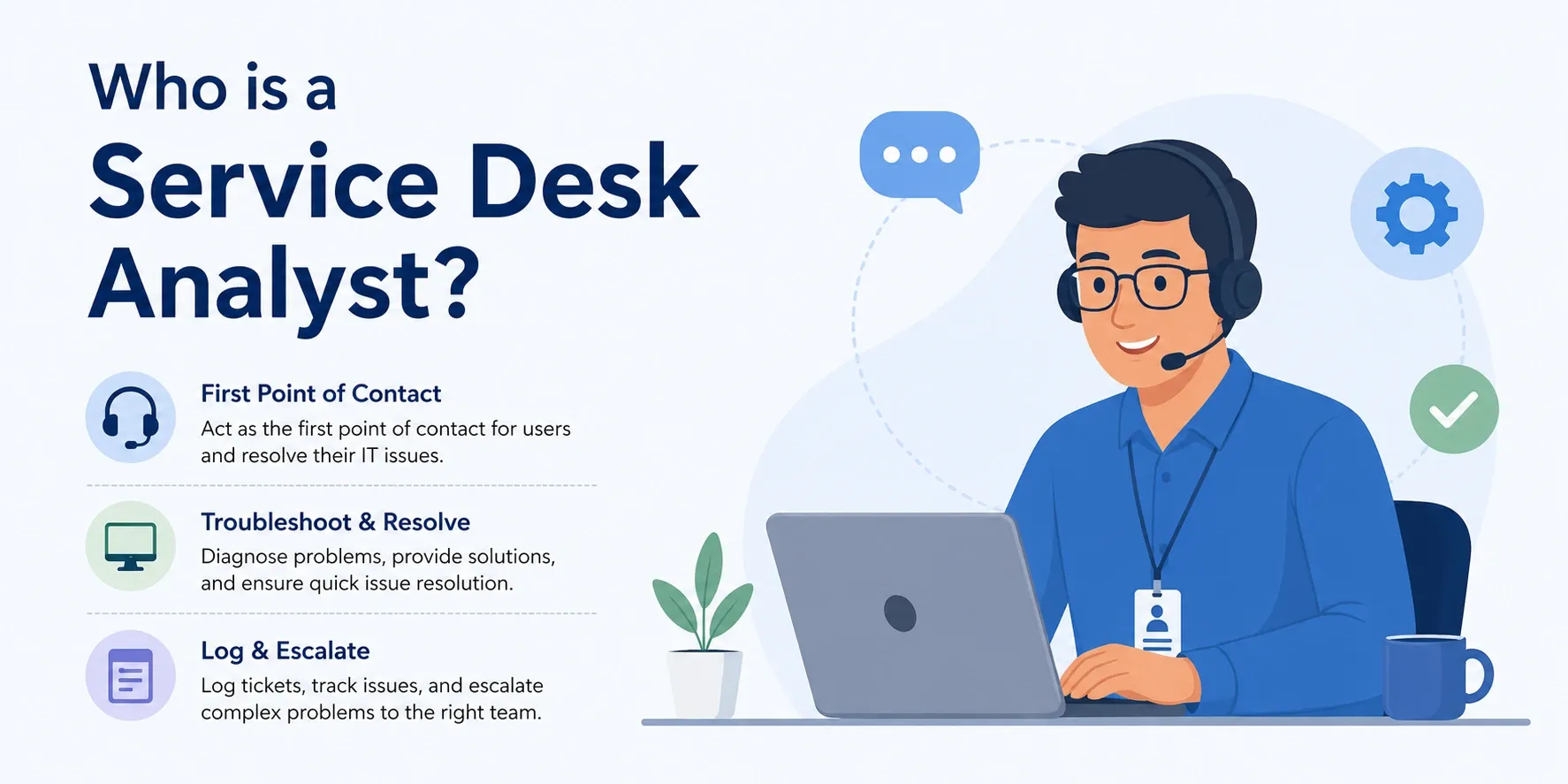









 ROI Calculator