Why a Supply Chain Career for Mechanical Engineers Makes Sense
Mechanical Engineer to Supply Chain Management: Key Roles to Consider
Procurement Career for Mechanical Engineers: A Closer Look
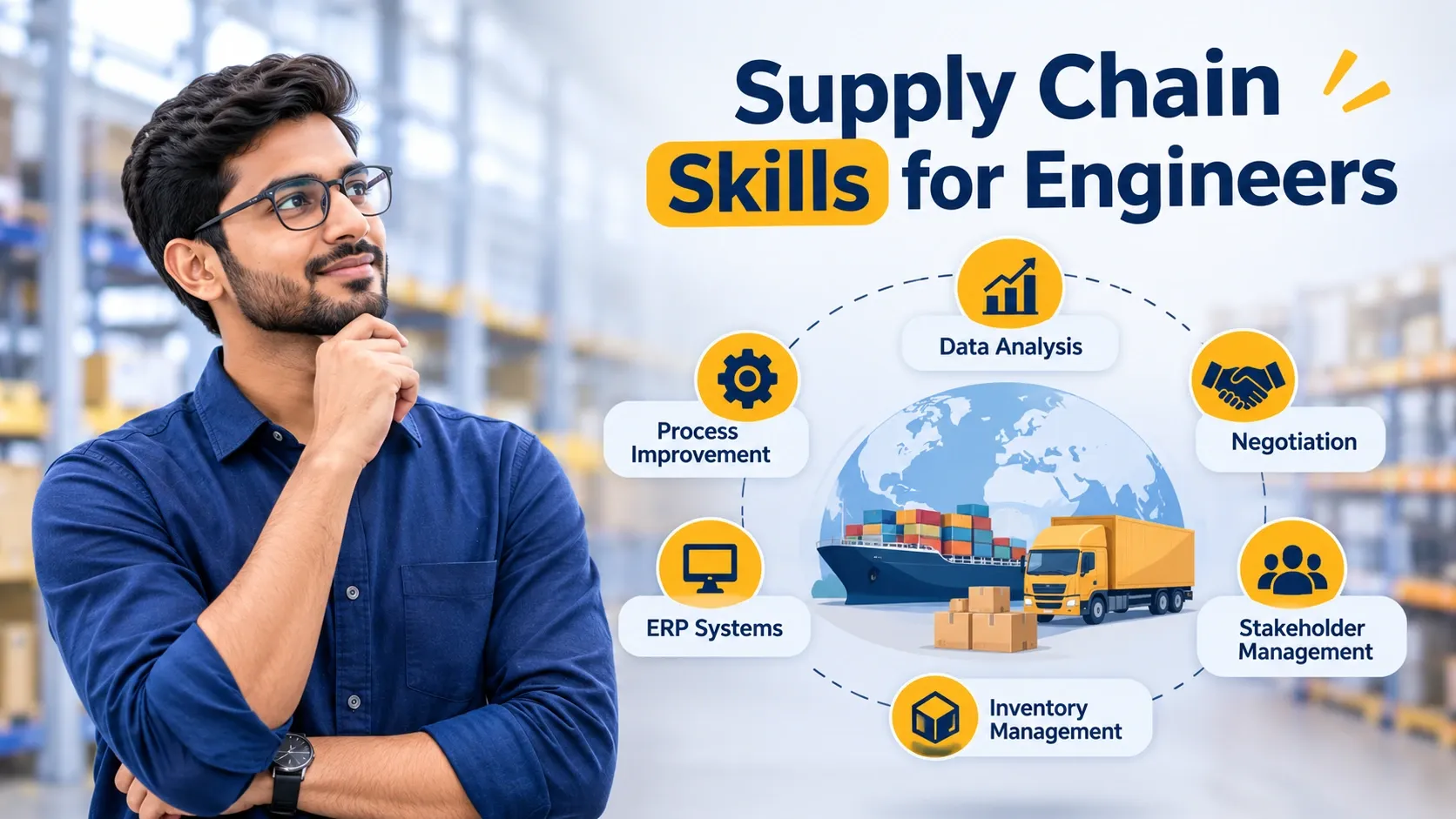
Supply Chain Skills for Engineers: What You Already Have and What to Build
Key Insights
Mechanical engineers can transition into supply chain management by applying their technical knowledge of manufacturing, materials, production processes, and quality management.
Common career opportunities include procurement engineer, supplier quality engineer, production planner, demand and inventory analyst, logistics executive, and supply chain manager.
Existing engineering skills such as analytical thinking, technical understanding, process improvement, and quality awareness provide a strong foundation for supply chain roles.
Building skills in demand forecasting, inventory management, negotiation, data analysis, ERP systems, logistics, and stakeholder management can make the transition smoother.
A structured career transition involves choosing a suitable function, gaining cross-functional experience, pursuing relevant learning programmes, developing tool proficiency, updating your résumé, and networking.
In this blog, you'll learn why supply chain management is a suitable career option for mechanical engineers, the key roles and skills involved, procurement opportunities, practical transition steps, and learning options to support your career move.
Many mechanical engineers reach a point in their careers where design drawings, plant schedules, and maintenance reports start to feel repetitive. At the same time, they notice something interesting: every product they help build must be sourced, moved, stored, and delivered by someone. That someone is the supply chain team.
Today, companies across manufacturing, automotive, energy, and e-commerce are looking for professionals who understand both technical details and business flow. The move from mechanical engineer to supply chain management is not a step away from engineering. It is a step sideways into a field where your technical foundation becomes a real advantage. Additionally, to support this career transition, theAI-Driven Global Supply Chain Management & Transformation programme from IIT Bombay can help professionals develop essential supply chain knowledge, understand AI-driven business transformation, and build the skills needed to advance into strategic supply chain roles.
This blog further explains the roles available, the skills you need, and a clear path to make the switch smoothly into supply chain management.
Why a Supply Chain Career for Mechanical Engineers Makes Sense
Supply chain management covers planning, sourcing, production, logistics, and delivery. Each of these stages depends on products and processes that mechanical engineers already understand well. When a buyer negotiates the price of a forged component, someone must understand tolerances, material grades, and manufacturing methods. When a planner schedules a production line, someone must understand cycle times, machine capacity, and downtime.
Mechanical engineers study thermodynamics, manufacturing processes, materials, and operations during their degree, and many spend years on shop floors afterward. This experience gives them credibility with suppliers, plant teams, and quality departments. Many hiring managers openly prefer candidates who can read an engineering drawing and a cost sheet with equal comfort.
There is also a practical reason behind this trend. Supply chains have become more complex because of global disruptions, rising logistics costs, and a growing push for local sourcing. Companies need people who can solve problems across departments rather than within one. A supply chain career for mechanical engineers offers wider business exposure, faster movement into management, and the chance to influence cost and delivery decisions directly.
Mechanical Engineer to Supply Chain Management: Key Roles to Consider
Supply chain is a broad field, so it helps to know where your background fits best. Here are some of the most common roles that mechanical engineers move into.
Sourcing or Procurement Engineer. This role involves finding suppliers, evaluating their technical capability, comparing quotations, and negotiating contracts. Your understanding of materials and manufacturing processes helps you judge whether a quote is realistic.
Supplier Quality Engineer. Here you audit suppliers, review inspection reports, and make sure incoming parts meet specifications. It is a natural bridge role because it blends quality knowledge with supplier management.
Production Planner or Materials Planner. Planners decide what to produce, when to produce it, and how much material is needed. Knowledge of machine capacity, routing, and bills of materials makes this role comfortable for engineers.
Demand and Inventory Analyst. This position focuses on forecasting demand, setting inventory levels, and reducing stockouts or excess stock. It suits engineers who enjoy data and pattern recognition.
Logistics and Distribution Executive. These professionals manage transportation, warehousing, and delivery timelines. Engineers with experience in packaging, material handling, or plant layout often do well here.
Category Manager or Supply Chain Manager. With experience, many professionals move into leadership positions where they manage entire product categories or end-to-end supply chain operations.
Each of these roles builds on engineering logic, but adds commercial thinking, which is exactly what makes the transition rewarding.
Procurement Career for Mechanical Engineers: A Closer Look
Among all supply chain functions, procurement is often the first choice for engineers. A procurement career for mechanical engineers is attractive because purchasing decisions in manufacturing are deeply technical. Buyers who do not understand the product often rely heavily on engineers, which slows decisions and increases risk. A buyer with an engineering background can ask better questions and spot problems early.
Day-to-day, a procurement professional works on supplier selection, request for quotation cycles, cost breakdown analysis, contract negotiation, and supplier performance reviews. Mechanical engineers can add value in areas such as should-cost modeling, where you estimate what a part should cost based on material, machining time, and overhead. This skill alone can save organizations a significant amount of money.
The career path is also clear. Many professionals begin as buyers or sourcing engineers, move to senior buyer or category lead positions, and later become procurement managers or heads of sourcing. Along the way, they may specialize in direct materials, indirect spending, or strategic sourcing. Because procurement directly affects profit margins, it receives strong attention from leadership, which often leads to faster visibility and growth.
Supply Chain Skills for Engineers: What You Already Have and What to Build
Before you start a career transition, it helps to take an honest inventory of your strengths and gaps. Supply chain skills for engineers fall into two groups: what you can carry forward and what you need to learn.
Skills you already bring
Analytical thinking: Engineers are trained to break complex problems into smaller parts, which is the core of supply chain problem-solving.
Technical understanding: Reading drawings, understanding specifications, and knowing manufacturing processes gives you an edge in sourcing and planning.
Process mindset: Concepts such as efficiency, bottlenecks, and waste reduction translate directly to supply chain improvement.
Quality awareness: Familiarity with tolerances, inspection, and standards helps in supplier evaluation.
Skills you should build
Demand forecasting and inventory management: Learn how to predict demand and balance stock levels against service targets.
Negotiation and commercial awareness: Understand pricing models, total cost of ownership, contracts, and payment terms.
Data analysis: Comfort with Excel, SQL, and visualization tools such as Power BI or Tableau is now expected in most roles.
ERP and planning systems: Exposure to systems like SAP or Oracle helps you understand how orders, inventory, and invoices flow.
Logistics fundamentals: Learn about freight modes, incoterms, customs basics, and warehouse operations.
Communication and stakeholder management: Supply chain professionals work with suppliers, finance, operations, and customers every day, so clear communication is essential.
The good news is that none of these skills require starting from zero. Most engineers find that the learning curve is manageable when they approach it step by step.
Career Transition to Supply Chain Management: A Practical Roadmap
A successful career transition to supply chain management rarely happens overnight. It works best when you follow a clear plan.
Step 1: Understand the field and choose a direction
Spend time learning how planning, procurement, logistics, and analytics differ. Talk to professionals already working in these areas. Decide which function matches your interests and strengths.
Step 2: Use your current job as a stepping stone
You do not always need to resign to begin. Offer to support purchasing decisions, vendor development, or inventory improvement projects in your present company. Even a few months of cross-functional exposure can strengthen your résumé.
Step 3: Build knowledge in a structured way
Self-study is useful, but structured learning through certifications or formal programs helps you cover topics in the right order and gives employers a clear signal of your commitment.
Step 4: Learn the tools
Practice with Excel models, learn basic SQL, and understand how an ERP system records transactions. Hands-on familiarity makes interviews much easier.
Step 5: Reframe your résumé
Instead of listing only technical tasks, highlight outcomes that matter to supply chain teams, such as cost reduction, lead time improvement, vendor coordination, and inventory control. Translate engineering achievements into business language.
Step 6: Network and apply with focus
Connect with supply chain professionals on LinkedIn, join industry groups, and apply for roles that value technical backgrounds, such as sourcing engineer, supplier development engineer, or planning analyst.
Step 7: Be patient with the first role
Your first supply chain position may not carry a dramatic title change, but it opens the door. Growth tends to follow quickly once you demonstrate both technical and commercial strength.
Learning Options That Support a Smooth Switch
For many working engineers, the biggest question is how to gain credible, structured knowledge without leaving their job. Part-time and online programs have become a popular answer. Programs such as theGlobal Supply Chain Management Programme from IIT Bombay, offered through Jaro Education, are designed with working professionals in mind. They typically cover areas such as planning, procurement, logistics, and analytics, and they give learners a recognized academic credential along with practical frameworks. For a mechanical engineer who already understands the technical side, a program of this kind can fill the commercial and strategic gaps and make the career transition more confident and better organized.
The path from mechanical engineer to supply chain management is both realistic and rewarding. Your technical training gives you a strong base, while supply chain adds business context, broader responsibility, and long-term growth. Whether you are drawn to procurement, planning, logistics, or analytics, the key is to start with a clear direction, build the right skills, and gain practical exposure along the way. With patience and consistent effort, engineers can become valuable supply chain leaders who connect technical knowledge with smart business decisions.
Frequently Asked Questions
Yes. An MBA is helpful but not compulsory. Many mechanical engineers enter supply chain through sourcing, planning, or supplier quality roles, and then strengthen their profile with certifications, short programs, or on-the-job experience.
Procurement, supplier quality, and production planning are the most common entry points because they use technical knowledge directly. The best role depends on whether you prefer negotiation, analysis, or operations.
It varies by person. With focused learning and relevant project exposure, many engineers make the move within six months to two years. Those who build skills while working often find the process smoother.
Yes. Global trade, e-commerce, manufacturing growth, and the need for resilient sourcing continue to increase demand for skilled supply chain professionals. The field also offers clear growth paths from analyst to senior leadership.
Nuthana Reddy
Nuthana Reddy is a Senior Manager at Procter & Gamble, specializing in operations, digitization, and cross-functional leadership. She has driven multimillion-dollar impact through innovation, process optimization, and strategic execution across global markets.
Get Free Upskilling Guidance
Fill in the details for a free consultation
Related Courses
Explore our programs
AI-Driven Global Supply Chain Management & Transformation
 HOME > BLOG > Supply Chain > Mechanical Engineer to Supply Chain Management: Roles, Skills, and Career Transition
 November 3, 2026
 7 min read




 Key Insights
 ChatGPT
 Perplexity
 Claude
 Grok











 ROI Calculator