Businesses today operate in an environment where efficiency, speed, accuracy, and data-driven decision-making are more important than ever. Whether it is manufacturing, e-commerce, healthcare, logistics, retail, or technology, organizations are constantly looking for ways to optimize operations, reduce costs, improve customer experiences, and remain competitive.
At the same time, the rapid adoption of Artificial Intelligence (AI), automation, predictive analytics, and digital technologies is transforming how operational decisions are made. Modern operations leaders are no longer expected to manage processes alone; they must also understand data, technology, and analytics to drive business performance.
This shift has created a growing demand for professionals who can combine operational expertise with analytical thinking. As a result, Operations Management and Analytics has emerged as one of the most valuable skill combinations for working professionals.
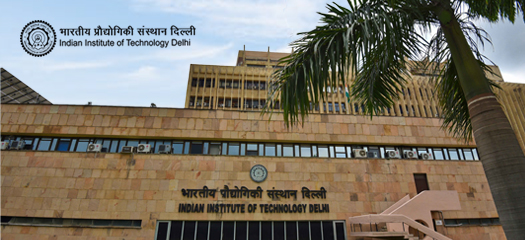
The Executive Programme in Operations Management and Analytics offered by CEP, IIT Delhi has been designed to help professionals build these future-ready capabilities. By combining operations strategy, process optimization, analytics, and emerging technologies, the programme aims to prepare learners for the evolving demands of modern business environments.
Operations Management has traditionally focused on planning, production, quality control, resource allocation, and process efficiency. However, the role has evolved significantly over the past few years.
Today’s operations leaders must navigate increasingly complex business environments influenced by technology, globalization, customer expectations, and market uncertainty.
Digital Transformation Is Reshaping Operations
Organizations across industries are adopting digital technologies to streamline workflows, automate routine tasks, and improve operational visibility.
Digital transformation initiatives are helping businesses:
Improve operational efficiency
Reduce manual processes
Enhance productivity
Enable real-time monitoring
As a result, professionals must understand how technology impacts business operations.
AI-Powered Decision-Making Is Becoming Standard
Artificial Intelligence is no longer limited to technology companies. Businesses across sectors are using AI to support operational decisions, predict demand, optimize inventory, and improve forecasting accuracy.
This growing integration of AI requires professionals to develop analytical and technology-oriented capabilities.
Supply Chains Have Become More Complex
Globalization, changing customer expectations, and economic uncertainty have increased supply chain complexity.
Organizations now need professionals who can:
Manage disruptions
Improve resilience
Optimize inventory
Strengthen supplier networks
Improve operational agility
Data Is Available Everywhere
Businesses now generate large volumes of operational data through enterprise systems, IoT devices, customer interactions, and digital platforms.
The challenge is no longer data collection but transforming data into meaningful business insights.
Customer Expectations Continue to Rise
Modern customers expect:
Faster deliveries
Better service quality
Greater transparency
Personalized experiences
Meeting these expectations requires organizations to continuously improve operational performance.
As a result, Operations Management is increasingly becoming a strategic business function rather than simply an operational responsibility.
In today’s competitive business environment, organizations must continuously improve efficiency, reduce costs, and make smarter decisions to stay ahead. This is where Operations Management and Analytics play a crucial role. While Operations Management focuses on ensuring that business processes run efficiently, Analytics helps organizations use data to make informed and strategic decisions. Together, these disciplines enable businesses to improve performance, enhance productivity, and create greater value for customers.
Understanding Operations Management
Operations Management is the process of planning, organizing, and optimizing business activities to ensure products and services are delivered efficiently. It involves managing resources, streamlining workflows, maintaining quality standards, controlling costs, and improving overall productivity. The primary objective is to ensure smooth business operations while maximizing value for both the organization and its customers.
Understanding Business Analytics
Business Analytics focuses on collecting, analyzing, and interpreting data to support decision-making. By leveraging analytics, organizations can forecast demand, identify operational bottlenecks, measure performance, optimize resource allocation, reduce risks, and develop more effective business strategies. Analytics transforms raw data into actionable insights that help businesses make better decisions and respond more quickly to changing market conditions.
Why the Combination Matters
The integration of Operations Management and Analytics has become increasingly important as businesses generate vast amounts of data through digital systems and connected technologies. Modern organizations no longer rely solely on intuition or past experience when making operational decisions. Instead, they use data-driven insights to improve operational visibility, enhance forecasting accuracy, optimize supply chains, increase customer satisfaction, and drive profitability. As industries continue to embrace digital transformation, professionals who can combine operational expertise with analytical thinking are becoming essential for sustainable business success.
Why Are Companies Investing in Analytics-Driven Operations?
Organizations today operate in highly competitive and fast-changing environments where efficiency, agility, and informed decision-making can significantly impact business success. As a result, companies are increasingly investing in analytics-driven operations to gain deeper visibility into their processes and improve overall performance. By leveraging data and advanced analytics, businesses can move beyond reactive decision-making and adopt a more proactive, strategic approach to operations management.
One of the key benefits of analytics is better demand forecasting. Accurate forecasting helps organizations anticipate customer demand, reducing the risk of inventory shortages or excess stock. This directly contributes to improved inventory management, enabling businesses to optimize stock levels, lower carrying costs, and enhance resource utilization.
Analytics also enables faster and more informed decision-making. With access to real-time dashboards and performance metrics, managers can quickly identify issues, monitor operational performance, and take corrective actions when necessary. This improved visibility helps organizations respond more effectively to market changes and operational challenges.
Another major advantage is cost optimization. Through analytical insights, businesses can identify inefficiencies, eliminate waste, streamline workflows, and allocate resources more effectively. These improvements often lead to higher productivity and better profitability.
Additionally, efficient operations contribute to a stronger customer experience. Faster delivery times, improved service quality, and greater operational reliability help organizations meet rising customer expectations and build long-term loyalty.
Perhaps most importantly, analytics provides a significant competitive advantage. Companies that use data effectively can identify opportunities earlier, adapt to changing market conditions faster, and make more strategic business decisions than their competitors.
Today, industries such as manufacturing, retail, e-commerce, logistics, healthcare, banking, and technology are actively investing in analytics-driven operations. As these sectors continue embracing digital transformation and AI-powered decision-making, the demand for professionals with expertise in both operations management and analytics is expected to grow significantly in the years ahead.
As organizations increasingly adopt data-driven business models, the demand for professionals who can combine operational excellence with analytical decision-making continues to grow. Modern businesses need leaders who can optimize processes, improve efficiency, manage complex supply chains, and leverage data to drive strategic outcomes. Recognizing this shift, IIT Delhi offers the Executive Programme in Operations Management and Analytics, designed to help working professionals develop expertise at the intersection of operations, analytics, and business transformation.
The programme goes beyond traditional operations management by integrating management principles with analytical frameworks and emerging technologies that influence modern business environments. It aims to equip participants with the knowledge and tools required to solve operational challenges, improve organizational performance, and make informed decisions in increasingly complex business ecosystems.
Why Is This Programme Relevant in 2026?
The role of operations professionals has evolved significantly. Today’s leaders are expected to manage more than processes and resources—they must use data, technology, and analytics to drive continuous improvement and business growth. Organizations increasingly seek professionals who can make data-informed decisions, optimize workflows, improve operational performance, manage supply chain complexities, and lead transformation initiatives. The IIT Delhi programme addresses these evolving expectations through a structured learning experience that combines academic rigor with practical business applications.
Programme Focus Areas
The curriculum is designed around the core competencies required for modern operations leadership. Participants gain exposure to areas such as operations strategy, process optimization, supply chain management, business analytics, quality management, and data-driven decision-making. The programme also explores the impact of emerging technologies on operations, helping learners understand how digital transformation, automation, and analytics are reshaping business functions.
By combining operational expertise with analytical thinking, the programme provides a holistic understanding of how businesses can improve efficiency, enhance decision-making, and create sustainable competitive advantages. This integrated approach makes it particularly relevant for professionals seeking leadership roles in operations, supply chain management, consulting, manufacturing, logistics, and business transformation.
Key Skills You Will Learn
The value of an Operations Management and Analytics programme lies in the practical capabilities it helps professionals develop.
Operations Strategy
Participants learn how operational decisions influence overall business performance and long-term organizational success.
Process Improvement
Modern organizations continuously seek opportunities to improve efficiency, productivity, and service quality. Understanding process improvement methodologies can help professionals identify and implement operational enhancements.
Supply Chain Optimization
Supply chains have become increasingly complex. Professionals need to understand how products, information, and resources move across interconnected business networks.
Quality Management
Quality remains a critical component of operational excellence. Participants gain insights into frameworks and approaches that help organizations maintain consistent standards and improve performance.
Business Analytics
Analytics skills enable professionals to interpret data, identify trends, and support decision-making using evidence-based approaches.
Technologies such as Artificial Intelligence, Machine Learning, IoT, and Digital Twins are increasingly influencing operations management. Understanding these technologies helps professionals prepare for the future of business operations.
These skills are becoming increasingly valuable as organizations seek leaders capable of combining operational expertise with analytical thinking and technology awareness.
Who Should Join This Programme?
The Executive Programme in Operations Management and Analytics is designed for professionals who want to strengthen their operational decision-making capabilities while developing analytical skills relevant to modern business environments.
As organizations increasingly rely on data-driven operations, professionals across functions can benefit from understanding how operational excellence and analytics work together.
Operations Professionals
Professionals responsible for managing processes, production, quality, logistics, or operational performance can use the programme to enhance their strategic and analytical capabilities.
Supply Chain Professionals
Individuals working in procurement, logistics, inventory management, warehousing, or supply chain planning can gain deeper insights into operational optimization and analytics-driven decision-making.
Manufacturing Managers
Manufacturing organizations increasingly depend on automation, predictive analytics, and process optimization. The programme helps professionals understand these evolving requirements.
Project Managers
Project leaders responsible for resource allocation, planning, and execution can benefit from learning how analytics improves operational efficiency and decision-making.
Business Analysts
Business Analysts looking to expand into operations, process improvement, and strategic decision-making can leverage the programme to broaden their expertise.
Mid-Career Professionals
Professionals aspiring to leadership roles often need stronger capabilities in operations strategy, analytics, and business transformation. This programme helps bridge that gap.
Career Opportunities After Operations & Analytics Upskilling
Operations and Analytics skills are becoming increasingly valuable across industries because businesses are seeking professionals who can improve efficiency while leveraging data for better decision-making.
Operations Manager
Operations Managers oversee business processes, optimize workflows, improve productivity, and ensure operational goals are achieved efficiently.
Supply Chain Manager
Supply Chain Managers coordinate procurement, logistics, inventory management, and supplier relationships to ensure smooth business operations.
Business Analytics Manager
These professionals use operational and business data to identify trends, improve processes, and support strategic planning.
Process Improvement Specialist
Organizations hire specialists to identify inefficiencies, implement improvements, and enhance operational performance.
Operations Consultant
Consultants help businesses improve efficiency, reduce costs, and adopt modern operational frameworks.
Logistics and Distribution Manager
As e-commerce and global trade continue expanding, logistics professionals play a critical role in ensuring efficient product movement and customer satisfaction.
The combination of operational expertise and analytical capability makes professionals valuable across sectors including manufacturing, retail, healthcare, technology, consulting, and logistics.
Many professionals use Operations Management and Supply Chain Management interchangeably because both functions contribute to business efficiency and organizational performance. However, while they are closely related, they focus on different aspects of how a business creates and delivers value.
Operations Management primarily focuses on internal business processes. It involves planning, managing, and optimizing the activities required to produce products or deliver services efficiently. Professionals in operations management work on improving productivity, enhancing quality, managing resources, optimizing workflows, and ensuring that organizational processes run smoothly. The goal is to maximize efficiency while maintaining high standards of performance and customer satisfaction.
In contrast, Supply Chain Management focuses on the broader network involved in delivering products and services to customers. It encompasses activities such as procurement, inventory management, logistics, supplier coordination, demand planning, and distribution. Supply chain professionals ensure that the right resources are available at the right time while maintaining cost efficiency and operational continuity across the entire value chain.
Although these disciplines have distinct areas of focus, they work closely together. Supply Chain Management ensures the smooth flow of materials, information, and resources across the business ecosystem, while Operations Management ensures those resources are utilized effectively to create products and services. A disruption in either function can impact overall business performance, making collaboration between the two essential.
As organizations increasingly prioritize efficiency, resilience, and data-driven decision-making, professionals who understand both Operations Management and Supply Chain Management are often better positioned for leadership roles. Their ability to optimize internal operations while managing external supply networks enables them to drive business performance and support long-term growth.
For professionals interested in developing deeper expertise in supply chain transformation and global operations, explore:
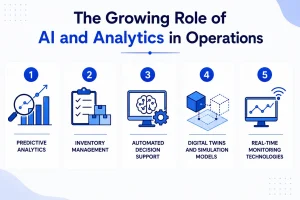
The Growing Role of AI and Analytics in Operations
Artificial Intelligence (AI) and Analytics are fundamentally transforming how organizations manage operations. In the past, operational decisions were often based on historical data, manual reporting, and managerial experience. Today, businesses are leveraging advanced technologies to make faster, more accurate, and data-driven decisions that improve efficiency, reduce costs, and enhance overall business performance.
One of the most significant applications of AI in operations is predictive analytics. By analyzing historical and real-time data, organizations can forecast demand, identify potential risks, anticipate disruptions, and proactively address operational challenges before they impact business outcomes. This helps companies improve planning and maintain operational continuity.
AI is also revolutionizing inventory management. Intelligent inventory systems can monitor stock levels, predict purchasing patterns, and recommend optimal replenishment strategies. This enables businesses to reduce excess inventory, minimize stock shortages, and improve working capital efficiency.
Another major advantage is automated decision support. Modern analytics platforms provide managers with real-time insights, performance dashboards, and actionable recommendations that support faster and more informed decision-making. Rather than relying solely on intuition, leaders can use data to guide strategic and operational choices.
Organizations are increasingly adopting Digital Twins and simulation models to improve operational performance. These digital replicas of physical assets, processes, or systems allow businesses to test different scenarios, evaluate potential outcomes, and optimize operations without disrupting actual workflows. This approach is particularly valuable in manufacturing, logistics, and supply chain environments.
Additionally, real-time monitoring technologies powered by IoT devices, sensors, and analytics platforms provide continuous visibility into business operations. This enables organizations to detect issues early, respond quickly to changing conditions, and maintain higher levels of efficiency and service quality.
As AI and analytics continue to reshape business operations, professionals who understand both operational management and data-driven decision-making will be increasingly valuable. Their ability to combine process expertise with analytical insights will position them to lead digital transformation initiatives and drive operational excellence in the years ahead.
Analytics Skills Are Becoming Essential Across Industries
One of the most important trends shaping business careers today is the growing demand for analytics capabilities.
Organizations generate vast amounts of data but often struggle to convert that information into actionable insights.
Professionals who can bridge this gap are increasingly valuable because they help organizations:
Is the IIT Delhi Programme Worth It for Working Professionals?
For many professionals, the decision to pursue an executive programme ultimately comes down to one question: Will it help me grow professionally and stay relevant in a rapidly changing business environment? While the answer depends on individual career goals, the growing importance of Operations Management and Analytics suggests that these skills are becoming increasingly valuable across industries.
The Executive Programme in Operations Management and Analytics offered by CEP, IIT Delhi is particularly relevant for professionals looking to strengthen their understanding of operational excellence, data-driven decision-making, process optimization, and emerging business technologies. As organizations continue investing in digital transformation and analytics-driven operations, professionals who can combine operational expertise with analytical thinking are often better positioned for leadership opportunities.
Potential Benefits of the Programme
The programme can help professionals develop a range of capabilities that are increasingly sought after in modern organizations. Participants gain exposure to contemporary operations management frameworks, improve their analytical and problem-solving skills, strengthen decision-making abilities, and build a better understanding of technologies that are reshaping business operations. The curriculum also focuses on operational leadership and strategic thinking, helping professionals manage complex business challenges more effectively.
What Makes It Relevant in 2026?
Businesses today are looking for professionals who can navigate operational complexity while leveraging data to drive performance improvements. Organizations increasingly value individuals who can optimize processes, interpret business data, lead transformation initiatives, improve efficiency, and support long-term growth objectives. The programme’s combination of Operations Management and Analytics directly aligns with these evolving industry requirements, making it highly relevant for professionals seeking future-ready skills.
A Practical Perspective
It is important to approach any executive programme with realistic expectations. Completing a programme alone does not guarantee an immediate promotion or career transformation. However, professionals who actively apply the concepts learned, develop their analytical capabilities, and leverage their new knowledge in real-world business situations often position themselves for stronger long-term career growth. For working professionals looking to enhance their operational leadership capabilities and build expertise in analytics-driven decision-making, the IIT Delhi programme can serve as a valuable investment in their professional development journey.
Final Thoughts
Operations Management is no longer limited to managing processes and improving efficiency. Today’s operations leaders are expected to combine business strategy, analytics, technology, and decision-making capabilities to drive organizational success.
As businesses continue investing in digital transformation, AI, automation, and data-driven operations, professionals who understand both operational excellence and analytics are likely to remain in high demand.
The Executive Programme in Operations Management and Analytics by IIT Delhi is designed to help professionals develop these future-ready capabilities through a structured learning experience focused on operations strategy, process improvement, supply chain optimization, quality management, and analytical decision-making.
For working professionals seeking to strengthen their operational leadership skills while building expertise in analytics, the programme offers a relevant pathway aligned with the evolving needs of modern businesses.
Frequently Asked Questions
It is an executive learning programme designed to help professionals develop expertise in operations strategy, process optimization, supply chain management, quality systems, analytics, and data-driven decision-making.
The field is suitable for operations professionals, supply chain managers, manufacturing leaders, project managers, business analysts, consultants, and professionals aspiring to leadership roles.
Yes. Organizations across industries continue to invest in operational excellence, digital transformation, and analytics, creating strong demand for operations professionals.
Operations Management focuses on internal business processes and efficiency, while Supply Chain Management focuses on the movement of goods, services, and resources across business networks.
Analytics helps professionals make informed decisions, improve forecasting, optimize resources, reduce costs, and enhance operational performance.
Yes. Modern Operations Management increasingly involves technologies such as AI, analytics, IoT, and Digital Twins, which influence operational decision-making.
For professionals seeking to improve operational leadership, analytical thinking, and business decision-making capabilities, the programme can provide valuable skills aligned with current industry demands.
Dr. Sanjay Kulkarni
Data & AI Transformation Leader
Dr. Sanjay Kulkarni is a Data & AI Transformation Leader with over 25 years of industry experience. He helps organizations adopt data-driven and responsible AI practices through strategic guidance and education. With experience across startups and global enterprises, he bridges the gap between theory and real-world application. His work empowers teams to innovate and thrive in AI-driven environments.
Get Free Upskilling Guidance
Fill in the details for a free consultation
Related Courses
Explore our programs
Admission Closed
Executive Programme in Operations Management and Analytics
 HOME > BLOG > Business Management > IIT Delhi Operations Management & Analytics Programme 2026: The Working Professional’s Honest Guide
 June 27, 2026
 14 min read




 ChatGPT
 Perplexity
 Claude
 Grok
Grok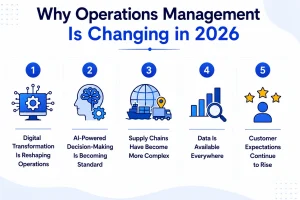



 Admission Closed

 Admission Open
 Admission Open
 Admission Closed
 ROI Calculator