For a lot of graduates in India, banking exams are not just about getting a job. They are about finding stability in a career market that changes too quickly. Among all the banking recruitment exams conducted every year, IBPS PO remains one of the most talked-about options because it offers something many roles do not, such as structured growth, respectable pay, and long-term career security.
If you are planning to appear for the IBPS PO exam, understanding how the exam works is just as important as preparing for it. From eligibility and syllabus to salary, exam structure, and career growth, here is a complete breakdown of what candidates should actually know before starting their preparation.
IBPS PO stands for the Institute of Banking Personnel Selection Probationary Officer. A Probationary Officer is recruited as a management trainee. During the probation period, candidates are trained in different banking operations so they can eventually handle responsibilities related to branch management, customer service, financial operations, administration, and supervision.
What Does an IBPS PO Actually Do?
The work of a Probationary Officer changes depending on the branch, workload, and banking requirements. A newly recruited PO may be involved in:
Assisting customers with banking services
Handling account-related processes
Supporting loan documentation and verification
Managing branch-level operational work
Monitoring transactions and compliance procedures
Coordinating with senior officials
Learning digital banking systems and financial products
During the training period, officers are usually rotated through different departments to understand how banking functions at multiple levels.
Candidates applying for the IBPS PO exam must meet a few basic eligibility conditions related to age, education, and nationality. Since the recruitment process involves document verification later, checking these details beforehand is important.
Educational Qualification
Applicants must hold a bachelor’s degree from a recognized university or institution. Candidates from any stream, including commerce, science, arts, engineering, or management, are eligible to apply. Final-year students may also apply, provided they can submit proof of graduation within the required timeline.
Age Limit
For IBPS PO 2026, candidates are generally expected to be between 20 and 30 years of age. Relaxation in the upper age limit is usually available for reserved categories, such as:
SC/ST candidates
OBC candidates
Persons with benchmark disabilities
Ex-servicemen
Nationality
The exam is mainly open to Indian citizens, although certain other categories specified in official recruitment guidelines may also be eligible.
Computer and Language Skills
Since banking operations are now largely digital, candidates should have basic computer knowledge. Familiarity with the local language of the state or region can also be helpful during customer interaction and branch operations.
IBPS PO Exam Pattern and Syllabus
Having complete knowledge of the exam pattern and syllabus makes preparation far more practical and less confusing. The IBPS PO selection process takes place in three stages:
Preliminary Examination
Mains Examination
Interview Round
Candidates must clear each stage to move forward in the recruitment process. Final selection is generally based on mains performance and the interview round.
Understanding the IBPS PO exam pattern and syllabus together helps candidates prepare more strategically. The recruitment process is conducted in three stages, and candidates must qualify at each level to move forward in the selection process.
Candidates who clear the mains examination are called for the interview stage. Contrary to other written tests, this phase centers more on the candidate’s personality, communication ability, awareness, and confidence level.
Interview panels may ask questions related to:
Banking awareness
Current affairs
Educational background
Career goals
Hobbies and interests
Situational judgment
Here, what the interviewers really want to know about is your thought process and communication skills, not necessarily your memory skills.
IBPS PO Salary and Career Growth
The IBPS PO salary is one of the biggest reasons the exam continues attracting such a large number of applicants every year. For many graduates entering the job market, the role offers a mix of financial security, structured growth, and long-term career stability that is difficult to find in most entry-level positions.
What makes the role appealing is not just the starting salary but the overall compensation structure attached to it.
IBPS PO Salary Structure
The salary of a Probationary Officer is made up of multiple components, including:
Basic pay
Dearness allowance
House rent allowance
Travel and special allowances
Other location-based benefits
The exact in-hand salary can vary depending on the posting city, deductions, and bank policies. For example, officers posted in metro cities may receive different allowances compared to those working in smaller towns or semi-urban branches.
Apart from a monthly salary, employees also benefit from the overall financial security associated with public sector banking jobs.
Additional Benefits Beyond Salary
Many candidates initially focus only on the pay scale, but the long-term benefits attached to the role are equally important.
IBPS PO officers may receive:
Medical coverage
Paid leaves
Pension-related benefits
Loan concessions
Travel reimbursements
Housing-related support in certain cases
Over time, these benefits significantly improve the overall value of the job, especially for candidates planning long-term careers in banking.
Career Growth After Becoming an IBPS PO
Another major reason candidates prefer the PO role over clerical positions is the managerial career path attached to it.
Unlike many entry-level jobs where growth feels uncertain, banking follows a relatively structured promotion hierarchy. With experience, internal exams, and performance-based progression, officers can gradually move into higher administrative and leadership roles.
The promotions may not feel extremely fast in the initial years, but the career progression remains stable and clearly defined. Candidates who perform consistently often get opportunities to move into specialized departments such as corporate banking, credit management, risk analysis, and financial operations as their careers advance.
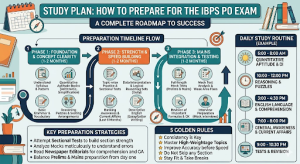
One mistake many beginners make is treating IBPS PO preparation as a sprint rather than a long-term process. The exam is not impossible, but it does reward consistency. Candidates who study regularly for months usually perform far better than those who try to cover everything in the final few weeks.
1. Start with the Basics Before Mock Tests
A lot of aspirants jump directly into difficult mocks after watching topper strategy videos online. That usually creates frustration early. Building strong basics in arithmetic, reasoning, and English first makes preparation smoother later.
2. Mock Analysis Matters More Than Mock Scores
Giving mock tests is important, but simply attempting papers every day is not enough. Candidates improve faster when they:
Review Mistakes Properly
Understand Weak Areas
Track Accuracy
Improve Question Selection
Many serious aspirants spend almost as much time analyzing mocks as attempting them.
3. Do Not Ignore Reading and Current Affairs
Banking exams heavily reward candidates who read consistently. Reading editorials, banking updates, and financial news regularly helps improve:
English Comprehension
Banking Awareness
Interview Confidence
Descriptive Writing Quality
Even 30 minutes of daily reading creates a noticeable difference over time.
4. Consistency Usually Beats Extreme Study Schedules
Studying 12 hours for three days and then burning out rarely works in competitive exams. A more realistic routine that candidates can actually sustain for months is usually far more effective in the long run.
How Can Jaro Education Help You Build a Strong Career Path?
Preparing for competitive exams like IBPS PO is a smart career move, especially for candidates looking for stability and long-term growth. At the same time, many students and working professionals also explore opportunities in the private sector to expand their career options and skill sets.
This is where Jaro Education can become a valuable learning partner.
Jaro Education is among the top online higher education and upskilling organizations in India, enabling you to access relevant certification programs, executive education, and professional courses provided by renowned universities and institutes.
If you are preparing for banking entrance exams, then upskilling while preparing can prove helpful for several reasons:
Builds confidence for interviews and professional roles
Opens additional career opportunities in finance, management, and corporate sectors
The reason many candidates consider private-sector roles alongside government exam preparation is that exploring skill-based programs in areas such as banking and finance, business management, data analytics, digital marketing and leadership can help you stay career-ready regardless of the path you eventually choose.
One further practical advantage of online upskilling is flexibility. Candidates can continue preparing for exams like IBPS PO while simultaneously building professional knowledge that remains valuable in the long run.
Whether your goal is public sector banking, private-sector growth, or simply creating stronger career backup options, continuous learning always adds an edge in today’s competitive job market.
For candidates looking for a stable, structured, and growth-oriented career, IBPS PO remains a strong option. Banking itself is evolving rapidly with digital systems, financial technology, AI-driven services, and changing customer expectations. That means the role of banking professionals is also becoming more dynamic over time.
For candidates willing to stay patient and prepare strategically, IBPS PO can become more than just an exam result. It can become the starting point of a long-term professional career.
Frequently Asked Questions
Ideally, candidates should begin preparing for the IBPS PO exam at least 5–6 months in advance. Early preparation helps improve speed, accuracy, and overall confidence before the actual exam.
Yes, the IBPS PO salary is considered attractive for an entry-level banking role. Along with basic pay, candidates also receive allowances, benefits, and long-term career growth opportunities.
Yes, candidates from engineering, arts, science, and other streams regularly clear the exam. The IBPS PO syllabus mainly tests aptitude, reasoning, English, and banking awareness rather than graduation specialization.
Candidates generally need educational certificates, ID proof, photographs, signatures, and category certificates, if applicable, during the IBPS PO application process.
The IBPS PO result usually depends on factors like exam difficulty level, number of vacancies, and overall candidate performance. Cut-offs can change every year based on competition and normalization criteria.
Shubham Lal
Lead Software Developer
Shubham Lal joined Microsoft in 2017 and brings 8 years of experience across Windows, Office 365, and Teams. He has mentored 5,000+ students, supported 15+ ed-techs, delivered 60+ keynotes including TEDx, and founded AI Linc, transforming learning in colleges and companies.

 June 2, 2026
 7 min read




 ChatGPT
 Perplexity
 Claude
 Grok
Grok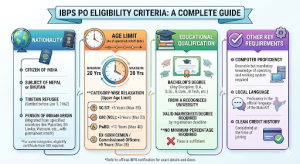








 ROI Calculator