AI and Risk Management: From Reaction to Prediction
Key Insights
AI in project management can automate repetitive tasks, analyze project data, identify patterns, and support proactive decision-making across the project lifecycle.
AI project planning can analyze workloads, timelines, dependencies, and resources to help create schedules, identify bottlenecks, and evaluate different project scenarios.
Generative AI project management can simplify documentation and communication by drafting reports, summarizing meetings, creating action items, and preparing stakeholder updates, with human review remaining important.
AI PM tools can support task management, automated reporting, risk detection, meeting documentation, and predictive analytics, but organizations should choose tools based on genuine workflow needs and maintain control over AI outputs.
In this blog, you'll learn how AI and generative AI are transforming project planning, risk management, resource allocation, monitoring, communication, and the role of project managers, along with their benefits and adoption challenges.
Project management is becoming increasingly data-driven, automated, and intelligent. According to IBM, Gartner predicts that 80% of routine project management tasks could be handled by AI by 2030, highlighting how significantly the role of technology could change in the coming years.IBM: AI in Project Management. From creating project plans and analyzing risks to generating reports and monitoring progress, AI is moving beyond simple automation to support everyday project decisions. Additionally, generative AI is introducing new ways to create project documentation, summarize meetings, develop communication drafts, and interact with project data. For project managers, the opportunity is not about handing over every decision to AI. It is about using AI to reduce administrative work while creating more time for strategy, leadership, problem-solving, and stakeholder management.
AI in project management denotes the use of artificial intelligence technologies to facilitate project management processes throughout the project lifecycle. The tools used in project management can analyze project data, detect patterns, automate the process, predict possible issues, and give recommendations on how to act based on the insights obtained.
As for traditional project management practices, they usually require updating the schedule, tracking the tasks, analyzing spreadsheets, creating reports, and conducting regular meetings to identify risks. All of these processes can be facilitated by AI that processes information about the ongoing project.
For instance, an AI-based system can analyze tasks and see that a certain milestone will be delayed. This means that the problem can be solved earlier, before the project manager discusses the project at a weekly status meeting.
Therefore, AI can be used to make project management proactive. The technology can be useful in the following processes and others:
The shift will be from reactive project management towards proactive decision-making.
How AI Changes Project Planning
Project planning is one of the most important processes within project management because the decisions made at this stage can impact the delivery time, resources needed, budget, and the outcome of the project in general.
The AI-based project planning can help the managers by analyzing project history, current workloads, time frames, interdependencies, and available resources. Based on this information, an AI tool can create or update the schedule and reveal any possible bottlenecks.
For example, if there are several tasks that depend on completing a single activity, the AI-based tool can point out this interdependency and the consequences of the delay in completing this task.
AI can also be used to conduct scenario planning. In this case, the project manager can think about the following issues:
What will happen if a certain team member is not available?
What if the vendor delays the delivery? How will it impact the deadline?
What if the project budget is decreased? What are the outcomes?
How the addition of extra resources will impact the delivery time?
There is no need to calculate every possible scenario manually thanks to AI. However, the plan developed by AI should not be considered the final decision.
The Role of Generative AI in Project Management
Generative AI is taking AI-powered project management a step further. While traditional AI is often used to analyze data, identify patterns, and make predictions,generative AIcan create new content based on the information provided to it.
This makes generative AI project management particularly useful for communication and documentation-heavy activities.
Consider a weekly project meeting. Generally, someone may need to review the discussion, identify decisions, record action items, and prepare a status update. Generative AI can assist with turning this information into a structured summary.
The project manager can then review, edit, and approve the output instead of creating everything manually.
AI and Risk Management: From Reaction to Prediction
Risk management is another area where AI can significantly influence project outcomes.
Conventional risk management often involves creating a risk register, assigning probability and impact, and reviewing risks at regular intervals. While this remains useful, AI can analyze project data continuously and identify signals that may indicate emerging problems.
For example, an AI system may identify patterns such as:
Repeated delays in particular tasks
Increasing workload for specific team members
Changes in project progress
Dependencies that are becoming bottlenecks
Resource allocation issues
Schedule deviations
This can enable project managers to investigate risks earlier.
AI can also support scenario-based risk analysis by modelling different possible outcomes. Instead of asking only, “What risks do we currently have?”, project managers can use AI to explore, “What could happen if this assumption changes?”
That makes risk management more dynamic.
However, predictive insights are only as useful as the data behind them. Poor-quality, incomplete, outdated, or biased project data can lead to misleading recommendations. Human review therefore remains essential, particularly for high-impact decisions.
AI for Resource Allocation and Team Workloads
Managing people and resources is a complex part of project management. A project may have a strong team but still experience delays if work is distributed unevenly or critical skills are unavailable when required.
AI can analyze workload, task assignments, schedules, and project requirements to identify potential imbalances.
For example, if one employee has significantly more high-priority tasks than others, an AI-enabled system may flag the imbalance. The project manager can then review whether some responsibilities can be reassigned.
AI can also help match resources to project requirements by considering factors such as availability, workload, skills, and deadlines.
The objective is not simply to maximize utilization. Effective resource management also requires consideration of employee capacity, collaboration, development, and the practical realities of teamwork.
AI-Powered Project Monitoring and Real-Time Insights
Project monitoring traditionally involves dashboards, spreadsheets, meetings, and periodic reports. While these methods remain valuable, they can make project managementreactive when information is not updated frequently.
AI can support continuous monitoring by analyzing project information as it changes.
Instead of manually searching through multiple reports, project managers may receive insights highlighting areas that require attention. This could include delayed activities, changing workloads, schedule deviations, or emerging risks.
This creates a shift from information collection to information interpretation.
Project managers spend less time simply finding out what happened and more time understanding why it happened and deciding what should happen next.
Free Courses
Mastering Product Management: Roadmap,Vision, and Strategy
How Generative AI Is Transforming Project Communication
Communication is often one of the most time-consuming responsibilities of a project manager, particularly when teams are distributed across departments, locations, or time zones.
Generative AI can help reduce this administrative burden.
A project manager can use AI to turn complex project information into different forms of communication for different audiences. For example, a detailed internal project update may need to become a concise executive summary for senior stakeholders.
Similarly, meeting discussions can be transformed into structured action points, while lengthy project documentation can be summarized for team members who need only the key information.
This can improve consistency and reduce the time spent preparing routine communications.
However, project managers should review AI-generated communication before sending it. AI may misunderstand context, omit important nuances, or produce wording that does not reflect the intended message.
AI Project Management Tools: What Can They Actually Do?
The growing ecosystem of AI PM tools combines traditional project management features with artificial intelligence and generative capabilities.
Rather than simply maintaining task lists, modern platforms can support activities such as:
1. Task and Schedule Management
AI can assist in creating tasks, organizing work, identifying dependencies, and adjusting schedules based on changing project conditions.
2. Automated Reporting
AI can turn project information into summaries and status updates, reducing the amount of manual reporting required from project managers.
3. Risk Detection
AI-powered systems can identify patterns that may indicate potential delays, workload problems, or other project risks.
4. Meeting and Documentation Support
Generative AI can summarize discussions, extract action items, and help organize project documentation.
5. Predictive Analytics
AI can use historical and current project information to support forecasting and scenario analysis.
The important consideration is not simply whether a tool has an “AI” label. Project managers should evaluate whether its AI features solve a genuine workflow problem and whether the outputs can be reviewed and controlled.
Key Benefits of AI in Project Management
When implemented thoughtfully, AI can provide several advantages across the project lifecycle.
Greater efficiency: Automating repetitive activities allows project managers to spend more time on strategic and people-focused responsibilities.
Better decision support: AI can analyze large amounts of information and highlight patterns that may be difficult to identify manually.
Earlier risk identification: Predictive capabilities can help teams identify potential problems before they become major project issues.
Improved communication: Generative AI can simplify reports, meeting summaries, documentation, and stakeholder updates.
Better resource visibility: AI can help identify workload imbalances and support more informed resource allocation.
More adaptive planning: AI can help project teams evaluate different scenarios when assumptions, resources, or timelines change.
Together, these capabilities can make project management more proactive and responsive.
Successful AI adoption does not require organizations to transform every project process at once. A gradual approach can be more practical.
Start by identifying repetitive activities that consume significant time. Reporting, meeting summaries, task administration, and documentation are often suitable starting points.
Next, establish clear guidelines around what information can be used with AI tools and which decisions require human approval.
Project managers should also develop the ability to evaluate AI outputs rather than simply accepting them. This includes checking accuracy, understanding limitations, refining prompts, and comparing AI recommendations with real project conditions.
Most importantly, AI adoption should have a clear purpose. Using AI simply because it is available may create additional complexity. The better question is: Which project problem are we trying to solve?
How AI Is Changing the Role of the Project Manager
The rise of AI does not necessarily make project managers less important. Instead, it changes where they can focus their attention. If AI handles more routine administration, project managers can spend more time on activities that require human judgment.
The project manager of the future may therefore work alongside AI rather than compete with it.
The most valuable skill will not simply be knowing how to use an AI tool. It will be knowing when to use AI, how to question its output, and when human judgement should take priority.
Advance Your Project Management Skills: Executive Certificate Programme in Advanced Project Management and Analytics by IIM Mumbai
Take your project management expertise to the next level with the Executive Certificate Programme in Advanced Project Management & Analytics from IIM Mumbai, delivered through Jaro Education. Designed for working professionals, the 7-month blended programme combines live online learning with campus immersion and focuses on end-to-end project execution, project analytics, AI and Generative AI, portfolio governance, risk management, leadership, and data-driven decision-making. Participants also gain practical exposure through real-life case studies, a capstone project, and hands-on sessions with project management tools, while successful completion earns a Certificate of Completion from IIM Mumbai and Executive Alumni Status, subject to programme requirements.
Conclusion
AI and generative AI are changing project management by reducing repetitive work, improving access to project insights, supporting predictive planning, and making communication more efficient. From AI project planning and resource allocation to risk monitoring, reporting, and stakeholder communication, intelligent technologies are becoming relevant across the project lifecycle.
However, successful adoption requires more than choosing the right AI PM tools. Organizations need reliable data, responsible governance, trained teams, and clear processes for reviewing AI-generated outputs. Project managers must also retain control over decisions where context, ethics, relationships, and judgement matter.
The most effective approach is not to ask whether AI can replace project managers, but how project managers can use AI to become more strategic, proactive, and effective. As generative AI continues to evolve, this human-AI partnership is likely to become an increasingly important part of modern project management.
Frequently Asked Questions
AI is more likely to automate repetitive project management tasks than replace project managers entirely. Human skills such as leadership, stakeholder management, decision-making, and handling complex situations will continue to be important.
Generative AI can help project managers create reports, summarize meetings, generate action items, draft project documentation, and support risk identification. It can reduce administrative work while keeping human review at the centre of important decisions.
The right AI PM tool depends on the team’s workflow, project complexity, required integrations, and AI capabilities. Modern tools increasingly offer features such as task automation, predictive insights, natural-language interfaces, and AI-assisted reporting.
Common challenges include data quality, security and privacy concerns, inaccurate AI-generated outputs, lack of trust, and difficulty integrating AI into existing workflows. Clear governance and human oversight are important for responsible adoption.
Nuthana Reddy
Nuthana Reddy is a Senior Manager at Procter & Gamble, specializing in operations, digitization, and cross-functional leadership. She has driven multimillion-dollar impact through innovation, process optimization, and strategic execution across global markets.
Get Free Upskilling Guidance
Fill in the details for a free consultation
Related Courses
Explore our programs
Executive Programme in Artificial Intelligence and Cyber Security for Organizations

 September 7, 2026
 9 min read




 Key Insights
 ChatGPT
 Perplexity
 Claude
 Grok
Grok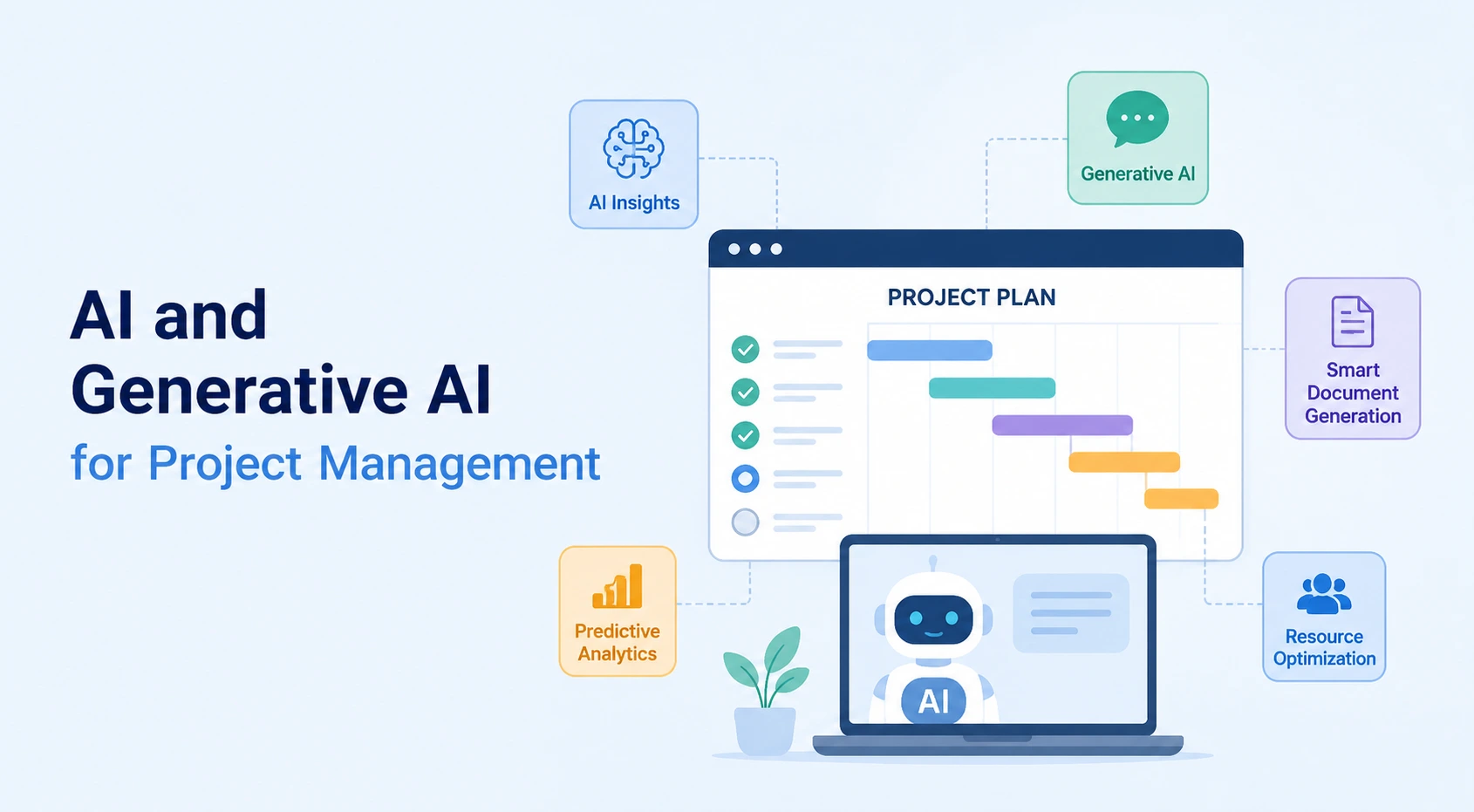











 ROI Calculator