The XAT exam (Xavier Aptitude Test) is one of India’s most prestigious management entrance examinations, conducted annually by XLRI Jamshedpur. Known for its unique decision-making section and rigorous evaluation standards, the XAT exam serves as a gateway to over 250 top B-schools across India.
For aspirants targeting premier MBA programmes, understanding every aspect of the XAT exam 2026—from eligibility and syllabus to exam pattern and preparation strategy—is crucial. This comprehensive guide provides all the essential details, including XAT exam date, XAT exam pattern, XAT exam syllabus, and expert preparation tips to help candidates succeed.
Unlike many other MBA entrance exams, XAT evaluates candidates not just on aptitude but also on ethical reasoning and decision-making abilities. This makes it a preferred exam for institutions that seek well-rounded management professionals.
Key Highlights of XAT Exam 2026
Conducting Body: XLRI Jamshedpur
Exam Mode: Computer-Based Test (CBT)
Duration: 3.5 hours
Number of Sections: 4
Frequency: Once a year
Accepted by: 250+ B-schools across India
XAT Exam Date 2026 and Important Schedule
Understanding the XAT exam date and timeline is critical for planning, preparation, and application.
XAT 2026 Important Dates
Event
Date
Registration Start Date
10 July 2025
Registration Last Date
11 December 2025
Official Mock Test
27–28 September 2025
Admit Card Release
20 December 2025 (Tentative)
XAT Exam Date 2026
4 January 2026
Response Sheet Release
January 2026
Result Declaration
31 January 2026 (Expected)
Candidates are advised to complete registration well before the deadline to avoid last-minute issues.
Before applying, candidates must check the XAT exam eligibility requirements.
Basic Eligibility
Here’s the basic XAT exam eligibility that a candidate must clear before they can appear for XAT 2026:
A Bachelor’s degree in any discipline from a recognised university
No minimum percentage requirement
Final-year students are eligible (must complete graduation before admission)
No age limit
Both freshers and working professionals can apply
Open to Indian and international candidates
The flexibility in XAT exam eligibility makes it accessible to a wide range of aspirants.
XAT Exam Fees 2026
Understanding the XAT exam fees is important while completing the application process.
Application Fee Structure
XAT Registration Fee: ₹2100
Additional XLRI Programme Fee: ₹200 per programme
Payment Mode: Online (Credit/Debit Card, Net Banking, UPI)
Candidates must ensure successful payment to complete the application process.
XAT Exam Pattern 2026
The XAT exam pattern stands out among MBA entrance exams because it evaluates candidates on a balanced combination of aptitude, analytical reasoning, ethical judgement, and general awareness. Unlike many other tests that focus only on quantitative and verbal ability, the XAT exam introduces a dedicated Decision Making section, which assesses a candidate’s ability to analyse complex real-world situations and make logical, ethical, and business-oriented choices.
*StudentArrive
The exam is conducted in a computer-based format (CBT) and typically lasts 3.5 hours, giving candidates sufficient time to demonstrate their conceptual understanding and problem-solving abilities. The structure of the exam is designed to test not just academic knowledge but also managerial aptitude, making it highly relevant for MBA aspirants.
Another distinctive feature of the XAT exam pattern is its negative marking system, which encourages accuracy and discourages random guessing. Additionally, candidates must manage their time effectively across multiple sections to maximise their overall score.
Overview of XAT Exam Pattern
Section
Key Areas
Verbal and Logical Ability
Reading comprehension, grammar, vocabulary
Decision Making
Caselets, ethical dilemmas, data-based scenarios
Quantitative Ability & Data Interpretation
Maths, DI sets
General Knowledge
Static and current GK
XAT Exam Syllabus 2026
While XLRI does not officially define a syllabus, the XAT exam syllabus is based on recurring topics over the years.
1. Verbal and Logical Ability (VLA)
The Verbal and Logical Ability section evaluates a candidate’s proficiency in English language comprehension, reasoning, and interpretation skills. This section is designed to assess how effectively candidates can interpret written information and apply logical thinking to reach conclusions.
Key topics typically covered include:
Reading Comprehension passages
Vocabulary-based questions
Grammar and sentence correction
Para jumbles
Critical reasoning
Fill in the blanks
Analogies
Reading comprehension questions often form a significant portion of this section, requiring candidates to analyse passages from diverse topics such as business, economics, psychology, philosophy, and social issues.
To perform well in this section, candidates must develop strong reading habits, improve vocabulary, and practise logical reasoning questions regularly.
2. Decision Making (DM)
The Decision Making section is one of the most distinctive components of the xat exam pattern. It tests a candidate’s ability to make sound judgements in complex scenarios that often involve ethical dilemmas, business challenges, or organisational conflicts.
Unlike traditional aptitude questions, this section presents caselets that require candidates to evaluate situations carefully before choosing the most appropriate solution.
Common question types include:
Ethical dilemmas
Business decision scenarios
Data interpretation within caselets
Logical problem-solving situations
Analytical reasoning-based case studies
Candidates must strike a balance between ethical considerations, practicality, and business logic when answering these questions. The section evaluates managerial potential and decision-making maturity.
Practising previous years’ caselets is one of the most effective ways to prepare for this section.
3. Quantitative Ability & Data Interpretation (QA & DI)
This section measures numerical aptitude, mathematical understanding, and the ability to interpret data presented in graphical or tabular formats.
Topics usually covered include:
Arithmetic:
Percentages
Profit and loss
Ratio and proportion
Time, speed and distance
Time and work
Algebra:
Equations
Inequalities
Functions
Progressions
Geometry and Mensuration:
Triangles
Circles
Coordinate geometry
Area and volume
Data Interpretation:
Tables
Bar graphs
Pie charts
Line graphs
Mixed data sets
Questions in this section may range from moderate to high difficulty level, requiring both conceptual clarity and calculation speed.
A strong foundation in mathematics and regular practice of DI sets is essential to score well.
4. General Knowledge (GK)
The General Knowledge section evaluates awareness of current events as well as static knowledge across multiple domains. While this section may not always contribute to the overall percentile directly, it plays an important role in the selection process for interviews.
Key topics include:
Current affairs
Business and economy
Awards and honours
Government policies
Science and technology
Sports news
International events
History and geography
Indian constitution
Reading newspapers, magazines, and reliable online resources regularly can help candidates perform well in this section.
Marking Scheme in XAT Exam Pattern
The xat exam pattern follows a structured marking scheme that rewards accuracy and penalises guesswork.
Key marking rules include:
+1 mark for each correct answer
-0.25 marks for each incorrect answer
-0.1 marks deducted for more than 8 unattempted questions
No negative marking in the General Knowledge section (in most cases)
Essay evaluation may be considered during the interview stage
Because of the penalty for unattempted questions, candidates should aim to attempt an optimal number of questions without compromising accuracy.
Free Courses
Stakeholder Communication & Negotiation Skill Sets
Negative marking for unattempted questions adds pressure
Overall, the XAT exam difficulty level demands both accuracy and smart time management.
XAT Exam 2026 vs CAT 2026
Understanding the difference helps candidates decide preparation strategies.
Feature
XAT 2026
CAT 2026
Conducting Body
XLRI
IIMs
Duration
3.5 hours
2 hours
Sections
4
3
Decision Making
Yes
No
GK Section
Yes
No
Negative Marking
Yes
Yes
The presence of decision-making and GK makes XAT more holistic in evaluation.
Top Colleges Accepting XAT Scores
*cracku
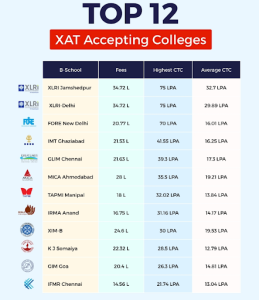
More than 250 institutes accept XAT scores. Some of the top ones include:
XLRI Jamshedpur
XIMB Bhubaneswar
SPJIMR Mumbai
IMT Ghaziabad
Great Lakes Institute of Management
TAPMI Manipal
KJ Somaiya Mumbai
LIBA Chennai
Expected Cut-offs
XLRI: 94–96 percentile
SPJIMR: 93–95 percentile
XIMB: 91–92 percentile
IMT Ghaziabad: 90–91 percentile
XAT 2026 Preparation Strategy
Preparing for the XAT exam requires a structured and disciplined approach.
1. Create a Study Plan
Break the XAT exam syllabus into manageable sections:
Allocate weekly targets
Focus on weak areas
Maintain consistency
A well-planned schedule ensures complete syllabus coverage.
2. Focus on Conceptual Clarity
Rather than rote learning:
Understand concepts deeply
Practise application-based questions
Analyse mistakes
This approach is essential for tackling the XAT exam difficulty level.
3. Master Decision Making
This section is unique to XAT.
Practise caselets regularly
Focus on logical reasoning
Avoid extreme or emotional choices
Consistency is key to scoring well here.
4. Practise Mock Tests
Mock tests are critical for success.
Attempt full-length tests regularly
Analyse performance after each test
Work on time management
Mocks simulate the actual XAT exam pattern and build confidence.
5. Improve Reading Skills
For verbal and GK sections:
Read newspapers daily
Focus on editorials
Build vocabulary
This enhances comprehension and general awareness.
6. Revise Regularly
Revision is essential for retention.
Maintain notes
Use flashcards for formulas and vocabulary
Revise weekly
7. Time Management Strategy
Time management is one of the most important skills when it comes to XAT exam preparation.
Allocate time per section
Avoid spending too long on one question
Attempt easy questions first
Common Mistakes to Avoid in XAT Preparation
Preparing for the XAT exam requires a strategic and disciplined approach. Many aspirants focus heavily on quantitative aptitude and verbal ability but overlook critical components that can significantly impact their final score. Being aware of common preparation mistakes can help candidates optimise their study plan and improve their overall performance.
Ignoring the Decision-Making Section
One of the biggest mistakes candidates make during XAT preparation is neglecting the Decision-Making (DM) section. Since this section is unique to XAT, many aspirants are unfamiliar with the question format and often underestimate its importance.
Decision-making questions typically present real-life business situations, ethical dilemmas, or organisational challenges. These questions test a candidate’s ability to evaluate multiple perspectives and choose the most logical and ethical solution.
Understand the business implications of each scenario
Regular practice will help candidates become comfortable with this section and improve accuracy.
Not Practising Enough Mock Tests
Mock tests are an essential component of XAT preparation. Many candidates spend months studying concepts but fail to evaluate their performance through full-length mock exams.
Mock tests help in:
Understanding the XAT exam pattern
Improving speed and accuracy
Identifying weak areas
Developing time management skills
Building exam-day confidence
Candidates should ideally attempt at least one mock test per week during early preparation stages and increase frequency closer to the exam.
After each mock test, detailed analysis is crucial. Simply attempting tests without reviewing mistakes will limit improvement.
Poor Time Management
Time management is a critical factor in scoring well in XAT, especially because the exam includes multiple sections with varying difficulty levels.
Common time management mistakes include:
Spending too much time on difficult questions
Not allocating enough time to decision-making questions
Rushing through easier questions
Leaving too many questions unanswered
Since XAT includes a penalty for excessive unattempted questions, candidates must strike a balance between accuracy and attempt rate.
Developing a section-wise time strategy during mock tests can help candidates optimise performance.
Skipping General Knowledge Preparation
Another common mistake is ignoring the General Knowledge (GK) section. Many aspirants assume GK does not significantly impact their final result and therefore do not devote sufficient preparation time.
However, GK plays an important role during the shortlisting and interview process for many top B-schools.
Key preparation strategies include:
Reading newspapers daily
Following business and economic news
Reviewing monthly current affairs compilations
Learning static GK topics such as important organisations, awards, and government initiatives
Consistent preparation ensures candidates perform confidently in this section.
Not Analysing Mistakes
One of the most overlooked aspects of XAT preparation is analysing mistakes. Many candidates focus only on completing study material without evaluating their errors.
Mistake analysis helps candidates:
Identify conceptual gaps
Improve problem-solving approach
Avoid repeating similar errors
Strengthen weak areas
Maintaining an error log or revision notebook can significantly improve preparation efficiency.
Avoiding these common mistakes can greatly enhance performance and increase the chances of achieving a high percentile in XAT.
Performing well on the day of the XAT exam requires both academic preparation and mental readiness. Following simple but effective strategies can help candidates remain confident and focused throughout the exam.
Reach the Exam Centre Early
Candidates should plan to arrive at the exam centre well before the reporting time. Reaching early helps avoid unnecessary stress caused by traffic delays or last-minute confusion regarding the exam venue.
Carrying all required documents such as the admit card and valid ID proof is essential.
Read Instructions Carefully
Before starting the exam, carefully read all instructions displayed on the screen. Understanding the marking scheme, navigation process, and section structure will prevent avoidable mistakes.
Pay close attention to:
Negative marking rules
Section switching options
Question navigation buttons
Submission guidelines
Even well-prepared candidates can lose marks due to misunderstanding instructions.
Manage Time Wisely
Time management plays a crucial role in completing all sections effectively.
Candidates should:
Start with a section they are most comfortable with
Avoid spending excessive time on a single question
Mark difficult questions for review
Maintain a steady pace throughout the exam
Efficient time management ensures balanced performance across all sections.
Avoid Guesswork Due to Negative Marking
The XAT exam pattern includes negative marking for incorrect answers and penalties for excessive unattempted questions.
Random guessing can significantly reduce the overall score. Instead, candidates should:
Attempt questions only when reasonably confident
Eliminate incorrect options before selecting an answer
Skip extremely difficult questions if unsure
Strategic answering improves accuracy and minimises score reduction.
Stay Calm and Focused
Maintaining composure during the exam is essential for optimal performance.
Helpful techniques include:
Taking deep breaths when feeling anxious
Staying focused on one question at a time
Avoiding panic if encountering difficult questions
Maintaining confidence in preparation
A calm mindset allows candidates to think clearly and make better decisions during the exam.
Why Choose XAT for MBA?
The XAT exam is considered one of the most prestigious management entrance exams in India. It offers access to top-tier institutions and evaluates skills that are essential for managerial success.
Access to Top-Tier B-Schools
Scores from XAT are accepted by more than 250 leading management institutes across India. Some of the most reputed B-schools consider XAT scores for admission to their flagship MBA programmes.
Institutions accepting XAT scores are known for:
Strong academic curriculum
Experienced faculty
Industry-relevant training
Excellent placement opportunities
This makes XAT a valuable exam for candidates aiming for quality management education.
Unique Evaluation of Decision-Making Skills
One of the defining features of XAT is its focus on decision-making ability. Unlike many entrance exams that primarily test mathematical and verbal aptitude, XAT evaluates how candidates respond to complex business scenarios.
The decision-making section tests:
Ethical reasoning
Analytical thinking
Problem-solving ability
Managerial judgement
These skills are essential for leadership roles in modern organisations.
Wide Acceptance Across Institutes
Another advantage of XAT is its wide acceptance among management institutes across India.
Candidates can apply to multiple B-schools using a single exam score, increasing their chances of securing admission to a reputed institution.
This flexibility makes XAT a practical option for MBA aspirants.
Opportunity to Build a Strong Management Career
Qualifying in XAT opens the door to high-quality MBA programmes that prepare students for leadership roles across industries.
Benefits of pursuing an MBA through XAT include:
Exposure to real-world business scenarios
Opportunities for networking with industry professionals
Skill development in leadership and strategy
Access to strong placement support
For candidates aiming to build a long-term career in management, XAT serves as an excellent pathway to success.
Conclusion
The XAT exam 2026 is more than just an entrance test—it is a comprehensive assessment of a candidate’s analytical ability, decision-making skills, and general awareness. With its distinct XAT exam pattern, dynamic XAT exam syllabus, and moderately high XAT exam difficulty level, it requires a focused and strategic preparation approach.
By understanding the XAT exam date, eligibility criteria, fees, and preparation strategies, aspirants can build a strong roadmap towards success. Consistent practice, mock tests, and a disciplined study plan will significantly enhance performance.
For candidates aiming to secure admission into top B-schools like XLRI and beyond, the XAT exam remains a powerful gateway to a rewarding management career.
Frequently Asked Questions
The XAT exam date for 2026 was 4 January 2026.
Candidates must have a bachelor’s degree in any discipline. There is no minimum percentage or age limit.
The XAT exam pattern includes four sections: Verbal Ability, Decision Making, Quantitative Ability & DI, and General Knowledge.
The XAT exam fee is ₹2100, with an additional ₹200 per XLRI programme.
The XAT exam difficulty level is considered moderate to high due to its unique sections and negative marking.
The XAT exam syllabus covers verbal ability, decision making, quantitative aptitude, data interpretation, and general knowledge.
Bhargavi R
HR Professional
Bhargavi Reddy is an HR professional with over 6 years of experience in IT recruitment and talent acquisition. She specializes in hiring across technologies like Java, DevOps, Python, and Data Engineering. With strong expertise in full-cycle recruitment and stakeholder management, she focuses on building high-performing teams. Currently, she works as an HR Manager driving strategic hiring initiatives.
Get Free Upskilling Guidance
Fill in the details for a free consultation
Related Courses
Explore our programs
Admission Open
Blended Post Graduate Program in Management MBA (MBA – BPGP)

 March 28, 2026
 12 min read





 ChatGPT
 Perplexity
 Claude
 Grok
Grok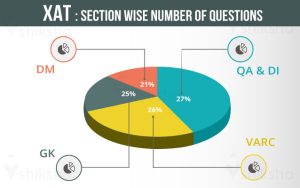






 Admission Open
 Admission Open
 Admission Open
 Admission Open
 ROI Calculator