
What Is Organisational Culture and Why It Matters
 November 12, 2026
 7 min read




Table Of Content
- Organisation Culture Meaning: A Simple Definition
- The Core Elements of Organisational Culture
- Understanding Organisation Work Culture in Daily Life
- Types of Organisational Culture
 Key Insights
- Organisational culture refers to the shared values, beliefs, attitudes, and habits that shape employee behaviour and define how people work together within a company.
- The four main types of organisational culture are clan, adhocracy, market, and hierarchy, each with distinct characteristics, strengths, and challenges.
- A positive organisation work culture improves employee engagement, retention, productivity, innovation, talent attraction, and customer experience.
- Leaders can build a strong organisational culture by defining clear values, leading by example, encouraging open communication, recognising the right behaviours, and investing in employee well-being.
- In this blog, you'll learn about the meaning, core elements, types, and real-world examples of organisational culture, why it matters, and how leaders can create a positive and productive workplace.
Two companies can have the same products, the same budget, and the same skilled people, yet achieve very different results. In many cases, the difference lies in something that cannot be seen on a balance sheet: the way people think, behave, and work together every day. This invisible force is known as organisational culture.
Whether you are a student of management, a new employee, or a team leader, understanding culture helps you make better decisions and build a healthier workplace. This blog explains the idea in simple terms, describes the main types, shares real examples, and shows why it matters for business success.
 ChatGPT
 Perplexity
 Claude
 Grok
Organisation Culture Meaning: A Simple Definition
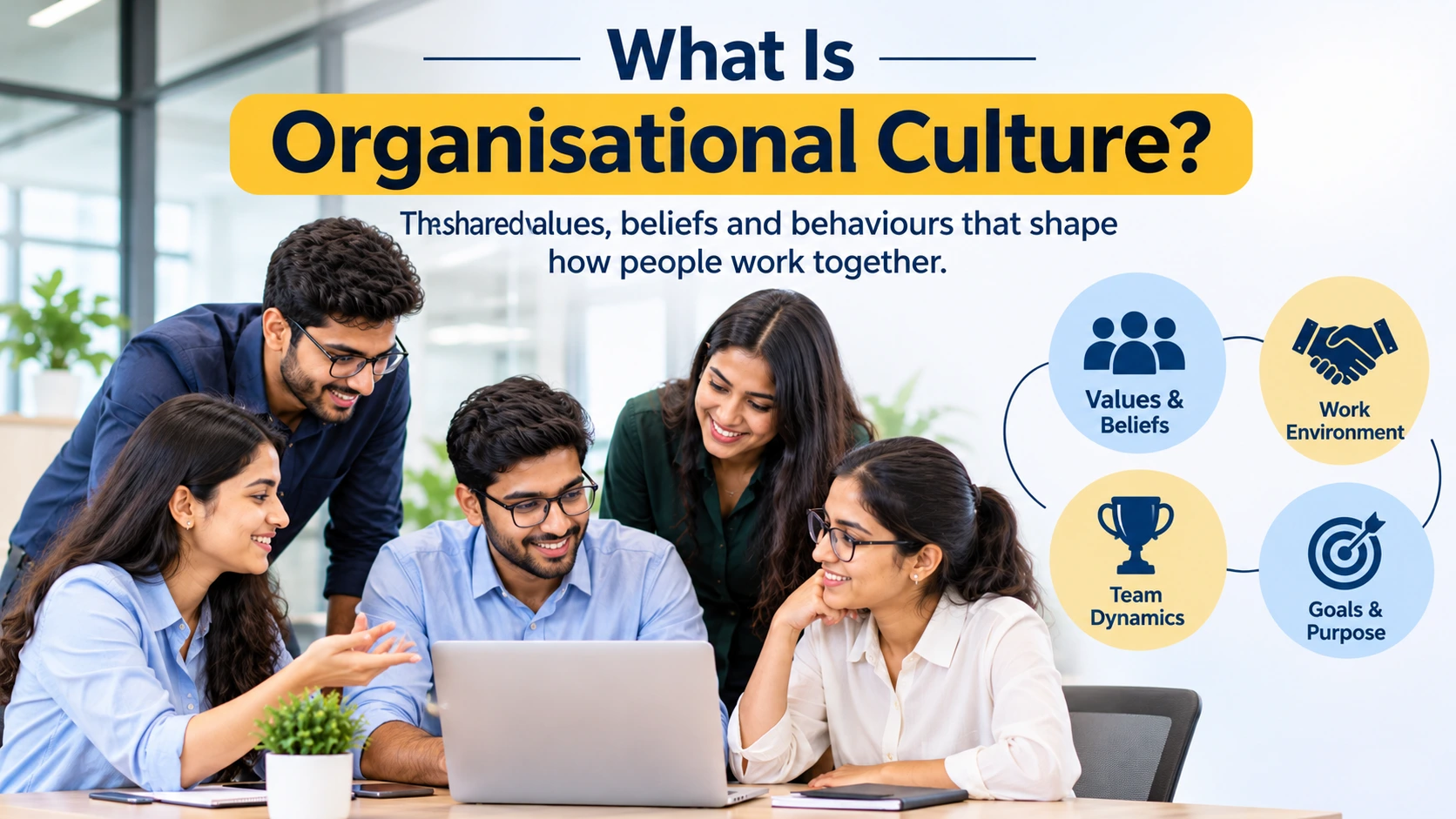
The organisation culture meaning can be summed up in one line: it is the shared set of values, beliefs, attitudes, and habits that shape how people behave inside a company. It is often described as the personality of an organisation, or as the unwritten rules of how things are done here.
Culture shows up in many everyday moments. It affects how managers speak to their teams, how decisions are made, how mistakes are handled, how success is celebrated, and even how people dress or hold meetings. Two employees may do the same job in two different companies, yet their experiences can feel completely different because the culture around them is different.
It is important to note that culture is not the same as a mission statement on a wall. A company may claim to value honesty, but if leaders reward those who hide problems, the real culture is something else. True culture is revealed by what people actually do, especially when no one is watching.
The Core Elements of Organisational Culture
To understand organisational culture more deeply, it helps to look at the parts that build it. Researchers often explain culture through three layers:
- Visible artifacts: These are the things anyone can see, such as office design, dress code, rituals, logos, and the way people communicate.
- Espoused values: These are the stated beliefs and goals of the company, often found in policies, codes of conduct, and leadership speeches.
- Basic assumptions: These are the deep, unspoken beliefs that people take for granted, such as whether failure is acceptable or whether seniority matters more than ideas.
The deepest layer is the hardest to see and the hardest to change, yet it has the strongest influence on behavior.





Understanding Organisation Work Culture in Daily Life
The term organisation work culture refers to how culture appears in daily work. It covers the work environment, the style of leadership, the level of teamwork, the approach to communication, and the balance between work and personal life.
A few questions can reveal the work culture of any workplace:
- Do employees feel safe to share new ideas or to admit mistakes?
- Is feedback open and regular, or rare and formal?
- Do people collaborate across teams, or work in separate silos?
- Are decisions made quickly at the top, or shared with the team?
- Does the company respect flexibility and personal well-being?
The answers show whether the workplace is supportive, competitive, strict, or flexible. A positive organisation work culture usually builds trust, motivation, and pride, while a negative one can lead to stress, conflict, and high turnover.
Types of Organisational Culture
There is no single universal list, but one of the most widely used models comes from researchers Kim Cameron and Robert Quinn. Their Competing Values Framework describes four main types of organizational culture.
1. Clan Culture
A clan culture feels like a large family. It values cooperation, mentoring, loyalty, and employee involvement. Leaders act like coaches, and people are encouraged to support one another. This type of culture is common in smaller firms, family-owned businesses, and people-focused organizations. Its strength is high morale and commitment. Its risk is that it may avoid tough decisions to protect relationships.
2. Adhocracy Culture
An adhocracy culture is dynamic, creative, and risk-friendly. It rewards innovation, experimentation, and speed. Employees are encouraged to try new ideas and accept that some will fail. Technology startups and design companies often follow this pattern. Its strength is adaptability. Its risk is that constant change can create confusion or burnout.
3. Market Culture
A market culture is results-driven and competitive. It focuses on achieving targets, winning customers, and beating rivals. Performance metrics, sales goals, and clear rewards play a major role. Its strength is strong productivity. Its risk is that too much pressure can harm teamwork and well-being.
4. Hierarchy Culture
A hierarchy culture values structure, rules, and stability. It depends on clear processes, defined roles, and careful control. Banks, government bodies, and large manufacturing firms often show this style. Its strength is consistency and reliability. Its risk is that it may respond slowly to change.
In practice, most companies are a blend of these types, and different departments may lean toward different styles. A research team may behave like an adhocracy, while the finance team follows a hierarchy.
Organisational Cultures Examples from the Real World
Looking at real companies makes the idea easier to understand. The following organisational cultures examples are widely discussed in business literature, though every company’s culture keeps evolving.
- Google: Known for encouraging curiosity, open discussion, and experimentation. Its culture is often described as innovation-driven, which reflects the adhocracy style.
- Netflix: Famous for its emphasis on freedom and responsibility. The company expects employees to use good judgment and holds them to high performance standards, with a culture of candid feedback.
- Zappos: Built around exceptional customer service. Its culture places strong value on personality, fun, and going the extra mile for customers.
- Patagonia: A mission-driven culture centered on environmental responsibility. Employees are often drawn to the company because they share its values.
- Toyota: Known for continuous improvement, often called kaizen. Every employee is encouraged to spot problems and suggest small, steady improvements.
- Tata Group: Often associated with ethics, trust, and long-term responsibility to society, reflecting a strong values-based culture.
These examples show that there is no single correct culture. What matters is that the culture matches the organization’s purpose and is genuinely practiced by its people.
Why Organisational Culture Matters
Culture is not a soft topic. It has a direct impact on business outcomes. Here are the main reasons it matters.
- It shapes employee engagement and retention. People who feel respected and connected to their workplace are more likely to stay and give their best effort. A poor culture is one of the common reasons employees choose to leave.
- It guides decision-making. When values are clear, employees can make good choices without waiting for constant approval. Culture acts as a compass when rules do not cover every situation.
- It supports productivity and performance. A healthy culture removes friction, builds trust, and helps teams work toward shared goals.
- It attracts talent. Skilled professionals care about where they work, not only about salary. A strong reputation for culture helps a company attract better candidates.
- It drives innovation and adaptability. Cultures that welcome new ideas and learning from mistakes respond better to market changes.
- It protects reputation and reduces risk. An ethical culture lowers the chances of misconduct, compliance failures, and public scandals.
- It improves customer experience. Customers can often feel the culture of a company through the quality of service they receive. Happy and motivated employees tend to serve customers better.
How Leaders Can Build a Strong Organisational Culture
Culture is built over time, and leaders play the most important role. Some practical steps include:
- Define the values clearly: Choose a few core values and explain what they look like in everyday behavior.
- Lead by example: Employees watch what leaders do more closely than what they say.
- Hire for fit and for growth: Look for people who share the core values while also bringing new perspectives.
- Communicate openly: Share information regularly and invite honest feedback.
- Recognize the right behavior: Reward actions that reflect the values, not only the results.
- Invest in learning and well-being: Provide training, flexibility, and support for mental health.
- Review regularly: Use surveys, interviews, and open discussions to check whether the culture is working as intended.
Change takes patience. Culture cannot be fixed with a single event or a poster. It improves through consistent actions over months and years.
Conclusion
Organisational culture is the foundation on which every company is built. It shapes how people think, how they treat one another, and how they respond to challenges. Understanding the organisation culture meaning, the types of organizational culture, and real-world examples helps both leaders and employees see why culture deserves attention.
A strong and positive culture does not happen by accident. It is created through clear values, consistent leadership, and everyday actions. Organizations that invest in it are more likely to enjoy loyal employees, better performance, and lasting success.
Frequently Asked Questions
Culture refers to the deep, long-term values and beliefs that shape behavior, while climate describes how employees feel about the workplace at a given time. Climate is more like a current mood and can change quickly. Culture is more stable and takes years to shift.

Related Courses
Explore our programs



Find a Program made just for YOU
We'll help you find the right fit for your solution. Let's get you connected with the perfect solution.
Is Your Upskilling Effort worth it?
 ROI Calculator


Are Your Skills Meeting Job Demands?
Try our Skill Gap tool
Experience Lifelong Learning and Connect with Like-minded Professionals
Explore Jaro Connect
