How Does E-Procurement Work? A Step-by-Step Process
Key Components of an E-Procurement System
Key Components of an E-Procurement System
Key Insights
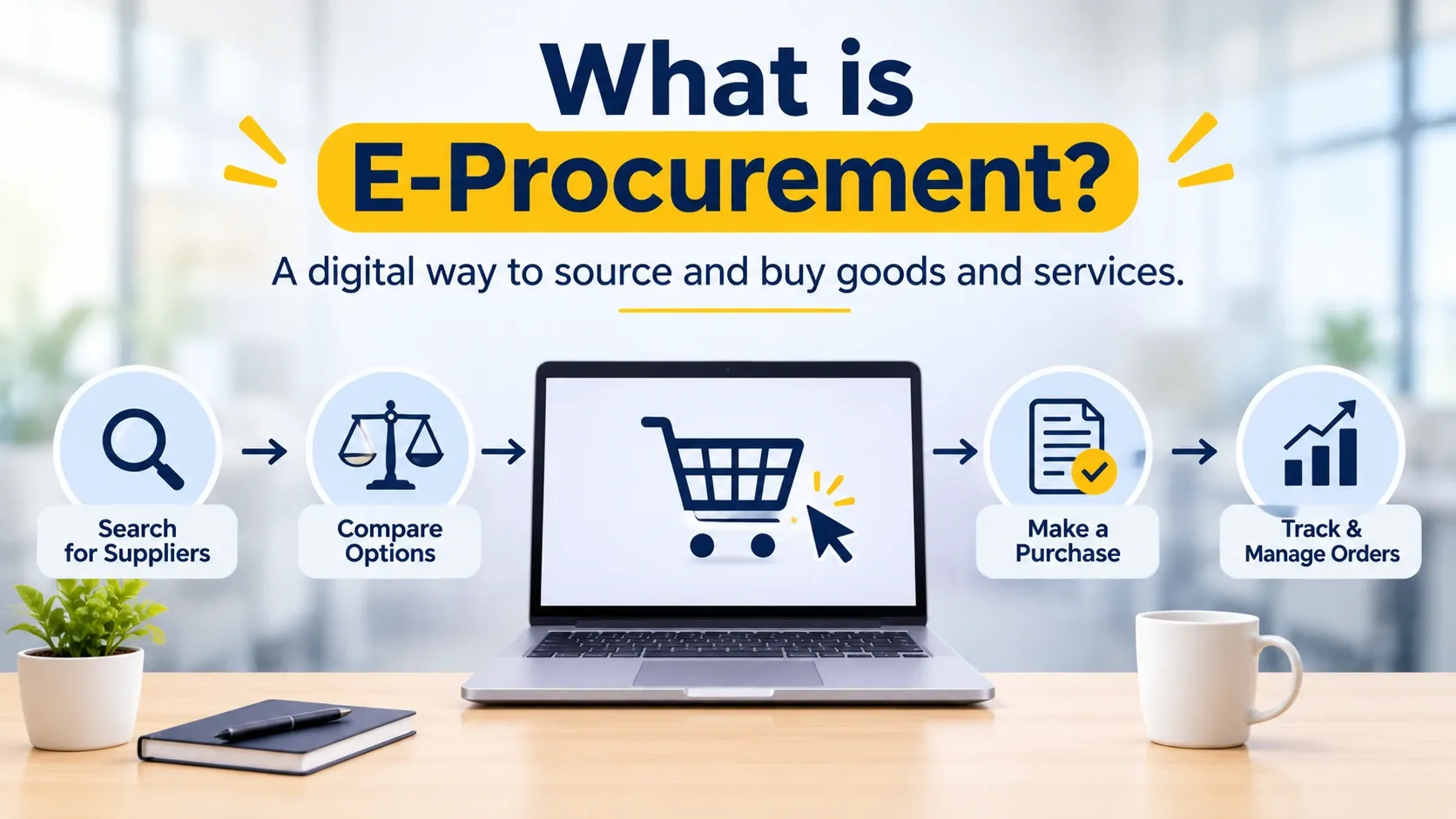
E-procurement uses digital platforms to manage the entire purchasing process, from supplier selection and purchase requests to order placement, invoice processing, and payments.
The e-procurement process involves eight key steps, including identifying needs, creating purchase requisitions, approvals, supplier sourcing, purchase orders, goods verification, invoice matching, and reporting.
E-procurement helps businesses reduce costs, save time, improve purchasing accuracy, maintain transparency, and ensure compliance with procurement policies.
It strengthens supply chain management through better visibility, improved coordination, stronger supplier relationships, risk management, and support for sustainable sourcing.
Successful e-procurement implementation requires clear goals, pilot testing, stakeholder involvement, employee training, accurate data, and regular performance reviews.
In this blog, you'll learn what e-procurement is, how it works, its key components and benefits, its role in supply chain management, and the best practices for successful implementation.
Procurement has always been the backbone of business operations. Every company, whether it makes cars, runs a hospital, or sells clothing online, needs to buy goods and services to keep working. For many years, this buying process depended on paper requisitions, email chains, phone calls, and manual approvals. It worked, but it was slow, hard to track, and prone to errors.
Today, digital tools have changed this picture. Organizations of all sizes are moving their buying activities onto online platforms, and e-procurement is at the center of this shift. This blog explains the concept in simple terms, walks through how it works, and looks at its benefits and its role in modern supply chains.
If you are wondering what is e-procurement, the simplest answer is this: it is the use of electronic systems and online platforms to manage the purchasing of goods and services. The term stands for electronic procurement, and it covers activities such as finding suppliers, raising purchase requests, getting approvals, placing orders, receiving goods, and paying invoices, all through digital tools.
Instead of filling out paper forms and sending them across departments, employees submit requests through a software system. The system routes the request to the right approver, sends the order to the supplier, and records every step. Everything is stored in one place, so buyers, managers, and finance teams can see the same information at the same time.
E-procurement is sometimes confused with e-commerce, but the two are different. E-commerce usually refers to buying and selling products online, often between a business and a consumer. E-procurement is focused on the business buying cycle, where organizations purchase from approved suppliers under agreed terms, budgets, and policies.
E-procurement solutions can be standalone software, modules within an enterprise resource planning (ERP) system, or cloud-based platforms that connect buyers and suppliers directly. The right choice depends on the size of the company, the volume of purchases, and the level of control it needs.
How Does E-Procurement Work? A Step-by-Step Process
Understanding how does e-procurement work becomes easier when you look at it as a sequence of connected steps. While the exact flow differs from one platform to another, most systems follow a similar pattern.
Step 1: Identifying the need. The process begins when a department realizes it needs something, such as raw materials, office equipment, software licenses, or maintenance services. The employee logs into the system and checks the catalog or creates a new request.
Step 2: Creating a purchase requisition. The employee fills out a digital purchase requisition that includes the item, quantity, estimated cost, and delivery date. Many systems display pre-approved catalogs with negotiated prices, which makes this step quick and reduces unnecessary spending.
Step 3: Approval workflow. The requisition moves automatically to the right approvers based on rules set by the company. These rules may depend on the amount, the department, or the type of product. Approvers can review and approve requests from a computer or mobile device, which removes the delay of physical signatures.
Step 4: Supplier selection and sourcing. For routine purchases, the system uses preferred suppliers and contract prices. For larger or more complex needs, the buyer can run an electronic request for quotation (RFQ), a request for proposal (RFP), or an online reverse auction. Suppliers submit their bids through the platform, and the buyer compares them side by side.
Step 5: Purchase order creation. Once a supplier is chosen, the system generates a purchase order and sends it electronically. The order includes prices, quantities, delivery terms, and payment conditions. Both parties can view and track its status.
Step 6: Goods receipt and verification. When the goods or services arrive, the receiving team records them in the system. The platform can compare the delivery against the purchase order to confirm that the right items and quantities were received.
Step 7: Invoice matching and payment. The supplier submits an electronic invoice. Many systems use a three-way match, which compares the purchase order, the goods receipt, and the invoice. If all three agree, the invoice moves to payment. If there is a mismatch, the system flags it for review.
Step 8: Reporting and analysis. After the transaction, the data remains in the system. Procurement teams can generate reports on spending by category, supplier performance, delivery times, and savings. These insights help them plan better for future purchases.
By following these steps, the entire buying cycle becomes faster, more transparent, and easier to audit.
Key Components of an E-Procurement System
Most e-procurement platforms are built from a few common modules. Knowing them helps you see how the different parts support the overall process.
E-sourcing. This component helps buyers find and evaluate suppliers through online RFQs, RFPs, and auctions.
E-ordering and e-catalogs. Employees can browse catalogs of approved products, place orders, and track them without going through long manual steps.
E-invoicing and e-payment. These tools receive invoices digitally, match them with orders, and support timely payments.
Contract management. Agreements, prices, and renewal dates are stored in one place, which reduces the risk of expired or forgotten contracts.
Supplier management. The system holds supplier profiles, certifications, performance scores, and compliance records.
Spend analytics. Dashboards show where money is going, which suppliers receive the most business, and where savings are possible.
The popularity of e-procurement comes from the practical advantages it offers. Here are the most important ones.
Cost savings. Digital catalogs, competitive bidding, and better visibility into spending help organizations negotiate better prices and avoid unplanned purchases. Automation also reduces the administrative cost of processing each order.
Time efficiency. Tasks that once took days, such as approvals and order confirmations, can often be completed within hours. Buyers spend less time on paperwork and more time on strategic work like supplier development.
Improved accuracy. Manual data entry often leads to mistakes in quantities, prices, or supplier details. E-procurement reduces these errors by using standard templates and automated checks.
Better transparency and control. Every step is recorded, so managers can see who requested what, who approved it, and how much was spent. This supports internal audits and helps prevent unauthorized or fraudulent purchases.
Policy compliance. Companies can build their procurement rules into the system. Employees are guided toward approved suppliers and contracts, which reduces maverick spending, meaning purchases made outside the agreed process.
Stronger supplier relationships. Clear communication, faster payments, and shared performance data help build trust with suppliers. This often leads to better service and more reliable deliveries.
Data-driven decisions. Because all transactions are stored digitally, procurement teams can analyze trends, forecast demand, and identify opportunities for consolidation or renegotiation.
Role of E-Procurement in the Supply Chain
Procurement is one of the first links in the supply chain. If materials arrive late, are poor quality, or cost more than expected, the effects spread through production, inventory, and customer delivery. This is why e-procurement plays such an important role in supply chain management.
First, it improves visibility. When purchase orders, delivery schedules, and supplier updates are available on one platform, planners can anticipate delays and adjust production or inventory plans in time. Second, it supports better coordination. Procurement, finance, warehouse, and production teams work from the same data, which reduces miscommunication.
Third, e-procurement strengthens supplier collaboration. Many platforms allow suppliers to confirm orders, update shipment status, and share documents in real time. This makes the flow of goods more predictable. Fourth, it helps manage risk. By tracking supplier performance, financial health, and compliance, companies can identify weak links early and develop backup sources.
Finally, e-procurement contributes to sustainability and ethical sourcing goals. Digital records make it easier to verify supplier certifications and monitor environmental or social standards, which is becoming more important for global businesses.
Best Practices for Successful E-Procurement Implementation
Organizations can reduce these challenges by following a few sensible practices:
Define clear goals. Decide whether the main aim is cost reduction, speed, compliance, or visibility.
Start with a pilot. Begin with one department or category before expanding across the company.
Involve stakeholders early. Include procurement, finance, IT, and supplier representatives in planning.
Provide training. Help employees and suppliers understand how to use the system effectively.
Clean your data. Accurate supplier and product information is essential for good results.
Review performance regularly. Track metrics such as cycle time, savings, and compliance, and improve the process over time.
Building Skills for a Career in Procurement and Operations
As e-procurement and other digital tools reshape buying and supply operations, many professionals are looking for structured ways to build skills in operations and analytics. Programs such as the PG Certificate Programme in Operations Management and Analytics from IIM Visakhapatnam are designed with this need in mind. They typically help working professionals understand operations planning, data-driven decision-making, and process improvement. For someone in procurement, sourcing, or supply chain roles, this kind of learning can make it easier to use spend data, evaluate supplier performance, and work with digital procurement systems more confidently.
E-procurement has moved from being a technology upgrade to becoming a standard part of modern business operations. By digitizing the buying process, organizations gain speed, accuracy, control, and valuable data. Understanding what is e-procurement and how does e-procurement work helps professionals appreciate why it has become so important in supply chain management. While implementation requires planning and change management, the long-term benefits in cost, efficiency, and supplier collaboration make it a worthwhile investment for companies that want to stay competitive.
Frequently Asked Questions
Traditional procurement relies on paper documents, manual approvals, and direct communication, which can be slow and difficult to track. E-procurement uses digital platforms to automate these steps, giving better speed, accuracy, and visibility.
Yes. Many cloud-based e-procurement tools are available with flexible pricing, so small and medium businesses can use them without heavy infrastructure. They help smaller teams save time, control spending, and keep clear records.
Artificial intelligence is increasingly used in e-procurement for spend analysis, supplier risk monitoring, demand forecasting, and automated invoice processing. These tools help teams make faster, more informed decisions and reduce repetitive manual work.
Professionals benefit from knowledge of sourcing, negotiation, contract management, and data analysis. Familiarity with ERP and procurement software, along with strong communication and problem-solving skills, is also valuable.
Nuthana Reddy
Nuthana Reddy is a Senior Manager at Procter & Gamble, specializing in operations, digitization, and cross-functional leadership. She has driven multimillion-dollar impact through innovation, process optimization, and strategic execution across global markets.
Get Free Upskilling Guidance
Fill in the details for a free consultation
Related Courses
Explore our programs
Post Graduate Certificate Programme in Operations Management & Analytics

 November 4, 2026
 8 min read





 Key Insights
 ChatGPT
 Perplexity
 Claude
 Grok











 ROI Calculator