HOME > BLOG > Finance > Top FinTech Career Paths in India 2026: Roles, Skills & Salary Guide
Finance
Top FinTech Career Paths in India 2026: Roles, Skills & Salary Guide
J
By Arif Siddiqui
August 16, 20269 min read
Last updated on September 10, 2026
SHARE THIS ARTICLE
Table Of Content
Top FinTech Roles in India 2026
FinTech Jobs in India 2026: Skills You Need
FinTech Jobs Salary in India: 2026 Guide
How to Build a Career in FinTech
Key Insights
FinTech Careers in India span multiple domains, including product management, software engineering, data science, cybersecurity, risk management, compliance, financial analysis, and business analysis.
The skills required for FinTech Jobs in India 2026 vary by role, with technical, financial, analytical, communication, stakeholder management, and problem-solving capabilities being important across different career paths.
FinTech Jobs Salary in India varies significantly based on experience, role, company, location, technical expertise, and responsibilities. Salary figures should be treated as indicative benchmarks rather than guaranteed compensation.
Professionals can choose FinTech Career Options based on their interests, such as technology and coding, business and customer problems, finance and numbers, regulations and governance, or a combination of finance and technology.
The future of FinTech Career Opportunities is expected to involve areas such as AI, digital payments, financial infrastructure, risk analytics, embedded finance, and regulatory technology, while also requiring knowledge of customers, finance, regulations, risk, and business models.
In this blog, you'll learn about the top FinTech roles in India, essential skills, salary benchmarks, career-building approaches, the best FinTech career paths, and emerging opportunities in the sector.
The financial services industry in India is changing rapidly as technology becomes increasingly integrated with banking, payments, lending, insurance, investments, and wealth management. From digital payments and online lending to AI-powered financial analysis and automated risk management, FinTech is creating career opportunities across both technology and finance.
For professionals and students planning their careers, this transformation has created several FinTech Career Options beyond traditional banking and software development. Product management, data science, cybersecurity, risk management, compliance, financial analysis, and software engineering are among the areas where FinTech companies require specialised talent.
Current hiring data also shows that FinTech is not limited to engineering roles. A May 2026 snapshot of 257 openings across Razorpay, PhonePe, Paytm, CRED, and Intuit included product management, sales and marketing, software engineering, and finance among the prominent role families.
This makes FinTech Careers in India particularly relevant for professionals from technology, finance, business, analytics, and related backgrounds.
There are several FinTech Roles in India that professionals can explore depending on their educational background, experience, and interests.
1. FinTech Product Manager
Product management is one of the most versatile FinTech Career Options. FinTech Product Managers work on products such as payment platforms, lending applications, investment platforms, digital banking products, and financial APIs.
Their responsibilities can include understanding customer problems, defining product requirements, prioritising features, coordinating with technology and design teams, analysing product metrics, and managing product roadmaps.
A FinTech Product Manager also needs to understand the regulatory environment because financial products must balance customer experience with compliance requirements. Current 2026 salary data from Indeed puts the averageProduct Managersalary in India at around ₹13.9 lakh per year, although FinTech-specific compensation can vary considerably based on experience, company, role, and product complexity.
2. FinTech Software Engineer
Software engineers form the technical foundation of many FinTech businesses. They develop and maintain payment systems, APIs, banking platforms, lending applications, financial infrastructure, databases, and other digital products.
Backend engineering is particularly relevant to payment and transaction systems where reliability, security, and scalability are important. Professionals can work with technologies such as Java, Python, Go, cloud platforms, databases, APIs, and distributed systems.
A 2026 FinTech career guide places software engineering among the core FinTech roles and highlights backend, data engineering, platform engineering, and DevSecOps as important technical areas.
3. Data Scientist and Machine Learning Engineer
Financial services generate large volumes of structured and unstructured data, making data science an important part of FinTech.
Data Scientists and Machine Learning Engineers can work on credit scoring, fraud detection, customer segmentation, repayment prediction, recommendation systems, risk models, and financial forecasting.
Professionals pursuing this path should develop skills in Python, statistics, machine learning, SQL, data visualisation, and model development. Financial-domain knowledge can further help them understand how analytical models are applied to lending, payments, investments, and risk.
4. Risk and Credit Analyst
Risk management is another important area within FinTech Career Opportunities, particularly for lending and credit-focused businesses.
Risk and Credit Analysts evaluate financial and customer information to assess creditworthiness, identify potential risks, monitor portfolios, and support lending decisions. FinTech companies can also use alternative data and analytics to build more sophisticated risk assessment models.
A 2026 FinTech career guide identifies risk and credit analysis as a major career path, with professionals working across borrower assessment, credit models, and risk management.
FinTech operates within a highly regulated financial environment. This creates demand for professionals who understand financial regulations, compliance processes, risk controls, and technology.
Compliance professionals may work on areas such as regulatory reporting, KYC, AML, data governance, internal controls, and regulatory requirements applicable to specific financial products.
The role can be especially valuable for professionals who understand both financial regulations and the technology systems used by FinTech businesses. A 2026 career guide highlights compliance and regulatory affairs as an established FinTech career path.
6. FinTech Business Analyst
Business Analysts bridge the gap between business requirements and technology teams. In FinTech, they may work on payments, lending, banking platforms, insurance products, financial operations, or customer-facing applications.
Their work can include gathering requirements, analysing processes, documenting business needs, supporting product development, and coordinating between stakeholders.
This can be a suitable entry route for professionals from business, finance, commerce, technology, or analytics backgrounds who want to move into FinTech without immediately taking a highly technical role.
7. Financial Analyst
Financial Analysts in FinTech combine traditional financial analysis with technology-driven data and tools. They can work on business performance, financial planning, investment analysis, forecasting, financial reporting, or strategic decision-making.
Professionals with backgrounds in finance, accounting, economics, commerce, or an MBA can explore this pathway while developing additional knowledge of financial technology and analytics.
8. Cybersecurity Professional
As FinTech companies handle sensitive financial and personal information, cybersecurity is an important career area.
Cybersecurity professionals can work on application security, threat monitoring, identity management, data protection, vulnerability assessment, incident response, and security architecture.
Those entering this field should combine cybersecurity knowledge with an understanding of financial systems and the risks associated with digital transactions.
The skills required for FinTech Jobs in India 2026 depend on the role, but successful professionals typically combine domain knowledge with technical, analytical, or business capabilities.
Technical Skills
For technology-oriented roles, important skills can include:
AI-related technical demand is becoming particularly relevant. Recent research into AI-driven labour-market changes found that AI-intensive roles frequently emphasise Python, SQL, machine learning, and data analysis, particularly within technical occupations.
Financial Skills
Professionals in FinTech should also understand financial concepts relevant to their role. These may include:
The combination of technology and finance knowledge can help professionals understand both the technical solution and the financial problem it is designed to solve.
Business and Soft Skills
FinTech professionals also need strong communication and business skills. Product Managers, Business Analysts, consultants, compliance professionals, and finance specialists frequently work with cross-functional teams.
Problem-solving, stakeholder management, communication, critical thinking, adaptability, and decision-making can therefore be valuable across different FinTech roles.
Free Courses
Finance for All – Free Finance Certification Course
One of the most common questions for people exploring FinTech is about FinTech Jobs Salary in India. Compensation varies substantially depending on experience, job function, company, location, technical expertise, and responsibility.
The following figures should be treated as indicative benchmarks rather than guaranteed FinTech salaries, because different salary platforms use different methodologies and the available data may cover broader technology or finance roles rather than FinTech alone.
FinTech Role
Indicative Salary Range in India
Product Manager
Around ₹14 lakh/year average across India
Data Scientist / ML Engineer
₹8–15 LPA at entry level; ₹30–50 LPA at senior level
Software Engineer
₹10–18 LPA at junior level; ₹35–55 LPA at senior level
Compliance Analyst
₹8–15 LPA
Compliance Manager
₹18–30 LPA
Head of Compliance
₹35–60 LPA
Risk & Credit Analyst
₹10–18 LPA at entry level; ₹35–65 LPA at senior level
Indeed’s July 2026 data reports an average Product Manager base salary of ₹13,96,751 per year in India based on 245 reported salaries. Other 2026 FinTech career guides provide indicative ranges for data science, software engineering, compliance, product, and risk roles.
Therefore, FinTech Salary in India 2026 should be evaluated by role and experience rather than using one industry-wide number.
For example, a software engineer and a compliance professional may work in the same FinTech company but have very different compensation structures. Similarly, a senior Product Manager with ownership of a major financial product may earn substantially more than someone entering product management.
How to Build a Career in FinTech
Building a FinTech career does not require everyone to follow the same route. Your starting point can depend on your existing education and professional experience.
A technology graduate can start with software development, data analytics, cybersecurity, or machine learning and later specialise in financial applications. A commerce or finance graduate can develop knowledge of analytics, digital payments, financial technology, or product management.
Working banking professionals can also transition towards digital banking, FinTech product management, risk technology, compliance technology, or financial analytics.
The most effective approach is to identify a target role and then build the skills required for that role. For example, someone targeting product management should develop product discovery, customer research, analytics, prioritisation, and stakeholder management skills. A data professional should focus more deeply on statistics, Python, SQL, machine learning, and financial datasets.
Best FinTech Careers in India: Which One Should You Choose?
The Best FinTech Careers in India depend on your background and career goals.
If you enjoy technology and coding, software engineering, data engineering, machine learning, or cybersecurity may be appropriate.
If you enjoy business and customer problems, FinTech product management or business analysis can be considered.
If you prefer finance and numbers, financial analysis, credit risk, investment analysis, or risk management may be a better fit.
If you are interested in regulations and governance, compliance and regulatory affairs can provide a specialised pathway.
For professionals who want a combination of finance and technology, FinTech product management, financial analytics, risk technology, and AI in finance can offer interesting career directions.
Future of FinTech Career Opportunities in India
The future of FinTech Career Opportunities is likely to be shaped by the continued integration of technology with financial services. AI, digital payments, financial infrastructure, risk analytics, embedded finance, and regulatory technology are areas receiving continued attention.
At the same time, the market is becoming more focused on sustainable and reliable financial infrastructure rather than technology for its own sake. Recent industry analysis points towards greater importance for infrastructure providers that address transaction reliability, KYC, compliance, and other foundational financial processes.
This means future FinTech professionals may need more than just technical knowledge. Understanding customers, financial products, regulations, risk, and business models can become equally important.
Build FinTech Expertise with IIM Nagpur
The Post Graduate Certificate Programme in FinTech, AI in Finance, and Risk Management from IIM Nagpur is designed for working professionals seeking expertise at the intersection of finance, technology, and innovation. The one-year programme covers digital payments, blockchain, AI, Machine Learning, Generative AI, analytics, risk management, cybersecurity, compliance, and sustainable finance.
With live online learning, a 3-day campus immersion, industry-led lectures, case discussions, project work, and hands-on sessions with Generative AI toolsfor finance, the programme focuses on practical learning and digital transformation in financial services.
FinTech offers one of the broadest combinations of technology and financial career opportunities in India. From software engineering and data science to product management, risk, compliance, cybersecurity, and financial analysis, there are multiple FinTech Career Options for professionals with different backgrounds.
The right career path depends on your existing skills and the type of work you enjoy. Technology-focused professionals can build expertise in software, AI, data, and cybersecurity, while finance professionals can explore risk, financial analysis, compliance, product, and digital financial services.
For anyone considering FinTech Jobs in India 2026, the focus should be on building a combination of technical, financial, analytical, and business skills. Rather than selecting a role based only on salary, evaluate its long-term learning potential, responsibilities, industry relevance, and alignment with your career goals.
Frequently Asked Questions
Some of the prominent career paths include FinTech Product Manager, Software Engineer, Data Scientist, Machine Learning Engineer, Risk and Credit Analyst, Compliance Professional, Business Analyst, Financial Analyst, and Cybersecurity Professional.
There is no single average salary for all FinTech professionals because compensation varies by role, experience, company, location, and skill set. For example, Indeed’s July 2026 data reports an average Product Manager base salary of about ₹13.97 lakh per year in India.
The required skills depend on the role. Commonly relevant capabilities include financial knowledge, data analytics, SQL, Python, AI and machine learning, cybersecurity, product management, risk management, regulatory knowledge, communication, and problem-solving.
Yes. FinTech includes finance, product management, compliance, risk, business analysis, financial analysis, sales, and other non-coding roles alongside technical positions. Current hiring snapshots show that FinTech companies recruit across multiple job families, not only engineering.
Start by identifying a target role and understanding its required skills. You can then build relevant knowledge through projects, practical experience, certifications, and role-specific learning while developing an understanding of financial services and technology.
Arif Siddiqui
Head of Accounting and Treasury
Arif Siddiqui is a finance leader specializing in accounting, treasury, and financial strategy. As Head of Finance at Generali Employee Benefits, he brings extensive experience in managing global financial operations. He is known for driving financial efficiency and governance across organizations. His leadership supports sustainable business growth and financial excellence.
Get Free Upskilling Guidance
Fill in the details for a free consultation
Related Courses
Explore our programs
Post Graduate Certificate Programme in FinTech, AI in Finance, and Risk Management

 August 16, 2026
 9 min read




 Key Insights
 ChatGPT
 Perplexity
 Claude
 Grok
Grok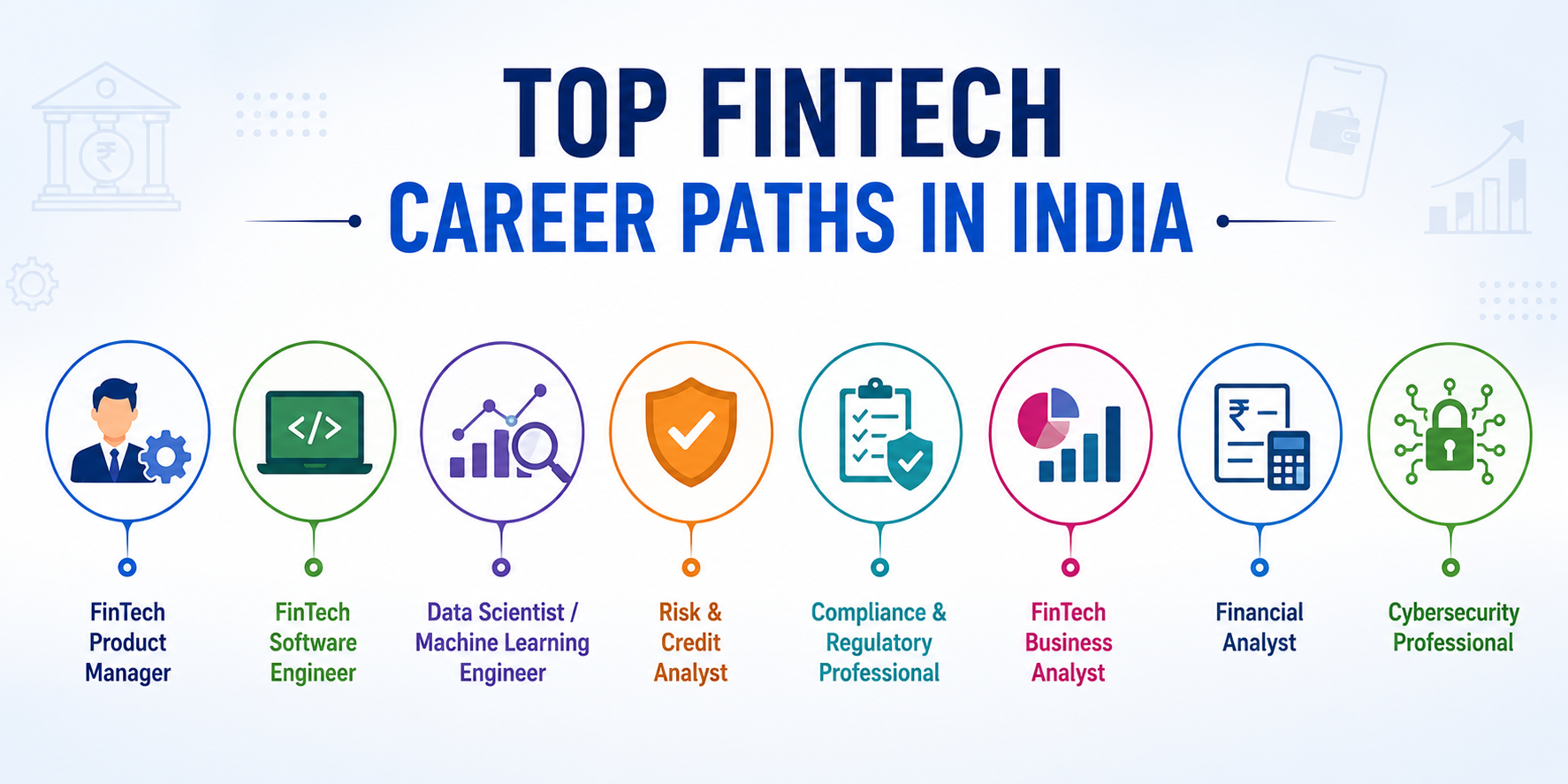










 ROI Calculator