HOME > BLOG > Supply Chain > Supply Chain Management Career in India 2026: Top Courses from IIM, IIT and What Salary to Expect
Supply Chain
Supply Chain Management Career in India 2026: Top Courses from IIM, IIT and What Salary to Expect
J
By Nuthana Reddy
July 15, 202613 min read
Last updated on July 21, 2026
SHARE THIS ARTICLE
Table Of Content
Why Supply Chain Management Is One of the Fastest-Growing Careers in 2026
What Is Supply Chain Management?
Why Supply Chain Professionals Are in High Demand
Industries Hiring Supply Chain Professionals
Supply Chain Management (SCM) has become one of the most strategically important business functions in today's global economy. From sourcing raw materials to delivering finished products, every stage of the supply chain plays a crucial role in determining an organization's efficiency, profitability, and customer satisfaction.
The disruptions experienced over the past few years—including global supply shortages, geopolitical uncertainties, rapid e-commerce growth, and digital transformation—have highlighted the importance of resilient and technology-driven supply chains. Organizations now seek professionals who can manage complex operations, optimize logistics, improve procurement strategies, and leverage data to make informed decisions.
As businesses continue investing in automation, Artificial Intelligence (AI), predictive analytics, and smart manufacturing, demand for skilled supply chain professionals is expected to grow across industries.
To meet this demand, leading institutions such as the Indian Institutes of Management (IIMs) and the Indian Institutes of Technology (IITs) now offer executive programmes that help working professionals build expertise in modern supply chain management.
In this guide, we'll explore why Supply Chain Management has become one of the fastest-growing career options in India, discuss the industries driving demand, and introduce some of the leading executive programmes available for professionals in 2026.
Why Supply Chain Management Is One of the Fastest-Growing Careers in 2026
Supply chains have evolved from operational support functions into strategic business assets. Organizations no longer view supply chain management simply as the movement of goods—they now recognize it as a key driver of business performance, customer experience, and competitive advantage.
Several factors are contributing to this transformation.
Digital Transformation
Organizations are adopting cloud platforms, Internet of Things (IoT), AI-powered forecasting, automation, and advanced analytics to improve visibility across supply chains.
These technologies enable businesses to make faster decisions, reduce operational costs, and improve overall efficiency.
Growth of E-commerce
The continued expansion of online retail has significantly increased the complexity of logistics and fulfillment operations.
Businesses require professionals who can optimize inventory management, warehouse operations, transportation networks, and last-mile delivery.
Global Supply Chain Networks
Modern businesses operate through interconnected supplier networks spanning multiple countries.
Managing international procurement, trade regulations, supplier relationships, and risk mitigation has become increasingly important.
Focus on Business Resilience
Organizations now prioritize supply chain resilience alongside cost efficiency.
Supply chain professionals play an important role in identifying potential disruptions, strengthening supplier relationships, and improving operational continuity.
Sustainability and ESG
Environmental, Social, and Governance (ESG) initiatives are influencing procurement practices, supplier selection, transportation planning, and inventory strategies.
Supply chain leaders increasingly contribute to sustainability goals while maintaining operational performance.
These developments have elevated Supply Chain Management into a strategic leadership function rather than a purely operational discipline.
What Is Supply Chain Management?
Supply Chain Management is the process of planning, coordinating, and optimizing the flow of goods, services, information, and finances from suppliers to end customers.
It involves managing multiple interconnected activities that ensure products reach customers efficiently while maintaining quality, controlling costs, and meeting business objectives.
A typical supply chain includes several important functions:
Procurement and sourcing
Inventory management
Production planning
Warehousing
Logistics and transportation
Distribution
Demand forecasting
Supplier relationship management
Customer fulfillment
Successful supply chain management requires professionals to balance operational efficiency with strategic decision-making while responding to changing market conditions.
Today’s supply chain leaders also rely heavily on technology, analytics, and real-time data to improve business performance.
Organizations across industries increasingly recognize that an efficient supply chain directly affects profitability, customer satisfaction, and business continuity.
This has created strong demand for professionals capable of managing increasingly complex operations.
Several trends continue driving this demand.
Increasing Business Complexity
Businesses operate across multiple regions, suppliers, manufacturing locations, and customer segments.
Managing these interconnected networks requires professionals with strong analytical and operational capabilities.
Technology Adoption
Artificial Intelligence, predictive analytics, digital twins, warehouse automation, robotics, and IoT technologies are transforming supply chain operations.
Professionals who understand both operations and technology are becoming highly valuable.
Customer Expectations
Consumers increasingly expect faster deliveries, greater transparency, and consistent service quality.
Meeting these expectations requires sophisticated supply chain planning and execution.
Data-Driven Decision-Making
Supply chain managers increasingly rely on data analytics to forecast demand, optimize inventory, improve procurement decisions, and reduce operational risks.
Global Risk Management
Recent global disruptions have highlighted the importance of risk assessment, contingency planning, supplier diversification, and resilient supply chain design.
As a result, organizations actively seek professionals capable of managing uncertainty while maintaining operational performance.
Industries Hiring Supply Chain Professionals
One of the biggest advantages of a Supply Chain career is its applicability across multiple industries.
Professionals with supply chain expertise can work in organizations ranging from manufacturing companies to technology firms and healthcare providers.
Some of the major hiring sectors include:
Manufacturing
Manufacturers require professionals to manage procurement, production planning, inventory optimization, quality control, and supplier relationships.
E-commerce
Online retailers depend on efficient logistics, warehouse management, inventory planning, and last-mile delivery to meet customer expectations.
Retail
Retail businesses require supply chain professionals to forecast demand, manage inventory, coordinate suppliers, and improve distribution efficiency.
Healthcare
Hospitals, pharmaceutical companies, and healthcare providers rely on efficient supply chains to ensure timely availability of medicines, medical equipment, and healthcare supplies.
Logistics and Transportation
Third-party logistics providers, freight companies, ports, shipping organizations, and transportation firms require specialists in logistics planning and network optimization.
Automotive
Automobile manufacturers manage highly complex supplier ecosystems and production networks, creating demand for professionals skilled in procurement and operations.
FMCG
Fast-moving consumer goods companies depend on efficient supply chains to maintain product availability across diverse distribution networks.
Top Executive Supply Chain Courses from IIMs & IITs
As supply chains become more technology-driven and globally integrated, executive education has become increasingly valuable for professionals seeking leadership roles.
Several programmes offered by IIMs and IITs focus on different aspects of modern supply chain management.
Designed for professionals managing increasingly global business operations, this programme emphasizes supply chain transformation, international logistics, operational excellence, and technology-enabled supply chain management.
The programme focuses on operations management, supply chain analytics, process optimization, and data-driven decision-making.
It is suitable for professionals interested in strengthening analytical capabilities while developing operational leadership skills.
Supply Chain Career Paths in India
One of the biggest advantages of building a career in Supply Chain Management is the wide variety of roles available across industries. As professionals gain experience, they can move from operational positions into strategic and leadership roles that influence business growth and organizational performance.
A typical career path may progress through several stages.
Supply Chain Executive
This is often the starting point for graduates and early-career professionals. Responsibilities include coordinating procurement activities, monitoring inventory, supporting logistics operations, and maintaining supplier communication.
Procurement Specialist
Procurement professionals focus on sourcing materials and services, negotiating with vendors, evaluating supplier performance, and ensuring cost-effective purchasing while maintaining quality standards.
Logistics Manager
Logistics managers oversee transportation, warehousing, distribution networks, and delivery operations. Their goal is to ensure products reach customers efficiently while minimizing operational costs.
Demand Planner
Demand planners use historical data, market trends, and business forecasts to predict customer demand. Accurate forecasting helps organizations optimize production schedules and inventory levels.
Supply Chain Analyst
Analysts use data analytics and business intelligence tools to evaluate supply chain performance, identify bottlenecks, and recommend improvements that enhance operational efficiency.
Operations Manager
Operations managers coordinate production, inventory, quality management, procurement, and logistics to ensure smooth day-to-day business operations.
Supply Chain Manager
At this level, professionals oversee end-to-end supply chain activities, manage cross-functional teams, develop sourcing strategies, and align operations with business objectives.
Global Supply Chain Leader
Senior professionals manage international supplier networks, global logistics, procurement strategies, risk management, and digital transformation initiatives across multiple countries.
As organizations increasingly operate across global markets, professionals who combine operational expertise with leadership and analytical capabilities are expected to remain highly valuable.
Skills Required for Supply Chain Professionals
Modern Supply Chain Management requires far more than operational knowledge. Organizations increasingly seek professionals who can combine business strategy with technology, analytics, and leadership.
Some of the most important skills include:
Analytical Thinking
Supply chain professionals regularly evaluate operational data, identify inefficiencies, forecast demand, and support business decisions through quantitative analysis.
Supply Chain Planning
Understanding procurement, production planning, inventory optimization, logistics, and distribution remains fundamental to every supply chain role.
Data Analytics
Organizations increasingly rely on dashboards, predictive analytics, and business intelligence tools to improve operational visibility and decision-making.
Technology Awareness
Modern supply chains utilize technologies such as:
Professionals familiar with these technologies are becoming increasingly valuable as businesses modernize operations. AI adoption is accelerating across manufacturing and supply chains, making digital capabilities an important differentiator for future leaders.
Communication and Collaboration
Supply chain professionals interact with procurement teams, suppliers, production managers, finance departments, logistics partners, and senior leadership.
Strong communication skills help coordinate activities across multiple stakeholders.
Leadership
As professionals progress into managerial positions, leadership becomes increasingly important.
Managing teams, negotiating with suppliers, driving organizational change, and making strategic decisions are all essential responsibilities.
Compensation in Supply Chain Management varies depending on industry, experience, specialization, organization size, and geographic location.
Recent market data indicates that demand for skilled professionals continues to grow as manufacturing, e-commerce, logistics, and digital supply chains expand across India. Professionals with expertise in analytics, automation, ERP platforms, and AI-enabled operations often command stronger compensation packages.
Indicative salary ranges include:
Role
Average Salary Range
Supply Chain Executive
₹4–7 LPA
Procurement Specialist
₹5–10 LPA
Logistics Manager
₹7–14 LPA
Supply Chain Analyst
₹7–15 LPA
Demand Planner
₹8–16 LPA
Operations Manager
₹10–20 LPA
Supply Chain Manager
₹12–30 LPA
Senior Supply Chain Leader
₹30 LPA+ (experience dependent)
Professionals working in e-commerce, pharmaceuticals, automotive, FMCG, electronics, and technology-driven manufacturing often have access to some of the strongest compensation opportunities due to the complexity of their supply chains.
Which Programme Is Right for You?
The executive programmes offered by IIMs and IITs serve different professional objectives. Choosing the right programme depends on your current role and future career aspirations.
Choose IIM Kozhikode if You Want to Lead Digital Supply Chain Transformation
The Advanced Certificate Programme in Smart Supply Chain Transformation focuses on helping professionals understand how emerging technologies are reshaping modern supply chains.
It is particularly suitable for professionals interested in digital transformation, smart manufacturing, and technology-enabled operations.
Choose IIT Bombay if You Work in Global Supply Chains
The Advanced Executive Programme in Global Supply Chain Management Transformation is designed for professionals managing international procurement, logistics, sourcing, and complex global operations.
The programme is particularly relevant for multinational business environments.
Choose IIM Mumbai if You Want to Build Analytics Expertise
Professionals interested in combining supply chain management with analytics may benefit from the Executive Certificate Programme in Supply Chain
Analytics and Management.
The programme emphasizes analytical decision-making, operational optimization, and business intelligence.
Choose IIM Nagpur if You Want Strong Operations Knowledge
The Post Graduate Certificate Programme in Supply Chain Operations & Analytics focuses on operational excellence, process improvement, and analytical problem-solving.
It is well suited to professionals looking to strengthen both operational and analytical capabilities.
Rather than selecting a programme based solely on institutional reputation, professionals should consider which curriculum aligns most closely with their career objectives and the type of supply chain role they aspire to.
IIM vs IIT Supply Chain Courses
Both IIMs and IITs offer high-quality executive education, but their programmes often emphasize different aspects of Supply Chain Management.
IIM programmes generally adopt a management-oriented perspective. They focus on leadership, strategic decision-making, business operations, organizational performance, and managerial problem-solving.
IIT programmes often combine management concepts with technology, engineering systems, automation, digital transformation, and innovation.
Neither approach is inherently better.
Professionals seeking broader business leadership may prefer management-focused programmes, while those working in technology-intensive industries may appreciate programmes that integrate engineering and digital transformation perspectives.
The right choice depends on individual learning goals rather than institutional comparisons alone.
The Future of Supply Chain Management
Supply Chain Management is expected to remain one of the most dynamic business functions over the coming decade.
Several emerging trends are likely to shape future careers.
Artificial Intelligence is transforming forecasting, procurement, inventory optimization, and operational planning. Organizations are increasingly investing in AI-driven decision-making, creating demand for professionals who understand both supply chain operations and digital technologies. Recent industry research shows demand for AI skills in supply chain roles has risen sharply, highlighting the need for continuous upskilling.
Automation and robotics continue to improve warehouse efficiency and manufacturing productivity.
Sustainability is becoming a strategic priority, encouraging organizations to develop greener procurement practices, optimize transportation, and build resilient supply networks.
Data analytics is helping businesses make faster, evidence-based decisions while improving forecasting accuracy and operational performance.
At the same time, India’s manufacturing sector continues to modernize through AI, predictive maintenance, and smart factory initiatives, further strengthening demand for supply chain professionals with digital capabilities.
These developments indicate that future supply chain leaders will require a combination of business knowledge, technological awareness, analytical thinking, and leadership skills to succeed in an increasingly connected global economy.
Supply Chain Certifications vs MBA in Operations
One of the most common questions professionals ask is whether they should pursue an executive Supply Chain certification or enroll in an MBA with an Operations or Supply Chain specialization.
The answer depends on your current experience, career goals, and learning objectives.
An MBA in Operations provides comprehensive management education covering finance, marketing, operations, human resources, strategy, and business leadership alongside operations management.
Executive Supply Chain programmes, on the other hand, are designed to build specialized expertise in modern supply chain functions while allowing professionals to continue working.
An MBA in Operations Is Suitable If You:
Want a postgraduate management degree.
Plan to transition into management roles.
Need exposure to multiple business functions.
Are looking for long-term leadership opportunities.
Want broader business knowledge.
Executive Supply Chain Certifications Are Suitable If You:
Already have professional experience.
Want to specialize in supply chain management.
Need practical, industry-focused learning.
Want to stay updated with digital transformation and analytics.
Prefer flexible learning while continuing your job.
Rather than replacing one another, these learning pathways often complement each other throughout a professional’s career.
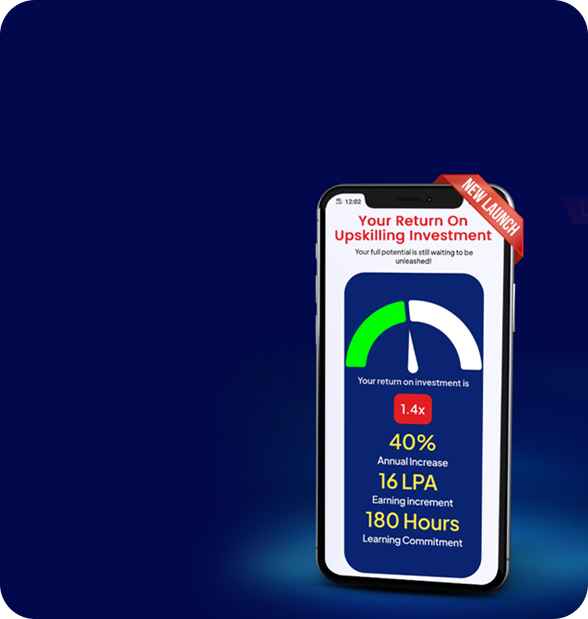
ROI of Executive Supply Chain Programmes
Return on Investment (ROI) should not be measured only by programme fees or immediate salary increases. The true value of executive education lies in developing skills that improve long-term career prospects and prepare professionals for future leadership roles.
Several factors influence the ROI of a Supply Chain programme.
Career Advancement
Executive programmes help professionals strengthen their expertise, making them better prepared for managerial and leadership responsibilities.
These competencies align closely with evolving industry requirements.
Professional Network
Participants often interact with experienced professionals from diverse industries, creating opportunities for collaboration, peer learning, and professional networking.
Practical Business Application
Unlike purely theoretical learning, executive programmes emphasize solving real-world business challenges that professionals can apply directly within their organizations.
The strongest ROI is generally achieved when learners actively implement the concepts they acquire and continue building experience alongside formal education.
Supply Chain Management is relevant across multiple industries, making executive education valuable for professionals at different career stages.
Early-Career Professionals
Individuals beginning their careers in logistics, procurement, manufacturing, or operations can use executive programmes to build a strong foundation in modern supply chain practices.
Operations Managers
Managers responsible for production, inventory, procurement, or logistics can strengthen their strategic thinking and operational decision-making capabilities.
Procurement Professionals
Professionals involved in supplier management, sourcing, vendor negotiations, and purchasing can develop broader supply chain knowledge beyond procurement functions.
Manufacturing Professionals
Factory managers, production planners, and industrial engineers can better understand integrated supply chain planning and digital manufacturing practices.
Logistics Professionals
Warehouse managers, transportation specialists, and distribution managers can benefit from programmes focused on analytics, automation, and operational optimization.
Business Leaders
Senior executives responsible for operations, transformation initiatives, or organizational strategy can develop a stronger understanding of global supply chain trends and technology-driven business models.
Why Continuous Upskilling Matters in Supply Chain
The supply chain industry is changing rapidly.
Technologies that were considered innovative a few years ago have become part of everyday business operations. Artificial Intelligence, machine learning, predictive analytics, robotics, blockchain, and digital twins are increasingly influencing procurement, logistics, manufacturing, and inventory management.
As a result, professionals who rely solely on existing knowledge may find it challenging to keep pace with changing industry expectations.
Continuous learning enables professionals to:
Stay updated with emerging technologies.
Understand changing global trade practices.
Improve strategic decision-making.
Build leadership capabilities.
Increase adaptability in dynamic business environments.
Executive education therefore becomes more than a qualification—it becomes part of a long-term career development strategy.
Final Verdict
Supply Chain Management has emerged as one of the most influential business functions in today’s economy. As organizations strive to build resilient, technology-enabled, and customer-centric supply chains, the demand for skilled professionals continues to grow across manufacturing, retail, healthcare, e-commerce, logistics, automotive, and financial services.
Executive programmes offered by leading institutions such as IIM Kozhikode, IIT Bombay, IIM Mumbai, and IIM Nagpur provide professionals with opportunities to strengthen their expertise while continuing their careers.
Rather than asking which programme is universally better, professionals should choose the one that aligns most closely with their current responsibilities, future aspirations, and industry requirements.
As supply chains become increasingly data-driven and technology-enabled, professionals who combine business knowledge with digital capabilities will be well positioned to lead the next generation of operational transformation.
Frequently Asked Questions
Yes. Supply Chain Management continues to be one of the fastest-growing career domains due to increasing investments in manufacturing, e-commerce, logistics, digital transformation, and global trade.
Professionals are hired across manufacturing, retail, e-commerce, healthcare, pharmaceuticals, automotive, FMCG, logistics, transportation, consulting, and technology companies.
The best programme depends on your career goals. Professionals interested in digital transformation may prefer IIM Kozhikode, those working in global operations may consider IIT Bombay, analytics-focused professionals may choose IIM Mumbai, while operations professionals may benefit from IIM Nagpur.
Key skills include procurement, logistics management, inventory planning, demand forecasting, analytics, strategic sourcing, leadership, communication, risk management, and digital technologies such as AI and IoT.
Yes. These programmes are specifically designed for working professionals and offer flexible learning formats that allow participants to continue working while upgrading their skills.
An MBA in Operations provides broader management education, while executive Supply Chain certifications offer specialized industry-focused knowledge. The right choice depends on your experience level and long-term career objectives.
The future of Supply Chain Management will be shaped by Artificial Intelligence, automation, sustainability, predictive analytics, smart manufacturing, and digital transformation. Professionals who continuously upgrade their skills are expected to remain highly competitive in this evolving field.
Nuthana Reddy
Nuthana Reddy is a Senior Manager at Procter & Gamble, specializing in operations, digitization, and cross-functional leadership. She has driven multimillion-dollar impact through innovation, process optimization, and strategic execution across global markets.
Get Free Upskilling Guidance
Fill in the details for a free consultation
Related Courses
Explore our programs
Admission Closed
Executive Programme in Operations Management and Analytics
 HOME > BLOG > Supply Chain > Supply Chain Management Career in India 2026: Top Courses from IIM, IIT and What Salary to Expect
 July 15, 2026
 13 min read




 ChatGPT
 Perplexity
 Claude
 Grok
Grok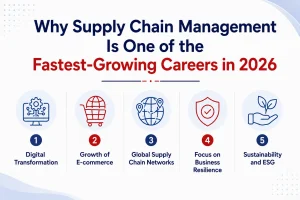


 Admission Closed

 Admission Closed
 Admission Closed
 Admission Closed
 ROI Calculator