Skills Professionals Gain Through Executive Supply Chain Programs
Supply chain management has transformed dramatically over the last decade. What was once considered a back-end operational function has now become a strategic pillar for business success. From global sourcing disruptions to AI-driven logistics and sustainability initiatives, modern supply chains demand leaders who can think strategically, adapt quickly, and drive innovation.
As organizations continue to prioritize operational resilience and digital transformation, professionals with advanced supply chain leadership skills are increasingly in demand. However, climbing the leadership ladder in supply chain management requires more than just years of experience. Professionals today need specialized knowledge, analytical capabilities, technological expertise, and strategic decision-making skills.
This is where executive programs in supply chain management play a critical role. These programs are specifically designed for working professionals who want to strengthen their leadership capabilities while staying aligned with evolving industry trends.
In this blog, we will explore how executive programs help professionals accelerate their careers in supply chain leadership, the key skills they develop, and why industry-focused learning has become essential in today’s competitive business environment.
The COVID-19 pandemic highlighted the importance of resilient and agile supply chains. Businesses across industries faced disruptions due to shortages, transportation delays, and changing customer demands. As a result, organizations realized the need for skilled leaders who could manage uncertainty while maintaining operational efficiency.
Today, supply chain leaders are expected to:
Optimize business performance
Improve customer satisfaction
Reduce operational costs
Leverage technology for automation
Manage global supplier networks
Ensure sustainability and compliance
Use analytics for better decision-making
This shift has created a growing demand for professionals with strategic leadership skills in supply chain management.
Why Professionals Need Executive Programs in Supply Chain Management
Many working professionals gain operational experience over time, but leadership roles require a broader understanding of business strategy, digital technologies, analytics, and organizational transformation.
Executive education programs bridge this gap by helping professionals transition from operational roles to strategic leadership positions.
Executive programs provide structured learning that combines theoretical concepts with real-world business applications. They help professionals stay updated with the latest trends while continuing their jobs.
One of the biggest differences between operational managers and supply chain leaders is strategic thinking.
Executive programs help professionals understand:
End-to-end supply chain strategy
Business alignment
Long-term planning
Operational optimization
Customer-centric supply chain models
Professionals learn how supply chain decisions impact business profitability, customer experience, and market competitiveness.
This strategic perspective enables professionals to move beyond routine operations and contribute directly to organizational growth.
2. Enhancing Decision-Making Through Analytics
Modern supply chains generate massive amounts of data. Organizations rely heavily on analytics to improve forecasting, optimize inventory, and manage risks.
Executive programs teach professionals how to use:
Professionals who can interpret data and make informed decisions are highly valued in leadership positions.
Many advanced supply chain programs now integrate analytics and technology-focused modules to prepare professionals for data-driven supply chain management.
3. Building Expertise in Digital Supply Chain Transformation
Digital transformation is reshaping supply chain operations globally. Companies are adopting technologies such as:
Artificial Intelligence (AI)
Internet of Things (IoT)
Blockchain
Cloud-based logistics systems
Robotics
Automation tools
Supply chain leaders must understand how these technologies impact operations and how they can be implemented effectively.
Executive programs expose professionals to digital transformation strategies and help them develop technology-driven leadership capabilities.
This knowledge is particularly important as organizations increasingly seek leaders who can modernize supply chain operations while improving efficiency and customer experience.
4. Improving Leadership and Team Management Skills
Technical expertise alone is not enough for leadership roles.
Supply chain leaders must manage cross-functional teams, coordinate with stakeholders, and lead organizational change initiatives.
Executive programs help professionals develop:
Leadership communication
Conflict resolution
Negotiation skills
Team collaboration
Change management
Strategic leadership
Interactive case studies, group discussions, and simulations provide practical exposure to real-world business challenges.
Professionals learn how to lead teams effectively in dynamic and high-pressure environments.
5. Gaining Industry-Relevant Exposure
One major advantage of executive education is industry-focused learning.
Unlike traditional academic programs, executive courses emphasize practical applications and real-world business scenarios.
Participants gain exposure to:
Live case studies
Industry projects
Peer learning
Faculty insights
Business simulations
Current market trends
This practical approach helps professionals apply concepts directly to their workplaces.
Many executive programs are designed and delivered by experienced faculty and industry experts, ensuring participants receive relevant and up-to-date knowledge.
6. Expanding Professional Networks
Networking is a critical aspect of career growth.
Executive programs bring together professionals from diverse industries and backgrounds. Participants interact with peers, faculty members, and industry leaders.
This creates opportunities for:
Knowledge sharing
Career guidance
Industry collaborations
Professional mentorship
Business partnerships
Strong professional networks often open doors to new leadership opportunities and career advancement.
Programs offered by premier institutions also provide access to alumni networks, which can significantly enhance professional visibility and credibility.
7. Learning Risk Management and Supply Chain Resilience
Global supply chains face constant disruptions, including:
Economic uncertainty
Geopolitical tensions
Climate-related risks
Supplier disruptions
Regulatory changes
Modern supply chain leaders must build resilient systems that can withstand disruptions.
Executive programs teach professionals how to:
Assess supply chain risks
Design resilient supply networks
Improve business continuity
Develop contingency strategies
Enhance operational flexibility
This capability is increasingly important for organizations seeking long-term sustainability and stability.
Sustainability has become a key focus area for businesses worldwide.
Organizations are now expected to implement environmentally responsible supply chain practices.
Executive programs introduce concepts such as:
Circular economy
Green logistics
Sustainable sourcing
Carbon footprint reduction
Ethical procurement
ESG compliance
Professionals who understand sustainable supply chain management are better positioned for future leadership roles.
The integration of sustainability into supply chain strategies is becoming a major differentiator in modern business operations.
9. Increasing Career Growth Opportunities
Executive education significantly improves career prospects for professionals.
Many participants pursue executive programs to:
Earn promotions
Transition into leadership roles
Switch industries
Increase salary potential
Build specialized expertise
Organizations often prefer candidates with advanced certifications and executive education credentials because they demonstrate commitment to continuous learning and professional growth.
Professionals with specialized supply chain leadership skills are increasingly sought after across industries such as:
Manufacturing
Retail
E-commerce
Healthcare
FMCG
Technology
Logistics
Consulting
As supply chains become more technology-driven and globally integrated, leadership opportunities in this domain continue to grow.
10. Balancing Learning with Work Commitments
One of the biggest advantages of executive programs is flexibility.
Most executive programs are specifically designed for working professionals and offer:
Weekend classes
Online learning
Hybrid learning formats
Interactive live sessions
Campus immersion opportunities
This allows professionals to continue working while upgrading their skills and knowledge.
The ability to immediately apply classroom concepts to workplace challenges makes executive education highly practical and effective.
Skills Professionals Gain Through Executive Supply Chain Programs
Executive programs help professionals develop a broad range of skills, including:
The programme is designed for working professionals who want to develop strategic supply chain management capabilities while understanding modern technologies, analytics, and digital transformation practices. It covers key areas such as:
Supply chain analytics
Demand forecasting
Procurement management
Digital supply chain transformation
Risk management
Sustainable supply chain management
Predictive and cognitive analytics
The programme is delivered through a Direct-to-Device (D2D) learning format and includes live online sessions, case studies, simulations, and hands-on analysis. Participants also receive exposure to industry-led pedagogy and campus immersion opportunities.
According to the programme details, professionals gain exposure to modern supply chain technologies and leadership concepts that help them improve decision-making, operational efficiency, and strategic business alignment. The programme also offers Executive Alumni Status from the Indian Institute of Management Kozhikode upon successful completion.
With the growing need for digitally skilled supply chain leaders, such executive programs can play an important role in helping professionals stay relevant and competitive in the evolving business landscape.
Frequently Asked Questions
Executive programs help professionals develop strategic, analytical, and leadership skills required for modern supply chain management. They provide industry-focused learning in areas like digital transformation, logistics, procurement, analytics, and risk management, helping professionals transition into leadership roles.
Executive supply chain programs are ideal for working professionals such as operations managers, logistics executives, procurement specialists, manufacturing professionals, consultants, and mid-level managers looking to advance into strategic leadership positions.
Professionals gain skills in supply chain analytics, demand forecasting, procurement strategy, digital supply chain transformation, sustainability, leadership communication, risk management, and strategic decision-making. These skills help improve operational efficiency and business performance.
Yes, executive programs can significantly improve career opportunities by enhancing industry knowledge, leadership capabilities, and technical expertise. Professionals often gain access to better job roles, higher salary potential, leadership positions, and stronger professional networks after completing such programs.
Digital transformation enables businesses to improve supply chain visibility, automation, forecasting accuracy, and operational efficiency. Modern supply chain leaders must understand technologies like AI, IoT, analytics, and automation to manage agile and resilient supply chain systems effectively.
Nuthana Reddy
Nuthana Reddy is a Senior Manager at Procter & Gamble, specializing in operations, digitization, and cross-functional leadership. She has driven multimillion-dollar impact through innovation, process optimization, and strategic execution across global markets.
Get Free Upskilling Guidance
Fill in the details for a free consultation
Related Courses
Explore our programs
Admission Closed
Advanced Certificate Programme in Smart Supply Chain Management & Transformation
 HOME > BLOG > Supply Chain > How Executive Programs Help Professionals Advance in Supply Chain Leadership
 May 31, 2026
 6 min read





 ChatGPT
 Perplexity
 Claude
 Grok
Grok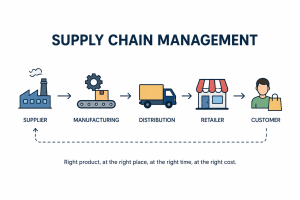


 Admission Closed

 Admission Closed
 Admission Open
 Admission Open
 ROI Calculator