
What is Quality Assurance (QA)? Definition, Importance & More
 February 14, 2026
 9 min read




Table Of Content
- What Is Quality Assurance?
- Quality Assurance vs. Quality Control
- Importance of Quality Assurance
- The Quality Assurance Process
Do you remember ever downloading an application that instantly crashed, purchasing a product whose performance did not match what was advertised, or receiving a service that seemed rushed and of poor quality? Most individuals have had similar experiences, which shows why the field of Quality Assurance exists.
Quality assurance is not merely concerned with identifying faults after they have occurred; it is concerned with ensuring that every step of a product’s lifecycle is executed in the right manner, whether it be during the development of a mobile application, the production of a medical device, or the provision of customer support. The expectations for quality, safety, and reliability should be present in every phase of development, manufacture, and distribution, so that consumers can trust products and services they purchase.
As consumers today become highly impatient with slow, inefficient, and error-prone service, quality assurance continues to have a growing influence over the world around us. Quality Assurance will help consumers find the products and services they need faster, deliver items to them more reliably, and give consumers the ability to get back on track if there are any problems.
In this guide, we’ll break down what quality really means, explain the concept of assurance, define quality assurance clearly, and explore why QA is essential today. We’ll also look at QA tools, processes, methods, challenges, and real-world examples.
Let’s begin.
 ChatGPT
 Perplexity
 Claude
 Grok
GrokWhat Is Quality Assurance?
*sofeast.com
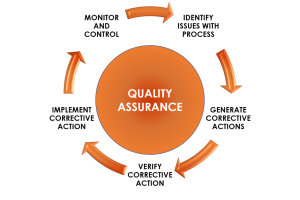
A quality assurance (QA) plan is an organized method of guaranteeing the compliance of a product or service with internal and external factors. Instead of relying on final checks to verify compliance, QA is about putting processes in place to provide assurance of quality throughout the entire life cycle of the product, from design through to implementation.
The importance of is beyond simply compliance; it can help to shape an organization’s strategic direction by creating a standard base that employees can refer to, establishing procedures for accomplishing tasks, evaluating performance, performing audits, and continuously evaluating processes for improvement. Quality assurance enhances the overall satisfaction of customers and strengthens the reputation of the brand, while minimizing the impact of long-term risk.
How does QA function within different industries? Here are a few examples:
- Software Development: A quality assurance tester examines an application to verify that features such as login security, load speed, compatibility with multiple devices and user flow are all functioning correctly prior to the application going live.
- Pharmaceutical Industry: Quality assurance teams verify the conditions under which the product was manufactured; test the raw materials; validate the manufacturing process; and ensure all batches manufactured are safe and compliant with applicable regulations before being distributed.
The primary goal of Quality Assurance, no matter the industry, is to ensure that all products produced will be both reliable and of the highest quality possible.
Quality Assurance vs. Quality Control
Both quality assurance (QA) and quality control (QC) are critical components of any effective quality system because each enables organizations to measure results and uphold commitments at an organization-wide level.
Understanding the differences between QA and QC can help organizations build upon existing successes in their quality systems and develop a culture of accountability.
Similarities Between QA and QC
The objectives of both QA and QC are very similar. Both are designed to ensure that product offerings conform to all customer expectations and applicable regulatory requirements. In addition, both QA and QC require that there are specific, measurable criteria (or standards) which may be used to assess product quality.
As such, the two processes provide an integrated framework for measuring performance, promoting continuity of operations, and enhancing operational effectiveness through the pursuit of continuous improvement.
Key Differences Between QA and QC
Despite having the same end goal, QA (Quality Assurance) and QC (Quality Control) have different foci, timescales and methodologies.
- Focus: While QAs focuses on establishing and sustaining robust processes to avoid defects, QCs evaluates the end product to determine whether it meets pre-established quality criteria.
- Approach: In addition, QA has a proactive approach to problem prevention, while QC has a reactive approach (i.e., once a defect is identified in production, it can be corrected).
- Process: QA uses process audit, documentation, employee training and standard operating procedures to achieve its objectives, while QC relies on inspection/testing, reviews and defect identification.
- Objective: The objective of QA is to create quality at every phase of production, while the purpose of QC is to create customer-ready finished goods.
Importance of Quality Assurance
*collidu.com
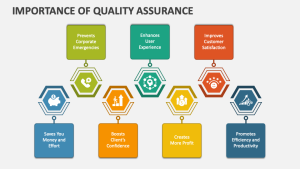
Quality assurance is essential for maintaining trust, reducing risks, and supporting long-term business growth. Its impact goes far beyond defect prevention.
- Customer Satisfaction: QA ensures products work as expected, which builds trust, loyalty, and repeat business.
- Compliance and Safety: QA helps organizations meet legal and regulatory requirements, reducing the risk of penalties or recalls.
- Market Reputation: Consistent quality strengthens brand credibility and sets businesses apart from competitors.
- Operational Efficiency: QA identifies inefficiencies early, reducing waste and improving resource utilization.
- Cost Management: Fixing issues early costs far less than addressing failures after release.
- Product Development: QA feedback improves product design and shortens time to market.
- Competitive Advantage: High-quality offerings naturally perform better in crowded markets.
The Quality Assurance Process
Building an effective quality assurance program requires a structured approach. Below are the key stages involved.
Establish Quality Objectives & Standards
The first step of the Quality Control Process is to define what “quality” means via defining customer expectations, regulation requirements, and internal benchmarks. These standards serve as the foundation for every activity in the Quality Control Process, ensuring consistency across the entire organization/operational area.
Quality Planning
Quality planning identifies how best to achieve each of the above-specified standards. Within this section, a quality management plan will be created that identifies what types of tools will be needed, the timing of delivery of the tools and the responsible person(s) for each piece of the quality management plan, and success metrics (Example: Defect rate/customer satisfaction).
Quality Assurance Process Design/Implementation
At this point, “quality” is incorporated into the various business workflows and system-level processes (CPM). Quality assurance (QA) activities help to establish best-in-breed industry practices via the design or refinement of either a new or existing business process cycle in terms of effectuation. For example, coding standards for software, compliance with regulations in manufacturing, etc.
Quality Assurance Testing
Testing is where QA processes are put into action. It helps identify issues before they impact users or stakeholders.
- Test Case Development: Detailed test cases are written to define steps, expected outcomes, and test conditions, covering both positive and negative scenarios.
- Test Environment Setup: Hardware, software, networks, test data, and tools are configured to mirror real production conditions.
- Test Execution: Test cases are run, results recorded, and defects documented.
- Defect Reporting and Tracking: Issues are logged, prioritized, tracked, and communicated using defect management systems.
Quality Assurance Monitoring & Control
This phase involves tracking performance metrics and quality indicators in real time. Monitoring helps teams detect deviations early and take corrective action before problems escalate.
Gather Customer Feedback & Validation
Customer feedback confirms whether the product meets real-world expectations. Insights gathered from surveys, reviews, interviews, and usability testing help identify improvement areas.
Quality Assurance Audits
Formal audits assess whether processes and systems align with quality standards. Internal or external auditors review documentation, workflows, and results to identify gaps and improvement opportunities.





Quality Assurance Methods
Different organizations have different quality assurance methods depending on their industry, scale, regulatory environment, and long-term goals. While the objective remains the same, i.e., delivering consistent quality. However, the approach can vary significantly. Some methods can only focus on organisations’ culture, while others may require data or stress-based testing. So, here we have outlined some of the widely used quality assurance methods and how they work in practice.
Total Quality Management (TQM)
Total Quality Management is a holistic quality assurance approach that emphasizes quality as a shared responsibility across the entire organization. Instead of limiting quality efforts to a single team, TQM encourages every department, production, marketing, customer support, and leadership, to actively contribute to continuous improvement.
Failure Testing
Failure testing focuses on understanding how and when a product breaks by deliberately pushing it beyond normal operating conditions. Products are exposed to extreme scenarios, such as prolonged usage, heavy loads, or environmental stress to uncover hidden flaws that may not appear during routine testing.
For example, an electronics manufacturer might run devices continuously at high temperatures to observe how components degrade over time. The insights gained help engineers redesign weak areas, improve durability, and reduce the risk of real-world failures after launch.
Process and Product Quality Assurance (PPQA)
PPQA is a structured approach that evaluates both processes and outputs against predefined quality standards. Rather than focusing only on end results, this method examines how work is performed across different stages of production.
Organizations using PPQA conduct regular gap analyses to compare current practices with expected quality benchmarks. This helps identify inefficiencies, process deviations, or compliance gaps early.
Capability Maturity Model Integration (CMMI)
CMMI is commonly used in software development and IT services to measure how mature and reliable an organization’s processes are. It categorizes process maturity into defined levels, ranging from ad hoc practices to fully optimized, data-driven systems.
Companies adopting CMMI assess their current maturity level and gradually improve processes through training, documentation, and performance measurement.
Statistical Process Control (SPC)
Statistical Process Control relies on data and statistical techniques to monitor process performance in real time. By tracking metrics such as error rates, cycle times, or output consistency, organizations can quickly identify variations that indicate underlying issues.
For instance, a manufacturing unit might use control charts to detect fluctuations in product dimensions.
Quality Assurance Principles
Effective quality assurance is guided by a set of core principles that shape how organizations plan, execute, and improve quality-related activities.
- Continuous Improvement: Quality is not static. Processes are regularly reviewed and refined to improve efficiency, reliability, and outcomes.
- User-Centric Approach: Customer needs and expectations remain central, ensuring products and services deliver real value.
- Risk Management: Potential quality risks are identified early and mitigated before they impact operations or customers.
- Standardized Processes: Consistent procedures reduce errors and ensure predictable results across teams.
- Evidence-Based Decisions: Data and measurable insights guide quality improvements rather than assumptions.
Quality Assurance Examples
While QA frameworks differ across industries, real-world applications demonstrate how quality assurance directly impacts performance and customer trust.
FinPay (Digital Payments Platform)
As FinPay expanded its digital payment services across regions, quality assurance played a critical role in maintaining transaction reliability and security. By implementing structured QA testing and continuous monitoring, the company ensured smooth payment experiences even during peak usage. Proactive defect detection helped reduce failed transactions and customer complaints.
SkyRoute Airlines
SkyRoute Airlines strengthened its service quality by standardizing QA reviews across customer touchpoints, including booking, check-in, and in-flight support. Regular audits and feedback reviews ensured staff followed consistent service standards, helping the airline maintain brand trust and improve passenger satisfaction.
NovaTech SaaS
NovaTech, a growing SaaS provider, improved its QA efficiency by moving from manual testing logs to centralized quality assurance software. This shift reduced review cycles and allowed QA testers and developers to collaborate more effectively. As a result, NovaTech released updates faster while maintaining product stability.
Enhance Your Quality Assurance Skills with the Right Learning Path
If you’re looking to build or advance a career in quality assurance, gaining structured knowledge and industry-recognized credentials can make a real difference. This is where Jaro Education plays an important role.
Jaro Education partners with leading universities and institutions to offer online courses and certifications in quality assurance, QA testing, and quality management. These programs are designed for working professionals and beginners alike, allowing you to learn at your own pace while gaining practical, job-relevant skills. From understanding quality assurance software to mastering real-world QA frameworks, the right course can help you stay competitive in a fast-evolving market.
With expert-led programs, career guidance, and flexible learning formats, Jaro Education helps you turn your interest in quality assurance into confident expertise.
Conclusion
Quality assurance is no longer just a supporting function, but it’s an important pillar that determines how reliable, safe, and successful a product or service will be in the real world. From defining clear standards and designing strong processes to conducting QA testing and continuous monitoring, quality assurance ensures that excellence is built into every stage, not checked at the end.
As industries become more competitive and customer expectations continue to rise, organizations that invest in strong quality assurance practices gain a clear edge. Whether it’s through structured methodologies, data-driven decisions, or customer-centric improvements, QA helps reduce risks, control costs, and build long-term trust. For professionals, understanding quality assurance opens doors to impactful roles where attention to detail and process thinking truly matter.
Frequently Asked Questions

Related Courses
Explore our programs
 Admission Open
 Admission Open
 Admission OpenAdmission Open
Find a Program made just for YOU
We'll help you find the right fit for your solution. Let's get you connected with the perfect solution.
Is Your Upskilling Effort worth it?
 ROI Calculator

Are Your Skills Meeting Job Demands?
Try our Skill Gap tool
Experience Lifelong Learning and Connect with Like-minded Professionals
Explore Jaro Connect

