What is Robotics Engineering? Fees, Subjects, Jobs & Salary
J
By Shubham Lal
February 10, 20268 min read
Last updated on April 15, 2026
SHARE THIS ARTICLE
Table Of Content
What Is Robotics Engineering, Really?
Why So Many Students Are Choosing Robotics Engineering Today
Robotics Engineering Courses: How Do You Enter This Field?
Core Subjects You’ll Study in Robotics Engineering
Take a moment to look at your surroundings. As you step through the door, there are automatic doors that open for you. Look at your mobile device, and there are mobile applications to help you get from place to place, recommend meals, or play music. There are factories that operate without human labour for 24 hours a day. In hospitals, there are machines that assist doctors in performing surgery with extreme accuracy. All of these innovations show that robots do not exist only in the future; they exist in the present.
Robotics engineering is one of the most exciting technical fields that is emerging due to technology advancement. In India, robotics engineering continues to grow as a result of the introduction of Industry 4.0, smart manufacturing, artificial intelligence, and automation in a variety of industries, and companies are actively searching for skilled robot engineers to design, build, and maintain intelligent systems. This makes it a perfect career to pursue for students who are more into technology and solving real-world problems.
Thus, if you’re interested in robotics engineering, this comprehensive blog is for you. Here we will discuss what is robotic engineering, its importance, career opportunities, and salaries in India.
According to Basic Engineering, “robots are machines that think, move, see, and act with minimal human intervention.” Robotics is not limited to the creation of humanoid robots; systems designed to resemble humans represent only a small proportion of developments within the robotics industry. Industrial robotic arms used in manufacturing, automated guided vehicles in storage facilities, surgical systems deployed in hospitals, aerial drones, and other intelligent machines are all outcomes of robotics engineering. The discipline encompasses multiple engineering and scientific domains, integrating them into a unified and functional technological field.
Mechanical engineering to design the robot’s physical structure
Electrical and electronics engineering for power and control movement
Computer science to program intelligence and decision-making
Artificial intelligence and machine learning to help robots learn and adapt
A robotics engineer works on both hardware (motors, sensors, actuators, frames) and software (programming, algorithms, AI models). This balance makes robotics engineering both challenging and incredibly rewarding.
*netcomlearning.com
What makes this field special is that robotics engineers don’t just write code or design parts, they create complete systems that interact with the real world.
Why So Many Students Are Choosing Robotics Engineering Today
Choosing a career is no longer just about job security; it’s about relevance, growth, and impact. This is exactly where robotics engineering stands out.
Robotics engineering is future-proof: Automation is not a trend that will disappear. Industries are investing heavily in robotics to improve efficiency, safety, and accuracy. That means skilled robotics engineers will continue to be in demand.
The field is interdisciplinary: It gives you flexibility. A robotics engineer is not locked into one industry. You can work in manufacturing today, healthcare tomorrow, and research or AI-driven startups later.
Robotics engineering fields are Tangible: Itallows you to see your work come alive. Unlike purely theoretical fields, robotics lets you build something tangible, machines that move, react, and perform tasks you designed.
Financially rewarding Career: With the right skills and experience, the robotics engineering salary in India can grow significantly over time.
Robotics Engineering Courses: How Do You Enter This Field?
To become a robotics engineer, students can take many different types of robotics engineering courses that cater to the academic requirements for all types of students, whether they are recent high school graduates or they are already employed in another field.
Let us take a closer look at the types of robotics engineering courses available.
Undergraduate Robotics Engineering Courses
Most students begin their journey through undergraduate programmes such as:
B.Tech in Robotics Engineering
B.E. in Robotics Engineering
B.Tech in Mechanical/Electronics Engineering with Robotics specialisation
These programmes usually run for four years and are designed to build strong foundations.
The first year generally includes the study of core subject areas (math, physics, basic programming, and engineering principles) to give the student a solid foundation for future study in robotics.
Once the student has completed the first year of the undergraduate course, the student progresses to robotics-specific subjects such as sensory devices, embedded systems, automation, and robotic design.
Postgraduate Robotics Engineering Courses
Postgraduate robotics engineering courses are ideal for students who want deeper expertise or leadership roles. Common options include:
M.Tech in Robotics Engineering
M.Sc. in Robotics
M.Tech in Automation and Robotics
Advanced programmes, including Autonomous Systems, Machine Learning, Robotics Vision and Human-Robot Interaction, are the primary focus of these programmes for students in postgraduate studies.
Postgraduate students typically have experience in a variety of fields, including research, collaboration with industry and problem-solving for real-world scenarios. Postgraduate students have the experience to pursue careers in research and development (R&D), advanced system design and academia.
Earning a higher salary as a Robotics Engineer, specialisation in Robotics Engineering, or holding a position in Innovation would be greatly enhanced by completing a postgraduate robotics engineering course.
Certification and Professional Robotics Engineering Courses
Not everyone wants or needs a full-time degree. That’s where certification-based robotics engineering courses come in.
These short-term programmes focus on specific, industry-relevant skills like:
Industrial robotics programming
Automation and PLC systems
AI and machine learning for robotics
Embedded systems and IoT integration
They are especially useful for working professionals or students from related engineering fields who want to transition into robotics engineer jobs.
Certification courses are practical, flexible, and often aligned with real industry requirements.
Core Subjects You’ll Study in Robotics Engineering
Robotics engineering subjects are carefully structured to build both understanding and confidence. Let’s look at what students actually study.
Mathematics and Engineering Basics
Mathematics is the language of robotics. Subjects like engineering mathematics, linear algebra, probability, and statistics form the foundation for robotics calculations.
While many students fear math initially, it becomes far more intuitive when applied to real robotic movements and control systems.
Mechanical Engineering Concepts
Mechanical knowledge helps robots move. Subjects include engineering mechanics, machine design, robotics, kinematics, and materials science.
These subjects teach students how robotic joints work, how forces act on structures, and how to design durable and efficient systems.
Electrical and Electronics Engineering
Robots need power, sensors, and control systems. This is where electronics come in.
Students learn about circuit design, sensors and actuators, embedded systems, and microcontrollers. These subjects allow robots to sense their environment and respond accurately.
Programming and Computer Science
This is where intelligence enters robotics engineering.
Students learn programming languages like C, C++, and Python, along with data structures, algorithms, artificial intelligence, machine learning, and computer vision.
These skills enable robots to process data, recognise patterns, and make decisions, turning machines into intelligent systems.
Control Systems and Automation
Control systems ensure robots move safely and precisely. Subjects like robotics control, automation, and feedback systems help students design stable and efficient robots.
This knowledge is especially important in industries where safety and accuracy are critical.
The fees for robotics engineering courses depend on multiple factors, including college reputation, infrastructure, faculty, and industry exposure.
In India, undergraduate robotics engineering courses generally fall in the moderate to higher fee range compared to traditional engineering branches. This is mainly because robotics programmes require specialised labs, equipment, and software.
Postgraduate robotics engineering courses may cost more due to advanced coursework and research facilities.
Certification courses usually have flexible fee structures, making them accessible to a wide range of learners.
Instead of focusing only on fees, students should evaluate return on investment, skill development, and placement support.
Robotics Engineer Jobs: Career Paths You Can Choose
Robotics engineering opens doors to diverse and exciting job roles. Here’s what these roles actually involve.
Robotics Engineer
The design, development and testing of robotic systems. A robotic engineer is responsible for designing and building the physical components of robotics, as well as the integration of hardware with software. Robotic engineers can expect to work in a diverse array of industries.
Automation Engineer
Automation engineers work to optimize the methods used by an organization to conduct a certain business process. They help reduce the reliance on manual input by developing and conducting a robotic workflow that automates and increases productivity.
Robotics Software Developer
Robotics software developers write the software that makes robots “intelligent”. These individuals will work with algorithms, artificial intelligence and real-time systems that allow robots to learn and adapt to their environment. Individuals who have excellent programming skills as well as advanced knowledge of artificial intelligence will find this career path to be an appealing choice.
Control Systems Engineer
A Control Systems Engineer is a key player in the movement of robots by ensuring that they operate correctly, precisely, and safely. Control Systems Engineers create feedback systems and performance controls for robotic systems, which is a vital position in industries that are very precise.
Robotics Research Engineer
A Robotics Research Engineer is focused on creating innovative solutions via designing, building and testing prototypes and contributing to the advancement of robotic technologies.
A student interested in technological advancement, experimentation and academic growth would be a good fit for this position.
Skills That Make a Successful Robotics Engineer
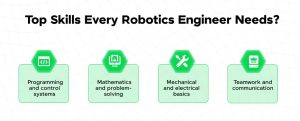
Robotics engineering is not just about technical knowledge. Successful professionals also possess:
Strong problem-solving skills
Curiosity and willingness to learn
Ability to work in teams
Clear communication
Adaptability to new technologies
*guvi.in
The best robotics engineers are those who never stop learning.
Robotics Engineering Salary in India: What Can You Expect?
The robotics engineering salary in India depends on experience, skills, industry, and location.
Fresh graduates can expect a robotics engineer salary between ₹3,00,000 and ₹6,00,000 per year. At this stage, professionals usually work on testing, programming support, and system integration.
Popular Companies with robotics engineer salary:
Company Name
Avg. annual salary
De facto Robotics and Automation
₹4.5 L/yr – ₹5.4 L/yr
JCB
₹3 L/yr – ₹3.5 L/yr
Robtech Automation & Services
₹4 L/yr – ₹5.1 L/yr
Metalman Auto
₹2.6 L/yr – ₹3.4 L/yr
Motherson Automotive Technologies and Engineering
₹3.3 L/yr – ₹7 L/yr
Takshi Auto Components
₹2.8 L/yr – ₹5 L/yr
Ttp Technologies
₹3.8 L/yr – ₹5 L/yr
Belrise Industries
₹2.7 L/yr – ₹4.9 L/yr
Magna International
₹3.7 L/yr – ₹5.1 L/yr
Patil Automation
₹2.6 L/yr – ₹6.4 L/yr
Salary From Ambition Box
Experience wise Robotics Engineer salaries
Experience
Avg. Annual Salary
1 year
₹4.4 L/yr – ₹4.9 L/yr
2 years
₹4.5 L/yr – ₹5 L/yr
3 years
₹4.8 L/yr – ₹5.3 L/yr
4 years
₹4.6 L/yr – ₹5.1 L/yr
5 years
₹5.3 L/yr – ₹5.9 L/yr
6 years
₹8.5 L/yr – ₹9.4 L/yr
7 years
₹8.5 L/yr – ₹10.2 L/yr
How Jaro Education Can Support Your Robotics Engineering Career
Building a successful robotics engineering career requires more than just a degree, it requires the right guidance, exposure, and industry alignment.
Jaro Education supports learners by offering access to industry-relevant programmes, expert-led learning, and skill-focused education that bridges the gap between academics and real-world requirements.
Through structured support, mentorship, and practical learning opportunities, Jaro Education helps students develop the confidence and competence needed to succeed in robotics engineer jobs.
Conclusion
Robotics engineering is a powerful blend of creativity, technology, and innovation. With diverse robotics engineering courses, exciting robotics engineer jobs, and competitive robotics engineering salary in India, it offers a career path that is both rewarding and future-ready.
For students who want to work on technologies that shape the world, robotics engineering is more than a career, it’s a chance to build the future. For learners seeking structured guidance while navigating advanced engineering education, Jaro Education plays a supportive role by connecting students with recognised universities, academic counselling, and programme insights. For those interested in contributing to technologies that shape industries and societies, visit our website to check out our vast range of online degree and certification courses offered.
A science background with mathematics and physics is required for undergraduate robotics engineering courses. Postgraduate courses need a relevant degree.
It can be challenging, but with curiosity, practice, and hands-on learning, it becomes highly rewarding.
Manufacturing, healthcare, automotive, aerospace, logistics, defence, research, and technology sectors.
Yes. With increasing automation, robotics engineering offers strong growth, stability, and salary potential.
Shubham Lal
Lead Software Developer
Shubham Lal joined Microsoft in 2017 and brings 8 years of experience across Windows, Office 365, and Teams. He has mentored 5,000+ students, supported 15+ ed-techs, delivered 60+ keynotes including TEDx, and founded AI Linc, transforming learning in colleges and companies.

 February 10, 2026
 8 min read




 ChatGPT
 Perplexity
 Claude
 Grok
Grok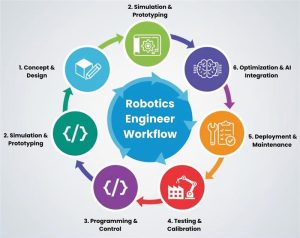




 Admission Closed
 Admission Closed
 Admission Closed

 Admission Open
 ROI Calculator