Main Difference Between Management and Administration: At Glance
What is Management?
What is Administration?
Similarities Between Management and Administration
Key Insights
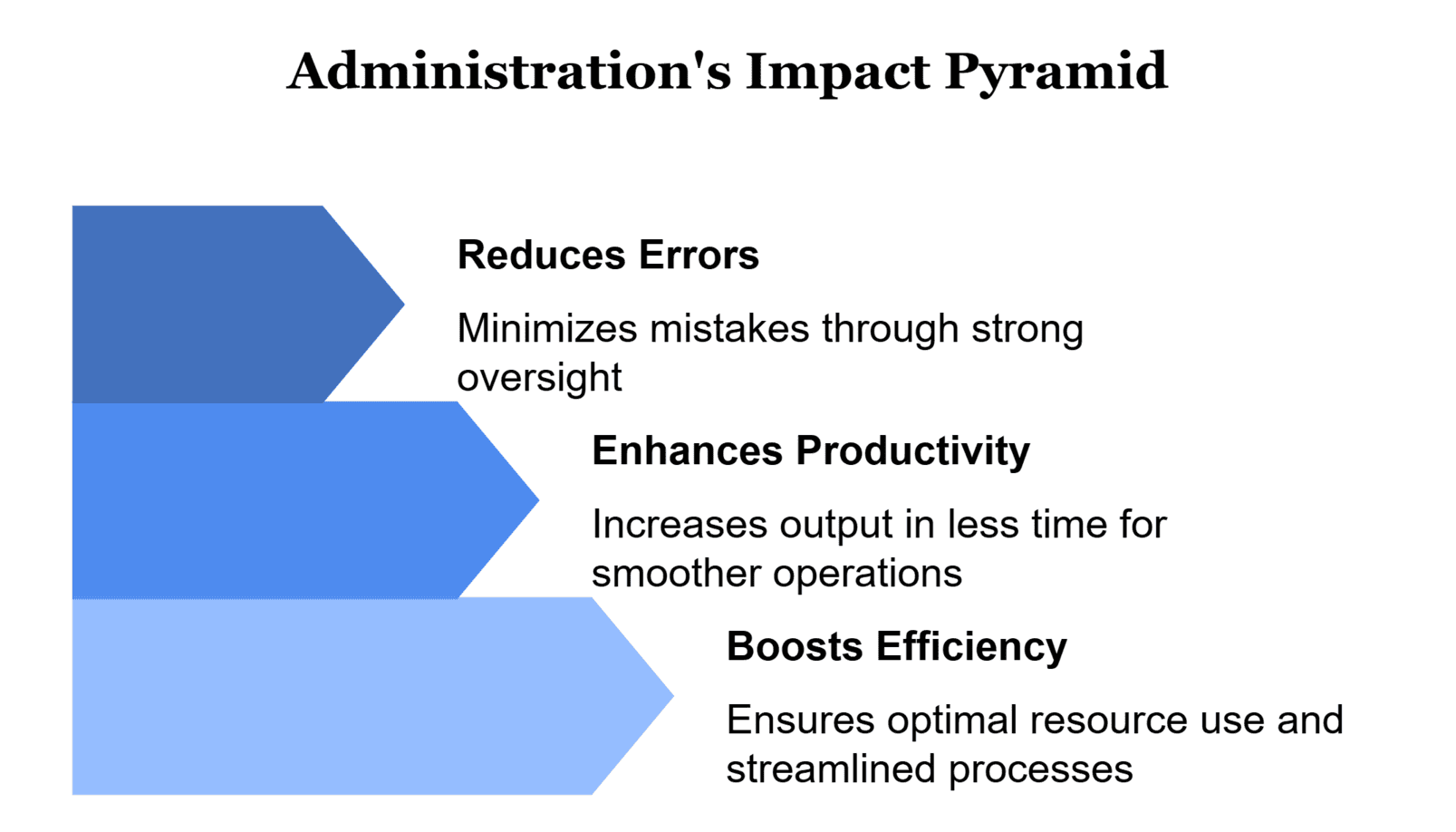
Administration focuses on setting organisational policies, objectives, and long-term direction, while management focuses on turning these plans into practical action.
Management coordinates employees, resources, projects, and daily activities to ensure that organisational objectives are achieved effectively.
Both functions involve planning, decision-making, leadership, coordination, and communication to maintain smooth organisational operations.
The roles may overlap depending on the organisation, but administration generally provides the broader framework while management handles implementation and execution.
Management and administration are essential functions in every organisation, but they do not have exactly the same role. They are closely connected and often work together to achieve common organisational goals.
The Difference Between Management and Administration can mainly be understood through their responsibilities, level of decision-making, and approach to organisational work. Administration generally deals with policies, objectives, and broader direction, while management focuses on implementing plans and coordinating people and resources. For example, administration may decide where an organisation should go, while management works on how to achieve that direction. Understanding this distinction can help students and professionals better understand organisational structures, leadership roles, and career opportunities.
Main Difference Between Management and Administration: At Glance
The Difference Between Management and Administration becomes clearer when their responsibilities are compared across different aspects. While both contribute to organisational success, their focus and level of responsibility can vary.
Aspect
Administration
Management
Primary focus
Establishes policies, objectives, and overall direction.
Implements plans and manages organisational activities.
Decision-making
Usually involves broad and strategic decisions.
Usually involves operational and execution-related decisions.
Time perspective
Primarily concerned with long-term direction.
Often focuses on short- and medium-term execution.
Nature of work
More policy-oriented and conceptual.
More practical and action-oriented.
Level in organisation
Often associated with senior leadership or governing bodies.
Management is the process of planning, organising, directing, and controlling people and resources to achieve organisational goals. It focuses on turning plans into action and ensuring tasks are completed efficiently.
Managers assign responsibilities, coordinate teams, monitor progress, problem solving, and make decisions related to execution.
Effective management helps organisations improve productivity, use resources efficiently, meet deadlines, address challenges, and keep employees aligned with organisational objectives.
Core Responsibilities of Management
Planning: Defines tasks, timelines, resources, and approaches required to achieve targets.
Organising: Allocates work, resources, and responsibilities among employees or teams.
Staffing: Helps identify, assign, and develop people for different organisational roles.
Directing: Guides employees and provides instructions to keep work moving towards goals.
Coordinating: Connects different teams and activities to avoid confusion or duplication.
Monitoring: Tracks progress and checks whether work is meeting expected standards.
Problem-solving: Identifies operational issues and takes suitable corrective action.
Performance management: Reviews individual and team performance against defined objectives.
What is Administration?
Administration is the process of establishing organisational policies, objectives, guidelines, and overall direction. It generally focuses on long-term planning and major decisions that shape an organisation.
Administrative responsibilities may be handled by senior leaders, founders, governing bodies, or institutional heads. Administration determines what an organisation aims to achieve and the policies guiding it, while managers focus on implementing these decisions through people, processes, and resources
Core Responsibilities of Administration
Policy formulation: Establishes rules and guidelines that shape organisational activities.
Goal setting: Defines broad objectives and priorities for the organisation.
Strategic planning: Determines long-term approaches for organisational growth and development.
Decision-making: Handles major decisions that can influence the organisation as a whole.
Resource direction: Determines how major resources should support organisational priorities.
Governance: Establishes frameworks for responsible and structured organisational functioning.
Risk oversight: Considers major risks and develops appropriate organisational responses.
Organisational direction: Provides a broad framework within which managers and teams operate.
Similarities Between Management and Administration
Although Management and Administration have different responsibilities, they share several common objectives. Both functions are important for maintaining an organisation’s structure, productivity, and long-term development.
Organisational Goals: Both functions support organisational objectives, with administration providing direction and management focusing on execution.
Decision-Making: Both require decisions, from policies and long-term direction to teams, resources, projects, and daily activities.
Planning: Both involve planning, with administration focusing on long-term goals and management preparing practical plans for implementation.
Coordination: Both require people and resources to work together, with administration creating the framework and management coordinating execution.
Leadership: Both involve leadership, with administrators setting direction and managers guiding employees in their responsibilities.
Organisational Efficiency: Both contribute to smooth operations, as effective policies and proper execution help improve productivity and goal achievement.
Communication: Both depend on clear communication to share objectives, policies, instructions, expectations, and organisational requirements.
Therefore, the two functions should not be viewed as completely separate. They are connected parts of the organisational system, with each supporting a different stage of organisational functioning.
Real-Life Examples of Management and Administration
The difference becomes easier to understand when we look at practical situations.
Example 1: Corporate Organisation
Consider a company planning to expand into a new city.
The administration may approve the expansion strategy, establish investment priorities, and decide the broader business objectives.
Management then converts this direction into an action plan. Managers may assign employees, prepare budgets, coordinate marketing and sales activities, monitor deadlines, and track performance.
In this situation: Administration provides the direction, while management handles implementation.
Example 2: School or College
In an educational institution, the administration may establish policies related to fees, academic guidelines, infrastructure, budgets, and institutional development.
Management may involve the principal, department heads, and other leaders who coordinate teachers, schedules, student activities, and academic operations.
In this situation: Administration establishes the institutional framework, while management ensures that academic activities are carried out effectively.
Example 3: Government Department
A government department may establish a development programme and define its objectives, budget, and operating guidelines.
Managers and departmental officers then coordinate employees, resources, timelines, and field-level activities to implement the programme.
In this situation: Administration provides the policy direction, while management focuses on execution.
Example 4: Hospital
A hospital’s administration may make decisions regarding budgets, expansion, major policies, compliance requirements, and overall institutional priorities.
Hospital managers may coordinate staff schedules, departments, supplies, workflows, and operational requirements.
In this situation: Administration focuses on the institution’s broader framework, while management handles operational coordination.
How Jaro Education Can Help Build a Career in Management for Working Professionals?
A career in management or administration requires an understanding of business functions, decision-making, leadership, and organisational processes.
Jaro Education offers programmes in collaboration with reputed institutions that can help professionals develop these skills. Depending on your experience and career goals, you can explore programmes focused on general management, business management, and strategic decision-making. Here are three relevant options:
A 1-year programme for professionals with 5+ years of work experience, covering strategic thinking, leadership, business decision-making, and key business functions
A 12-month programme for professionals with 1+ year of work experience, focusing on cross-functional business knowledge, leadership, strategic thinking, and decision-making
An 11-month programme for professionals with 2+ years of work experience, focusing on business management, strategic decision-making, leadership, and broader managerial responsibilities
Understanding the Difference Between Management and Administration can help students and professionals understand how organisations move from direction to execution. Administration generally focuses on policies, objectives, governance, and broader organisational direction. Management focuses on implementing those plans by coordinating people, resources, projects, and daily activities.
Although Management and Administration have different areas of responsibility, neither works effectively in isolation. Clear direction needs effective execution, while successful execution needs a clear framework.
Understanding Management vs Administration can therefore provide a useful foundation for anyone interested in leadership, business, organisational operations, or related career paths.
Frequently Asked Questions
The main distinction is their focus. Administration generally deals with organisational policies, objectives, and long-term direction, while management focuses on implementing plans, coordinating teams, and handling operational activities.
Management is the process of planning, organising, leading, and controlling people and resources to achieve organisational goals efficiently.
It involves establishing policies, setting organisational objectives, making major decisions, and providing the overall framework and direction within which an organisation operates.
Management and Administration are closely related but generally have different responsibilities. Administration focuses more on organisational direction and policy, while management focuses more on implementation and execution.
The answer depends on the organisation’s structure. Traditionally, administration is associated with broader strategic or policy-level responsibilities, while management is concerned with implementing plans and managing operational activities.
Management commonly involves planning, organising, directing, coordinating, and controlling activities. Administration generally involves policy formulation, goal setting, strategic planning, governance, and major organisational decision-making.
A manager generally oversees people, resources, projects, or operations to achieve defined objectives. An administrator usually works on broader policies, organisational frameworks, strategic decisions, or institutional responsibilities. The exact roles can vary depending on the organisation.
Nuthana Reddy
Nuthana Reddy is a Senior Manager at Procter & Gamble, specializing in operations, digitization, and cross-functional leadership. She has driven multimillion-dollar impact through innovation, process optimization, and strategic execution across global markets.
Get Free Upskilling Guidance
Fill in the details for a free consultation
Related Courses
Explore our programs
Executive Programme in Operations Management and Analytics

 June 9, 2025
 6 min read





 Key Insights
 ChatGPT
 Perplexity
 Claude
 Grok
Grok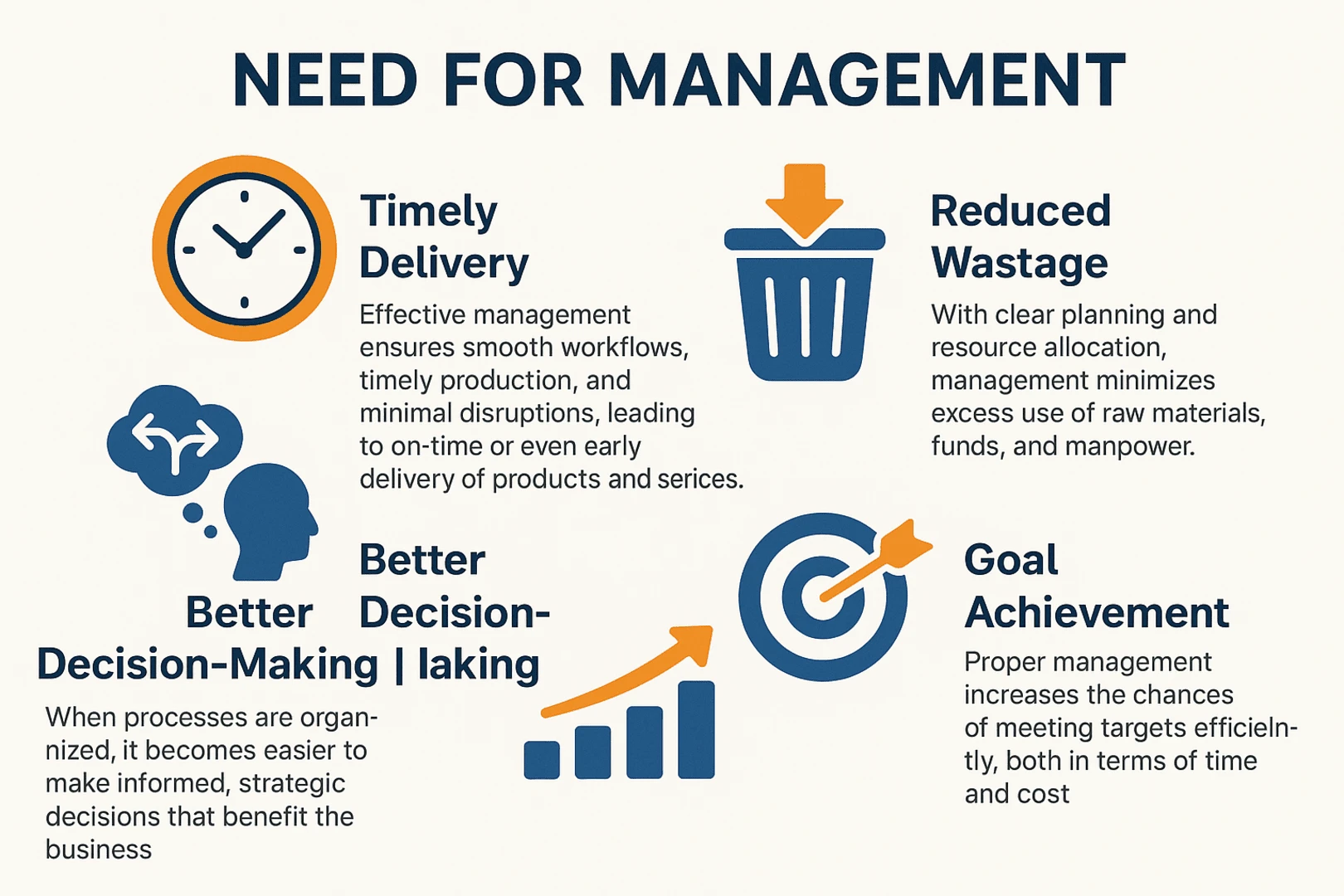











 ROI Calculator



