
What Is Management? Meaning, Functions, and Importance
 February 1, 2026
 12 min read





Table Of Content
- 5 Key Functions of Management
- Levels of management
- Types of Management
- Five Objectives of Management
Curious to learn what it takes to work in management? With this guide, explore what management is, the levels of management, the types, career opportunities and progression, and much more.
Management is how organisations organise and direct workflows, employees and operations to meet long-term goals. The primary goal of management is to establish an environment conducive to effective and productive work among employees. This necessitates a robust strategy that guides employees and is put into action.
To put it simply, a manager oversees all the work, from planning to implementing strategies, and delivering the final product or services. In addition, they also evaluate structures to increase performance, mentor employees, train staff, monitor budgets and productivity levels, and so on.
 ChatGPT
 Perplexity
 Claude
 Grok
Grok5 Key Functions of Management
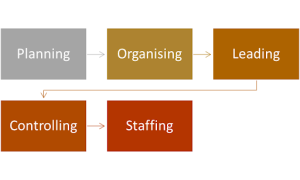
The exact answer to what is management boils down to a few significant functions, i.e., planning, organising, leading, controlling, and staffing. These functions are found in almost every business textbook, but in real life, they often overlap.
1. Planning
Everything starts with the planning. It is about asking, “Where are we heading?” “What is the objective?” or “What’s the best way to achieve goals?” However, effective planning does not involve creating a comprehensive and inflexible roadmap. The market changes, budgets shift, and team bandwidth changes. Therefore, the best managers plan as living documents that are flexible, not fixed.
2. Organising
Once the plan is developed, the next step is to transform it into an effective work plan. Organising involves determining who will perform what task, what tools and resources will be necessary, how tasks will be linked together, etc. While organising may seem to be a simple process, it is usually where challenges arise.
A well-thought-out plan can fail because of poorly defined roles or ineffective communication. As a result, a strong organisation will allow the strategy to progress from concept to execution without team members stepping on each other’s toes.
3. Leading
Leading is probably the most visible part of management. It’s about inspiring people, keeping morale high, and helping the team move in the same direction. But leadership isn’t always loud or dramatic.
Often, it’s quiet things- checking in at the right time, giving feedback, listening carefully, or considering ideas from team members.
4. Controlling
For some, the word controlling can sound a bit intense. But in reality, it’s not that harsh. Here, controlling refers to tracking the project’s progress, implementing changes, and meeting the target. The manager also oversees whether the team is overloaded, do we need to change the strategy, and so on.
5. Staffing
Some models skip staffing, but it’s too important to ignore. Hiring the right people, onboarding them properly, and placing them in roles where they can succeed lays the foundation for everything else.
No amount of planning or leadership can compensate for gaps in skills or poor role fit. When the right people are in the right positions, management becomes smoother and results follow more naturally.
Levels of management
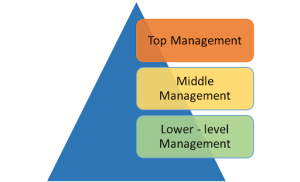
Almost every organisation, management has three levels, i.e. top, middle, and low. Managers in smaller companies may fill roles at more than one level, whilst larger organisations may have several managers within each level.
1. Senior/Top Management
- Senior management refers to the highest-ranking executives in an organisation, including the Chief Executive Officer (CEO), Managing Director (MD) and other members of the Board of Directors. This is where the overall strategy and vision for the organisation are established.
- The primary responsibility of senior management is to set long-term objectives, provide guidance and leadership regarding how those objectives will be achieved, and make major decisions affecting the organisation as a whole.
- Senior managers must always take into account what will happen in the future (Future Growth, the Company’s Vision, Overall Business Performance), not just what happens on a day-to-day basis.
2. Middle Management
- In contrast to senior management, middle management includes managers such as department heads, regional or district managers and division managers.
- Middle managers serve as the link between upper management and workers.
- Middle management carries out what has been planned by upper management. They oversee the activities of their department or division, work with cross-functional teams, use available resources efficiently and effectively, and ensure the organisation achieves their goals.
3. Lower-Level (First-Line) Management
- Lower-level management consists of the supervisors, team leaders, and foremen. These managers work directly with employees in order to manage them on a day-to-day basis.
- Lower-Level (First-Line) Managers are responsible for assigning tasks, guiding them, and monitoring their performance.
- They are also responsible for ensuring that their employees perform at optimal levels and that their employees remain engaged and motivated at work.
Types of Management
If you’re still wondering what is management? Let us tell you, management isn’t a one-size-fits-all concept. Different areas of an organisation need different kinds of management, each focusing on specific goals like efficiency, growth, and long-term success. Understanding these types of management helps you see just how wide the role is and why every function matters.
Below are the six major types of management that play a key role in keeping organisations running smoothly.
1. Project Management
Project management is about completing tasks on time and on budget. It involves developing and implementing plans to create, execute and complete a project with a defined timeframe and scope of work.
Project Managers coordinate the project’s tasks, allocate resources and manage their team’s members to ensure everything is on track. For example, if a company is about to launch a new product in the market, it’s a project manager’s responsibility to ensure everything is structured.
2. Business Management
Business management looks at the organisation as a whole. It involves overseeing daily operations while also planning for the future.
Business managers handle strategic decisions, budgeting, resource allocation, and overall performance. Their goal is to make sure the business runs efficiently today and stays competitive in the long run.
3. Operations Management
In these types of management, a manager is responsible for managing the core operations that support the creation of products or services. It helps keep the operation efficient, effective and streamlined by managing everything that occurs from the production schedules to the service delivery on a day-to-day basis. Operations Managers ensure all of these pieces come together to create a seamless customer experience.
4. Financial Management
Financial management deals with how money is planned, spent, and monitored within an organisation.
Financial managers take care of budgeting, financial planning, and analysis to make sure the company meets its financial goals. Their role is crucial in maintaining financial stability and supporting smart business decisions.
5. Human Resource Management (HRM)
Human Resource Management (HRM) focuses on the importance of people as an asset, as they form the basis of every successful organisation. These types of management occur at many levels, including the recruitment and selection of qualified employees, their training and development, performance management, compensation management, and compliance with relevant labour legislation.
Additionally, HRM plays an important role in developing and maintaining a healthy and productive workplace culture.
6. Strategic Management
Strategic management requires long-term thinking, and it provides a framework within which to establish and achieve business goals.
Strategic managers use analysis of industry market trends, competition, and business opportunities to develop strategies that lead to business sustainability through future growth. Strategy defines not only what the organisation plans to do, but also how it will do so.
Five Objectives of Management
Management is about guiding an organisation in the right direction and making sure everything works together smoothly. It brings people, resources, and processes into alignment so goals can be achieved without chaos or waste. Understanding these objectives helps managers, professionals, and students see what effective management is really trying to accomplish.
1. Turning Goals into Results
The purpose of management is to ensure that the organisation achieves its objectives. To support this effort, managers identify and plan for activities, assemble teams, and track progress to achieve not only short-term goals, but also the long-term vision of the organisation.
2. Making the Best Use of Resources
In every organisation, whether public or private, there are limits on the availability of an organisation’s resources (employees, cash, time, in-kind contributions). One of the significant goals of management is to efficiently utilise all available resources, thereby minimising waste while maximising productivity and efficiency.
3. Improving Employee Performance
As one of the essential functions of management, employee performance is enhanced by management through guidance, training, motivation, and recognition. Therefore, managers support employee contributions to their fullest potential by creating a culture of support and encouragement.
4. Encouraging Growth and Innovation
To stay relevant, organisations must evolve. Management supports innovation by promoting new ideas, improving processes, and embracing change. This focus on growth helps businesses stay competitive in dynamic markets.
5. Balancing Consistency with Adaptability
Good management maintains stability in daily operations while staying flexible enough to handle unexpected challenges. This balance allows organisations to adjust to change without losing focus on their core values and objectives.




Common Management Theories and Approaches
Management theories provide a foundation for understanding how organisations function and how leaders can guide teams effectively. These approaches help managers plan better, organise work efficiently, motivate employees, and improve overall performance. By learning different management frameworks, leaders can handle challenges more confidently and apply the right methods based on their organisation’s needs.
1. Classical Management Theory(CMT)
- This approach focuses on order, structure, and efficiency.
- CMT provides guidance for creating effective organisational entities, establishing clear hierarchical structures of authority, defining job functions specifically, and implementing standardised processes.
- It also encourages employee specialisation to maximise productivity and strengthen organisational control of operational resources.
2. Behavioural Management Theory
- Behavioural management shifts the focus from processes to people. It looks closely at employee behaviour, motivation, and group dynamics.
- This theory highlights the importance of leadership style, employee satisfaction, and workplace morale.
- When applied well, it leads to higher engagement, better teamwork, and a healthier organisational culture.
3. Modern Management Theories
- Modern approaches recognise that businesses operate in constantly changing environments.
- These theories combine systems thinking, contingency planning, and data-driven decision-making.
- Organisations are viewed as interconnected systems where changes in one area affect others. This approach encourages flexibility, innovation, and quick adaptation to market changes.
Top Skills Every Manager Should Have
There’s no magic checklist that turns someone into a great manager overnight. And honestly, there’s no “perfect” set of traits either. But if you talk to people who’ve worked with really good managers or painfully bad ones, you’ll notice the same management skills coming up again and again.
1. Communication
Though writing a good email or speaking fluently matters. But there are other things that a manager should possess, i.e., when to speak, when to pause, and how to convey any information within the team or with the clients. A good manager does not necessarily have to say everything they know to be an effective communicator, but when they’re done speaking, they’re rarely misunderstood.
2. Empathy
Empathy can’t be learned or faked; however, it can shine through as a manager goes beyond just noticing that someone is struggling, or just asks how they are doing (without judgment) and listens to them without trying to “fix” everything. These management skills help build trust more than any motivational speech could.
3. Decision-Making
Decision-making is a key management skills, as you must choose between many options, some of which are not very clear-cut and have the potential to become messy. Many times, with decision-making, you won’t always have the highest quality option, and every decision made will not necessarily be perfect; therefore, you must remember to make the best decision possible and own up to it.
4. Delegation
New managers sometimes try to handle everything themselves. Although it may feel safer, that’s not the way true leadership shows. Instead, you should learn to assign tasks, trust others, and let others do the same task differently.
5. Adaptability
Projects change. Teams shift. Priorities flip overnight. Managers who stay rigid usually break under pressure. The ones who adjust, rethink, regroup — those are the ones people want to work with again.
Could we add more? Sure. Time management, conflict resolution, strategic thinking… the list never really ends. But most great managers aren’t perfect. They’re just aware. They keep learning. They ask better questions. And that, often, matters more than ticking every skill box.
Purpose of Management
Management exists to make sure things don’t fall apart. It helps organisations use their people, time, money, and resources in the best possible way to reach their goals. Without management, even the best ideas can turn chaotic. With it, work becomes more focused, organised, and productive.
Management provides a clear structure for planning work, coordinating efforts, and keeping everything on track, so goals are achieved with less waste and better results.
Achieving Goals
One of the main purposes of management is to bring people and resources together and guide them toward shared goals. By setting clear targets and timelines, management ensures that objectives are achieved efficiently and on time.
Using Resources Wisely
Every organisation has limited resources. Management helps make the most of what’s available, whether it’s manpower, materials, or money, by reducing waste and improving output.
Encouraging Growth and Innovation
Good management doesn’t just focus on today; it plans for the future. By offering direction and support, it creates space for new ideas, continuous improvement, and long-term growth.
Creating Coordination and Teamwork
When different teams and departments work in isolation, problems arise. Management brings everyone onto the same page, ensuring smooth coordination and a sense of harmony across the organisation.
Adapting to Change
Markets shift, technology evolves, and customer expectations change. Management helps organisations stay flexible, respond quickly, and remain competitive in a constantly changing environment.
Developing People
Management also plays a key role in employee growth. By nurturing talent, building skills, and motivating teams, it ensures people feel valued and contribute effectively to overall success.
Popular Job Roles in Management
Career management offers a wide range of opportunities across industries. Here are common job roles at entry, mid, and senior levels.
| Level | Job titles |
| Entry-level | Management Trainee, Team Leader, Assistant Manager |
| Mid-level | Project Manager, Operations Manager, HR Manager |
| Senior-level | General Manager, Director, Vice President, CEO |
Here are some popular job roles in management with their average managerial salaries for different roles.
| Role | Average salary range (₹ LPA) |
| Project Manager | 4.6 – 30.9 |
| Operations Manager | 2.5 – 15.0 |
| HR Manager | 3.2 – 19.5 |
| Marketing Manager | 3.0 – 26.0 |
| General Manager | 5.4 – 44.0 |
| Sales Manager | 2.4 – 16.0 |
| Engineering Manager | 7.7 – 42.0 |
The Bottom Line
Understanding what is management exactly, its functions and key characteristics work in real life, is essential for anyone aiming to grow as a business professional or leader. Strong management helps organisations achieve their goals, use resources wisely, and keep teams aligned and productive.
With the right skills and guidance, handling real-world business challenges becomes far more confident and effective. Jaro Education offers industry-relevant management programs that combine practical learning with modern business insights. We also offer an online MBA in Management that is designed to build leadership capabilities, sharpen strategic thinking, and prepare you for today’s competitive corporate landscape.
Some of our highly recommended online MBA programmes are:
- Online MBA – Symbiosis School for Online and Digital Learning (SSODL)
- Online MBA – Manipal University Jaipur
- Amity Online MBA (Amity University)
- Online MBA – Dr. D. Y. Patil Vidyapeeth, Pune
Also, if you’re looking for expert support to take the next step in your management career, you can also book a free counselling session with Jaro Education today. Elevate your leadership potential with their in-demand management courses and move closer to becoming a dynamic, future-ready leader.
Frequently Asked Questions

Related Courses
Explore our programs





Find a Program made just for YOU
We'll help you find the right fit for your solution. Let's get you connected with the perfect solution.
Is Your Upskilling Effort worth it?
 ROI Calculator

Are Your Skills Meeting Job Demands?
Try our Skill Gap tool
Experience Lifelong Learning and Connect with Like-minded Professionals
Explore Jaro Connect
