How Is AI in Online Education Changing the Way We Learn?
What Does the India AI Impact Summit 2026 Reveal About AI in Online Education?
What Role Do AI Education Tools Play for Educators?
Artificial Intelligence is no longer a distant promise in education. In 2026, it sits at the heart of how learning is designed, delivered, evaluated, and linked to real opportunity. This shift was clearly echoed at the India AI Impact Summit 2026, where education and human capital were positioned as some of the most immediate pathways for translating AI ambition into real-world impact.
As online education becomes central to upskilling, reskilling, and lifelong learning—especially across the Global South—the role of artificial intelligence in modern online education takes on deeper significance. AI in online education is no longer about efficiency alone; it is about inclusion, access, relevance, and measurable progress.
Because access without impact is no longer enough.
For years, online education focused on scale—more courses, more learners, more reach. Yet scale alone did not guarantee outcomes. Learners struggled with engagement, completion, and clarity around career value.
This gap mirrors a concern highlighted at the India AI Impact Summit 2026: despite global AI commitments, a Global AI Divide persists, where benefits remain concentrated, and impact on the ground remains uneven.
AI changes this by enabling online education to be:
Learner-centric rather than platform-centric
Outcome-driven rather than content-heavy
Inclusive rather than exclusionary
For working professionals and first-generation learners alike, AI ensures education adapts to real life—not the other way around.
How Is AI in Online Education Changing the Way We Learn?
By responding to people, not averages.
One of the Summit’s core principles—the People Sutra—emphasises that AI must remain human-centred. This philosophy is already reshaping online learning.
*LeewayHertz
Personalised learning at scale
AI analyses how learners interact with content:
Time spent on modules
Assessment performance
Revision patterns
Drop-off signals
Based on this, learning paths adapt automatically. Struggling learners receive reinforcement; confident learners move faster. This kind of personalisation, once impossible at scale, is now foundational to AI in online education.
Intelligent tutoring systems as learning companions
Intelligent tutoring systems provide round-the-clock academic support by:
Explaining concepts in simpler language
Offering targeted practice
Supporting revision before assessments
For learners balancing work, family, and study, this constant support often determines whether learning continues or stops.
What Does the India AI Impact Summit 2026 Reveal About AI in Online Education?
That education is where AI impact can be felt fastest.
The India AI Impact Summit 2026 frames AI through three guiding Sutras—People, Planet, and Progress—supported by seven Chakras of action. Online education aligns most directly with these priorities.
Education as a Human Capital lever
Under the Human Capital and Inclusion for Social Empowerment Chakras, AI-enabled education is positioned as a way to:
Expand access to quality learning
Address skill shortages at scale
Reduce structural inequities
Online education, powered by AI, becomes a practical mechanism to democratise opportunity—especially for the Global South.
From aspiration to measurable outcomes
A recurring Summit theme is moving beyond high-level AI principles to tangible, measurable impact. In education, this means:
Skill acquisition, not just certificates
Employability, not just enrolment
Career clarity, not just completion
This is where AI-driven learning platforms begin to matter.
What Role Do AI Education Tools Play for Educators?
By freeing time for what actually matters.
AI in online education does not replace educators—it augments them.
Automating low-value academic tasks
AI education tools manage:
Objective grading
Quiz evaluation
Attendance tracking
Progress reporting
This allows educators to focus on mentoring, discussion, and curriculum quality—areas where human judgement is irreplaceable.
Teaching with insight, not intuition
AI dashboards reveal:
Where learners struggle most
Which modules cause disengagement
When intervention is needed
This aligns with the Summit’s emphasis on Safe and Trusted AI, ensuring AI supports informed, responsible decision-making rather than opaque automation.
How Does AI Improve Accessibility and Inclusion in Online Education?
By designing for diversity, not uniformity.
The People Sutra and Inclusion for Social Empowerment Chakra strongly emphasise inclusive AI. Online education is one of the clearest beneficiaries.
Supporting diverse learner needs
AI-powered features such as:
Speech-to-text and text-to-speech
Automated captions and translations
Adaptive interfaces
make learning more accessible to learners with disabilities, language barriers, or non-traditional backgrounds.
Reaching underserved geographies
AI-enabled platforms extend high-quality education to learners beyond urban centres, addressing long-standing access gaps—an explicit concern highlighted in discussions around the Global AI Divide.
How Does AI Change Assessment and Evaluation in Online Education?
By shifting focus from memory to mastery.
Traditional exams capture performance at a single point. AI enables continuous evaluation and thus career advancement.
Adaptive assessments
AI-driven assessments adjust difficulty in real time, offering a more accurate measure of understanding rather than rote recall.
Continuous feedback loops
Learners receive:
Instant performance insights
Concept-level feedback
Personalised improvement suggestions
This reduces anxiety and keeps learners engaged—especially important for adult and professional learners.
How Is AI Improving Engagement and Reducing Dropouts?
By spotting problems before learners disengage.
AI tracks engagement signals such as:
Login frequency
Module completion
Assessment consistency
When disengagement risk appears, learners receive nudges, reminders, or academic support. This proactive approach significantly improves retention—particularly for working professionals navigating unpredictable schedules.
How Is AI Helping Learners Make Smarter Career Decisions?
By replacing guesswork with data.
Under the Progress Sutra, AI is seen as an engine for inclusive growth. In education, this translates into career-aligned learning.
Identifying real skill gaps
AI analyses labour-market data to show:
In-demand skills
Emerging roles
Gaps in a learner’s current profile
Tools like Jaro Education’s Skill Gap Calculatorhelp learners decide what to learn next, rather than enrolling blindly.
For busy learners, instant support often determines consistency.
Secure and trusted learning systems
Aligned with the Safe & Trusted AI Chakra, AI supports:
Secure assessments
Identity verification
Plagiarism detection
Trust is essential as online education scales.
How Does AI Support Lifelong Learning and Upskilling?
Because careers no longer follow linear paths.
AI enables continuous learning by recommending:
Skill refreshers
Advanced certifications
New learning paths as industries evolve
This transforms education from a one-time milestone into an ongoing journey.
Learners planning long-term growth may also explore free courses in AI, analytics, or digital skills before committing to specialised programmes.
What Should Learners Look for in an AI-Enabled Online Programme?
Because “AI-powered” is not enough.
A genuinely AI-enabled programme should offer:
Personalised learning paths
Intelligent tutoring systems
Skill-gap visibility
ROI transparency
Human academic support
These indicators separate meaningful AI adoption from marketing claims.
What Challenges Must Be Addressed as AI Scales in Education?
Because impact requires responsibility.
Key challenges include:
Data privacy
Algorithmic bias
Over-automation
Unequal access
The Summit’s emphasis on people-centric, trusted AI reinforces the need for balanced, ethical implementation.
Conclusion: Why AI Is Central to Modern Online Education
Because education is where AI can deliver the fastest human impact.
The role of artificial intelligence in modern online education extends far beyond efficiency. From personalised learning and intelligent tutoring systems to skill alignment, ROI clarity, and inclusive access, AI is redefining what quality education looks like.
As underscored by the India AI Impact Summit 2026, AI’s true success will be measured not by innovation alone, but by its ability to serve people, expand opportunity, and drive real progress. In online education, that impact is already taking shape.
Frequently Asked Questions
AI enables personalised learning, intelligent tutoring systems, continuous feedback, and career-aligned insights, improving engagement and outcomes.
They provide instant explanations, targeted practice, and 24/7 academic support.
Yes. They adapt learning schedules and personalise content for busy professionals.
India’s first AI-powered ROI calculator by Jaro Education assesses career impact, salary potential, and skill relevance before enrolment.
No. AI complements educators by automating routine tasks and providing insights.
Dr. Sanjay Kulkarni
Data & AI Transformation Leader
Dr. Sanjay Kulkarni is a Data & AI Transformation Leader with over 25 years of industry experience. He helps organizations adopt data-driven and responsible AI practices through strategic guidance and education. With experience across startups and global enterprises, he bridges the gap between theory and real-world application. His work empowers teams to innovate and thrive in AI-driven environments.
 HOME > BLOG > AI and Machine Learning > Role of AI in Online Education (2026): Impact, Tools & Intelligent Systems
 February 25, 2026
 5 min read




 ChatGPT
 Perplexity
 Claude
 Grok
Grok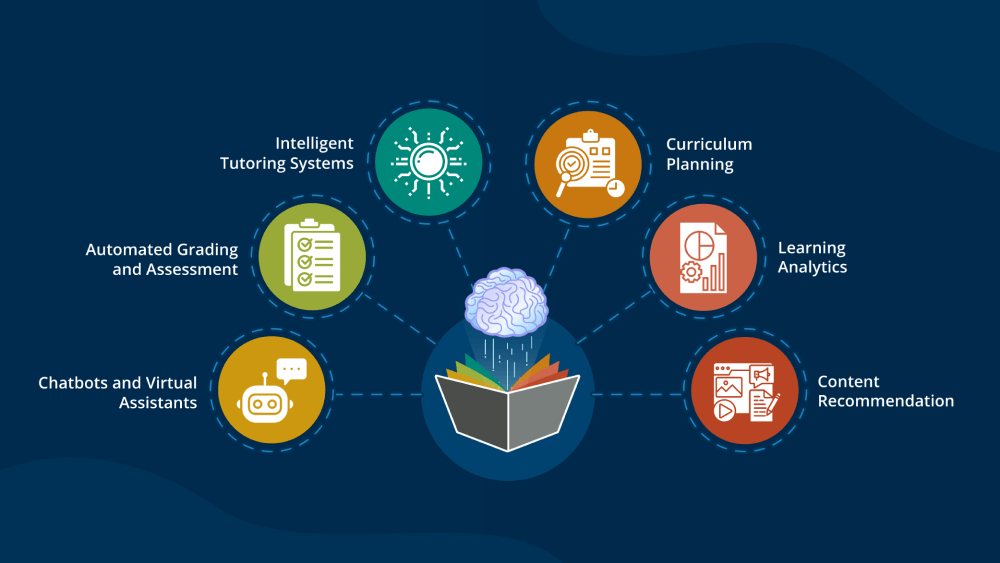







 Admission Open
 Admission Closed
 Admission Open

 ROI Calculator