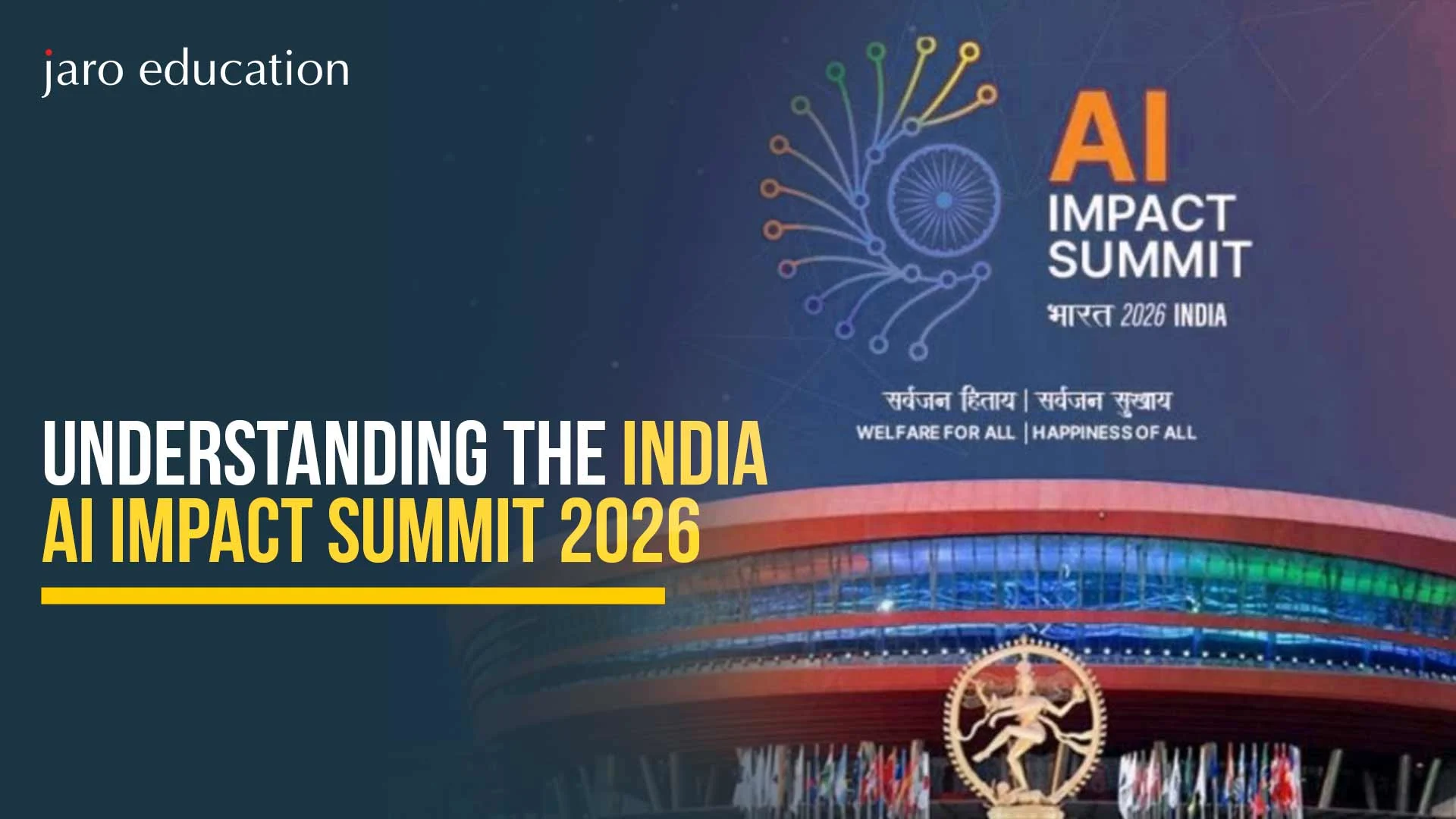
The India AI Impact Summit 2026 just wrapped up in New Delhi, and it’s being called artificial intelligence’s defining diplomatic moment. Picture this: tech titans like Sundar Pichai, Sam Altman sharing the stage with government
The India AI Impact Summit 2026 just wrapped up in New Delhi, and it’s being called artificial intelligence’s defining diplomatic moment. Picture this: tech titans like Sundar Pichai, Sam Altman sharing the stage with government leaders from 85 nations and all converging at Bharat Mandapam to hash out how AI will reshape our world. This wasn’t your typical tech conference; it was where policy met innovation at breakneck speed. Running from February 17-21, 2026, the summit brought together an unprecedented mix of stakeholders. We’re talking ministers, regulators, AI researchers, startup founders, and civil society leaders all under one roof. The agenda? Nothing less than establishing global frameworks for responsible AI development while ensuring technology serves humanity’s broader interests.
What made this gathering particularly significant was its timing. As nations race to establish AI dominance, India positioned itself as a bridge-builder between developed and developing economies. The discussions weren’t abstract philosophy; they tackled real challenges like algorithmic bias, workforce displacement, and digital sovereignty. Prime Minister Modi’s presence signaled India’s serious intent to shape the global AI narrative rather than simply respond to it. The conversations here will ripple outward for years, influencing everything from how countries regulate large language models to how international AI governance takes shape.
Key Themes and Topics at the Summit
The India AI Impact Summit centred its discussions on four core themes addressing AI’s role in society. AI for All focused on equitable access, ensuring technology bridges divides rather than widening them. Conversations ranged from multilingual AI models to affordable deployment in rural regions.
AI in Education and Skill Development
A major emphasis was on integrating AI into learning at every level. From the 2026–27 academic year, AI and computational thinking will be introduced nationwide from Grade 3 onwards under the National Education Policy 2020. Multilingual textbooks, digital resources, and teacher training through platforms such as NCERT’s NISHTHA aim to prepare educators and students alike. Experts believe this shift will enable personalized learning, multilingual instruction, and real-time assessment across classrooms.
AI for Economy
This track addressed job transformation, productivity gains, and global competitiveness. Discussions and the research presented at the summit highlighted AI’s potential to add trillions to global GDP while reshaping traditional employment structures.
AI for Safety and Governance
Delegates examined how to regulate AI without slowing innovation. Key debates covered ethical deployment, data sovereignty, and international cooperation on standards.
AI for Good
The summit also showcased real-world impacts across climate modelling, disease prediction, and disaster response. The central question remained consistent: how can AI’s transformative power serve society responsibly and inclusively?
Finally, AI for Good showcased moonshot applications: climate modeling, disease prediction, and disaster response. This wasn’t theoretical naval-gazing; speakers shared concrete examples of AI already improving healthcare outcomes and accelerating scientific discovery in developing nations. Each theme connected back to one central question: How do we harness AI’s transformative power while ensuring it serves humanity’s broader interests?
Bharat Mandapam isn’t just another convention centre – it’s a statement. Built for India’s G20 presidency and now hosting the AI Impact Summit, this architectural marvel in Delhi perfectly embodies India’s ambitions: blending tradition with cutting-edge innovation.
The venue’s design deliberately evokes India’s cultural heritage while providing state-of-the-art facilities for global tech diplomacy. Multiple pavilions allowed parallel tracks to run simultaneously throughout the week, accommodating hundreds of nations and thousands of delegates who descended on the capital.
What made Bharat Mandapam particularly strategic? Its proximity to government institutions enabled seamless high-level engagements. Cabinet ministers could shuttle between formal summit sessions and bilateral meetings without logistical headaches. The venue’s modular spaces transformed from plenary halls to intimate roundtables within hours, supporting everything from product demonstrations to policy negotiations.
The venue selection itself sent a message: India positioning itself as the natural bridge between Silicon Valley’s innovation and the developing world’s needs. Setting up participants for what would come next, a genuinely global conversation.
*Financial Express
India’s “MANAV” Vision for Ethical AI
At the summit, Prime Minister Narendra Modi introduced the MANAV Vision, a five-pillar philosophy guiding India’s AI journey:
M – Moral & Ethical Systems
A – Accountable Governance
N – National Sovereignty (data protection)
A – Accessibility & Inclusivity
V – Validity & Trustworthiness
*ANI NEWS
The emphasis: AI must amplify human capability, not replace human dignity.
This framework aligns with India’s broader digital public infrastructure strategy and reinforces its commitment to responsible AI innovation on the global stage.
The India AI Summit 2026 drew an unprecedented international presence, transforming New Delhi into a global AI crossroads. Over 250 delegates from more than 50 countries participated across the week-long event, representing governments, leading tech firms, academic institutions, and civil society organizations.
What made this gathering distinctive wasn’t just the headcount; it was the deliberate inclusion of voices typically sidelined in AI conversations. The summit featured representatives from the Global South, including nations from Africa, Southeast Asia, and Latin America. Tech leadership arrived in force: executives from Google, Microsoft, OpenAI, and India’s homegrown AI champions shared stages with policymakers. However, real diversity emerged in breakout sessions where agricultural experts from Kenya discussed AI-powered crop monitoring alongside officials from Nordic countries presenting digital governance frameworks.
This wasn’t about checking diversity boxes—it was strategic coalition-building around shared challenges in an AI-powered future.
Conventional Wisdom vs. Reality: The AI Summit's True Impact
Here’s where things get interesting. Most coverage of the New Delhi AI Summit focused on the celebrity tech CEOs and diplomatic handshakes—easy headlines, shallow analysis. But dig deeper, and you’ll find the summit’s real value proposition was something entirely different.
The conventional wisdom: Big summits equal big announcements. Flash, PR wins, photo ops.
The reality: This event was designed for infrastructure building, not theatre. While Google announced partnerships to bring AI to India’s public services, the more substantive work happened in closed-door sessions—GPAI working groups hammering out technical standards, bilateral negotiations on data-sharing frameworks, and working-level diplomacy that never makes front pages.
Consider what didn’t happen: no grand unveiling of a miraculous AI solution to solve all of India’s challenges. Instead, participants focused on unglamorous but critical questions, regulatory harmonization, talent pipeline development, and ethical frameworks that could actually be implemented. One notable quote from the summit emphasized that “AI revolution is here to stay, not as hype, but as infrastructure reality requiring long-term commitment.
The summit’s success metric wasn’t tweets generated but rather working groups formed and follow-up commitments scheduled. That’s how you move from AI tourism to genuine AI integration.
The Role of the India AI Mission
Behind the summit’s convening power stood theIndia AI Mission, a government initiative that’s reshaping how India approaches artificial intelligence development. This isn’t just another bureaucratic framework—it’s a $1.25 billion commitment to building AI infrastructure that works for a billion-plus population.
The Mission’s strategy reveals sophisticated thinking about global positioning. Rather than competing head-to-head with Silicon Valley’s computing power, India is focusing on what makes sense for its context: developing AI models trained on Indian languages, datasets, and use cases. The summit showcased this approach brilliantly, with demonstrations of AI tools handling regional dialects that Western models struggle to parse.
What’s particularly clever is how the Mission structured the summit as a two-way exchange. India wasn’t just inviting tech giants to lecture about AI—it was showcasing domestic capabilities and datasets that could enhance global models. Think about it: where else can companies access structured data from 22 official languages and hundreds of regional variations? That’s the kind of unique value proposition that turns diplomatic events into genuine business opportunities.
The infrastructure investments announced during the summit—specialized compute centers, annotation facilities, and AI research hubs—signal that India’s betting big on becoming an AI development partner, not just a deployment market.
Example Scenarios: How the Summit Could Impact AI Development
Let’s get practical. What do the summit’s agreements actually mean for real-world AI development? Consider three concrete pathways already emerging from commitments made in New Delhi.
Agricultural transformation- A collaboration between Indian agritech startups and US research institutions could deploy AI-powered crop monitoring systems across 50,000 farms by 2027. The technical groundwork? Laid during bilateral meetings at Bharat Mandapam, where data-sharing protocols were hammered out between NITI Aayog and USAID representatives.
Healthcare democratization- India’s pharmaceutical research centers gained access to Western clinical trial data platforms through summit agreements. One immediate outcome: accelerated development of AI diagnostic tools trained on diverse patient populations—something that addresses the bias problems plaguing current medical AI systems.
Talent pipeline acceleration- The summit’s Human Capital AI initiative isn’t just bureaucratic fluff. It’s connecting Indian engineering graduates directly with international AI labs through structured exchange programs. Result? A projected 15,000 skilled researchers flow between economies annually, each bringing cross-cultural perspectives that make AI systems more robust. These scenarios share something crucial: they’re already moving beyond slides and into implementation phases. That’s the practical test of whether New Delhi will matter five years from now.
Limitations and Considerations – No summit produces perfect solutions, and the India AI Impact Summit 2026 operated within real-world constraints that temper optimistic projections.
Implementation timelines remain uncertain- While declarations and partnerships generated headlines, the UN’s coverage of side events emphasized that translating commitments into deployed systems typically spans years, not months. Infrastructure bottlenecks—from compute capacity to talent availability—can delay even well-funded initiatives.
Equity challenges persist despite rhetoric- The summit’s focus on AI for Economic Growth concentrated heavily on urban centers and established tech hubs. Rural connectivity gaps and language barriers weren’t fully addressed in most partnership announcements. What works in Delhi or Bangalore may not translate to districts with intermittent electricity or limited digital literacy.
Regulatory frameworks lag behind ambition- India’s AI governance structure remains under development, creating uncertainty for companies planning long-term investments. Wikipedia’s summit overview notes that harmonizing standards across participating nations—each with distinct data sovereignty laws—introduces complexity that summits can’t resolve through dialogue alone.
The path forward requires acknowledging these constraints while building incrementally toward the summit’s broader vision.
Key Takeaways
What is the India AI Impact Summit? Fundamentally, it’s a blueprint for bridging ambition with accountability in artificial intelligence. The five-day gathering demonstrated that India’s AI journey isn’t about mimicking Silicon Valley but rather forging a uniquely inclusive path where technological advancement serves human dignity.
The summit’s most significant achievement wasn’t any single announcement but the deliberate architecture of collaboration it established. By convening 1,500+ delegates from 140+ nations, India positioned itself as the nexus connecting developed economies’ resources with developing nations’ untapped potential. The partnerships forged—from Google’s AI Compute Centre, through bilateral agreements with the US- create tangible infrastructure rather than aspirational rhetoric.
However, the true measure of success lies ahead. The Delhi Declaration’s commitments mean nothing without persistent execution. India must now demonstrate that AI democratization isn’t a diplomatic talking point but a measurable reality—where rural farmers access crop intelligence as seamlessly as urban developers deploy machine learning models.
For stakeholders navigating this landscape: monitor implementation timelines, demand transparency in algorithmic decision-making, and hold institutions accountable to equity metrics. The question isn’t whether India can lead AI innovation, but whether it can sustain the political will to make that innovation genuinely transformative.
Frequently Asked Questions
The summit aimed to establish India as a global AI hub while creating frameworks for responsible AI development. According to theofficial summit documentation, the event brought together 45+ countries to shape international AI governance through multilateral dialogue and concrete policy agreements.
Unlike standard industry gatherings, this summit emphasized governmental coordination alongside private sector participation. The Research Symposium component featured academic institutions presenting peer-reviewed findings on AI ethics and implementation, bridging the gap between theoretical frameworks and practical policy-making.
TheDelhi Declaration established binding commitments with six-month review cycles. Implementation committees will track progress on workforce development targets, cross-border data protocols, and safety standard adoption. However, enforcement mechanisms remain voluntary, relying primarily on diplomatic pressure and reputational incentives.
Absolutely. The summit’s standardization efforts potentially reduce compliance costs by creating unified frameworks rather than fragmented regional requirements. India’s domestic AI initiatives include startup accelerators and technology transfer programs specifically designed to lower entry barriers for emerging companies.
Dr. Sanjay Kulkarni
Data & AI Transformation Leader
Dr. Sanjay Kulkarni is a Data & AI Transformation Leader with over 25 years of industry experience. He helps organizations adopt data-driven and responsible AI practices through strategic guidance and education. With experience across startups and global enterprises, he bridges the gap between theory and real-world application. His work empowers teams to innovate and thrive in AI-driven environments.

 February 20, 2026
 9 min read




 ChatGPT
 Perplexity
 Claude
 Grok
Grok











 ROI Calculator