Role of CTO in a Startup: Hands-On and Fast-Moving
Chief Technology Officer vs Chief Information Technology Officer
Key Insights
A Chief Technology Officer (CTO) is responsible for setting technology strategy, leading engineering teams, managing budgets, protecting systems, and aligning technology decisions with business goals.
The role of CTO in a startup is often hands-on in the early stages, but it gradually shifts toward strategic planning, delegation, and team leadership as the company grows.
A CTO focuses on product technology and customer-facing innovation, while a Chief Information Technology Officer (CIO) typically manages internal IT systems, data, and business operations.
Essential CTO skills include technical expertise, business thinking, leadership, communication, and decision-making under uncertainty. Practical experience, mentoring, networking, and executive education can help professionals prepare for leadership roles.
In this blog, you'll learn what a CTO does, the difference between CTO and CIO roles, the scope of a fractional CTO, the qualifications and skills required, and the step-by-step career path to becoming a Chief Technology Officer.
Ask a room full of engineers where they want to be in ten years, and plenty will say "CTO". It's easy to see why. The chief technology officer decides which technology a company bets on, shapes the product, and sits right next to the CEO when big calls are made. But the road from writing code to leading technology at the top is rarely a straight line, and nobody hands you a map.
This guide is that map. We'll cover what a chief technology officer actually does, the role of CTO in a startup versus a large company, how it differs from a chief information technology officer, what a fractional chief technology officer is, the CTO skills worth building, and a clear step-by-step path to get there.
A chief technology officer is the senior executive responsible for a company’s technology vision and strategy. In simple words, the CTO decides what technology the company builds, buys or avoids, and makes sure all of it supports the business goals.
Most CTOs report to the CEO and sit on theleadership team. What they do all day depends heavily on the company. In a ten-person startup, a CTO might be writing code in the morning and talking to investors in the afternoon. In a large enterprise, the same title often means managing big budgets, vendors, security risk and several engineering groups.
If you strip away the fancy title, the role of CTO comes down to a handful of responsibilities:
Setting the technology strategy. Choosing the roadmap, the architecture, and the big technical bets, and tying them to what the business wants to achieve.
Leading engineering teams. Hiring good people, coaching them, and building a culture where they can do their best work.
Managing budget and vendors. Deciding what to build in-house, what to buy, and how to get value from every rupee spent on technology.
Protecting the business. Keeping systems secure, reliable, and compliant as the company grows.
Watching what’s next. Tracking trends like AI, cloud, and automation, and deciding which ones are worth acting on and which are just noise.
Translating tech into plain business language. Explaining trade-offs to the board, investors, customers, and the rest of the leadership team.
The last point matters more than most people expect. A brilliant technologist who can’t explain a decision in simple words will struggle in this seat.
Role of CTO in a Startup: Hands-On and Fast-Moving
The role of CTO in a startup looks quite different from the corporate version. Early on, the CTO is often a co-founder who does a bit of everything:
Choosing the tech stack and building the first version of the product
Hiring the first engineers and setting basicengineering habits
Making quick decisions with limited time, money, and information
Helping the CEO explain the technology to investors and early customers
As the company grows, something has to change. The CTO who used to write most of the code must slowly step back, hire senior engineers, delegate, and focus on strategy. This is where many startup CTOs struggle, because letting go of hands-on work can feel uncomfortable. The ones who manage the shift well usually grow into excellent leaders.
Chief Technology Officer vs Chief Information Technology Officer
You’ll often see the terms chief technology officer and chief information technology officer used side by side, sometimes interchangeably. In practice, the second usually refers to what most companies call the chief information officer (CIO). The two roles overlap but have different centres of gravity.
Aspect
Chief Technology Officer
Chief Information Technology Officer (CIO)
Main focus
Technology that powers products and customers
Technology that runs the business internally
Typical work
Product architecture, R&D, innovation
IT systems, data, employee tools, internal security
Looks outward to
Customers, market, competitors
Employees, operations, processes
In smaller companies, one person often covers both. In larger organizations, they’re separate roles that work closely together. Titles vary from company to company, so always read the job description rather than relying on the name alone.
Fractional Chief Technology Officer: A Flexible Route
A fractional chief technology officer is an experienced technology leader who works with a company part-time, on a retainer or contract, instead of as a full-time employee. Many startups and small businesses can’t afford or don’t yet need a full-time CTO, but they still need senior guidance on architecture, hiring, security, and roadmap decisions. That’s the gap a fractional chief technology officer fills.
For your career, this can be an interesting path. You get exposure to different industries, different problems, and different teams, often within the same year. It can also be a stepping stone to a full-time CTO job, or a long-term way to build an independent practice.
The catch? You need real credibility. Companies hire a fractional chief technology officer for judgment and experience, so you’ll need a solid track record, the ability to influence people without formal authority, and clear scoping of what you will and won’t do.
CTO Skills You Need to Build
Strong CTO skills fall into four buckets. Being excellent at one isn’t enough.
Technical depth. You don’t need to be the best coder in the room, but you must understand architecture, cloud infrastructure, data, security, and modern engineering practices well enough to judge other people’s work and spot bad ideas early. Knowing where AI and machine learningfit is now part of the job.
Business thinking. Budgeting, return on investment, product strategy, and understanding how the company makes money. A CTO who can’t link a technical decision to a business outcome will lose arguments in the boardroom.
Leadership and people skills. Hiring, coaching, handling conflict, building a healthy engineering culture, and leading teams through change. Most of a CTO’s impact comes through other people.
Communication and influence. Presenting to non-technical audiences, negotiating with vendors, aligning with the CEO and CFO, and telling a clear story about where the technology is headed.
A useful side skill is decision-making under uncertainty: build or buy, move fast or fix the tech debt, adopt the new tool, or wait. Good CTOs make these calls calmly, explain their reasoning, and adjust when they learn something new.
Education and Qualifications for a Chief Technology Officer
There’s no single mandatory degree for becoming a chief technology officer, but most people follow a similar pattern:
A bachelor’s degree in computer science, engineering, IT, or a related field
Years of hands-on experience in software, systems, or product development
Optional postgraduate study, such as an MBA or an executive programme focused on technology leadership
Certifications in areas like cloud, security, or architecture, which help but rarely decide the outcome
In startups, your track record and what you’ve built often count for more than formal qualifications. In large enterprises, formal education and structured leadership training tend to carry more weight.
How to Become a Chief Technology Officer: Step by Step
There’s no fixed timeline, and every journey looks a little different. Still, most chief technology officers follow a path like this:
Build a strong technical foundation. Spend your early years as a hands-on engineer. Work across different parts of the stack, own real systems, and learn from production failures.
Step into technical leadership. Become a tech lead or engineering manager. This is where you start guiding people and decisions, not just code.
Take on bigger scope. Move toward senior engineering manager, director, head of engineering, or VP-level roles, where you handle multiple teams, budgets, and delivery commitments.
Learn the business side. Spend time with product, finance, and sales. Understand how your company earns money and where technology creates or protects value.
Develop executive presence. Practice presenting to senior leaders, writing clear strategy documents, and defending your decisions with data and calm confidence.
Grow your network and visibility. Find mentors, join tech communities, speak at events, write about your work. Many CTO roles come through trust and reputation.
Upskill formally when it helps. An executive programme can fill gaps in strategy, finance, and leadership, especially if your background is mostly technical.
Pick your route. You can climb the corporate ladder, join or found a startup as its technology leader, or build a fractional chief technology officer practice.
Many CTOs in larger organizations reach the role after a decade or more of experience, while startup founders can reach it much sooner. Neither route is better; they simply suit different goals and risk appetites.
Ready to Step Into the Chief Technology Officer Role?
If you already have years of experience and want a structured way to move from technical expertise to strategic leadership, theIIT Bombay Chief Technology Officer Programme, offered through Jaro Education, is worth a look. It’s an 8-month hybrid programme with live weekend sessions (Saturdays, 6 to 9 PM) and an optional campus immersion, covering technology strategy, business acumen, AI and generative AI,digital transformation, and people and change leadership. It is aimed at senior professionals with roughly 8 to 20 years of experience, and the programme page lists a fee of ₹3,00,000 + GST and a Certificate of Completion from Educational Outreach, IIT Bombay. The next batch is listed to begin on October 24, 2026, so check eligibility, dates, and fees on the programme page before you apply.
Conclusion
Becoming a chief technology officer is less about one big jump and more about steady growth across four areas: technical depth, business sense, leadership, and communication. Master your craft first, then take on bigger teams, learn how your company makes money, and practice explaining technology in simple words. Whether you aim for a corporate CTO seat, a startup co-founder role, or a fractional chief technology officer practice, the fundamentals stay the same. Understand the role of CTO, keep building your CTO skills, and say yes to opportunities that stretch you. The title follows the impact you create.
Frequently Asked Questions
There’s no fixed number. In larger companies, CTOs often have around 10 to 20 years of experience, including several years in leadership roles. In startups, founders can take on the CTO title much earlier if they can build the product and lead the team.
You need strong technical understanding, but you don’t have to code daily. In early-stage startups, CTOs usually code a lot. As the company grows, the role shifts to architecture, strategy, and leadership, though you should still be able to read and review technical work.
CTO focuses on the technology behind products and customer-facing innovation, while a CIO focuses on internal IT systems, data, and operations. In small companies, one person may handle both.
A fractional chief technology officer is an experienced tech leader who works part-time with one or more companies. It can be a rewarding move if you have deep experience and enjoy variety, but it requires a strong reputation and the ability to guide teams without full-time authority.
Manya Tohani
Personal Growth Mentor
Manya Tohani is a Personal Growth Mentor and content strategist, helping individuals build strong personal brands and accelerate career growth. With 8M+ impressions and experience mentoring students, she empowers others through actionable guidance, resilience, and real-world insights.

 October 13, 2026
 8 min read




 Key Insights
 ChatGPT
 Perplexity
 Claude
 Grok
Grok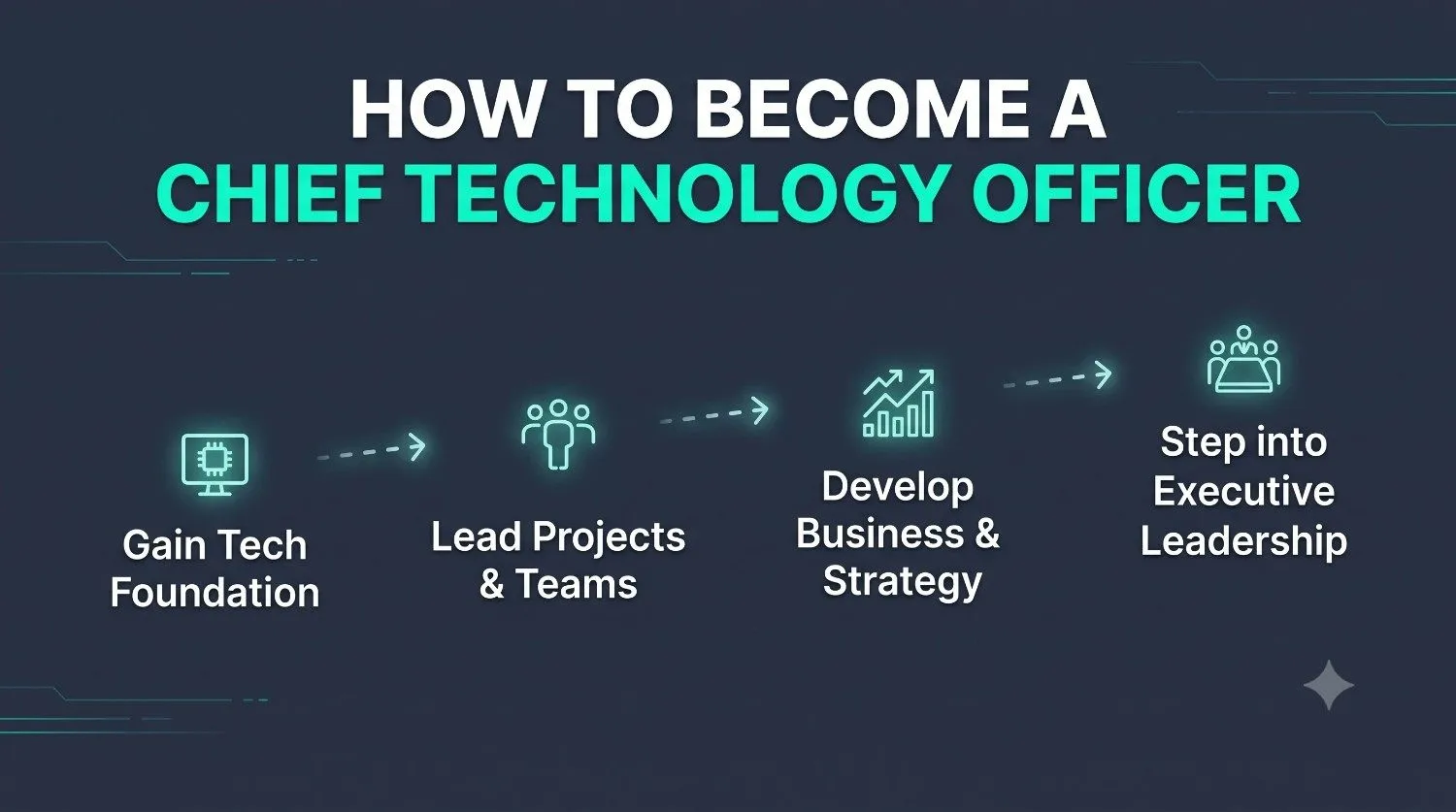










 ROI Calculator



