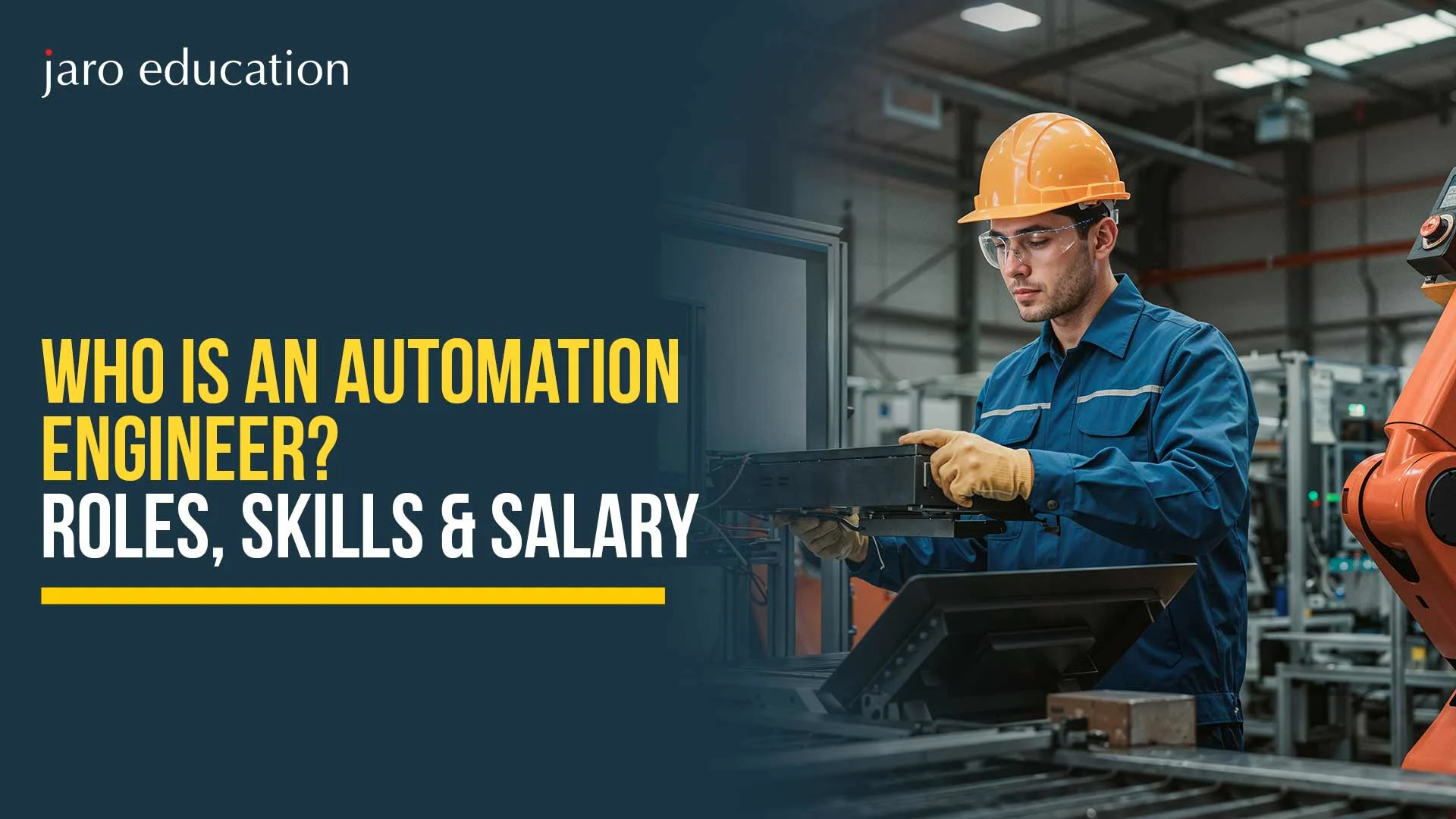
Who is an Automation Engineer? Roles, Skills & Salary
J
By Shubham Lal
March 30, 20268 min read
Published on March 30, 2026
SHARE THIS ARTICLE
Table Of Content
Who is an Automation Engineer?
Key Roles and Responsibilities of an Automation Engineer
Essential Skills for Automation Engineers
Automation Engineer Salary: What to Expect
In India, manufacturing facilities that once required large teams now function with minimal staff, thanks to intelligent machinery. Banking apps can approve loans within minutes rather than weeks. Self-driving cars adeptly navigate complex traffic scenarios. At the heart of these innovations is a professional transforming modern industry: the automation engineer.
Automation engineering is a swiftly advancing field where professionals design, program, and maintain systems that allow machines to perform tasks with minimal human intervention. These engineers connect mechanical systems with advanced software, creating solutions that boost efficiency, minimize errors, and enable human workers to focus on complex problem-solving.
The industry has expanded rapidly as companies across various sectors—from healthcare to logistics—recognize that automation is essential. According to recent data, automation engineers earn competitive salaries, reflecting the high demand for their specialized skills. Whether programming robotic assembly lines, developing test automation frameworks for software, or integrating artificial intelligence into manufacturing processes, this career offers significant variety and growth potential.
If you're considering this path, you'll join a profession that combines technical expertise with practical impact, where your work directly translates into measurable results for organizations globally.
An automation engineer is a specialized professional who designs, programs, and maintains automated systems that replace manual processes across industries. They are the architects behind the invisible hands powering modern factories, software testing suites, and smart building systems. They transform repetitive tasks into self-running operations, merging skills in electrical engineering, computer science, and process optimization.
These professionals work at the intersection of hardware and software, creating systems capable of making autonomous decisions. Whether programming robotic arms on assembly lines, designing automated quality control systems, or building software deployment pipelines, automation engineers ensure operations run smoothly, efficiently, and accurately.
The role has evolved significantly beyond traditional manufacturing. Today’s automation engineers might configure cloud infrastructure that scales automatically with demand, develop test frameworks that verify code quality instantly, or design smart home systems that adjust temperature and lighting based on occupancy patterns. The common thread? They eliminate manual effort while improving consistency and speed.
The financial rewards match the technical demands. In India, the average automation engineer salary is approximately ₹6,00,000 annually, though this varies significantly based on experience, industry, and location. Entry-level positions start around ₹4,00,000, while senior professionals command over ₹8,00,000. For those considering career transitions, similar technical compensation patterns exist across related engineering fields.
Key Roles and Responsibilities of an Automation Engineer
Understanding what is automation engineering begins with recognizing the diverse responsibilities these professionals handle daily. An automation engineer’s role spans the entire lifecycle of automated systems—from initial design and planning through implementation, testing, and ongoing maintenance.
At the core, automation engineers design control systems that manage manufacturing processes, robotic operations, and industrial machinery. They program PLCs (Programmable Logic Controllers) and develop SCADA (Supervisory Control and Data Acquisition) systems that monitor and control equipment across factory floors. Think of them as architects who blueprint how machines communicate and coordinate with each other.
Beyond design work, these professionals troubleshoot system failures, optimize existing processes for better efficiency, and ensure safety compliance across all automated operations. They collaborate with cross-functional teams—from mechanical engineers to IT specialists—to integrate automation solutions that reduce production costs while improving output quality.
Documentation represents another critical responsibility. Automation engineers create detailed technical specifications, user manuals, and training materials that help operators understand and maintain complex systems. They also stay current with emerging technologies, evaluating new automation tools and methodologies that could benefit their organizations. For those interested in the financial rewards of specialized engineering, automation offers compelling opportunities.
Essential Skills for Automation Engineers
Success in automation engineer jobs requires a unique blend of technical prowess and problem-solving abilities. The most effective professionals master both hard and soft skills that enable them to design, implement, and optimize automated systems across diverse industries.
Technical Skills Form the Foundation
At the core, automation engineers need strong programming capabilities. Languages like Python, C++, and Java dominate the field, with Python particularly valuable for its versatility in scripting and data analysis. Understanding PLCs (Programmable Logic Controllers) and SCADA systems is equally crucial, as these technologies power most industrial automation processes.
Beyond coding, proficiency in CAD software helps engineers design system layouts, while knowledge of electrical circuits and control theory ensures they can troubleshoot hardware issues effectively. Career paths in engineering increasingly emphasize cross-functional technical skills.
Soft Skills That Set You Apart
What typically separates good automation engineers from exceptional ones? Strong analytical thinkingpaired with attention to detail. You’ll spend considerable time debugging complex systems, requiring patience and systematic problem-solving approaches. Communication skills matter too—translating technical concepts for non-technical stakeholders becomes a daily necessity as you collaborate across departments.
Automation Engineer Salary: What to Expect
When considering a career in automation engineering, compensation is naturally a key factor. The good news? Automation engineers command impressive salaries that reflect the specialized nature of their work and the value they bring to organizations.
In India, the average automation engineer salary is approximately ₹6,00,000 per year, though this figure varies significantly based on several factors. Entry-level professionals typically start around ₹4,00,000 annually, while experienced engineers with 10+ years in the field can earn well over ₹8,00,000.
The salary trajectory is particularly promising for those who continuously update their skills. Professionals who specialize in emerging areas like AI-driven automation or cloud-based systems typically command premium rates. What’s especially encouraging about this field is that the demand continues to outpace supply, creating leverage for professionals to negotiate competitive packages that reflect their expertise and impact on organizational efficiency.
Not all automation engineers earn the same salary—compensation varies significantly based on several critical factors. Understanding these variables helps you make strategic career decisions and maximize your earning potential.
Experience level is the most significant determinant. Entry-level automation engineers typically start around ₹4,00,000 annually, while senior professionals with 10+ years of experience can command ₹8,00,000 or more. Each year of experience typically adds meaningful value to your compensation package.
Geographic location dramatically impacts salaries. Automation engineers in metropolitan areas often earn more than national averages, though higher living costs partially offset this advantage. Remote positions are increasingly offering location-adjusted compensation that balances these factors.
Industry sector matters considerably. Manufacturing automation roles often pay differently than positions in software development or aerospace. The automation engineer skills you develop—particularly specialized expertise in AI, machine learning, or specific industrial platforms—can justify premium compensation. Engineers who master emerging technologies position themselves for higher earnings.
Company size and type also influence pay. Large companies typically offer structured salary bands with comprehensive benefits, while startups might provide equity compensation alongside base salary.
The Future of Automation Engineering Jobs
The landscape of automation engineer roles is evolving rapidly, driven by technological breakthroughs and shifting industry needs. As we move deeper into 2026, the demand for skilled automation professionals shows no signs of slowing—in fact, it’s accelerating across multiple sectors.
Emerging opportunities are reshaping traditional career paths. Manufacturing plants are transitioning to smart factories where automation engineers orchestrate entire production ecosystems. Healthcare facilities now employ automation specialists to manage robotic surgery systems and automated diagnostic equipment. Even retail giants are hiring automation experts to optimize warehouse robotics and supply chain operations.
The integration of artificial intelligence with automation systems is creating entirely new specializations. Engineers who can bridge the gap between AI development and traditional automation infrastructure are particularly sought after. Similarly, professionals skilled in cloud-based automation platforms are commanding premium positions as companies migrate their systems to distributed architectures.
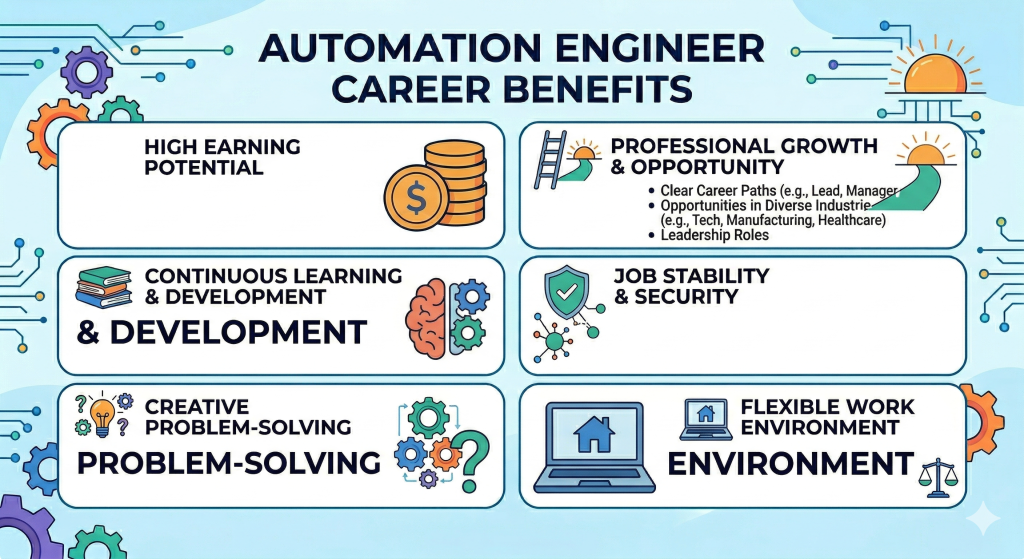
Job security in this field remains remarkably strong. Organizations recognize that investing in automation talent delivers measurable ROI through improved efficiency and reduced operational costs. As industries worldwide embrace digital transformation, automation engineers will remain at the forefront of innovation, solving complex challenges that shape how businesses operate in an increasingly automated world.
To better understand how automation engineers create real-world impact, let’s explore practical scenarios across different industries. These examples illustrate the diverse applications of automation engineering skills and how professionals tackle complex challenges.
Manufacturing Production Line Optimization
An industrial automation engineer working in automotive manufacturing might redesign a vehicle assembly process that’s experiencing bottlenecks. The engineer analyzes the existing workflow, identifies inefficient manual steps, and implements robotic arms coordinated through PLC systems. This transformation typically increases production speed by 40-50% while reducing human error rates. The engineer programs vision systems to inspect part quality in real-time, ensuring defects are caught immediately rather than at the end of the line.
Healthcare Laboratory Automation
In pharmaceutical labs, automation engineers develop systems that handle thousands of sample tests daily. They design automated pipetting systems, integrate barcode tracking for sample identification, and create data management workflows that connect laboratory equipment to hospital information systems. This automation reduces processing time from hours to minutes while maintaining strict compliance with regulatory standards.
Smart Building Management
Automation engineers create integrated systems that control lighting, HVAC, security, and energy management in commercial buildings. They program sensors that adjust temperature based on occupancy patterns and external weather conditions, potentially reducing energy consumption by 30%. These systems communicate through IoT networks, similar to technologies explored in DevOps infrastructure.
Quality Assurance Testing
In software companies, automation engineers build comprehensive testing frameworks that validate application functionality before release. They design test scripts that simulate thousands of user interactions, catching bugs that manual testing processes might miss. Automation engineers in tech hubs specializing in QA automation command premium compensation, reflecting the critical nature of this work.
Key Takeaways
As you explore the world of automation engineering, understanding the core elements of this dynamic profession helps you make informed career decisions. Automation engineers play a crucial role in designing, implementing, and maintaining systems that optimize manufacturing, industrial processes, and software development workflows.
The automation engineer salary remains highly competitive, with national averages ranging from ₹6,00,000 to ₹8,00,000 annually, reflecting the specialized technical expertise required. What sets this career apart is the blend of programming skills, system design knowledge, and problem-solving abilities needed to succeed.
Automation engineer jobs span multiple industries—from manufacturing plants implementing robotics to software teams automating testing pipelines. The growing emphasis on automation and robotics engineering creates expanding opportunities as businesses seek efficiency gains and competitive advantages.
Success in what is automation engineering requires continuous learning and adaptability. As technologies evolve and industries transform, professionals who invest in developing both technical and soft skills position themselves for long-term career growth. Whether you’re just starting or looking to specialize further, the automation engineering field offers rewarding challenges and meaningful impact across diverse sectors.
Shubham Lal
Lead Software Developer
Shubham Lal joined Microsoft in 2017 and brings 8 years of experience across Windows, Office 365, and Teams. He has mentored 5,000+ students, supported 15+ ed-techs, delivered 60+ keynotes including TEDx, and founded AI Linc, transforming learning in colleges and companies.

 March 30, 2026
 8 min read




 ChatGPT
 Perplexity
 Claude
 Grok
Grok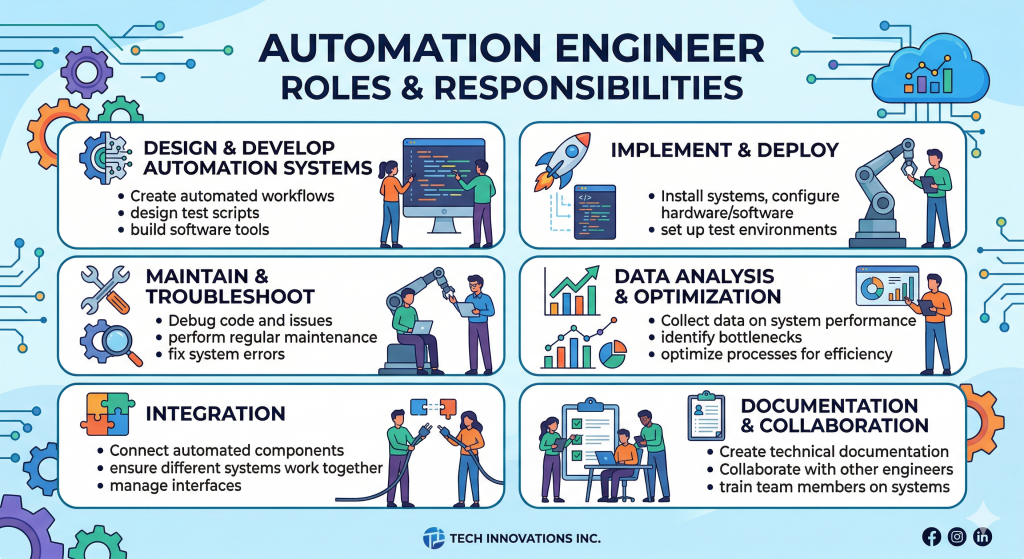




 Admission Closed

 Admission Closed
 Admission Open
 ROI Calculator