Credit analyst jobs involve evaluating the financial health and creditworthiness of borrowers by reviewing financial statements, cash flows, credit history, and business conditions.
Key credit analyst duties include financial analysis, credit assessment, industry research, risk identification, report preparation, and monitoring existing credit.
Credit analysts can work across commercial credit, corporate credit, credit risk, credit ratings, and retail credit, creating career opportunities across banking, lending, investment, and financial services.
Strong financial analysis, financial modelling, risk assessment, analytical thinking, attention to detail, communication, and time management skills can help professionals build a career in credit analysis.
In this blog, you'll learn about credit analyst jobs, the role and duties of a credit analyst, credit analyst salary, required skills, career paths, the credit analyst course, and the Certified Credit Research Analyst certification.
When a bank considers giving a business a large loan, it cannot simply look at the company’s revenue and say yes. Someone needs to examine its financial statements, understand its ability to repay, assess industry conditions, and identify potential risks. This is where a credit analyst plays an important role.
With the growth of banking, financial services, lending, credit ratings, and investment businesses, credit analyst jobs have become an attractive career option for finance professionals. The role combines financial analysis, research, risk assessment, and decision-making, making it suitable for people who enjoy working with numbers and understanding businesses.
This blog explores credit analyst roles, credit analyst duties, salary, required skills, qualifications, certifications, and career opportunities in India.
A credit analyst evaluates the financial health and creditworthiness of individuals, businesses, or other borrowers. Their analysis helps lenders and financial institutions decide whether credit should be approved and under what terms.
A credit analyst may examine financial statements, credit history, cash flows, debt levels, business performance, industry conditions, and other relevant information before making a recommendation.
Credit analysts commonly work with banks, financial institutions, credit rating agencies, investment firms, and other organizations involved in lending or credit-related activities. (Indeed)
The role requires more than just understanding numbers. A good analyst needs to connect financial information with the broader business situation and identify risks that may affect repayment.
The exact responsibilities can differ depending on the employer and type of credit being assessed. However, several credit analyst duties are common across the industry.
1. Analyzing Financial Statements
One of the primary responsibilities is reviewing balance sheets, income statements, and cash flow statements. Analysts use financial ratios and other measures to understand profitability, liquidity, solvency, and debt levels.
2. Evaluating Creditworthiness
A credit analyst assesses whether a borrower is financially capable of repaying a loan or credit facility. This can involve reviewing credit reports, payment history, income, assets, liabilities, and collateral.
3. Conducting Industry Research
Financial performance does not exist in isolation. Analysts may study the borrower’s industry, market conditions, economic trends, competition, and regulatory changes to identify factors that could affect repayment capacity.
4. Identifying Credit Risks
Analysts look for warning signs that could increase the possibility of default. These may include deteriorating cash flow, increasing debt, declining profitability, or adverse changes in the borrower’s business environment.
5. Preparing Credit Reports
Credit analysts prepare reports that summarize their findings and recommendations. These reports help lenders, managers, and other decision-makers understand the financial position and risks associated with a borrower.
6. Monitoring Existing Credit
The job may continue after a loan has been approved. Analysts can monitor financial performance, repayment behavior, and compliance with credit terms to identify emerging concerns.
Credit analyst duty
What it involves
Financial analysis
Reviewing financial statements and ratios
Credit assessment
Evaluating repayment capacity
Risk analysis
Identifying potential financial and business risks
Industry research
Understanding market and sector conditions
Reporting
Preparing analysis and recommendations
Credit monitoring
Tracking borrower performance
Types of Credit Analyst Jobs in India
The term credit analyst covers several career paths. Your responsibilities can change depending on the type of organization you join.
Commercial Credit Analyst
Commercial credit analysts evaluate businesses seeking loans or credit facilities. They may examine company financials, cash flows, business models, management quality, and industry risks.
Corporate Credit Analyst
Corporate credit analysts generally work with larger companies and more complex credit transactions. Their work can involve detailedfinancial modelling, credit proposals, industry research, and risk assessment.
Credit Risk Analyst
Credit risk analysts focus on identifying and managing risks associated with lending portfolios. They may work with risk models, credit data, portfolio performance, and internal risk policies.
Credit Rating Analyst
Credit rating analysts assess the financial strength and credit quality of companies or debt instruments. Their research can contribute to credit ratings and investor decision-making.
Retail Credit Analyst
Retail credit analysts generally work with individual borrowers or smaller businesses. Their work can include evaluating applications, credit scores, income, repayment capacity, and other borrower information.
These different paths mean that professionals can explore credit analyst jobs acrossbanking, financial services, ratings, investment, and lending organizations.
Free Courses
Finance for All – Free Finance Certification Course
The credit analyst salary depends on experience, location, employer, industry, qualifications, and the complexity of the role.
According to Indeed’s September 2026 data, the average base salary for a Credit Analyst in India is approximately ₹10,59,287 per year. Indeed reports a typical range of around ₹8,07,395 to ₹13,89,764 annually based on its available salary data. (Indeed)
However, salary figures should be viewed as indicative rather than guaranteed. Different platforms use different samples, and compensation can vary considerably between employers.
Career level
Salary trend
Junior Credit Analyst
Entry-level compensation
Credit Analyst
Moderate compensation
Senior Credit Analyst
Higher compensation with experience
Credit Risk/Corporate Credit roles
Can vary based on specialization
Managerial credit roles
Higher compensation with greater responsibility
Indeed’s data also reports an average salary of approximately ₹10.46 lakh per year for Senior Credit Analysts in India.
Credit Analyst Salary by Location
Location can also influence compensation. Major financial and business hubs often have a larger concentration of banking, financial services, and investment organizations.
According to Indeed’s available September 2026 data, reported average annual salaries include approximately ₹14.32 lakh in Mumbai, ₹12.12 lakh in Bengaluru, ₹11.73 lakh in Gurgaon, and ₹10.59 lakh in Pune
Location
Reported average annual salary
Mumbai
₹14.32 lakh
Bengaluru
₹12.12 lakh
Gurgaon
₹11.73 lakh
Pune
₹10.59 lakh
Noida
₹9.73 lakh
These figures can change over time as salary databases receive new job postings and compensation information.
Skills Required for Credit Analyst Jobs
A successful credit analyst needs a combination of technical knowledge and soft skills.
Financial Analysis
Understanding financial statements is fundamental. Analysts should be comfortable interpreting revenue, expenses, assets, liabilities, cash flows, debt, and profitability.
Financial Modelling
Financial modelling can help analysts evaluate different scenarios and understand how changes in revenue, costs, debt, or cash flows could affect a business.
Risk Assessment
Credit analysis is ultimately about understanding risk. Professionals need to identify financial, business, industry, and market risks before making recommendations.
Analytical Thinking
Credit analysts often work with large amounts of financial information. Strong analytical thinkinghelps them identify patterns, compare information, and draw meaningful conclusions.
Attention to Detail
Small inconsistencies in financial documents can sometimes signal larger issues. Attention to detail is therefore an important part of the job.
Communication
Analysts need to communicate their findings clearly through reports, presentations, and discussions with managers, clients, lenders, and other stakeholders.
Time Management
Credit professionals may handle several borrowers, reports, and deadlines at the same time. Good organization and prioritization help them maintain accuracy while meeting deadlines.
Indeed also highlights analytical ability, communication, attention to detail, decision-making, and time managementamong the skills relevant to credit analysts.
How to Become a Credit Analyst in India
There is no single route to becoming a credit analyst. However, a background in finance, accounting, economics, commerce, or a related field can provide a useful foundation.
Relevant undergraduate and postgraduate qualifications can include B.Com, finance-related bachelor’s programs, MBA Finance, accounting qualifications, and other finance-focused programs.
Employers may also value experience in financial analysis, corporate banking, commercial lending, risk management, and financial modelling.
Credit Analyst Course and Certifications
A credit analyst course can help learners develop practical knowledge of financial statement analysis, credit assessment,risk management, and financial modelling.
The right course depends on your current education, experience, career goals, and the type of credit role you want to pursue.
One certification that may interest aspiring professionals is the Certified Credit Research Analyst (CCRA). The CCRA program offered by AIWMI focuses on areas such as financial analysis, credit analysis, rating methodologies, credit strategy, and structuring. (equalifi.org)
It is important to note that the certification’s history has changed over time. NISM states that its joint certification arrangement for CCRA with AIWMI ended in 2019, while the certification continues to be offered independently by the relevant organization. (NISM)
Other credit-related certifications can also be considered depending on career goals. Indeed lists certifications such as the Certified Credit Officer certificate by IIBF, Commercial Banking and Credit Analyst certification by CFI, Credit Risk Certification, and NISM and CRISIL’s credit underwriting certification among relevant options.
Before enrolling, candidates should check the current course provider, syllabus, eligibility, certification status, fees, and assessment requirements.
Current job listings show credit-related opportunities across cities such as Mumbai, Bengaluru, Pune, and other financial and business centers.
Professionals can also move into related areas such as credit risk, corporate banking, financial analysis, investment research, portfolio management, and risk management as they gain experience.
Career Growth for a Credit Analyst
Credit analysis can offer several directions for career development. A professional may begin in a junior analyst position and gradually take on more complex borrowers, larger portfolios, or specialized credit functions.
Continuous learning can be particularly valuable because credit professionals need to understand changing business conditions, financial markets, regulations, technology, and risk management practices.
Is Credit Analyst a Good Career in India?
If you enjoy finance, research, numbers, and problem-solving, credit analysis can be an interesting career option. The role provides exposure to businesses, financial statements, lending decisions, risk management, and financial markets.
At the same time, the job requires accuracy and responsibility. A credit decision can have significant financial consequences, so analysts need to approach their work carefully and base recommendations on thorough analysis.
The career can also provide opportunities to specialize. With experience, professionals can explore corporate credit, credit risk, ratings, commercial lending, investment research, and other related areas.
Conclusion
Credit analysis is an important function within banking and financial services because it helps organizations understand the risks associated with lending and credit decisions. For aspiring finance professionals, credit analyst jobs can provide opportunities to build expertise in financial analysis, risk assessment, research, and decision-making.
Building a strong foundation in finance, developing analytical and communication skills, gaining practical experience, and choosing a relevant credit analyst course or certification can help professionals prepare for this career. As experience grows, credit analysts can explore senior and specialized roles across the financial services industry.
Frequently Asked Questions
A credit analyst evaluates the financial health and creditworthiness of borrowers. Their credit analyst duties can include analyzing financial statements, assessing risks, researching industries, preparing reports, and monitoring credit performance.
According to Indeed’s September 2026 data, the average Credit Analyst salary in India is approximately ₹10.59 lakh per year. Actual compensation varies based on experience, location, employer, and specialization.
A specific certification is not the only route into credit analysis. A relevant degree, financial knowledge, analytical skills, and practical experience can help candidates enter the field, while a suitable credit analyst course or certification can strengthen specialized knowledge.
The Certified Credit Research Analyst (CCRA) is a professional certification focused on areas such as financial analysis, credit analysis, rating methodologies, credit strategy, and structuring. It is offered independently by AIWMI following the end of its previous joint certification arrangement with NISM.
Arif Siddiqui
Head of Accounting and Treasury
Arif Siddiqui is a finance leader specializing in accounting, treasury, and financial strategy. As Head of Finance at Generali Employee Benefits, he brings extensive experience in managing global financial operations. He is known for driving financial efficiency and governance across organizations. His leadership supports sustainable business growth and financial excellence.

 October 6, 2026
 8 min read





 Key Insights
 ChatGPT
 Perplexity
 Claude
 Grok
Grok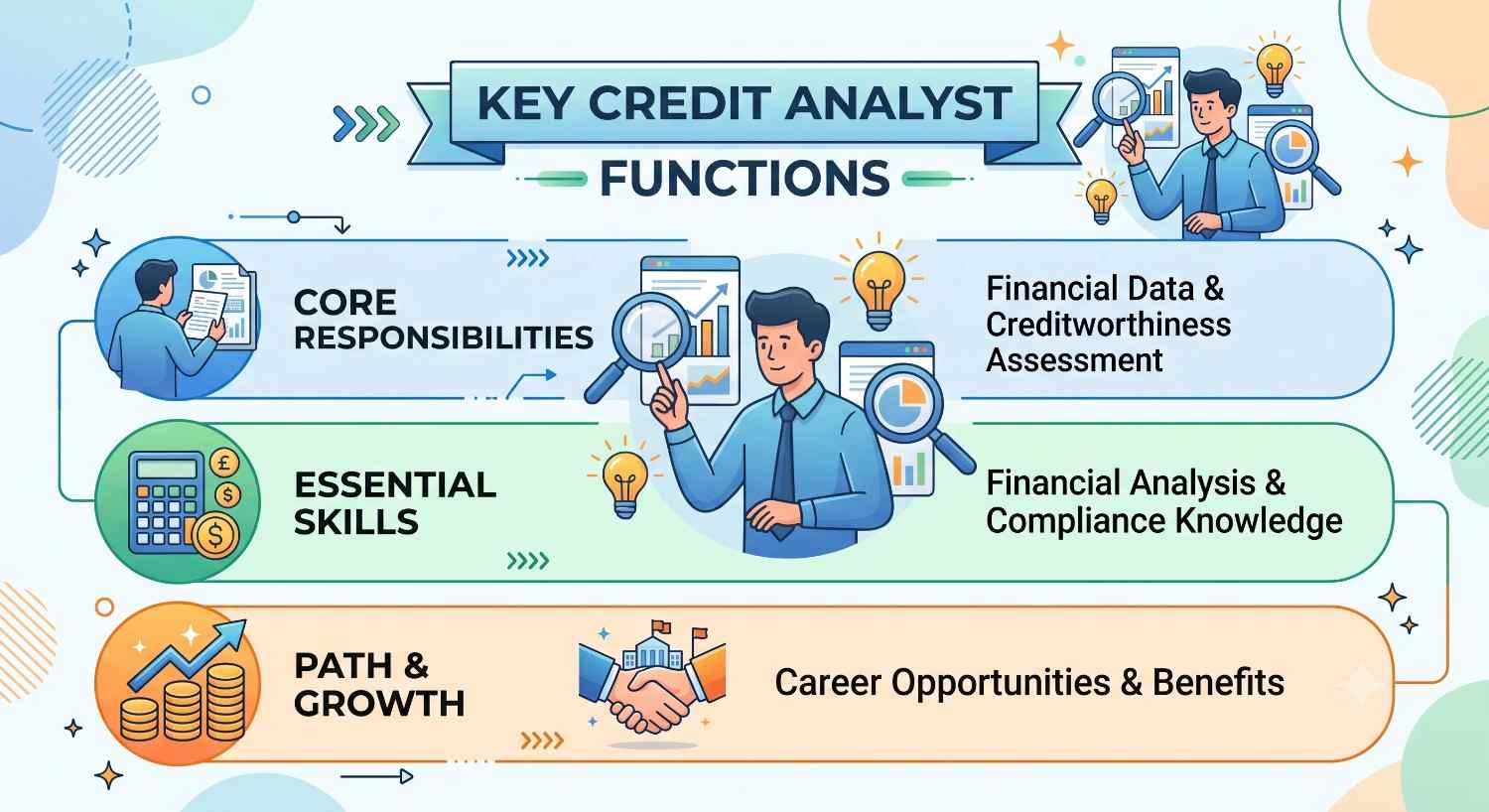











 ROI Calculator



