HOME > BLOG > Finance > IIM Ahmedabad Business Finance Course: Full Review, Fee, Eligibility & Syllabus (2026)
Finance
IIM Ahmedabad Business Finance Course: Full Review, Fee, Eligibility & Syllabus (2026)
J
By Dr. Sanjay Kulkarni
August 2, 20268 min read
Published on August 2, 2026
SHARE THIS ARTICLE
Table Of Content
What Is the IIM Ahmedabad Executive Programme in Business Finance?
Who Should (and Shouldn't) Apply
Syllabus: What You'll Actually Learn
Format and Delivery
If you're a manager without a finance background but are being handed P&L targets, budget approvals, or investment decisions to sign off on, you've probably searched for a way to close that gap fast — without quitting your job or spending two years back in a classroom. IIM Ahmedabad's Executive Programme in Business Finance is built for exactly this situation. Here's a straightforward breakdown of what it covers, what it costs, who it's for, and whether it's worth your time.
What Is the IIM Ahmedabad Executive Programme in Business Finance?
The programme is designed for working professionals who handle budgets, forecasts, or investment decisions but don’t come from a finance, accounting, or CA/CFA background. Rather than turning you into an accountant, it’s built to make you fluent enough in financial language and logic to hold your own in a boardroom, evaluate a business case, or challenge a finance team’s assumptions.
It’s delivered in a format meant to work alongside a full-time job — live online sessions, recorded content for catch-up, and periodic assignments rather than daily coursework.
Who Should (and Shouldn't) Apply
This programme fits you if:
You’re a functional manager (marketing, operations, sales, product, HR) moving into a role with budget or P&L ownership
You review financial reports but don’t fully understand how the numbers are built
You want a credible IIM credential without a 1–2 year time commitment
You’re preparing for a general management or leadership track where finance fluency is expected
You’ve been asked to sit in on investment or budget discussions and want to stop feeling like the least informed person in the room
It’s probably not the right fit if:
You’re already CA/CFA qualified or work in a core finance function — the content will feel introductory
You want a deep, technical specialisation in investment banking, equity research, or financial modelling — this is a breadth programme, not a depth one
You’re looking for campus immersion or a full-time residential MBA experience
You need the credential purely to switch careers into finance itself — a more specialised, practitioner-focused certification would serve that goal better
If you’re unsure which camp you fall into, a useful gut-check is this: if someone handed you last quarter’s P&L right now, could you explain in plain language whether the business is healthier or weaker than the quarter before — and why? If the honest answer is “not really,” this programme is built for exactly that gap.
The curriculum is structured to build from fundamentals to more advanced, boardroom-relevant topics. Here’s a closer look at what each module typically covers and why it’s included:
Financial Accounting — how financial statements are constructed, and how to read a balance sheet, P&L, and cash flow statement without a CA’s training. This is usually the entry point of the programme, since every later module assumes you can navigate these three documents comfortably.
Managerial Accounting — using internal accounting data (costs, budgets, variances) to make operating decisions. This is the module most directly useful day-to-day, since it covers the kind of numbers you’ll actually be asked to defend in internal reviews.
Financial Markets — how capital markets function and how they affect corporate financing decisions. Useful context if you’ve ever wondered why a company raises debt versus equity, or why interest rate news matters to your own department’s budget.
Corporate Finance — capital budgeting, cost of capital, and how companies decide where to deploy money. This module usually introduces frameworks like net present value and payback period — concepts that come up constantly once you’re proposing or approving spend.
Valuation of Firms — how businesses are valued, relevant if you’re ever involved in M&A, fundraising, or investment appraisal. Even if you never personally run a valuation, understanding the logic behind one changes how you interpret acquisition or investment news about your own industry.
ESG & BRSR Reporting — a newer addition covering sustainability reporting requirements now mandatory for large listed companies in India. Increasingly relevant even outside sustainability roles, since ESG metrics are starting to affect cost of capital and investor sentiment.
Each module builds practical fluency rather than certification-style depth — the goal is that you can sit in a finance review meeting and understand (and question) what’s being presented, not that you could personally prepare a statutory financial statement from scratch.
Format and Delivery
Executive programmes like this are typically structured around:
Live online sessions: Conducted every Sunday from 2:00 PM to 5:00 PM, making it possible to continue alongside a full-time job.
Programme duration: 6–7 months, beginning 21 September 2026.
Campus immersion: The programme includes two campus modules at the IIM Ahmedabad campus, providing opportunities for networking with faculty and peers.
Learning methodology: Strong emphasis on case-based learning, supported by projects, simulations, role plays, self-learning, and peer-to-peer discussions.
Peer learning: Participants are typically mid-level and senior professionals from different industries and functions, enabling discussions that compare how finance concepts apply across sectors and business contexts .
Recorded sessions: Non-downloadable recordings are available only if you miss a live session, for an optional fee of ₹250 per session (payable to JITMRL). They are not included by default.
Free Courses
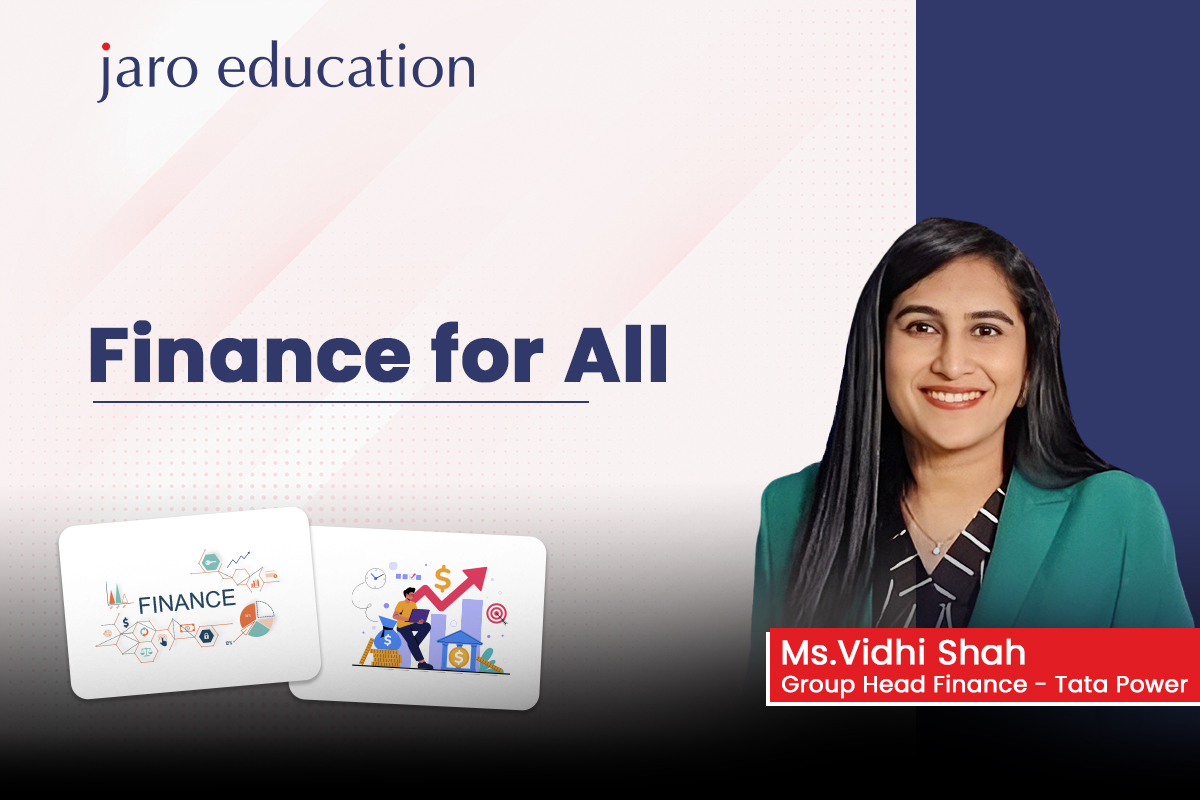
Finance for All – Free Finance Certification Course
Certificate of Completion from IIM Ahmedabad, subject to successful assessment and minimum 80% attendance
Eligibility & Admission Process
The Executive Programme in Business Finance at IIM Ahmedabad is designed for experienced professionals who want to strengthen their financial decision-making skills and prepare for greater business leadership responsibilities. The programme is particularly suited for executives who have limited formal exposure to finance but are expected to handle Profit & Loss (P&L) responsibilities in their current or future roles.
Eligibility Criteria
To apply for the programme, candidates must meet the following requirements:
Hold a graduate degree from a recognized institution.
Have a minimum of 3 years of professional work experience.
Be an executive who is currently handling or is likely to handle Profit & Loss (P&L) responsibilities, or be a finance and accounts professional seeking to enhance business finance expertise.
The programme is specifically designed for mid-level and senior executives with minimal exposure to finance. It is ideal for managers who need stronger commercial acumen but have not received formal education in finance and accounting.
Admission Process
The admission process follows a structured, application-based approach. According to the programme information, applicants progress through the following stages:
Eligibility of Applicant – Graduates with minimum 3 years of experience.
Application Submission – Complete and submit the online application form.
Screening & Shortlisting – Applications are reviewed for eligibility and programme suitability.
Admission & Fee Payment – Selected candidates complete the admission formalities and pay the programme fee.
Book Your Seat – Your seat is confirmed after completing the admission process.
Evaluation & Certification
Participants are evaluated throughout the programme and receive one of the following grades:
Satisfactory Plus (S+)
Satisfactory (S)
Unsatisfactory (U)
A participant may be withdrawn from the programme and forfeit the programme fee under the following circumstances:
Receiving a second “U” for academic indiscipline, including cheating, plagiarism, copying, facilitating cheating, or other integrity violations.
Receiving a third “U” for under-performance.
Receiving one “U” for academic indiscipline and two “U”s for under-performance.
To be eligible for the Certificate of Completion (CoC) from IIM Ahmedabad, participants must:
Successfully complete the programme requirements.
Maintain a minimum 80% attendance throughout the programme.
The honest answer depends on what you’re optimising for:
If you want the IIM brand + genuine finance fluency for your next promotion or role, this is a strong, time-efficient option compared to a full MBA.
If you want deep technical finance skills for a career pivot into finance itself, this programme alone probably isn’t enough — you’d be better served by a more specialised finance certification or an MBA with a finance major.
If cost is a major constraint, weigh the fee against your expected career impact — a promotion, project ownership, or lateral move into a bigger role — rather than treating it as a guaranteed salary jump.
If you’re comparing this against self-study, factor in not just the content but the structure and accountability — a fixed cohort schedule tends to get finished, where open-ended self-study often stalls against daily work pressure.
How This Compares to Other Ways of Building Finance Skills
It’s worth briefly placing this programme against the other paths people consider when they realise they need financial fluency:
Self-study (books, YouTube, free courses): Cheapest option, but open-ended — no cohort accountability, no structured progression, and easy to deprioritise against actual work. Works well for motivated self-starters with a lot of spare time; less reliable for busy managers with competing deadlines.
A full-time or executive MBA: Far more comprehensive (covers marketing, strategy, operations, and finance), but a much bigger time and cost commitment — usually a full year or more, versus a few months for a focused finance programme. Makes sense if you want a broader general management credential, not just a finance-specific one .
A specialised finance certification (like CFA): Deep, practitioner-level finance training aimed at people building a career in finance — investment analysis, portfolio management, and similar roles. Overkill in both depth and time commitment if your goal is fluency to support an existing non-finance career track.
An executive finance programme (like this one): The middle path — enough structure and credibility to build real fluency and a recognised credential, without the time commitment of an MBA or the technical depth (and multi-year exam process) of a specialised finance qualification.
What to Do Before You Apply
If you’re seriously considering this programme, it’s worth doing a few things first so you get the most out of it and can make a clear-eyed decision:
Talk to your manager or HR about how the programme fits into your growth plan. Some organisations offer partial reimbursement or formally recognise this kind of credential in internal promotion criteria — worth checking before you commit personally.
Get clarity on the exact cohort schedule and confirm it doesn’t clash with your current work commitments, especially around quarter-end or major project deadlines.
Talk to a current or past participant if possible. Programme pages naturally highlight the best outcomes — a candid conversation with someone who’s been through it gives you a more grounded picture of the actual weekly workload and what you’ll walk away able to do.
Be honest about your starting point. If you’re genuinely comfortable reading a P&L and just want the credential, this may feel too foundational. If reading a balance sheet still feels intimidating, this is squarely built for you.
Frequently Asked Questions
Yes — it’s specifically designed for managers without prior finance training. The early modules (Financial and Managerial Accounting) assume no prior exposure.
Yes. Eligible participants receive a Certificate of Completion (CoC) from IIM Ahmedabad upon successfully completing the Executive Programme in Business Finance. To receive the certificate, participants must satisfy the programme’s assessment requirements and maintain a minimum of 80% attendance. The programme does not mention the award of IIM Ahmedabad alumni status.
The programme features live virtual classes every Sunday from 2:00 PM to 5:00 PM, requiring 3 hours of scheduled learning each week. In addition to the live sessions, participants should allocate extra time for self-learning, case studies, projects, and peer learning.
The current programme information does not mention a policy for cohort transfers, programme deferrals, or pausing the course. If you anticipate changes to your schedule, it is advisable to contact the admissions team before enrolling to understand the available options.
Participants are evaluated throughout the programme, and performance is graded as Satisfactory Plus (S+), Satisfactory (S), or Unsatisfactory (U). While the programme confirms that every course includes an evaluation, it does not specify whether assessments consist of written examinations, assignments, case studies, projects, or a combination of these. Maintaining 80% attendance and meeting the academic requirements are mandatory to earn the Certificate of Completion from IIM Ahmedabad.
An executive MBA is a broader, longer, and more expensive commitment covering general management across marketing, operations, strategy, and finance. This programme is narrower by design — finance-only, shorter, and priced accordingly — for someone who specifically needs financial fluency rather than a full general management credential.
It’s built primarily to strengthen fluency for managers staying in their current functional track (marketing, operations, product, etc.) as they take on more financial responsibility — not as a springboard into a core finance career. If a finance career switch is the goal, pair this with, or consider instead, a more technical, practitioner-focused qualification.
Dr. Sanjay Kulkarni
Data & AI Transformation Leader
Dr. Sanjay Kulkarni is a Data & AI Transformation Leader with over 25 years of industry experience. He helps organizations adopt data-driven and responsible AI practices through strategic guidance and education. With experience across startups and global enterprises, he bridges the gap between theory and real-world application. His work empowers teams to innovate and thrive in AI-driven environments.
Get Free Upskilling Guidance
Fill in the details for a free consultation
Related Courses
Explore our programs
Executive Certificate Programme in Corporate & Strategic Finance

 August 2, 2026
 8 min read




 ChatGPT
 Perplexity
 Claude
 Grok
Grok








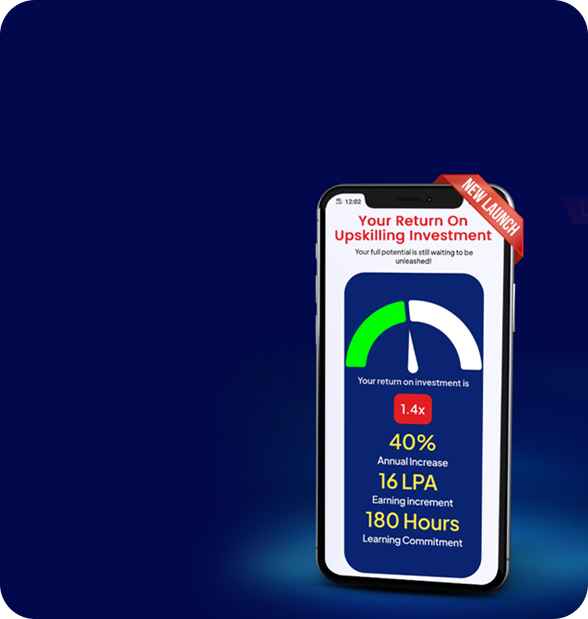
 ROI Calculator