HOME > BLOG > Investment Banking > Best Finance Certifications from IIM & IIT in 2026: FRCG, Investment Banking, CFA — What’s Right for You?
Investment Banking
Best Finance Certifications from IIM & IIT in 2026: FRCG, Investment Banking, CFA — What’s Right for You?
J
By Arif Siddiqui
July 12, 202613 min read
Last updated on July 21, 2026
SHARE THIS ARTICLE
Table Of Content
Why Finance Certifications Matter More Than Ever in 2026
Why Professionals Choose IIM & IIT Finance Certifications
How to Choose the Right Finance Certification
Top Finance Certifications from IIMs & IITs
The finance industry is evolving at an unprecedented pace. Artificial Intelligence, automation, ESG regulations, digital banking, corporate governance reforms, and data-driven investment strategies are transforming how organizations make financial decisions.
As businesses become more complex, employers are looking for finance professionals who possess not only technical expertise but also strategic thinking, regulatory knowledge, and digital capabilities. Traditional finance qualifications remain valuable, but professionals increasingly complement them with executive certifications from leading institutions to stay competitive.
This growing demand has led many professionals to ask:
Which finance certification is worth pursuing in 2026?
The answer depends on your career goals.
Some professionals want to move into corporate finance, while others aspire to build careers in investment banking, financial reporting, banking leadership, portfolio management, or strategic finance. Fortunately, India's leading institutions—including the Indian Institutes of Management (IIMs) and Indian Institutes of Technology (IITs)—offer executive programmes designed for different finance career paths.
In this guide, we'll compare some of the most sought-after finance certifications available through Jaro Education, helping you understand who each programme is designed for and how it aligns with different career objectives.
Why Finance Certifications Matter More Than Ever in 2026
Finance professionals today are expected to do much more than prepare reports or manage budgets.
Modern finance teams increasingly contribute to strategic decision-making, business planning, digital transformation, risk management, sustainability reporting, and investment strategy.
Several trends are driving the growing demand for executive finance education.
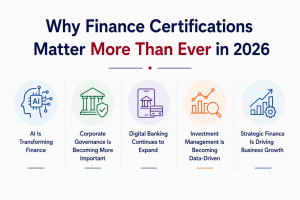
AI Is Transforming Finance
Artificial Intelligence is changing financial forecasting, fraud detection, investment research, risk assessment, and customer analytics.
Finance professionals are expected to understand how technology can improve financial decision-making rather than relying solely on traditional methods.
Corporate Governance Is Becoming More Important
Organizations are placing greater emphasis on transparency, regulatory compliance, financial reporting, and governance standards.
Professionals who understand these areas are increasingly valued by businesses, investors, and regulators.
Digital Banking Continues to Expand
The rapid growth of fintech, digital payments, embedded finance, and online banking has created new opportunities for professionals with specialized banking and financial services expertise.
Investment Management Is Becoming Data-Driven
Portfolio managers and investment professionals increasingly rely on analytics, AI tools, quantitative research, and alternative data sources to support investment decisions.
Strategic Finance Is Driving Business Growth
Finance leaders are expected to contribute beyond accounting by supporting mergers and acquisitions, business strategy, capital allocation, financial planning, and organizational transformation.
These developments make continuous learning essential for professionals who want to remain competitive in the evolving finance landscape.
Why Professionals Choose IIM & IIT Finance Certifications
Executive programmes offered by IIMs and IITs have gained popularity because they combine academic credibility with practical business relevance.
Unlike traditional degree programmes, these certifications are specifically designed for working professionals who want to enhance their expertise without taking a career break.
Some of the reasons professionals choose these programmes include:
Learning from experienced faculty and industry experts.
Exposure to current industry practices and emerging finance trends.
Flexible online or blended learning formats.
Executive education from reputed institutions.
Curriculum designed around real-world business challenges.
Networking opportunities with experienced professionals across industries.
Rather than replacing existing qualifications, these certifications help professionals strengthen specialized capabilities that are increasingly valued in today’s finance roles.
Not every finance programme serves the same purpose.
Before selecting a certification, professionals should first identify the type of career they want to build.
Some programmes focus on corporate finance and governance, while others specialize in banking, investment management, portfolio strategy, or financial leadership.
When evaluating a finance certification, consider the following factors:
Career Objectives
Do you want to work in corporate finance, investment banking, banking leadership, financial reporting, treasury, or portfolio management?
Your answer should guide your programme selection.
Curriculum Relevance
Review whether the curriculum addresses current finance trends such as AI, ESG, corporate governance, financial strategy, digital banking, or investment analytics.
Professional Experience
Some executive programmes are more suitable for experienced professionals, while others are appropriate for individuals seeking foundational specialization.
Industry Recognition
Choose programmes offered by institutions with strong academic credibility and industry reputation.
Learning Flexibility
Working professionals should also evaluate programme duration, online learning support, live sessions, and schedule flexibility.
Selecting a programme aligned with your career goals generally provides stronger long-term value than choosing one based solely on institutional reputation.
Top Finance Certifications from IIMs & IITs
Several executive programmes have emerged as strong options for finance professionals in 2026. Each programme addresses a different aspect of modern finance, making it important to understand their unique focus areas.
Financial Reporting and Corporate Governance – IIM Ahmedabad
Professionals responsible for financial reporting, governance, compliance, auditing, or corporate finance often require a strong understanding of evolving regulatory frameworks and strategic financial reporting.
The programme is particularly relevant for finance managers, accountants, auditors, compliance professionals, and individuals preparing for senior finance leadership roles.
Post Graduate Certificate Programme in Banking & Finance – IIM Tiruchirappalli
The banking sector continues to evolve through digital transformation, fintech innovation, changing regulations, and customer-centric financial services.
The programme is well suited for investment professionals, portfolio managers, wealth managers, equity analysts, and finance professionals interested in capital markets.
Executive Certificate Programme in Corporate Strategic Finance – IIM Mumbai
Strategic finance plays an increasingly important role in helping organizations allocate capital, evaluate investments, improve profitability, and support long-term growth.
The programme is particularly relevant for finance managers, business leaders, consultants, entrepreneurs, and professionals preparing for senior finance leadership positions.
Finance Certification Comparison at a Glance
Choosing the right finance certification becomes easier when you compare each programme based on its primary focus, target audience, and career outcomes.
IIT Delhi – Investment Strategies & Portfolio Management in the Age of AI
Investment Professionals, Wealth Managers
Portfolio Management, Investments, AI in Finance
Investment Banking, Wealth Management, Capital Markets
IIM Mumbai – Corporate Strategic Finance
Finance Leaders & Business Managers
Corporate Finance, Strategic Decision-Making, Capital Allocation
Strategic Finance, FP&A, Corporate Leadership
Although all four programmes belong to the finance domain, each addresses a different specialization. The ideal choice depends on where you want your career to progress over the next five to ten years.
Which Certification Is Best for Different Career Goals?
Rather than asking which programme is objectively the best, it is more useful to identify which certification aligns with your professional aspirations.
For Corporate Finance Professionals
If your responsibilities involve budgeting, financial planning, capital allocation, mergers and acquisitions, or long-term financial strategy, a programme focused on corporate finance may be the most suitable.
The Executive Certificate Programme in Corporate Strategic Finance by IIM Mumbai emphasizes financial strategy and business decision-making, making it particularly relevant for professionals preparing for senior finance leadership roles.
For Financial Reporting and Governance
Organizations continue to strengthen financial reporting standards and governance practices as regulatory expectations increase.
Professionals working in accounting, auditing, compliance, statutory reporting, or corporate finance may benefit from the Financial Reporting and Corporate Governance Programme by IIM Ahmedabad, which focuses on financial reporting frameworks and governance principles.
For Banking Professionals
Banking is undergoing rapid transformation due to digital payments, fintech innovation, AI, and changing customer expectations.
Professionals working in commercial banking, retail banking, lending, financial services, or NBFCs may find the Post Graduate Certificate Programme in Banking & Finance by IIM Tiruchirappalli aligned with their career goals.
The programme explores banking operations, financial products, risk management, and modern financial services.
For Investment Banking and Capital Markets
Investment professionals require a strong understanding of portfolio construction, financial markets, investment analysis, and increasingly, AI-driven investment decision-making.
The Investment Strategies and Portfolio Management in the Age of AI Programme by IIT Delhi combines traditional investment concepts with emerging technologies that are reshaping wealth management and capital markets.
It is particularly suitable for professionals working in:
Senior finance professionals increasingly need capabilities beyond accounting.
Modern finance leaders contribute to:
Business strategy
Capital allocation
Risk management
Digital transformation
Corporate governance
Financial planning
Professionals aspiring to CFO or senior finance leadership positions may benefit from combining expertise in strategic finance with strong governance knowledge.
Skills You Develop Across These Programmes
Although each certification has its own specialization, several high-value competencies are developed across executive finance education.
Financial Decision-Making
Participants learn structured approaches to evaluating business opportunities, investments, and financial performance.
Strategic Thinking
Executive programmes increasingly focus on aligning financial decisions with long-term organizational objectives.
Risk Assessment
Finance professionals are expected to identify financial risks while balancing growth opportunities.
Data-Driven Analysis
Modern finance relies heavily on analytics, forecasting models, and evidence-based decision-making.
Leadership
Finance professionals increasingly collaborate with business leaders, making communication and leadership essential competencies.
Technology Awareness
Many finance programmes now introduce learners to AI, digital finance, analytics, and technology-enabled financial decision-making to reflect changing industry requirements.
Career Scope After Finance Certifications
Executive finance certifications can support career progression by helping professionals strengthen domain expertise and prepare for specialized or leadership roles.
Depending on the chosen programme, professionals may pursue opportunities such as:
Corporate Finance Manager
Responsible for financial planning, budgeting, capital investment decisions, and business performance analysis.
Financial Reporting Manager
Focuses on regulatory reporting, accounting standards, governance, and financial disclosures.
Investment Analyst
Supports investment research, portfolio analysis, equity valuation, and financial modelling.
Wealth Manager
Advises individuals and institutions on investment planning, portfolio diversification, and financial growth.
Banking Relationship Manager
Works across lending, investment products, customer advisory, and financial services.
Strategy and Finance Consultant
Helps organizations improve financial performance, optimize costs, and support business transformation initiatives.
Chief Financial Officer (Long-Term Career Path)
Experienced finance professionals often progress toward executive leadership roles where they oversee organizational financial strategy and governance.
Salary Trends in Finance (2026)
Compensation within finance continues to vary based on industry, experience, specialization, and professional expertise. Executive certifications can strengthen a professional’s profile by enhancing specialized knowledge, although salary growth also depends on work experience and organizational responsibilities.
*Senior leadership compensation varies significantly depending on company size, industry, and executive experience.
Professionals who combine finance expertise with strategic thinking, digital capabilities, analytics, and leadership skills are increasingly well-positioned for higher-value roles as organizations modernize their finance functions.
Cost vs ROI Comparison
One of the most important questions professionals ask before enrolling in an executive programme is whether the investment will generate meaningful career returns. While programme fees are an important consideration, Return on Investment (ROI) should be evaluated from a broader perspective.
ROI is influenced by factors such as career progression, leadership opportunities, salary growth, industry relevance, networking, and the ability to apply newly acquired knowledge in the workplace.
Each finance certification discussed in this guide offers a different type of value depending on the learner’s career goals.
IIM Ahmedabad – Financial Reporting and Corporate Governance
This programme is particularly valuable for professionals working in accounting, financial reporting, compliance, governance, and corporate finance. As regulatory requirements continue to evolve, expertise in governance and reporting can strengthen leadership readiness and support progression into senior finance roles.
IIM Tiruchirappalli – Banking & Finance
Professionals working in banking, financial services, NBFCs, or fintech may benefit from this programme because it aligns closely with industry-specific knowledge and current banking practices. It is particularly relevant for individuals looking to grow within financial institutions.
IIT Delhi – Investment Strategies and Portfolio Management in the Age of AI
Investment professionals seeking to strengthen their understanding of portfolio management, AI applications, and modern investment strategies may find strong long-term value in this programme. As investment management becomes increasingly data-driven, professionals with analytical capabilities are expected to remain in demand.
IIM Mumbai – Corporate Strategic Finance
For professionals preparing for finance leadership positions, the focus on corporate finance, strategic decision-making, and financial planning makes this programme relevant for long-term career progression into senior managerial roles.
Rather than asking which programme offers the highest ROI, professionals should consider which certification best supports their intended career path.
Which Certification Should Working Professionals Choose?
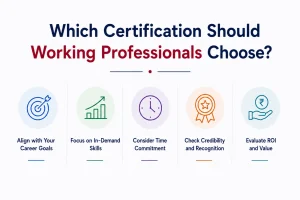
Working professionals often have different priorities from full-time students. Flexibility, practical relevance, and immediate workplace application usually matter more than theoretical learning.
The right certification depends on your current role and future aspirations.
If you work in financial reporting, accounting, auditing, or compliance, the IIM Ahmedabad Financial Reporting and Corporate Governance Programme can help strengthen your understanding of governance frameworks and financial reporting standards.
If your career is focused on banking, lending, financial services, or fintech, the IIM Tiruchirappalli Banking & Finance Programme provides industry-specific knowledge relevant to the evolving banking landscape.
Professionals interested in investment banking, portfolio management, equity research, wealth management, or capital markets may benefit from the IIT Delhi Investment Strategies and Portfolio Management in the Age of AI Programme, which combines investment principles with emerging technologies.
Those aspiring to become Finance Managers, Finance Directors, Business Leaders, or CFOs may find the IIM Mumbai Corporate Strategic Finance Programme particularly valuable because of its focus on financial strategy and business leadership.
Ultimately, the most effective certification is the one that complements your existing experience while preparing you for your next career milestone.
Can You Pursue More Than One Finance Certification?
Yes. In fact, many professionals pursue multiple executive programmes throughout their careers as their responsibilities evolve.
A finance professional’s learning journey often progresses through different stages.
During the early years, professionals typically focus on building technical expertise in areas such as banking, accounting, investment analysis, or financial reporting.
As they move into managerial positions, they often seek broader exposure to financial strategy, governance, leadership, and business decision-making.
A possible learning pathway could look like this:
Begin with a specialization aligned to your current role, such as Banking & Finance or Investment Management.
Strengthen strategic capabilities through Corporate Strategic Finance.
Develop governance expertise through Financial Reporting and Corporate Governance as you move into senior leadership roles.
Rather than replacing one another, these certifications can complement each other and support continuous professional development.
Another common question among professionals is whether they should pursue an executive finance certification or enroll in an MBA with a Finance specialization.
Although both options contribute to career growth, they serve different purposes.
An MBA in Finance provides a comprehensive postgraduate education covering finance alongside other management disciplines such as marketing, operations, human resources, strategy, and organizational behaviour. It is generally suited to professionals seeking broader managerial responsibilities or career transitions.
Executive finance certifications, on the other hand, focus on specific domains within finance. They allow professionals to deepen expertise in targeted areas without committing to a two-year degree programme.
MBA in Finance is ideal if you want to:
Build a broad management foundation.
Transition into management roles.
Explore multiple business functions.
Earn a postgraduate management degree.
Executive Finance Certifications are ideal if you want to:
Develop expertise in a specific finance domain.
Upgrade skills while continuing to work.
Prepare for specialized or leadership roles.
Stay updated with industry developments and emerging technologies.
For many professionals, these pathways are complementary rather than mutually exclusive. An MBA may establish a strong management foundation, while executive certifications can support continuous specialization throughout one’s career.
Final Verdict
The finance profession is evolving rapidly, and continuous learning has become essential for professionals who want to remain competitive. Advances in Artificial Intelligence, regulatory changes, digital banking, investment analytics, and corporate governance are reshaping the skills expected from finance leaders.
Each programme discussed in this guide serves a distinct purpose.
The IIM Ahmedabad Financial Reporting and Corporate Governance Programme is well suited to professionals seeking expertise in governance, compliance, and financial reporting.
The IIM Tiruchirappalli Banking & Finance Programme aligns with professionals working in banking, financial services, and fintech.
The IIT Delhi Investment Strategies and Portfolio Management in the Age of AI Programme supports professionals interested in investment management, wealth advisory, and AI-driven financial decision-making.
The IIM Mumbai Corporate Strategic Finance Programme is designed for professionals preparing for strategic finance and leadership responsibilities.
There is no single certification that is best for everyone. The most valuable programme is the one that aligns with your current experience, career aspirations, and long-term professional goals.
By selecting a certification that complements your role and future ambitions, you can strengthen your expertise, expand your career opportunities, and prepare for the evolving demands of the finance industry.
Frequently Asked Questions
The best programme depends on your career objectives. Professionals interested in governance may prefer IIM Ahmedabad, banking professionals may benefit from IIM Tiruchirappalli, investment professionals may find IIT Delhi more relevant, while aspiring finance leaders may prefer IIM Mumbai.
Yes. Most executive finance programmes are specifically designed for working professionals and offer flexible learning formats that allow participants to continue their careers while studying.
Professionals interested in investment banking, portfolio management, equity research, and wealth management may find the Investment Strategies and Portfolio Management in the Age of AI Programme by IIT Delhi particularly relevant.
The Executive Certificate Programme in Corporate Strategic Finance by IIM Mumbai is well suited to professionals seeking expertise in corporate finance, financial planning, and strategic decision-making.
Executive certifications can strengthen specialized knowledge, enhance professional credibility, and support career progression. However, career growth also depends on experience, performance, leadership capabilities, and continuous learning.
If you require a comprehensive management education, an MBA in Finance may be appropriate. If you already possess management experience and want to specialize further, an executive finance certification may be a better fit.
Yes. Many professionals complete multiple executive programmes over time to build expertise in different areas such as banking, investment management, governance, and strategic finance as their careers progress.
Arif Siddiqui
Head of Accounting and Treasury
Arif Siddiqui is a finance leader specializing in accounting, treasury, and financial strategy. As Head of Finance at Generali Employee Benefits, he brings extensive experience in managing global financial operations. He is known for driving financial efficiency and governance across organizations. His leadership supports sustainable business growth and financial excellence.
 HOME > BLOG > Investment Banking > Best Finance Certifications from IIM & IIT in 2026: FRCG, Investment Banking, CFA — What’s Right for You?
 July 12, 2026
 13 min read









 Admission Closed
 Admission Closed
 Admission Open
 Admission Closed

 ROI Calculator




