
Workplace Etiquette: Essential Rules for Professional Success
 October 10, 2026
 7 min read




Table Of Content
- What Is Workplace Etiquette?
- Why Workplace Etiquette Matters
- Core Rules of Office Etiquette
- Etiquette at Work in Remote and Hybrid Settings
 Key Insights
- Workplace etiquette is the set of unwritten and written norms for how colleagues treat one another, and it shapes trust, teamwork and how you are perceived.
- Research reported in Harvard Business Review links workplace rudeness to lower effort, lower quality of work and higher attrition, so etiquette has a real business cost and benefit
- The basics are simple: be punctual, communicate clearly and respectfully, use email and meetings well, respect shared spaces and give credit to others
- Hybrid and remote work need extra etiquette around availability, camera use, response times and written tone.
- Etiquette complements the law. In India, the POSH Act sets a legal baseline for conduct, and good etiquette goes well beyond it.
- In this blog, you'll learn core office etiquette rules, remote work etiquette, guidance for freshers and managers, common mistakes and how HR can build a respectful culture.
Two employees can have the same skills and the same targets, yet be remembered very differently. One is described as easy to work with, reliable and respectful. The other is talented but careless about deadlines, abrupt in messages and always late to meetings. Over time, the first person gets the interesting projects, the second gets avoided.
That difference is workplace etiquette. This guide explains what it means, why it matters, the core rules of office etiquette, how to handle remote and hybrid work, and how freshers, managers and HR teams can build a respectful, productive culture.
 ChatGPT
 Perplexity
 Claude
 Grok
GrokWhat Is Workplace Etiquette?
Workplace etiquette is the collection of expected behaviours, spoken and unspoken, that help people work together respectfully and professionally. It covers how you greet colleagues, communicate by email and chat, behave in meetings, dress, use shared spaces and handle disagreements.
Etiquette at work is different from company policy. A policy is written and enforceable, such as an attendance or conduct rule. Etiquette is often unwritten, shaped by company culture, industry and region. A startup may be casual about dress and first names, while a bank or law firm may expect more formality. The skill lies in reading the environment and adapting with respect.
Why Workplace Etiquette Matters
Good manners at work are not decoration. They affect results.
Research by Christine Porath and Christine Pearson, reported in Harvard Business Review, surveyed managers and employees about workplace rudeness. Of those who experienced it, 48% said they deliberately cut back their effort, 38% said they reduced the quality of their work and 12% said they left their jobs because of it. The study is more than a decade old and was based largely on US workplaces, but it shows how small acts of disrespect compound.
Strong etiquette helps in four practical ways:
- Trust: reliable, courteous colleagues are easier to depend on.
- Collaboration: clear, respectful communication reduces friction and rework.
- Reputation: people remember how you treated them, and that follows you across teams and employers.
- Retention: employees stay where they feel respected.
Etiquette also overlaps with core professional skills. Our guide on how to improve soft skills covers many of the habits behind it.





Core Rules of Office Etiquette
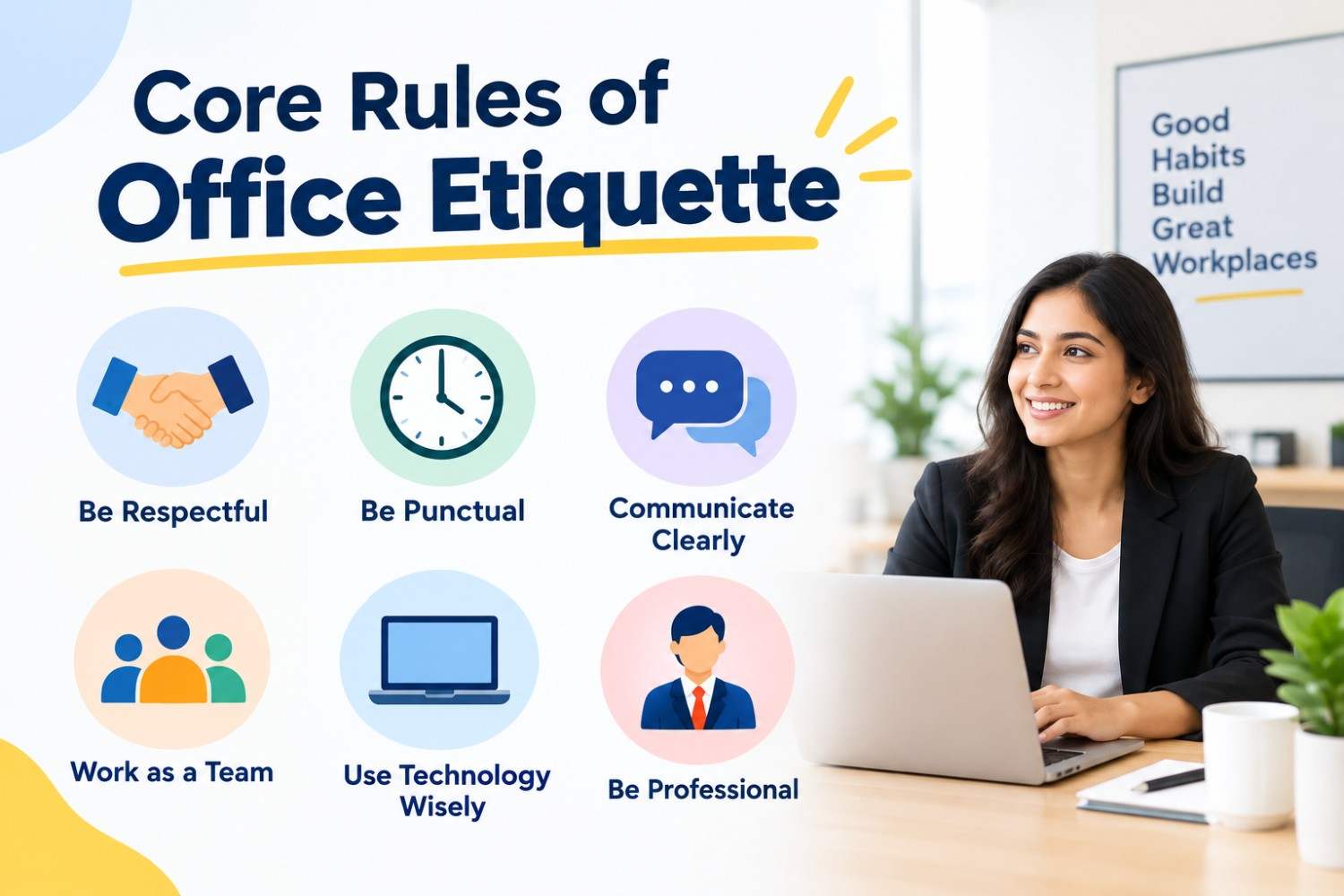
1. Be Punctual and Reliable
Arrive on time for work and meetings, and meet deadlines you have agreed to. If you will be late or need more time, tell people early rather than letting them find out. Reliability is the foundation of professional trust.
2. Communicate Respectfully
Speak clearly, listen without interrupting and keep your tone courteous even when you disagree. Avoid sarcasm, raised voices and public criticism. Pay attention to body language as well as words. Our guides on business communication and the art of verbal and non-verbal communication show how both channels work together.
3. Dress Appropriately
Follow your company’s dress code, and when it is unclear, observe what colleagues and senior leaders wear. Aim for clean, neat and suited to the day’s activities, such as client meetings or training sessions.
4. Respect Shared Spaces and Personal Space
Keep noise down, avoid strong perfumes, clean up after using the pantry and do not use other people’s belongings without asking. In open offices, use headphones for calls where possible and step away for longer conversations. Knock or message before interrupting someone who looks focused.
5. Use Email and Messaging Well
- Write a clear subject line that states the purpose.
- Keep messages short and put the request or decision at the top.
- Use “reply all” only when everyone needs the information.
- Check tone, spelling and the recipient list before sending.
- Respond within a reasonable time, and set an out-of-office message when away.
- Keep chat tools for quick questions, and avoid sending non-urgent messages late at night.
6. Run and Attend Meetings Professionally
Share an agenda in advance, start and end on time and keep phones away unless you are using them for the meeting. Come prepared, let others finish speaking and summarise decisions and owners at the end. If you cannot attend, say so early and send input beforehand. For presenting well, see our tips on presentation skills for professionals.
7. Give Credit and Avoid Gossip
Acknowledge colleagues’ contributions publicly and do not take credit for shared work. Avoid gossip, which damages trust and can spread quickly. If you have a concern about a colleague, raise it with them or with a manager, not around the office.
Etiquette at Work in Remote and Hybrid Settings
Working from home removes the visual cues of the office, so expectations need to be clearer.
- Be available when you said you would be, and update your status when you step away.
- Turn up prepared for video calls: test audio and lighting, mute when not speaking and use the camera if the team norm is to do so.
- Respect time zones and working hours, especially in distributed teams.
- Write with extra care, because tone is easily misread in text.
- Do not multitask visibly during meetings.
Our article on collective intelligence in remote teams explains how remote groups can work well together.
Workplace Etiquette in India: Cultural Context
Indian workplaces are diverse, and norms vary by company, city and industry, so avoid assuming one “Indian way”. A few points commonly matter:
- Forms of address: many offices use “Sir” or “Ma’am” with senior colleagues, while others use first names. Follow what the team does.
- Hierarchy and respect: show courtesy to seniors, but speak up with ideas, since modern managers value input.
- Language: teams often mix languages. Be inclusive in meetings so no one is left out.
- Festivals and diversity: be aware of religious and regional occasions, and avoid scheduling important deadlines around them without discussion.
- Food and breaks: sharing food is common, but be mindful of dietary and religious preferences.
Etiquette and the Law
Etiquette sits above the legal baseline. In India, the Sexual Harassment of Women at Workplace (Prevention, Prohibition and Redressal) Act, 2013 requires employers with 10 or more employees to set up an Internal Committee, as the PIB backgrounder on the SH Act explains. Respectful behaviour means never making colleagues uncomfortable with jokes, comments or contact, regardless of whether it would meet a legal definition. For HR obligations in more detail, see our guide to HR compliance and legal issues.
Etiquette for Freshers and New Joiners
Starting a first job can be nerve-wracking, and small habits make a strong first impression.
- Learn names, roles and team norms in your first weeks.
- Ask questions, but try to look for the answer first.
- Take notes in meetings and follow up on actions.
- Be punctual, dress appropriately and keep personal phone use low.
- Thank people who help you.
Our guide on moving from campus to corporate covers this transition in more depth.
Etiquette for Managers and Leaders
Managers set the standard for the whole team. People copy what leaders do, not what they say.
- Model the behaviour you expect, including punctuality and respectful tone.
- Give feedback privately and promptly, and praise publicly.
- Respect boundaries, such as off-hours and leave.
- Include everyone, especially quieter and remote team members.
- Address incivility early rather than hoping it disappears.
Self-awareness helps here, so read about emotional intelligence and how it shapes leadership.
Handling Difficult Situations Gracefully
- Disagreement: focus on the issue, not the person, and acknowledge their point before offering yours.
- Mistakes: own them quickly, explain what you will do to fix them and move on.
- Feedback: listen fully, ask clarifying questions and thank the person before responding.
- Conflict: talk privately and calmly, and involve a manager or HR if it does not resolve. Our guide to conflict resolution offers practical methods.
- Busy periods: protect your time without being dismissive, and use time management skills so that urgency does not turn into rudeness.
Common Workplace Etiquette Mistakes
- Being late without notice.
- Writing emails in anger or copying people unnecessarily.
- Interrupting or talking over colleagues.
- Using speakerphone or loud calls in shared spaces.
- Checking your phone constantly in meetings.
- Taking credit for others’ work.
- Ignoring generational differences. Our article on the Gen Z office workspace helps teams understand different expectations.
How HR Can Build a Culture of Good Etiquette
Etiquette cannot be enforced by a poster. HR teams can support it by:
- Writing a clear, practical code of conduct and explaining the reasons behind it.
- Including etiquette in onboarding and manager training.
- Recognising respectful behaviour in appraisals.
- Giving employees safe channels to raise concerns.
- Running regular awareness sessions, including on the POSH Act.
- Looking at the ethical side of people management, which our guide to ethical issues in HRM explores.
Leaders who want to go beyond basics and strengthen interpersonal and management skills across functions can consider a structured programme.
Conclusion
Workplace etiquette is not about rigid rules. It is about respect, reliability and clear communication, applied with awareness of your team’s culture. Small habits, such as being on time, writing clear emails, listening in meetings and crediting others, build trust and open doors. Start with one habit this week, such as replying to messages within a set time, and build from there.
If you are a working professional preparing for broader management roles, the Post Graduate Certificate Programme in General Management from IIM Nagpur may be worth exploring. It is a 12-month online programme for graduates with at least two years of work experience, and its curriculum includes a module on effective interpersonal communication covering difficult conversations, body language, listening and communicating in a diverse workforce. Check the programme page for the current batch and details.
Frequently Asked Questions
Workplace etiquette is the set of spoken and unspoken norms that guide professional behaviour, including communication, punctuality, dress, meetings and respect for colleagues.
It builds trust, improves collaboration, protects reputation and supports retention. Research reported in Harvard Business Review links workplace rudeness to reduced effort, lower quality and higher attrition.
Be punctual, communicate clearly and respectfully, use email and meetings well, respect shared spaces, dress appropriately, give credit to others and avoid gossip.
Use a clear subject line, keep messages concise, check tone and recipients, reply in reasonable time and use “reply all” sparingly.

Related Courses
Explore our programs





Find a Program made just for YOU
We'll help you find the right fit for your solution. Let's get you connected with the perfect solution.

Is Your Upskilling Effort worth it?
 ROI Calculator

Are Your Skills Meeting Job Demands?
Try our Skill Gap tool
Experience Lifelong Learning and Connect with Like-minded Professionals
Explore Jaro Connect
