KMAT Registration and KMAT Application: Step by Step
KMAT Exam Application Fee
Key Insights
The KMAT exam is a state-level entrance test conducted by KPPGCA for admission to MBA, PGDM, and MCA programmes at participating colleges across Karnataka.
Candidates generally need a recognized graduation degree with at least 50% marks, while reserved category candidates need a minimum of 45% marks.
The KMAT registration process is online and involves filling in personal and academic details, uploading the required documents, paying the application fee, and saving the confirmation.
The exam consists of 120 multiple-choice questions to be completed in 120 minutes, covering VARC, Quantitative Ability, and Logical Reasoning, with one mark per question and no negative marking.
In this blog, you'll learn about KMAT exam eligibility, registration, application fees, exam pattern, syllabus, preparation strategies, exam-day tips, and the selection process.
If you're aiming for an MBA, PGDM, or MCA seat in Karnataka, the KMAT exam has probably landed on your radar already. It's one of the friendlier state-level tests out there: shorter than most national MBA exams, no negative marking, and a difficulty level that's generally easy to moderate. But "friendly" doesn't mean "effortless". Knowing the rules, the pattern, and the process early makes everything smoother.
In this blog, we'll keep things simple and walk through who can apply, how KMAT registration works, what the fee is, what the KMAT entrance paper looks like, and how to prepare without burning out.
Quick note: this guide covers the Karnataka Management Aptitude Test conducted by KPPGCA. Kerala also has an exam called KMAT (run by CEE Kerala) with a different pattern and negative marking, so don't mix the two up.
The KMAT exam, short for Karnataka Management Aptitude Test, is a state-level entrance test conducted by the Karnataka Post Graduate Private Colleges’ Association (KPPGCA). Scores are used for admission to MBA, PGDM, and MCA programmes offered by participating colleges across Karnataka.
In 2026, the test was conducted as a home-based, online, remote-proctored exam. That means you write it from your own room, as long as you have a stable internet connection, a working webcam, and a quiet space. For many students, that’s a big relief compared to travelling to a test centre.
The KMAT entrance is a popular choice for two kinds of candidates: those who want a quick, low-pressure route into a Karnataka B-school and those who want a solid backup alongside CAT or other MBA exams.
KMAT Exam Eligibility: Who Can Apply?
The eligibility rules for the KMAT exam are refreshingly straightforward:
You must hold a graduation degree from a recognized university or college.
You need at least 50% marks in graduation.
Candidates from reserved categories need a minimum of 45% marks.
That’s the core of it. One practical tip: the exam body sets the basic criteria, but individual colleges can have their own requirements for admission, such as work experience for certain programmes or specific subject backgrounds for MCA. Always check the college’s own admission page before you get your heart set on a particular campus.
Also, if you’re in your final year of graduation, read the official brochure carefully to see whether you can still apply and what documents you’ll need to submit later.
KMAT Registration and KMAT Application: Step by Step
The KMAT registration process is entirely online, and it doesn’t take long if you keep your documents ready. Here’s how the KMAT application usually goes:
Visit the official KMAT website (kmatindia.com) and open the application section.
Fill in your personal details, such as name, date of birth, contact information, and academic details.
Receive your application number and password. Save these somewhere safe, because you’ll need them later to download your admit card and scorecard.
Upload the required documents, usually a photograph, signature, and academic details as specified.
Pay the application fee online.
Save the confirmation and take a screenshot or printout.
A few things that trip people up during the KMAT exam application:
Spelling mistakes. Your name and date of birth should match your official documents exactly.
Last-minute filing. Servers get busy near the deadline. For the 2026 first session, the registration deadline was September 6, so apply early rather than risking a glitch.
Wrong photo or signature size. Check the format and size limits before uploading.
If you do spot an error after submitting, look for a correction window on the official site. Don’t assume you can fix things later without one.
KMAT Exam Application Fee
Let’s talk money. The KMAT exam application fee for 2026 was ₹850, including GST, payable online during registration. That’s quite affordable compared to many national MBA entrance exams, which means you can treat it as a low-risk addition to your exam list.
Fees and payment rules can change from one cycle to the next, so confirm the latest amount on the official website before you pay. And always keep your payment receipt until the admission process is completely over.
In 2026, MBA candidates wrote the exam in the 2 PM to 4 PM slot, while MCA candidates had a 10 AM to 12 PM slot. Check your admit card for the exact timing in your cycle.
With 120 questions in 120 minutes, you have roughly one minute per question. Since there’s no negative marking, attempting every question is smart strategy. A calculated guess costs you nothing.
KMAT Exam Syllabus
The KMAT exam syllabus is built around basic aptitude. You won’t find anything wildly advanced, but you do need strong fundamentals.
1. Verbal Ability and Reading Comprehension (VARC)
Sr. No.
Topics
1
Reading Comprehension
2
Vocabulary and Synonyms
3
Grammar and Tenses
4
Para Jumbles
2. Quantitative Ability
Sr. No.
Topics
1
Arithmetic
2
Number System
3
Numerical Calculations
4
Algebra and Geometry
5
Interpretation of Tables
3. Logical Reasoning
Sr. No.
Topics
1
Family Trees
2
Puzzles and Data Arrangement
3
Strong and Weak Arguments
4
Venn Diagrams
If you’ve studied up to graduation-level aptitude, most of this will feel familiar. The challenge isn’t difficulty, it’s speed and accuracy.
Free Courses
Finance for All – Free Finance Certification Course
Good news: you don’t need a year-long plan. Six to ten focused weeks are enough for most candidates, depending on where you’re starting from. Here’s a simple approach.
Take a mock test first. Before opening any book, attempt a full-length paper. It shows your baseline and tells you which section needs the most practice.
Build your quant basics. Revise percentages, ratios, averages, time and work, and number properties. Practice mental maths to save precious seconds.
Read every day. For VARC, 20 to 30 minutes of newspaper editorials, magazine articles, or good blogs does wonders. Add a little vocabulary and grammar practice on the side.
Practice logical reasoning in bursts. Puzzles and arrangements get easier with repetition. Start with simpler sets, then move to tougher ones.
Take timed mocks regularly. Aim for one full mock every week, and more in the final fortnight. Always review your mistakes afterwards, because analysis matters more than the score.
Keep an error log. Write down the questions you got wrong and why: a silly mistake, a concept gap, or a time issue. Revisit this log before the exam.
Practice on a computer. Since the KMAT exam is taken online, get comfortable reading long passages on screen and navigating between questions.
Because the test is remote-proctored, a littletechnical preparation goes a long way:
Log in early and check your internet, webcam, and microphone.
Choose a quiet, well-lit room and keep your ID and admit card ready.
Keep distractions away, since proctoring may flag unusual activity.
Start with the section you’re strongest in to build confidence.
Don’t get stuck. If a question eats up more than a minute, mark it and move on.
After the KMAT Exam: Results, Cutoffs, and Selection
Once the result is out, you can log in with your application number and date of birth to download your scorecard. Participating colleges then release their own category-wise cutoffs, and shortlisted candidates move on to counselling and further rounds.
Selection isn’t just about your KMAT score. Colleges may also look at your academic record, performance in a group discussion, a personal interview, a writing aptitude test, and your work experience. So while you’re preparing for the KMAT entrance, it’s worth polishing your communication skills too.
Final Thoughts
The KMAT exam is a practical, student-friendly route into management and computer applications programmes in Karnataka. The eligibility is simple, the KMAT registration is quick, the fee is modest, and the exam pattern is simple. What separates good scores from average ones is consistent practice,smart time management, and a calm head on test day.
Mark the dates, complete your KMAT application well before the deadline, and start your first mock test this week. Details such as dates and fees can change between cycles, so always verify them on the official KMAT website.
Frequently Asked Questions
No. The Karnataka KMAT exam awards one mark per correct answer and has no negative marking, so it’s best to attempt every question.
No. They’re two different exams. The Karnataka KMAT is conducted by KPPGCA and has 120 questions in two hours. The Kerala KMAT is conducted by CEE Kerala and follows a different pattern with 180 questions and negative marking.
Yes. The 2026 KMAT exam was conducted as a home-based, online, remote-proctored test. You’ll need a reliable internet connection, a webcam, and a quiet room.
The difficulty level is generally easy to moderate. With regular practice in aptitude, reading, and reasoning, most graduates can score well, though cutoffs vary from college to college.
Bhargavi R
HR Professional
Bhargavi Reddy is an HR professional with over 6 years of experience in IT recruitment and talent acquisition. She specializes in hiring across technologies like Java, DevOps, Python, and Data Engineering. With strong expertise in full-cycle recruitment and stakeholder management, she focuses on building high-performing teams. Currently, she works as an HR Manager driving strategic hiring initiatives.

 October 12, 2026
 6 min read




 Key Insights
 ChatGPT
 Perplexity
 Claude
 Grok
Grok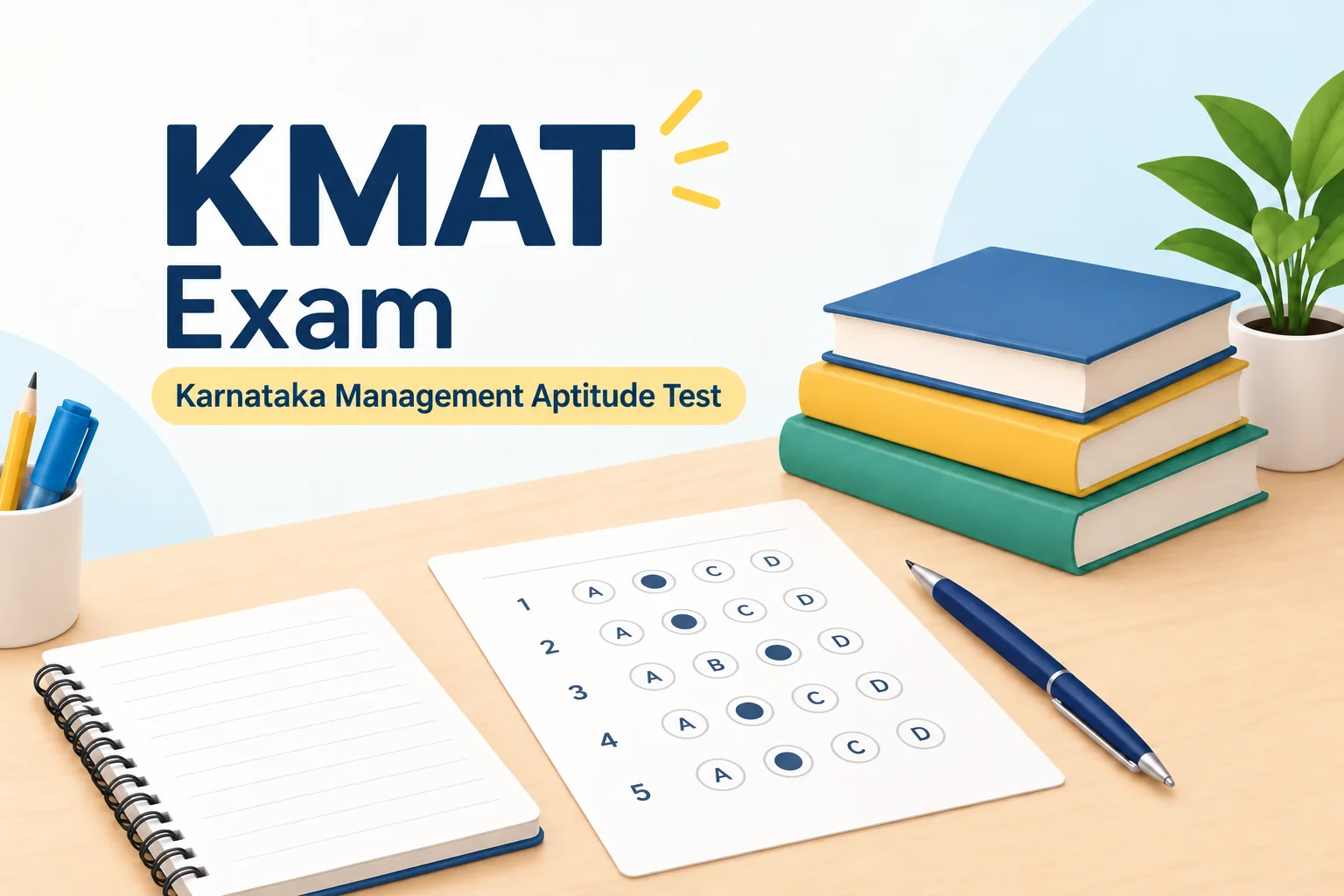










 ROI Calculator



