HOME > BLOG > Online MBA > Is an Online MBA Worth It in 2026? A Data-Backed Answer for Working Professionals in India
Online MBA
Is an Online MBA Worth It in 2026? A Data-Backed Answer for Working Professionals in India
J
By Dr. Sanjay Kulkarni
June 11, 20266 min read
Last updated on June 29, 2026
SHARE THIS ARTICLE
Table Of Content
The Rise of Online MBA Programmes in India
What Makes an Online MBA Valuable in 2026?
Salary Growth After an Online MBA
Online MBA vs Full-Time MBA in 2026
The Online MBA in India has evolved significantly over the last few years. What was once considered a secondary alternative to a traditional MBA is now becoming a mainstream choice for working professionals, entrepreneurs, and career switchers. In 2026, online MBA programmes from UGC-approved universities and institutions are offering industry-relevant curriculum, placement assistance, global certifications, and flexible learning — all without requiring professionals to quit their jobs.
But the biggest question remains: Is an Online MBA really worth it in 2026?
The answer depends on your career stage, goals, industry, and the institution you choose. For some professionals, an online MBA can lead to promotions, salary hikes, and leadership opportunities. For others, it may simply become an additional qualification without significant career impact.
This guide provides a realistic, data-backed analysis of whether pursuing an Online MBA in 2026 is worth your time, money, and effort.
The Rise of Online MBA Programmes in India
India’s online education market has witnessed rapid growth after 2020. Companies became more accepting of remote learning, universities improved their digital infrastructure, and working professionals started prioritising flexibility over full-time classroom learning.
According to multiple industry reports, India’s online higher education market is expected to continue growing strongly through 2026 and beyond. Online MBA programmes have become one of the most popular postgraduate options because they combine career advancement with convenience.
Several factors contributed to this growth:
Increased acceptance of online degrees by employers
UGC-DEB approval framework for online education
Affordable fee structures compared to full-time MBAs
Availability of EMI and financing options
Growth in digital-first industries requiring management skills
Hybrid and remote work culture
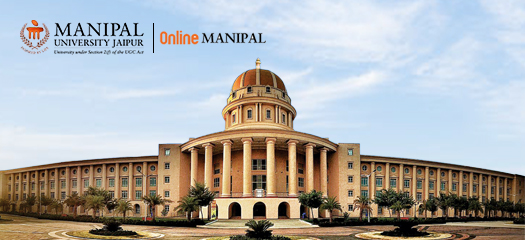
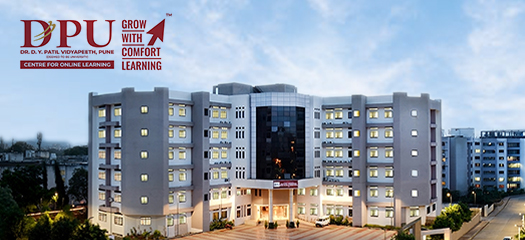
Today, universities such as Symbiosis SSODL, Amity Online, Manipal University Jaipur, DY Patil University, Jain University, Amrita Vishwa Vidyapeetham, and others offer structured online MBA programmes for professionals across industries.
The value of an Online MBA no longer depends only on the “online” format. Instead, employers and professionals evaluate programmes based on several practical factors.
1. University Recognition and Accreditation
An Online MBA is worth pursuing only if the institution is credible and recognised.
In India, the most important quality indicators include:
UGC-DEB approval
NAAC accreditation
NIRF ranking
Industry partnerships
Alumni reputation
Universities with NAAC A+ or A++ accreditation generally have stronger institutional credibility. Similarly, NIRF-ranked universities tend to attract more employer trust than completely unranked institutions.
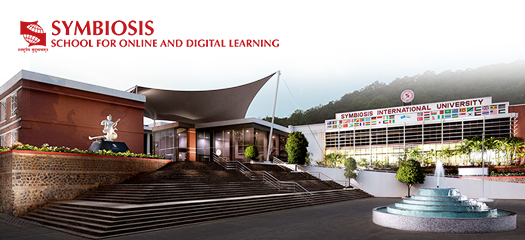
For example, programmes offered by institutions like Symbiosis International University,Amrita Vishwa Vidyapeetham, and Manipal University Jaipur benefit from strong institutional recognition.
Free Courses
Stakeholder Communication & Negotiation Skill Sets
One of the biggest reasons professionals pursue an MBA is salary growth.
In 2026, salary outcomes from an Online MBA depend heavily on:
Existing work experience
Industry
Role transition
Networking ability
Institution quality
Skill application
An Online MBA alone does not automatically guarantee a high-paying job. However, it can significantly improve career progression when combined with professional experience.
Average Salary Impact
For working professionals with 3–10 years of experience, an Online MBA may contribute to:
Professionals in sectors like IT, BFSI, healthcare, consulting, marketing, analytics, and operations tend to benefit the most from management education.
Online MBA vs Full-Time MBA in 2026
This is one of the most important comparisons professionals make before applying.
Full-Time MBA
A traditional full-time MBA offers:
Campus immersion
Peer networking
Summer internships
Strong placement opportunities
Career-switching support
However, it also comes with major trade-offs:
Career break
High tuition fees
Opportunity cost of lost salary
Relocation expenses
Top-tier full-timeMBA programmes from IIMs may still offer the highest ROI in India. But they are also highly competitive and expensive.
Online MBA
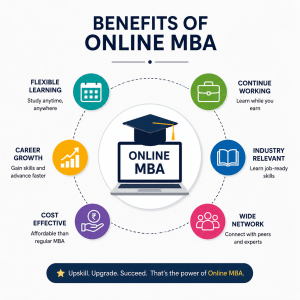
An Online MBA offers:
Flexibility
Continued income
Lower fees
Learning while working
Career continuity
Accessibility from any location
For working professionals who cannot leave their jobs or relocate, the Online MBA becomes a highly practical option.
Is an Online MBA Accepted by Employers?
Employer perception has changed significantly in recent years.
In 2026, most employers focus more on:
Skills
Work experience
Institutional credibility
Business understanding
Leadership ability
Rather than simply whether the MBA was completed online or offline.
For experienced professionals, the distinction between online and regular MBA matters far less than it did a decade ago.
The perception gap between online and traditional education continues narrowing.
Several factors are accelerating this shift:
Remote work culture
Digital transformation
AI-driven learning platforms
Executive upskilling demand
Acceptance of lifelong learning
In the coming years, employers are expected to focus even more on demonstrable skills rather than classroom formats.
As a result, credible Online MBA programmes are likely to become even more valuable for working professionals.
Final Verdict: Is an Online MBA Worth It in 2026?
Yes, for many working professionals in India, an Online MBA is absolutely worth it in 2026.
However, its value depends less on the “online” format and more on:
The institution you choose
Your professional experience
Your career goals
Your ability to apply the learning
For professionals seeking flexibility, career growth, management skills, and recognised credentials without taking a career break, an Online MBA can provide strong long-term benefits.
But success ultimately depends on execution. An Online MBA is not a shortcut to career growth — it is a platform that helps professionals build leadership capability, strategic understanding, and business credibility over time.
If chosen carefully and utilised strategically, an Online MBA in 2026 can become one of the most practical career investments for modern professionals in India.
Frequently Asked Questions
The best MBA specialization in 2026 depends on your career goals and industry demand. Business Analytics, Finance, Marketing, Healthcare Management, and Operations are among the most in-demand specializations due to growing opportunities in digital transformation, AI, fintech, and strategic management.
Yes, an Online MBA from a UGC-DEB-approved university is valid for private sector jobs, higher education, and many government applications. Employer acceptance has increased significantly in recent years.
For experienced professionals, employers focus more on skills, work experience, and university reputation than the mode of learning. A recognised Online MBA is widely accepted across industries.
Salary depends on experience, industry, and role. Professionals with 3–10 years of experience often use an Online MBA to secure promotions, managerial roles, or salary hikes.
Top choices include Symbiosis SSODL, Amity Online, Manipal University Jaipur, Amrita Vishwa Vidyapeetham, and Jain University based on accreditation, curriculum, and industry recognition.
Dr. Sanjay Kulkarni
Data & AI Transformation Leader
Dr. Sanjay Kulkarni is a Data & AI Transformation Leader with over 25 years of industry experience. He helps organizations adopt data-driven and responsible AI practices through strategic guidance and education. With experience across startups and global enterprises, he bridges the gap between theory and real-world application. His work empowers teams to innovate and thrive in AI-driven environments.
 HOME > BLOG > Online MBA > Is an Online MBA Worth It in 2026? A Data-Backed Answer for Working Professionals in India
 June 11, 2026
 6 min read










 Admission Open
 Admission Open
 Admission Open
 Admission Open
 ROI Calculator