Businesses constantly seek strategies to grow faster, increase market share, and strengthen their competitive position. One commonly used approach is horizontal integration, a strategy where a company expands by acquiring, merging with, or partnering with another business operating at the same level of the value chain.
Understanding ‘what is horizontal integration’ helps professionals analyse how major companies scale their operations, reduce competition, and improve efficiency. From global technology companies acquiring competitors to retail brands merging with similar businesses, horizontal integration plays a key role in shaping modern industries.
This blog explains horizontal integration, how it works, its advantages and disadvantages, and real-world examples. It also explores the difference between vertical and horizontal integration to provide a complete understanding of business growth strategies.
Horizontal integration is a business strategy in which a company expands by merging with or acquiring another company that operates in the same industry and performs similar functions in the supply chain.
Instead of expanding into different stages of production, the organisation grows by combining with competitors or businesses offering similar products or services.
Simple Definition
*Investopedia
Horizontal integration refers to the process of acquiring or merging with companies that operate at the same level of the market to increase market share, reduce competition, and improve operational efficiency.
Example
If one smartphone manufacturer acquires another smartphone brand, it is considered horizontal integration because both companies operate in the same industry and produce similar products.
Horizontal integration typically occurs through mergers, acquisitions, or strategic partnerships. The main objective is to strengthen market presence and increase competitiveness.
Below is a simplified step-by-step explanation of how horizontal integration works.
Step 1: Identifying a Suitable Company
The organisation identifies a competitor or similar business that aligns with its growth strategy. The target company usually offers related products, services, or operates in the same market segment.
Companies may look for businesses with:
Strong customer base
Valuable brand reputation
Complementary products
Market expansion opportunities
Advanced technology or expertise
Step 2: Evaluation and Due Diligence
Before proceeding, companies evaluate the financial performance, legal status, and operational capabilities of the target organisation.
Key evaluation factors include:
Revenue and profitability
Market share
Customer base
Brand strength
Operational efficiency
Potential risks
Due diligence ensures that the integration will create long-term value.
Step 3: Negotiation and Agreement
Once the company decides to proceed, both parties negotiate terms such as pricing, ownership structure, and operational responsibilities.
Horizontal integration may occur through:
Acquisition (one company purchases another)
Merger (two companies combine to form a new entity)
Strategic partnership or alliance
Step 4: Integration of Operations
After the agreement is finalised, companies integrate operations such as:
Technology systems
Employees and teams
Marketing strategies
Supply chains
Product portfolios
The aim is to achieve synergy and reduce duplication of resources.
Step 5: Expansion and Growth
After integration, the company benefits from increased market presence, reduced competition, and improved efficiency.
The combined organisation can:
Reach more customers
Strengthen brand visibility
Improve economies of scale
Increase profitability
Horizontal Integration vs Vertical Integration
Understanding the difference between vertical and horizontal integration is important for analysing business strategies.
Factor
Horizontal Integration
Vertical Integration
Definition
Expansion by merging with competitors
Expansion into different stages of the supply chain
Level of operation
Same stage of production
Different stages of production
Objective
Increase market share
Improve supply chain control
Example
One airline acquiring another airline
A clothing brand acquiring a fabric manufacturer
Competition
Reduces competition
Improves efficiency and cost control
Example Comparison
Horizontal integration: A food delivery company acquires another food delivery platform.
Vertical integration: The same company acquires a restaurant chain or logistics provider.
Both strategies support growth but serve different strategic goals.
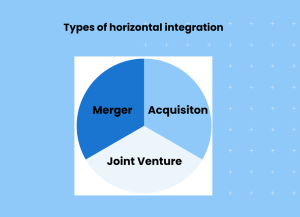
Types of Horizontal Integration
Horizontal integration can take multiple forms depending on the business objective.
*BirdEye
Merger
Two companies combine to form a new organisation. Both companies usually share ownership and management responsibilities.
Example: Two pharmaceutical companies merging to strengthen research capabilities.
Acquisition
One company purchases another company and gains control over its operations.
Example: A large technology company acquiring a smaller software firm.
Strategic Alliances
Companies collaborate without fully merging operations. They may share technology, resources, or distribution networks.
Example: Two retail brands partnering to expand into new markets.
Free Courses
Stakeholder Communication & Negotiation Skill Sets
Organisations typically adopt horizontal integration when they aim to:
Increase market dominance
Expand product offerings
Enter new geographic markets
Reduce competition
Improve economies of scale
Strengthen brand recognition
Access new technologies
Companies must carefully evaluate financial, operational, and regulatory factors before implementing this strategy.
Importance of Understanding Horizontal Integration for Professionals
Professionals in business management, strategy, finance, and marketing benefit from understanding horizontal integration concepts.
Knowledge of business growth strategies helps professionals:
Analyse market trends
Identify expansion opportunities
Understand competitive positioning
Make informed strategic decisions
Improve leadership capabilities
Strategic knowledge is particularly valuable for professionals pursuing leadership roles.
Programmes such as the Accelerated General Management Programme by IIM Ahmedabad help professionals develop strong strategic thinking skills required to analyse business expansion strategies such as mergers, acquisitions, and market positioning.
Key Takeaways
Horizontal integration is a widely used strategy that helps organisations grow by merging with or acquiring competitors operating at the same level of the value chain.
Key benefits include increased market share, reduced competition, improved efficiency, and stronger brand positioning.
However, companies must also consider challenges such as regulatory approvals, integration complexity, and financial risks.
Understanding the difference between vertical and horizontal integration helps professionals evaluate which strategy best aligns with organisational goals.
As industries continue to evolve, horizontal integration will remain an important approach for companies seeking long-term growth and competitive advantage.
Frequently Asked Questions
Horizontal integration is a business strategy where a company expands by merging with or acquiring another company that operates in the same industry and offers similar products or services. The aim is usually to increase market share and reduce competition.
The primary objective of horizontal integration is to strengthen market position, increase customer base, improve efficiency, and achieve economies of scale. It also helps companies reduce competition and improve profitability.
Horizontal integration occurs when companies combine with competitors operating at the same stage of production. Vertical integration occurs when a company expands into different stages of the supply chain, such as production, distribution, or retail.
Common examples include Facebook acquiring Instagram, Disney acquiring Pixar, Vodafone merging with Idea, and Marriott acquiring Starwood Hotels. These companies operate in the same industries and expand their market reach through integration.
Shubham Lal
Lead Software Developer
Shubham Lal joined Microsoft in 2017 and brings 8 years of experience across Windows, Office 365, and Teams. He has mentored 5,000+ students, supported 15+ ed-techs, delivered 60+ keynotes including TEDx, and founded AI Linc, transforming learning in colleges and companies.

 April 8, 2026
 6 min read





 ChatGPT
 Perplexity
 Claude
 Grok
Grok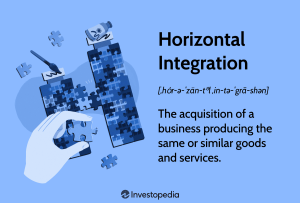










 ROI Calculator